

Articles & Reports
Featured

One Consumer, Dozens of Touchpoints, One Campaign
Every new touchpoint used to mean another campaign to build, budget, and measure. Brands pulling ahead in retail media reach consumers across all of them with one campaign and no extra workload.
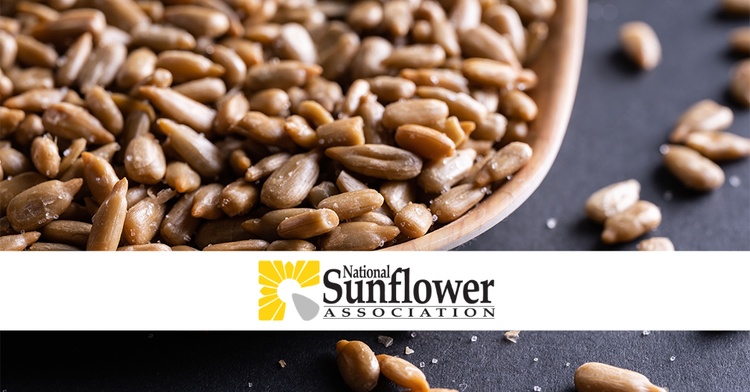
Where Crunch Meets Clean Label: Sunflower Kernels for the Next Generation of Better-for-You Snacks
Canada’s healthy snacks market is experiencing strong growth. According to Grand View Research, the market generated $3,713.6 million (USD) in 2025 and is projected to reach $7,282.5 million (USD) by 2033, growing at a compound annual growth rate (CAGR) of 8.8% from 2026 to 2033.¹ The research also identifies Canada as the fastest-growing regional market in North America, highlighting significant opportunities for food manufacturers looking to innovate in the category. For food scientists and product developers, this growth presents a complex formulation challenge. Consumers increasingly seek snacks that deliver nutritional value, convenience and recognizable ingredients, without sacraficing the taste,texture and overall eating experience they expect. Success depends on balancing these priorities to create better-for-you products that satisfy both nutritional goals and consumer expectations. Why Texture Matters in Snack Innovation Texture is a powerful influence on how consumers experience food, shaping everything from first impressions to repeat purchases. Puratos’s Taste Tomorrow research found that nearly half of consumers prioritize texture over ingredients when purchasing food, while 68% of millennials say texture directly influences their choices.² Ingredion research further indicates that 70% of global consumers would switch to a different product or brand if they were dissatisfied with its texture.³ For snack food manufacturers, these findings underscore the importance of getting texture right from the outset. Crunch, crispness and contrast can help distinguish a product in a competitive market, while combinations of complementary textures can create a more engaging and premium eating experience. Innova Market Insights’ Global Texture Trends 2026 report highlights the appeal of combining textures such as creamy, crunchy, and soft. Its research also revealed that one in four consumers globally is interested in trying snacks in formats that are new to them.⁴ Together, these insights point to opportunities for food manufacturers to explore fresh ingredient combinations and textural experiences that make better-for-you snacks stand out. Where Sunflower Kernels Fit In U.S.-grown sunflower kernels give food manufacturers a practical way to build that contrast. Their mild flavour and satisfying crunch add dimension to both sweet and savoury product innovations without overpowering other ingredients. They also bring plant-based protein, fibre and healthy fats, along with vitamin E, zinc, folate, iron and magnesium, so the texture upgrade comes with a nutritional one. Available raw, roasted and ready-to-eat, sunflower kernels can be used across a wide range of applications, including: • Better-for-you snack bars • Granola and trail mixes • Crackers and savoury snacks • Bakery products and breakfast cereals • Plant-based snacks and bites Clean Label and Allergen-Friendly by Design Consumers worldwide are increasingly prioritizing clean-label products made with recognizable ingredients and greater transparency. Innova Market Insights reports that more than two in three consumers globally say they are at least somewhat influenced by clean ingredient decks, and that nearly one in three new products now carries some type of clean label claim.⁵ Innova also notes that non-GMO claims are most established in North America.⁵ Sunflower kernels are naturally non-GMO and sustainably grown, which supports the transparency and recognizable-ingredient positioning shoppers respond to. They are also an allergen-friendly alternative to tree nuts, delivering the crunch consumers expect from nuts and seeds. Unlike tree nuts, sunflower kernels are not considered a priority allergen in Canada, making them a versatile option for manufacturers developing new products or reformulating existing ones. Turning Texture Trends into Product Opportunities As Canada's healthy snacks market continues to expand, food manufacturers have an opportunity to differentiate their products through thoughtful ingredient choices and more engaging eating experiences. Texture is an important part of that equation, influencing consumer appeal while creating opportunities to innovate across familiar snack formats. U.S.-grown sunflower kernels bring together satisfying crunch, plant-based nutrition and application versatility, making them a valuable ingredient to consider for the next generation of healthy snacks. From bars and granola to crackers and savoury mixes, they can help product developers create food innovations that balance texture, taste and nutritional value. Explore how U.S.-grown sunflower kernels can add texture, nutrition and versatility to your next snack innovation. Connect with a supplier today > {link to lead to the NSA Kernel suppliers page} References: 1. Grand View Research, Canada Healthy Snacks Market Size & Outlook, 2026–2033. https://www.grandviewresearch.com/horizon/outlook/healthy-snacks-market/canada 2. Puratos, “Why texture is important in food,” February 19, 2025. https://www.puratos.com/blog/why-texture-is-important-in-food 3. Ingredion research, as reported in “New approaches to texture innovation,” Food Business News, May 7, 2026. https://www.foodbusinessnews.net/articles/30275-new-approaches-to-texture-innovation

Inside SIAL Canada 2026: Driving Food Innovation Through Connection and Collaboration
CFIN had the honour of taking a bite out of SIAL Canada 2026 in Montréal 🍎—connecting with partners, members, and industry leaders shaping the future of food innovation across Canada and beyond. Representing CFIN on site were CEO @Dana McCauley and @Julie Daigle , Regional Innovation Director (Quebec), who engaged with the ecosystem throughout the event. Their presence reflected CFIN’s ongoing commitment to strengthening Canada’s food innovation ecosystem and supporting high-potential foodtech ventures. Attendees could also catch Julie as a Foodtech Focus expert at the SIAL Canada Expert Hub, where she connected directly with innovators and shared insights with the community. Dana also took the stage as part of the Dairy Talks program, contributing to a forward-looking discussion on innovation as a driver of market leadership in the Canadian dairy sector. Her session explored the shift from incremental product development toward a broader innovation mindset—highlighting next-generation ingredients, value-added dairy formats, new go-to-market strategies, and the role of Industry 4.0 technologies like AI, robotics, automation, and digital supply chains in strengthening productivity and global competitiveness. A key highlight of the week was CFIN’s involvement in the 7th edition of the Startup Pitch Competition, held on April 30 on the Food & Bev Connect stage. Julie Daigle participated as the President of the Foodtech jury, joining a panel of industry experts evaluating promising entrepreneurs from the Startup Village. Beyond the competition, the Startup Pitch stage served as a strategic platform connecting entrepreneurs with buyers, investors, and key decision-makers across the agri-food ecosystem. A standout moment for the CFIN community was the recognition of Maia Farms, a CFIN member and funding recipient, which earned the Gold Prize in the foodtec h competition 🍄🏆 CFIN’s presence at SIAL Canada underscored the momentum of Canada’s food innovation sector and the value of convening the ecosystem to accelerate ideas from concept to commercialization. 📖 Explore more from SIAL Canada 2026 R elive the stories, innovations, and key moments captured throughout the show in the official SIAL Canada Daily: SIAL Canada Daily – 2026 Edition (Photos Courtesy of SIAL)
Five Years of CFIN: A Letter to the Network
Thirty years ago, I worked as a chef in the kitchen of one of Canada’s top restaurants standing should er to shoulder with people who ca red about the sensory experience of food above all else . Our tech stack was al most all analog and , to be honest, we didn’t give our ordering system or the way we did inventory a lot of thought. My career broadened over time , and I ’ ve also held roles where I developed recipes at Canadian Living and wrote about food trends; built innovation strategies and products for national brands, founded a business incubator, and ran a venture creation office at a prestigious Canadian u niversity . Food was always the thread , and technology was always present but in most of the food focused businesses I’ve worked for, it was taken for granted, and creativity and hard work were what drove the businesses forward. While smart people with great ideas are essential to food business success, it’s not enough to be competitive in today’s world. Old ways of running restaurants, innovation labs and food and beverage processi ng businesses can’t compete internationally or absorb the trade shocks that have become commonpla ce in recent history. That’s why I feel l ik e CFIN is the perfect place for me to be today and why we’re adding dozens of new members per week. When CFIN was created in 2021, the mandate was intentionally broad : cata lyze Canadian food innovation with funding , build community, connect an ecosystem that had been operating in silos for decades. The funding programs took shape quickly. Since 2022, we’ve awar ded $23.3 million to 133 projects across six program s. For every $1 CFIN invested, our members committed $7.65 of their own capital toward innovation. This leverage ratio of nearly 8-to-1 has unlocked over $140 m illion in private sector spending on R&D and capital infrastructure. The other work was harder to define . What do "build community" and "connect an ecosystem" mean in practice for a sector span ning startups, processors, researchers, investors, policymakers, and operators spread across this vast country ? Th at question didn't have a tidy answer. As a result , fostering and serving this network was (and remains ) an exercise in innovation itself : something new to be built , and then tested, adjusted, and iterated upon , ad infinitum . I’m immensely proud of what we’ve built so far . A team of Regional Innovation Directors who've supported more than 2,200 organizations, brokering the introductions that became commercial partnerships, strategic investments, leadership hires, and research collaborations. A digital platform , YODL, connecting Canada's food sector across industry silos and bridging interprovincial barriers . The first comprehensive analysis of Canadian foodtech . A network of 8,500 members from every province, every part of the food value chain, every stage of business . On any given week, our community is discussing topics ranging from precision fermentation bioreactor designs and funding stacks to food packaging labeling regulations and export strategies, all in the same space. Members benefit from purpose-built tools and resources — like our Funding Finder that aggregates food and beverage funding opportunities across the country and a growing library of original sector research and analysis — alongside direct access to our Regional Innovation Directors. Canada has strong regional funders, accelerators, trade associations, and tech transfer offices, each doing necessary work in a defined lane. What this sector didn't have was a place where the conversation s , the tools, and the connections all showed up at once — where the range of problems and the range of capabilities were dense enough that the right solutions could emerge . That's what CFIN has built. That foundation is important because the next five years will be even more dynamic, and often more challenging, than the last five . To keep pace and flourish in an increasingly volatile world, Canada's food sector needs to modernize faster and more strategic ally than ever before . Trade disruption is dramaticall y reshaping supply chains . L abour constraints are compounding a productivity gap that was widening long before tariffs became front-page news. Climate pressures are intensifying. Food 4.0 — a tech-enabled food s ector that's more collaborative, productive, resilient, and competitive — is the framework CFIN is building toward, and the case for it gets more urgent by the quarter. I ’m confident that we’re up to the task . Five years ago, Canada's food innovation ecosystem was fragmented, underleveraged, and often invisible to the investors, operators, policymakers, and media who needed to see it. That's no longer true. The capacity to respond to the challenges ahead is here. Not in any single program or policy, but in the breadth of this network — the founders , processors , researchers , and investo rs who are hungry to innovate and build a better Canadian food sector . My own wide-ranging path through the food sector taught me that no single role ever showed me the full picture. It took working across kitchens, labs, newsrooms, boardrooms, and startups to understand how innovation really moves through this industry — and where it get s stuck. CFIN was built on the same insight. A sector this complex, facing challenges this urgent, needs more than funding or advice or connections in isolation. It needs all of them in the same room. That's what we've spent five years building, and I'm betting the next five will prove its value at a scale none of us can yet imagine. Thank you for being part of it. Dana McCauley, CEO, Canadian Food Innovation Network
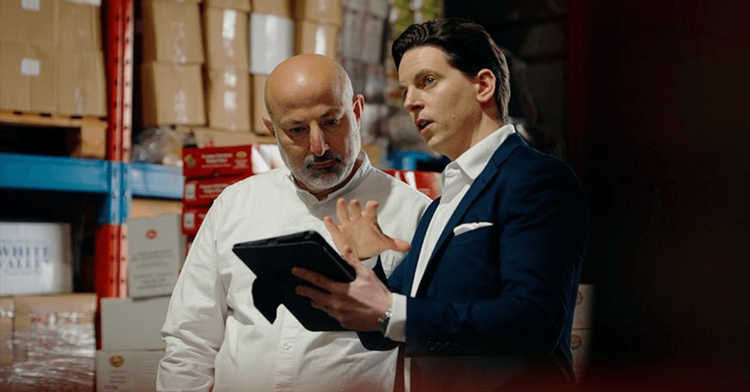
How BC is Becoming a National Foodtech Hub
Editor's Note: This article was o riginally published in the Vancouver Tech Journal on March 13, 2026 The province has a diverse food processing industry, world-class research facilities, and a deep bench of tech talent — everything a foodtech ecosystem needs to thrive. Foodtech builds the software, automation, and applied science for how food gets processed, manufactured, packaged, distributed, and sold. The industry behind it is enormous — food and beverage processing alone is Canada's largest manufacturing sub-sector , bigger than automotive, bigger than aerospace. It's a serious market, and in British Columbia, it's growing fast. But if you work in the province's broader tech ecosystem, you might not even know that. Foodtech hasn't traditionally drawn the same attention as sectors like cleantech or enterprise SaaS despite being a comparable market in scale and complexity — and one where demand for new technology is accelerating fast. What BC brings to the table BC's food processing sector is substantial — over 3,200 companies producing roughly $12.6 billion in value-added products annually. And it's being treated as a strategic priority. The province has funded a network of shared food processing hubs, UBC just opened a Food and Beverage Innovation Centre with pilot-scale production labs that processors and startups previously had to leave BC to access, and SFU's BC Centre for Agritech Innovation is partnering directly with SMEs on cost-shared R&D. At the same time, much of what the food industry needs is already being built in BC for other thriving tech sectors. Process automation, energy management, supply chain software, safety and traceability systems, data-driven quality control — these are cleantech and software problems applied to production floors and distribution networks. The talent, research base, and trade infrastructure to support a serious foodtech cluster are all here. A different kind of tech sector Foodtech doesn't work like enterprise SaaS or consumer tech. Processors and manufacturers adopt slowly and carefully, because failure is expensive in ways that go beyond lost revenue — a food safety issue, a botched line integration, a regulatory problem. Sales cycles run in quarters. The investor community that understands food is small and specialized. And the industry's own networks run through trade associations, existing supply relationships, and sector-specific events that sit well outside the broader tech community's orbit. None of this means foodtech is closed off. It means that if you want in — as a founder, investor, developer, or potential partner — you need a way to access the conversations, the deal flow, and the operating knowledge that don't surface through the usual channels. The Canadian Food Innovation Network The Canadian Food Innovation Network is a national not-for-profit, established in 2021 that functions as the operating infrastructure for Canada's foodtech sector. CFIN runs cost-shared funding programs that help companies de-risk R&D and move technology into commercial settings. Since launch , the organization has awarded over $22 million to 122 Canadian foodtech projects, matched by $25 million in industry co-investment. Those funded companies have generated $90 million in economic impact, created over 355 jobs and co-op placements, and attracted more than $82 million in follow-on investment. The network's 8,000-plus members include food processors, technology companies, ingredient suppliers, retailers, researchers, and investors — connected through YODL, CFIN's member platform, and supported by Regional Innovation Directors embedded across the country, who work directly with members to broker introductions, navigate funding, and connect emerging technology with the processors and buyers who need it. CFIN also produces the sector's most detailed intelligence . The Foodtech in Canada 2025 Ecosystem Report mapped investment flows, identified sector strengths, and gave both companies and investors a clearer picture of where the Canadian foodtech market stands. And then there's Foodtech Frontier , CFIN's annual program identifying the country's highest-potential foodtech companies. The inaugural cohort of 35 winners included eight BC companies. For investors, it works as curated, vetted deal flow in a sector where sourcing is otherwise hard. For the companies, it's structured national visibility. Plug into Canada’s foodtech ecosystem If you work in technology or investment and you've been curious about the food sector, then signing up for a free CFIN membership is the best place to start. Members get access to funding programs, sector intelligence, a national innovation community, and regional team members that know the BC landscape specifically.
Other Articles

News File – September 16
Each Friday we’ll bring you a roundup of news from CFIN, YODL and around the food world. As seen on YODL Check out this week’s most viewed discussions: Functional foods - are you interested in finding out what health benefits of your food product | Open Forum (cfin-rcia.ca) Product Launch: Kellogg's Cereal Bowls with "Milk" | Open Forum (cfin-rcia.ca) Une solution pour sécuriser la chaine d'approvisionnement! L'entreprise Relocalize de Montréal | Open Forum (cfin-rcia.ca) Around the Food World Walmart is piloting a reusable bag rental program in its Guelph, ON stores. The CIFST has started planning for a new food cluster under Agriculture and Agri-Food Canada’s Next Policy Framework. Nestlé and Perfect Day are teaming up to create a dairy-free milk-like beverage. Did you Know? Food and beverage companies are high users of energy, primarily from fossil fuels, and worldwide the industry produces approximately 37 per cent of all greenhouse gas (GHG) emissions. Alteco has developed a predictive tool to help food businesses manage energy consumption, cut costs and reduce their carbon footprint. The recently launched SaaS (software as a service) tool registers which equipment is being used when electricity enters a manufacturing facility, and reveals the specific energy consumption of that equipment. Alteco says the software can help reduce energy costs by at least 15 per cent.
CIFST ALT Supplier Showcase Series - Berentz
CFIN is partnering with the Canadian Institute of Food Science & Technology (CIFST) to present CIFST ALT on September 28, 2022 at the Delta Toronto Airport Hotel & Convention Centre. Companies participating in the show also have the opportunity to present a Supplier Showcase Session during the CIFST ALT Innovation Showcase. Here’s a preview of one of the companies and speakers you’ll see at the show. Jessie To Technical development manager Berentz Q: What solutions do your products or services offer food manufacturers? A: We supply strategically curated ingredients from world-class manufacturers so we can offer the best. We apply the expertise and know-how of our principals and our experienced food technologists to support food manufacturers in creating delicious products that consumers will love. We also have ingredient manufacturing companies under Barentz and so we are able to offer cost-efficiency. Q: What makes your product or services unique and an alternative in the market? A: We work closely with global market leaders and powerful niche suppliers and we have a global network of Barentz application laboratories that are ready to find the best solutions for our customers. Also, we have a dedicated focus on being leaders in the alternatives market, ranging from alternative functional ingredients to nutritional, to ingredients being processed in alternatively sustainable ways. Q: How do you maintain innovation as a priority in your company? A: We are built on an entrepreneurial spirit and we continue to cultivate that. We apply our global market and technological knowledge to source complementary ingredients for local markets and do local applications work that help us provide value to our partners. We continue to invest in innovation and talent. Barentz North America is proudly EcoVadis Gold recognized. This award reflects Barentz’ commitment towards our customers and communities. Q: What are you most looking forward to about CIFST Alt? A: Being able to learn from others and seeing the innovation that will be making a difference in this world. Ready to register for CIFST ALT? Click here to find out more. #CIFSTALT #FoodInnovation #tradeshow #ingredients
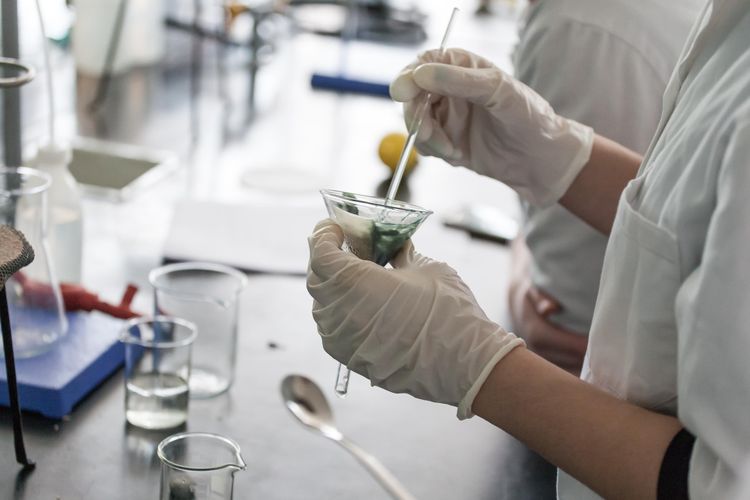
Discussion: Innovation and Research and Development in Plastic Alternatives
Food and beverage operators tell us that they have made eliminating plastic a priority in their businesses, and many are looking for unique innovations such as packaging produced from biowaste. Participants Dr Zoraide Bentellis, Director, and Dr Mohamed Laakel, Senior Researcher, Bioplastics, Institute of Packaging Technology and Food Engineering (ITEGA) Simon Chretien, Director General, Alliance Polymères Québec (Vallée de la Plasturgie) Q: Tell us about some of the best innovations you have seen on the market or in development? Zoraide Bentellis & Mohamed Laakel: Several examples exist, and it is impossible to name them all. The following examples are therefore not exhaustive. For ITEGA, a bio-based food packaging solution is packaging that must have barrier and mechanical properties practically developed to measure by packaging manufacturers according to the needs of food companies using it. It may be antimicrobial, antioxidant, edible, intelligent, recyclable, industrially compostable and home compostable. Innovations can be named within each criterion. Here are a few examples: PLA is one of the most commercially promising bioplastics for replacing non-degradable polymers such as polyethylene terephthalate (PET) and polystyrene (PS). PLA has been the subject of considerable research over the past 20 years. Other polymers include cellulose, polyhydroxybutyrate (PHB) and polyhydroxyalkanoates (PHA). In addition, to produce a biomass-derived PET substitute, scientists have recently proposed the use of furan-2,5-dicarboxylic acid (FDCA). Plant-, sugar cane-, coconut-, hemp- and corn starch-based packaging is also replacing plastic packaging. These innovations are economical. A few examples of companies on the market: Oceanium ( Our products - Oceanium) is a UK-based start-up that makes products from sustainably cultivated seaweed; the Bulgarian start-up Lam’On ( LAM’ON - Biodegradable laminating film for printing (lam-on.com)) which produces 100% compostable and biodegradable laminating films and aluminium packaging. It produces a polylactic acid (PLA) packaging sheet, PACK’ON, derived from corn. The use of silver nanoparticles as antibacterial additives in the sheet, together with its oxygen-barrier properties, makes the solution suitable for food packaging; Origin Materials, Origin Materials - Carbon Negative Materials ,USA, creates bio-based plastic bottles containing 80% renewable materials such as cardboard and sawdust. To date, half of its capital investments have come from major food companies such as Nestlé and Danone. Simon Chretien : The development of polymer resins from agricultural residues and forestry co-products for manufacturing is very advanced. However, work is also needed to adapt manufacturing processes to shape these resins. A great deal of research and development is being carried out around the world on this subject, and there are many technological advances. Several viable products have reached the pre-commercialisation or commercialisation stage with manufacturers, such as coffee pods, reusable dishwasher-safe coffee cups, single-use tableware and even reusable tableware. Q : How far are we from seeing some biowaste packaging solutions become mainstream? Zoraide Bentellis & Mohamed Laakel: In Canada, Quebec and internationally, plastic-substitute material solutions include Evanesce. Based in Vancouver, Canada, Evanesce designs, develops and manufactures sustainable, single-use solutions that are certified compostable, commercially scalable and competitive, using the latest advances in materials science. The patented Evanesce Molded Starch technology is a complete replacement for expanded polystyrene (EPS) in packaging and was to become commercially available in 2023. The product is made from recycled plant-based by-products, is home compostable and breaks down in far less than 90 days. Kruger’s FiloCell : Kruger Biomaterials has been working on the development and commercialisation of FiloCell™, its trademark for cellulose filaments, since 2013. It has the world’s first CF demonstration plant, with a five-tonne-per-day production line, where it is successfully conducting trials that have the potential to revolutionise the manufacturing processes of many products BE UP Biotechnologies Inc. is a company created to commercialise biopolymers developed in Quebec and produced using innovative, environmentally friendly processes. The biopolymers proposed are fully biodegradable and produced from renewable raw materials. These biopolymers are part of a large family of 100% natural compounds: PHA (polyhydroxyalkanoates). With properties equivalent to conventional plastics, mainly petroleum-based, PHAs offer an alternative to their use. BOSK Bioproduits is a Quebec company. Bosk’s project is a radical innovation in that it offers a fully compostable bioplastic at a competitive cost. Unlike other PHAs available on the market, their PHA contains no GMOs, is non-toxic and is made from unused, renewable materials from paper-industry operations. ITEGA-CÉPROCQ bioplastics platform: located in Montreal, Quebec. As part of an NSERC mobilisation grant application, ITEGA and CÉPROCQ received a grant of $1,500,000 over five years for the “Development of the first integrated platform for compostable bioplastics”. The circularity initiative aims to: 1. produce monomers from agri-food by-products from biofood companies; 2. produce bioplastic; 3. develop active food packaging; and 4. validate durability and compostability. Rootree, located in Boucherville, Quebec, manufactures using renewable and bio-based materials to create a film structure in which each layer is certified home compostable. Simon Chretien: As long as the recycling and sorting chain has not been adapted to separate petroleum-based packaging from bio-based packaging, and as long as a network of suitable composting sites for bio-based packaging has not been established, it will be difficult for this technology to be adopted on a large scale. Q : What are the current challenges to commercialising these types of innovative packaging solutions? Zoraide Bentellis & Mohamed Laakel: Meeting consumer expectations and current standards; optimising material performance to protect and preserve food products; the costs of sustainable packaging; the life cycle of the product and packaging, which is of crucial importance; and, indeed, developing infrastructure for end-of-life management. Simon Chretien: Bio-based packaging cannot be properly separated from petroleum-based plastic packaging and therefore contaminates the current recycling and sorting chain. In addition, bio-based packaging is mainly compostable under industrial conditions and is difficult to compost under home-composting conditions. At present, the use of bio-based packaging products requires a closed use loop that makes it possible to recover the packaging and process it in a closed system. For example, compostable packaging used at a festival or in a cafeteria is collected directly on site and composted by the organisers or by a firm specifically mandated for that purpose. In addition, the mechanical properties of bio-based packaging are not sufficient for current needs. The infrastructure costs, such as reactors, required to manufacture the resins are also quite high, although still more accessible than those required to manufacture petroleum-based resins. Moreover, these bio-based resins offer greater potential for investors to establish manufacturing plants in Canada than petroleum-based resins do. Q : What should food and beverage operators know about research and development into alternatives to plastic? Zoraide Bentellis & Mohamed Laakel: To feed the world’s population, we will need 70% more food by 2050. It is estimated that one third of the food produced is lost or wasted each year. The impact of product losses from harvest through to consumer use has a far greater environmental impact than plastic packaging (60% versus 20%). As an independent applied research centre, we emphasise the following points: companies in the food and beverage sector, particularly large companies, must be proactive in eliminating unsustainable packaging, especially the use of virgin and non-recyclable plastic; the packaging-substitution strategy must incorporate an action plan to improve products along three connected axes, considered simultaneously and translated into actions: 1. integrate sustainable practices; 2. optimise existing products (product-process-packaging) to reduce losses, increase shelf life, reduce the environmental impact of packaging and promote this to consumers; and 3. develop an eco-design strategy for new products. Packaging manufacturers and suppliers will need to consider their customers’ needs by developing high-performance materials and packaging that respond to highly specific functions. Packaging functions are defined by the specific nature of the food, its manufacture and target shelf life, as well as environmental and health regulatory constraints. In turn, the functions of packaging dictate material choices. From this perspective, you are an integral part of the solution. Improving and maintaining competitiveness in relation to the European context requires strengthening applied research and development because fundamental solutions exist around the world; it is their application that presents technological challenges and requires specialised human, infrastructure and financial resources capable of linking industry with fundamental research. R&D into alternatives to plastic requires financial effort from all levels of government and also from private partners. This is essential. Simon Chretien: It is the users, including food and beverage operators, who will partly determine the success of the implementation of these new technologies and new products by getting involved in their development, but also by requesting this type of product, while being prepared to pay slightly more for products that cost more to manufacture. Colloque Bois-Polymères 2022 Marché d’avenir, produits d’avenir: 9 November 2022, Laval, Quebec (cbp2022.com). This symposium will present the potential use of forestry co-products as a basis for developing high-performance polymer products, particularly for packaging. Alliance Polymères Québec is working with the Université de Sherbrooke to develop a research project to create flexible food packaging films from potato residues, to be carried out in collaboration with potato-producing companies and plastic-packaging manufacturers. Alliance Polymères Québec (APQ) can support companies in the food and beverage sector in developing high-performance polymer products from non-petroleum-based natural resources, including biowaste, in collaboration with polymer-product manufacturers. In addition, for companies located in Quebec, APQ may in certain cases contribute financially to a collaborative project for up to 50% of costs through a funding programme supported by Quebec’s Ministère de l’Économie et de l’Innovation. See also our support service offered under the name Le Moule . Food innovation and new technology can have a major impact on product life cycle design. Do you have a ground-breaking concept needing funding? CFIN’s Food Innovation Challenge, Plastics Solutions for Food: Reduction, Replacement, and Recyclability, is looking for proposals! Click ici for more information.
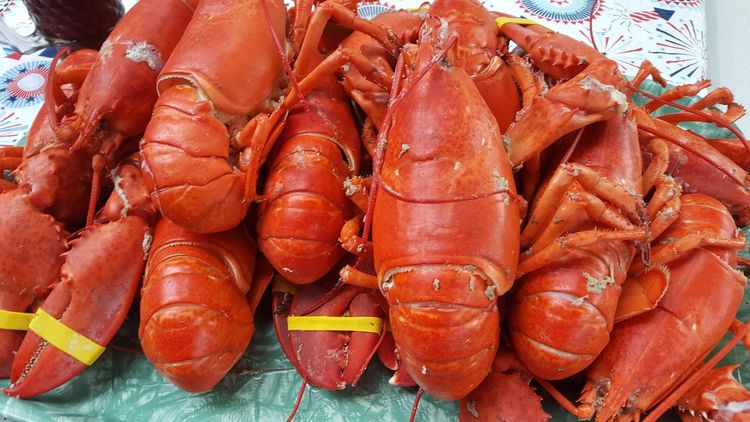
From biowaste to sustainable packaging
This article originally appeared on the Food in Canada website . Atlantic Canada’s seafood industry is challenged with how to deal with processing by-products and waste more sustainably. At the same time, the plastics industry is looking for greener packaging alternatives that don’t rely on fossil fuel-based ingredients. North Sydney, NS-based Copol International Ltd. , a leading manufacturer of cast polypropylene films for the flexible packaging industry, has teamed up with researchers at the Verschuren Centre for Sustainability in Energy and the Environment to develop a solution that will benefit both industries. The result: using lobster shells left over from processing to create a biopolymer that can be incorporated into environmentally friendly packaging with antimicrobial properties to help reduce food waste. “For us, it’s really all about sustainability and being able to bring the plastics industry and our product – used mainly in produce and bakery items to enhance presentation and extend shelf-life – forward to both prevent food waste and to reduce the impact of plastic on the environment,” says Denis Lanoë of Copol International. “Plastic has a role to play; our customers and their customers want to be sustainable, so we want to be able to help with that and come up with a better solution moving forward.” Currently, many of the by-products of seafood processing are considered waste product – even though they contain nutrient-rich compounds – and end up in landfills. Not only is that detrimental to the environment, but seafood processors must pay tipping fees for disposal, adding to their operating costs. “What we are trying to do with the project is to use marine by-products – a waste stream that is generated out of seafood processing – and other under-utilized marine resources to develop functional ingredients,” explains Aishwarya Mohan, who worked on the project during her time as research manager for bioproducts at Verschuren Centre. The research team has developed a green chemistry approach for extracting interesting compounds from seafood waste, examining their properties and evaluating what benefits they might provide. The biopolymer that they’ve developed using lobster shells and other shellfish waste can be used both as an additive on existing film to extend the shelf-life of fresh produce and bakery items, as well as replacing some of the fossil-based polypropylene that is currently used as an ingredient in the packaging film. “This is addressing two issues: to take care of the waste products that are generated from the seafood processing and also producing higher-value products for niche applications,” adds Mohan. “We have realized some promising results. What we have left to do is continue to work with our collaborators on testing in real food systems.” According to Lanoë, if even 10 or 20 per cent of the fossil fuel-based ingredients can be replaced by the polymer using seafood waste, it will lead to more environmentally friendly packaging solutions – and a potential boost to the regional economy. “The biopolymer itself is based on a waste marine product that is locally available so the whole project has very big potential and is very exciting for the whole regional economy,” he says. “Everything is locally sourced and locally based so with a successful outcome, we could actually start developing a biopolymer industry based right here in Nova Scotia.” The antioxidant properties of the fish peptides identified by the research team at the Verschuren Centre could also be incorporated into beverages and other food applications. A final step in the project involves testing them with dairy products like cheese to determine their suitability for use in dairy products. Verschuren Centre CEO Beth Mason says her organization translates what happens at the research level into reality for industry partners like Copol. With this project, the cluster funding has brought multiple industry partners together which will ultimately broaden the application of the research itself. “Generally industry partners wouldn’t have large R&D capacity internally and to get new technologies into industry, you need this type of approach (like the cluster funding) so that you can actually adapt R&D into real life,” Mason says. “We can mediate far greater uptake of R&D by having multiple partners.” This project is helping the marine industry extract value from resources that are currently under-used while also supporting the food packaging sector with sustainable alternatives that are better for the environment and can help reduce food waste by extending product shelf life. Food innovation and new technology can have a major impact on product life cycle design. Do you have a ground-breaking concept needing funding? CFIN’s Food Innovation Challenge, Plastics Solutions for Food: Reduction, Replacement, and Recyclability, is looking for proposals! Click here for more information.
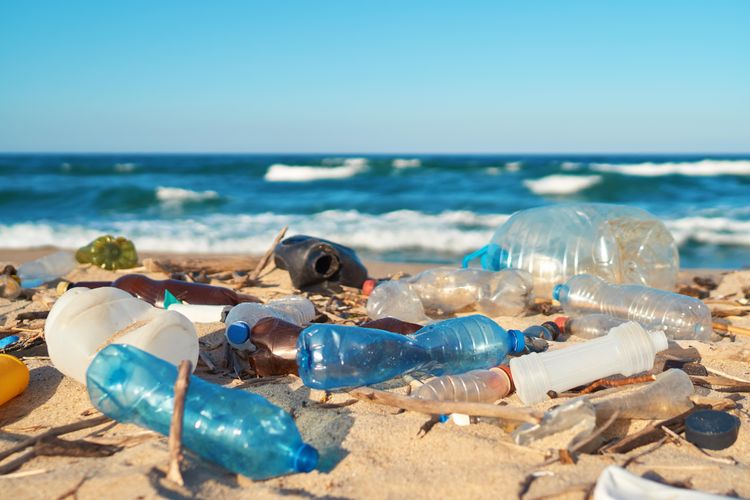
Guest Blog: Innovation in the circular economy of plastic packaging
By Carol Zweep When it comes to the circular economy of plastics, innovative solutions continue to be introduced to the market. These options offer alternatives to traditional plastics, reducing landfill waste and impacts on the environment. Edible and biodegradable packaging: Some packaging materials are safe for consumption and can replace items such as single-use plastic beverage bottles, cups, and condiment sachets. Ooho , a material made from brown seaweed, is one such material that is also a renewable natural resource. Produce packaging replacement: Plant-derived coatings such as Apeel can be used in place of plastic packaging such as shrink-wrap on fruit and vegetables. This coating slows water loss and oxidation, extending the shelf-life of produce without plastic. Take-out containers: Companies such as Friendlier are designing polypropylene takeout containers that can be returned after use to collection bins. Once returned, the container is washed, sanitized, and redistributed in a closed-loop system. Then, at the end of its life, the container can be recycled. Meat trays: A package converter, Klockner Pentaplast , has developed an unique design for a polyethylene terephthalate (PET) tray that retains and reroutes liquid away from meat at any angle. By eliminating the absorbent pad typically seen in meat packaging, this product improves quality while also increasing clear product visibility. In addition, the tray contains recycled content and is recyclable. Compostable options: Single-use coffee pods can be wasteful. Nabob and Maxwell House recently developed a zero-waste solution where all of the pod components – the lids, rings, filter, and used coffee grounds – are compostable. The pods have demonstrated successful breakdown in real-world testing in a variety of composting conditions and processes. The pod bags and cartons are also recyclable, offering a new alternative to consumers. Recycling rate improvements: Innovations such as digital watermarking technology enable higher sorting and recycling capture rates for packaging while reducing waste. Digimarc technology modifies the pixels of the packaging to carry an imperceptible code undetectable to the consumer. The code is picked up by cameras, such as on the sorting line of a waste management facility, and then the packaging is sorted into the recycling section. Proctor & Gamble is currently using Digimarc for its Lenor Fabric Softener, but the technology is being piloted in other packaging as well. Food-Grade Recycled Plastic: Post-consumer PET is being used by companies such as Ice River , taking materials from used bottles and thermoform clamshell packaging to make new food containers and water bottles. Once collected from municipal recycling facilities in Canada and the Northern U.S., the material, which is often contaminated, undergoes a rigorous purification process before being recycled into food-grade recycled plastic. Hard-to-Recycle Plastics: Even hard-to-recycle plastics are being repurposed to reduce waste. For example, Firstar Fiber Corporation is transforming such plastics into plastic lumber, a value-added product used in decking and furniture. CRDC Global is also applying scale solutions to the conversion of hard-to-recycle plastic into a concrete additive in building and construction. As companies look to meet the demands of a circular economy of plastics, more innovative solutions are on the horizon. In the future, we can expect to see even more creativity and applications for alternatives to traditional plastics in food packaging. Carol Zweep is manager of Consulting and Technical Services for NSF Canada. Contact her at czweep@nsf.org . #FIC #foodinnovationchallenge #FoodInnovation #circulareconomy #plasticwaste #Packaging

The Tablesetter – September 12
Happy Monday CFIN members! Here's your weekly heads up on what’s happening on YODL and around the food world this week. The YODL Menu Did you notice we added a YODL Menu widget to our homepage? Now you can easily access all of our articles and keep track of what’s coming up. Monday: The Tablesetter – September 12 Tuesday: Guest blog: Innovation in the circular economy of plastic packaging Wednesday: From biowaste to sustainable packaging Thursday: C hallenge – Innovation and R&D in plastic alternatives Friday: News File Something to Celebrate September 13 is international chocolate day! Chocolate was first used more than 4,000 years ago in Mesoamerica, as both medicine and during rituals. Eventually Mayan cultures began consuming it as a beverage and using the valuable commodity as a trade currency. Historians believe chocolate made it to Spain in the 16 th century, and the expensive treat spread throughout Europe. Once the chocolate press was invented in the early 1800s, chocolate production became easier and less costly, making mass production of chocolate possible. Food Facts In 2012 historians uncovered a strange plan to assassinate UK Prime Minister Winston Churchill. The plan involved Nazi bomb makers coating an explosive with dark chocolate, then packaging it to look like a luxury chocolate bar. The bars were intended to be placed in the War Cabinet, but the plan was foiled by MI5 agents in 1943. Happy YODLing!

CIFST ALT Supplier Showcase Series - National Sunflower Association
CFIN is partnering with the Canadian Institute of Food Science & Technology (CIFST) to present CIFST ALT on September 28, 2022 at the Delta Toronto Airport Hotel & Convention Centre. Companies participating in the show also have the opportunity to present a Supplier Showcase Session during the CIFST ALT Innovation Showcase. Here’s a preview of one of the companies and speakers you’ll see at the show. Michelle Peitz Oils Technical Solutions manager at ADM National Sunflower Association Q: What solutions do your products or services offer food manufacturers? A: The National Sunflower Association is a USA-based organization that promotes the use of non-GMO sunflower in the creation of food and beverage products. Q: What makes your product or services unique and an alternative in the market? A: Sunflower oil has many attributes that make it a strong fit for the alternative market. Functionally it provides an oxidatively stable oil across each alternative space. Its neutral flavour makes it easy to work with. It has a strong North American supply chain and it is inherently non-GMO benefiting many of today’s consumer claims. Q: How do you maintain innovation as a priority in your association? A: The NSA does not innovate its own products. The association’s role is to educate food manufacturers on how to use sunflower oil in a variety of applications including alternative product innovations. The NSA offers webinars featuring technical oil experts and shares testimonials from manufacturers who have had success using sunflower oil in their products. Q: What are you most looking forward to about CIFST Alt? A: The opportunity to share technical knowledge about sunflower oil with CIFST members and guest and to hear from other experts about their alternative product innovations. Q: What’s your favourite alternative to either dairy, grain or traditional protein products? A: My favourite part of the alternative categories is how diverse and inclusive they are today. I have options to choose a flexitarian diet at home or when dining out and I’m more likely to choose that because they taste good! It’s easier to go out or cook with friends that choose or need a specific diet without them feeling left out or everyone feeling unsatisfied. The technology and developers are giving us options that are full of flavour, have texture, and are satisfying even to the pickiest of eaters! Ready to register for CIFST ALT? Click here to find out more.

News File – September 9
Each Friday we’ll bring you a roundup of news from CFIN, YODL and around the food world. As seen on YODL Check out this week’s most viewed discussions: Looking for a early adopter company to help us run a pilot | Open Forum (cfin-rcia.ca) CFIN's Innovation Booster Intake Now Open - Focused on Food Ecosystem Sustainability projects | Open Forum (cfin-rcia.ca) Functional foods - are you interested in finding out what health benefits of your food product | Open Forum (cfin-rcia.ca) Around the Food World A study from Dalhousie University found that the majority of Canadians oppose eliminating best before dates on food and beverage products. Newfoundland and Labrador begin implementation of a sugar tax on sweetened beverages. It must almost be fall, because Tim Hortons has announced its 2022 lineup of pumpkin spice products, including the limited-edition Maple Collection. Did you Know? Kerry recently released a global study on plant-based burgers and plant-based cheese looking at the flavour and texture profiles consumers want in these meatless options. The study found that flexitarians, consumers who sometimes eat meat, are more critical of plant-based foods than vegetarians or vegans. Some of the key findings include: The benchmark for plant-based burgers is beef, but better. That means consumers want the taste and texture of beef, with improved nutrition and environmental impact. Consumers want a mouthfeel that mimics meat, with a firm bite. Consumers also want “beef burger cooking cues” that signal the burger is safe and ready to eat, including a change in colour, carmelization, oil release, a sizzling sound, and a meaty aroma. 63% of U.S. consumers eat plant-based products because they are considered healthier, while 40% say they began eating the products because they are better for the planet. 76% of respondents say they expect meatless burgers to have an authentic chargrilled taste.
Challenge: Auditing your operations and moving toward a circular economy, Part 2
Plastics are everywhere in the food industry, from component parts in operations to packaging, wrapping during distribution and single-use consumer materials. As Canada moves toward a circular economy without plastic waste, many food and beverage entrepreneurs are wondering just how to begin the process of eliminating plastic from their operations. Click here to see part one of the series on circular economies. Participants Barry Friesen, executive director, Cleanfarms Brianne Miller, co-founder and CEO, Nada Grocery Q: Have you audited your operations to see where waste from single-use plastics still exists? Barry Friesen: Yes, we have. We have identified plastic used in agriculture from coast to coast in our report Agricultural Plastic Characterization and Management on Canadian Farms . As shown in the report, there are about 62,000 tonnes of plastics estimated to be used in agriculture each year in Canada. The vast majority of these materials are single-use plastics, though there are several reusable systems in use today. For instance, 40 per cent of pesticides used in Canada are delivered in a reusable system. The seed industry utilizes reusable boxes in many instances, or it is often delivered in bulk where no plastics are used. We have done this research because our goal is to achieve zero plastic waste to landfill in agriculture. To do so, we needed to understand what is being generated and where. Brianne Miller: Yes. Nada offers sustainably sourced foods, zero waste lifestyle products, and a package-free shopping experience. In 2020 students in the Bren School of Environmental Science & Management at UC Santa Barbara conducted a research study on our circular model. The goal for this study was to quantify the carbon footprint of a package-free grocery store and identify additional opportunities for emission reductions. It found that Nada has a lower carbon footprint because of programs we have in place such as food waste diversion strategies and sourcing specific, low-carbon products from local suppliers. Auditing waste is part of our business model, and we report on waste as part of our B-Corp recertification process as well. You can see more in our 2021 Impact Report . Q: What challenges have you faced while trying to remove plastic waste from your system? Brian Friesen: Cleanfarms isn’t working to eliminate anything other than waste sent to landfill or discharged into the environment, whether it be plastic, fibre, wood or chemicals. While plastic is the main type of waste we manage, it is not the only material we manage. Our goal is to collect waste materials, on behalf of our members, and recycle or safely dispose of these materials. We strive for zero plastic waste to landfill in agriculture in Canada. But it is important to understand that we do not make these products – we manage them once they become waste and as such, we cannot “remove plastic waste” from manufacture because we don’t manufacture them. Rather, we prevent it from entering the environment or being landfilled. It’s also important to understand that plastics used in agriculture contribute to a safe, affordable and efficient method of growing and preserving food as it makes its way to market. Plastic is not evil. In many cases, its use means a smaller environmental footprint than alternative materials. But if not properly managed, plastic waste can be harmful in our environment. And that is why we exist – to collect this plastic and convert it into new plastic products while avoiding plastic waste in the environment. We are trying to eliminate plastic waste…but not the plastic itself. While we don’t manufacture the plastic, we do understand that a circular economy for these products, where they can be incorporated into new products and packaging, is probably the best end use of these materials. We are currently collecting these plastic wastes to move towards a circular economy where they are made right back into new products with a “north star” goal of making the same product out of the old product. We are also actively working towards a bottle-to-bottle recycling project for pesticide containers. We’ve also recently partnered with Berry Global, one of our members, on a grain bag circular economy project. Finally, there are areas where Cleanfarms can make a difference in eliminating unnecessary plastics or other materials that create a negative environmental footprint. We usually send this through to our members in price signals, charging them more for products that are non-recyclable. If they redesign their packaging for recycling, we can eliminate or change some of the plastic used moving towards a circular economy. Brianne Miller: The challenges we’ve faced include the time and funding to conduct audits in as much detail as we’d like, as well as confusion around compostables and bioplastics, and educating our customers about these. Q: What opportunities have you found in terms of replacing plastic with other materials? Barry Friesen: As mentioned previously, replacing plastic is not our goal or mandate. However, we can influence the use of certain plastics when the product or package is non-recyclable. The best way to influence our members is in price signals. If a plastic product we collect is non-recyclable, the cost of managing that product is higher. A prime example is for plastic pesticide containers. Up to 25 per cent of the cost of our program in collecting and recycling these containers is offset by the sale of the plastic to manufacturers of new products. If we cannot sell the plastic, it must be disposed and, in that case, we will be forced to pay for its disposal. One particular pesticide product, for instance, renders the container non-recyclable. In that case we place a 100-per-cent surcharge on the container because of the loss of plastic sale revenue and the extra cost of disposing of the containers. The manufacturers have shifted to reusable containers to save money wherever they can. Brianne Miller: We’ve seen opportunities in cost savings for materials and products, and in our ability to relationship-build and find joint opportunities to reduce waste with suppliers. Q: Do you think creating a circular economy in your operations is possible? Barry Friesen: Absolutely. We have several global brand-owners as members who are already incorporating circular economy principles in many of their packaging. We are working with them and have implemented a sustainable packaging committee, a subcommittee of our board, whose mandate is to pursue more circular economy approaches to the members. We can use assistance as these initiatives take time, effort and lots of technical studies to bring solutions to the marketplace. Brianne Miller: Yes, it already is! Food innovation and new technology can have a major impact on product life cycle design. Do you have a ground-breaking concept needing funding? CFIN’s Food Innovation Challenge, Plastics Solutions for Food: Reduction, Replacement, and Recyclability, is looking for proposals! Click here for more information.
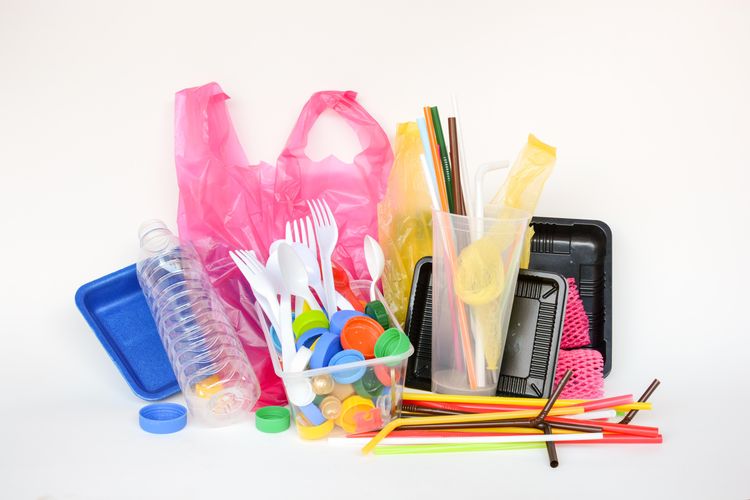
Explained: Packaging and extended producer responsibility
What is it? Extended producer responsibility (EPR) is an initiative that encourages manufacturers to consider a product’s entire life cycle, including end use, in its original design. This way the product can be designed to minimize its environmental impact. First introduced in Sweden in 1990, the policy shifts financial and operational responsibility for end-of-life management to the product manufacturer, who must pay for that product’s reuse, recycling or disposal. EPR programs involve government working with manufacturers, and vary according to the recycling and waste programs available, as well as set standards and performance agreements. While they can be industry-led and voluntary, governments may legislate programs when a waste stream is too costly for producers or recycling companies to voluntarily recover products. EPR programs can include consumer initiatives such as deposit returns, fees or other incentives, and voluntary initiatives like industry or company targets, and consumer education and awareness. Why you should care The Canada-wide Action Plan for Extended Producer Responsibility was introduced in 2009, and since then more provincial, territorial and municipal governments have moved towards EPR models. According to the Canadian Stewardship Services Alliance’s 2020 report Canada’s Extended Producer Responsibility Programs: An Overview , EPR is essential to creating a circular economy for waste. EPR programs vary across the country, from full producer responsibility in B.C. and Quebec, to producers paying 75 per cent of end-of-life management costs in Saskatchewan, 80 per cent in Manitoba and 50 per cent in Ontario (although Ontario recently announced a major expansion to its Blue Box recycling program, eventually making producers of products and packaging fully responsible for product life cycle by 2025). Next Steps The federal government offers a list of recycling programs for different consumer products, including beverage containers, plastic bags and packaging, as well as a list of programs by region. Industry associations such as PAC Global also offer resources and support for member companies working to design products with end of life planning in mind. Food innovation and new technology can have a major impact on product life cycle design. Do you have a ground-breaking concept needing funding? CFIN’s Food Innovation Challenge, Plastics Solutions for Food: Reduction, Replacement, and Recyclability, is looking for proposals! Click here for more information.
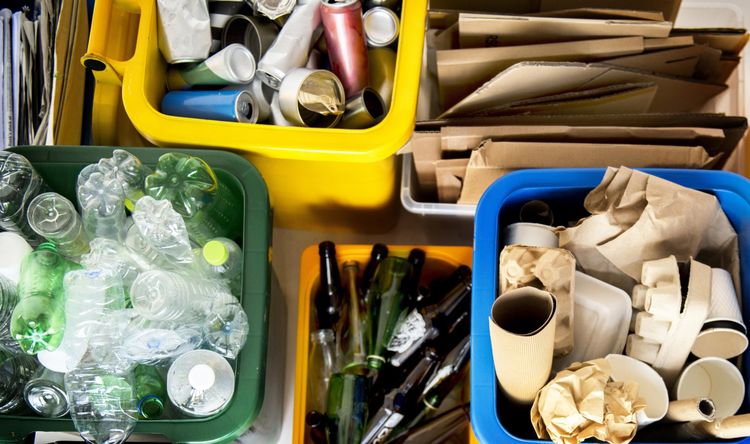
Guest Blog: Food packaging life cycle challenges
By Carol Zweep Over three million tonnes of plastic waste end up in Canada’s landfills each year. To address plastic waste nationwide, the Canadian Council of Ministers of the Environment (CCME) introduced t he Canada-Wide Strategy on Zero Plastic Waste in November 2018. This strategy, built on the Ocean Plastics Charter, takes a circular economy approach to plastics. This approach aims to keep plastic products and materials in use for as long as possible, closing the loop through reducing, reusing, repairing, remanufacturing, recycling, and composting materials, and by recovering energy at a material’s end of life. While this approach supports a circular versus linear flow, some challenges must still be mitigated throughout a food package’s life cycle. New packaging must meet municipalities’ infrastructure for recyclability and compostability, which varies from region to region across the country. Food and beverage companies must also consider how user-friendly and acceptable the new packaging is, as well as how adjusting the packaging materials or design will impact their product, especially when it comes to food contact safety, the taste or odour the material could impart, and the product shelf-life and package integrity during thermal processing, handling, transportation, and storage. Carol Zweep is manager of Consulting and Technical Services for NSF Canada. Contact her at czweep@nsf.org .
CIFST ALT Supplier Showcase Series - Dempsey Food
CFIN is partnering with the Canadian Institute of Food Science & Technology (CIFST) to present CIFST ALT on September 28, 2022 at the Delta Toronto Airport Hotel & Convention Centre. Companies participating in the show also have the opportunity to present a Supplier Showcase Session during the CIFST ALT Innovation Showcase. Here’s a preview of one of the companies and speakers you’ll see at the show. Belinda Elysée-Collen Vice president, Food Canada Dempsey Food Q: What solutions do your products or services offer food manufacturers? A: Dempsey is a full service functional food ingredient distributor. We partner with supplier manufacturers around the world to bring innovative ingredients to food manufacturers in Canada. Our products solve technical needs for our customers, such as controlling syneresis, improving flavour, texture and colour, extending shelf life, controlling pathogens, and adding nutrients such as protein and fibre, among others. As a distributor we can offer shorter lead times and lower MOQ for stocked products. For a full list of our functional food ingredients please connect with a Dempsey account manager who can assist you. Q: What makes your product or services unique and an alternative in the market? A: Our account managers are food scientists and product developers who can quickly understand the challenges our customers face, and help them find the best solution. We are supported by technical and regulatory experts both at Dempsey and at our suppliers. Q: How do you maintain innovation as a priority in your company? A: Our team members are empowered to network and connect with new manufacturers to find the next ingredients. For example, we partnered with Innodal to bring Inneo for listeria control to food manufacturers. Our account manager in Quebec identified Innodal and then followed them for four years until they were ready to sell to the Canadian market. Q: What are you most looking forward to about CIFST Alt? A: We’re looking forward to connecting with our customers in person after so many years of virtual events. Q: What’s your favourite alternative to either dairy, grain or traditional protein products? A: Even though I work in the processed food industry, I choose to cook with unprocessed products like lentils and chick peas as an alternative to meat in our recipes. My family also enjoys halloumi, paneer or tofu instead of chicken or beef. Ready to register for CIFST ALT? Click here to find out more. #CIFSTALT #FoodInnovation #tradeshow #ingredients