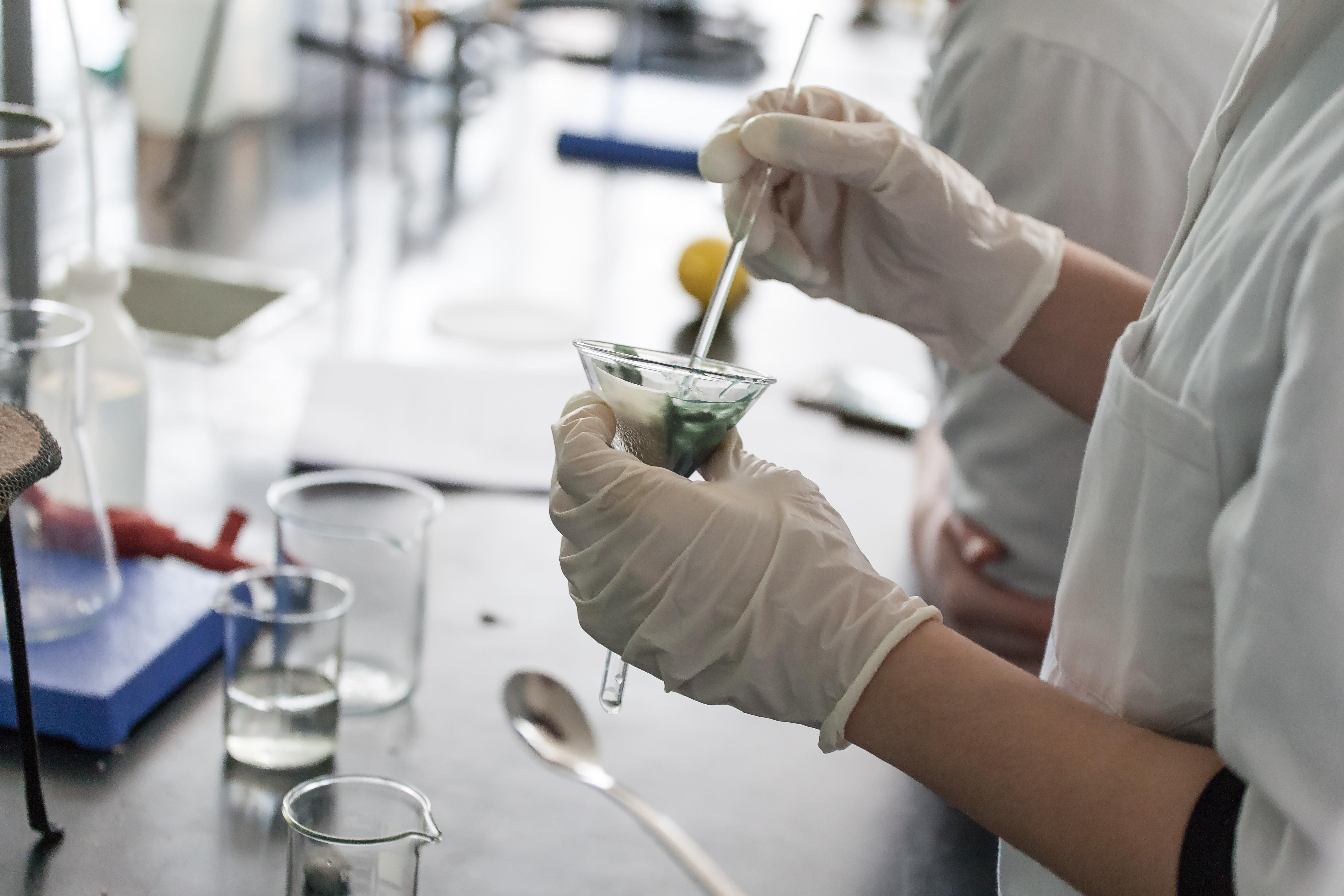
Food and beverage operators tell us that they have made eliminating plastic a priority in their businesses, and many are looking for unique innovations such as packaging produced from biowaste.
Participants
- Dr Zoraide Bentellis, Director, and Dr Mohamed Laakel, Senior Researcher, Bioplastics, Institute of Packaging Technology and Food Engineering (ITEGA)
- Simon Chretien, Director General, Alliance Polymères Québec (Vallée de la Plasturgie)
Q: Tell us about some of the best innovations you have seen on the market or in development?
Zoraide Bentellis & Mohamed Laakel: Several examples exist, and it is impossible to name them all. The following examples are therefore not exhaustive. For ITEGA, a bio-based food packaging solution is packaging that must have barrier and mechanical properties practically developed to measure by packaging manufacturers according to the needs of food companies using it. It may be antimicrobial, antioxidant, edible, intelligent, recyclable, industrially compostable and home compostable. Innovations can be named within each criterion. Here are a few examples: PLA is one of the most commercially promising bioplastics for replacing non-degradable polymers such as polyethylene terephthalate (PET) and polystyrene (PS). PLA has been the subject of considerable research over the past 20 years. Other polymers include cellulose, polyhydroxybutyrate (PHB) and polyhydroxyalkanoates (PHA). In addition, to produce a biomass-derived PET substitute, scientists have recently proposed the use of furan-2,5-dicarboxylic acid (FDCA). Plant-, sugar cane-, coconut-, hemp- and corn starch-based packaging is also replacing plastic packaging. These innovations are economical. A few examples of companies on the market: Oceanium (Our products - Oceanium) is a UK-based start-up that makes products from sustainably cultivated seaweed; the Bulgarian start-up Lam’On (LAM’ON - Biodegradable laminating film for printing (lam-on.com)) which produces 100% compostable and biodegradable laminating films and aluminium packaging. It produces a polylactic acid (PLA) packaging sheet, PACK’ON, derived from corn. The use of silver nanoparticles as antibacterial additives in the sheet, together with its oxygen-barrier properties, makes the solution suitable for food packaging; Origin Materials, Origin Materials - Carbon Negative Materials,USA, creates bio-based plastic bottles containing 80% renewable materials such as cardboard and sawdust. To date, half of its capital investments have come from major food companies such as Nestlé and Danone.
Simon Chretien : The development of polymer resins from agricultural residues and forestry co-products for manufacturing is very advanced. However, work is also needed to adapt manufacturing processes to shape these resins. A great deal of research and development is being carried out around the world on this subject, and there are many technological advances. Several viable products have reached the pre-commercialisation or commercialisation stage with manufacturers, such as coffee pods, reusable dishwasher-safe coffee cups, single-use tableware and even reusable tableware.
Q : How far are we from seeing some biowaste packaging solutions become mainstream?
Zoraide Bentellis & Mohamed Laakel: In Canada, Quebec and internationally, plastic-substitute material solutions include Evanesce. Based in Vancouver, Canada, Evanesce designs, develops and manufactures sustainable, single-use solutions that are certified compostable, commercially scalable and competitive, using the latest advances in materials science. The patented Evanesce Molded Starch technology is a complete replacement for expanded polystyrene (EPS) in packaging and was to become commercially available in 2023. The product is made from recycled plant-based by-products, is home compostable and breaks down in far less than 90 days. Kruger’s FiloCell: Kruger Biomaterials has been working on the development and commercialisation of FiloCell™, its trademark for cellulose filaments, since 2013. It has the world’s first CF demonstration plant, with a five-tonne-per-day production line, where it is successfully conducting trials that have the potential to revolutionise the manufacturing processes of many products BE UP Biotechnologies Inc. is a company created to commercialise biopolymers developed in Quebec and produced using innovative, environmentally friendly processes. The biopolymers proposed are fully biodegradable and produced from renewable raw materials. These biopolymers are part of a large family of 100% natural compounds: PHA (polyhydroxyalkanoates). With properties equivalent to conventional plastics, mainly petroleum-based, PHAs offer an alternative to their use. BOSK Bioproduits is a Quebec company. Bosk’s project is a radical innovation in that it offers a fully compostable bioplastic at a competitive cost. Unlike other PHAs available on the market, their PHA contains no GMOs, is non-toxic and is made from unused, renewable materials from paper-industry operations. ITEGA-CÉPROCQ bioplastics platform: located in Montreal, Quebec. As part of an NSERC mobilisation grant application, ITEGA and CÉPROCQ received a grant of $1,500,000 over five years for the “Development of the first integrated platform for compostable bioplastics”. The circularity initiative aims to: 1. produce monomers from agri-food by-products from biofood companies; 2. produce bioplastic; 3. develop active food packaging; and 4. validate durability and compostability. Rootree, located in Boucherville, Quebec, manufactures using renewable and bio-based materials to create a film structure in which each layer is certified home compostable.
Simon Chretien: As long as the recycling and sorting chain has not been adapted to separate petroleum-based packaging from bio-based packaging, and as long as a network of suitable composting sites for bio-based packaging has not been established, it will be difficult for this technology to be adopted on a large scale.
Q : What are the current challenges to commercialising these types of innovative packaging solutions?
Zoraide Bentellis & Mohamed Laakel: Meeting consumer expectations and current standards; optimising material performance to protect and preserve food products; the costs of sustainable packaging; the life cycle of the product and packaging, which is of crucial importance; and, indeed, developing infrastructure for end-of-life management.
Simon Chretien: Bio-based packaging cannot be properly separated from petroleum-based plastic packaging and therefore contaminates the current recycling and sorting chain. In addition, bio-based packaging is mainly compostable under industrial conditions and is difficult to compost under home-composting conditions. At present, the use of bio-based packaging products requires a closed use loop that makes it possible to recover the packaging and process it in a closed system. For example, compostable packaging used at a festival or in a cafeteria is collected directly on site and composted by the organisers or by a firm specifically mandated for that purpose. In addition, the mechanical properties of bio-based packaging are not sufficient for current needs. The infrastructure costs, such as reactors, required to manufacture the resins are also quite high, although still more accessible than those required to manufacture petroleum-based resins. Moreover, these bio-based resins offer greater potential for investors to establish manufacturing plants in Canada than petroleum-based resins do.
Q : What should food and beverage operators know about research and development into alternatives to plastic?
Zoraide Bentellis & Mohamed Laakel: To feed the world’s population, we will need 70% more food by 2050. It is estimated that one third of the food produced is lost or wasted each year. The impact of product losses from harvest through to consumer use has a far greater environmental impact than plastic packaging (60% versus 20%). As an independent applied research centre, we emphasise the following points: companies in the food and beverage sector, particularly large companies, must be proactive in eliminating unsustainable packaging, especially the use of virgin and non-recyclable plastic; the packaging-substitution strategy must incorporate an action plan to improve products along three connected axes, considered simultaneously and translated into actions: 1. integrate sustainable practices; 2. optimise existing products (product-process-packaging) to reduce losses, increase shelf life, reduce the environmental impact of packaging and promote this to consumers; and 3. develop an eco-design strategy for new products. Packaging manufacturers and suppliers will need to consider their customers’ needs by developing high-performance materials and packaging that respond to highly specific functions. Packaging functions are defined by the specific nature of the food, its manufacture and target shelf life, as well as environmental and health regulatory constraints. In turn, the functions of packaging dictate material choices. From this perspective, you are an integral part of the solution. Improving and maintaining competitiveness in relation to the European context requires strengthening applied research and development because fundamental solutions exist around the world; it is their application that presents technological challenges and requires specialised human, infrastructure and financial resources capable of linking industry with fundamental research. R&D into alternatives to plastic requires financial effort from all levels of government and also from private partners. This is essential.
Simon Chretien: It is the users, including food and beverage operators, who will partly determine the success of the implementation of these new technologies and new products by getting involved in their development, but also by requesting this type of product, while being prepared to pay slightly more for products that cost more to manufacture. Colloque Bois-Polymères 2022 Marché d’avenir, produits d’avenir: 9 November 2022, Laval, Quebec (cbp2022.com). This symposium will present the potential use of forestry co-products as a basis for developing high-performance polymer products, particularly for packaging. Alliance Polymères Québec is working with the Université de Sherbrooke to develop a research project to create flexible food packaging films from potato residues, to be carried out in collaboration with potato-producing companies and plastic-packaging manufacturers. Alliance Polymères Québec (APQ) can support companies in the food and beverage sector in developing high-performance polymer products from non-petroleum-based natural resources, including biowaste, in collaboration with polymer-product manufacturers. In addition, for companies located in Quebec, APQ may in certain cases contribute financially to a collaborative project for up to 50% of costs through a funding programme supported by Quebec’s Ministère de l’Économie et de l’Innovation. See also our support service offered under the name Le Moule.
Food innovation and new technology can have a major impact on product life cycle design. Do you have a ground-breaking concept needing funding? CFIN’s Food Innovation Challenge, Plastics Solutions for Food: Reduction, Replacement, and Recyclability, is looking for proposals! Click ici for more information.