

Articles & Reports
Featured

One Consumer, Dozens of Touchpoints, One Campaign
Every new touchpoint used to mean another campaign to build, budget, and measure. Brands pulling ahead in retail media reach consumers across all of them with one campaign and no extra workload.

Where Crunch Meets Clean Label: Sunflower Kernels for the Next Generation of Better-for-You Snacks
Canada’s healthy snacks market is experiencing strong growth. According to Grand View Research, the market generated $3,713.6 million (USD) in 2025 and is projected to reach $7,282.5 million (USD) by 2033, growing at a compound annual growth rate (CAGR) of 8.8% from 2026 to 2033.¹ The research also identifies Canada as the fastest-growing regional market in North America, highlighting significant opportunities for food manufacturers looking to innovate in the category. For food scientists and product developers, this growth presents a complex formulation challenge. Consumers increasingly seek snacks that deliver nutritional value, convenience and recognizable ingredients, without sacraficing the taste,texture and overall eating experience they expect. Success depends on balancing these priorities to create better-for-you products that satisfy both nutritional goals and consumer expectations. Why Texture Matters in Snack Innovation Texture is a powerful influence on how consumers experience food, shaping everything from first impressions to repeat purchases. Puratos’s Taste Tomorrow research found that nearly half of consumers prioritize texture over ingredients when purchasing food, while 68% of millennials say texture directly influences their choices.² Ingredion research further indicates that 70% of global consumers would switch to a different product or brand if they were dissatisfied with its texture.³ For snack food manufacturers, these findings underscore the importance of getting texture right from the outset. Crunch, crispness and contrast can help distinguish a product in a competitive market, while combinations of complementary textures can create a more engaging and premium eating experience. Innova Market Insights’ Global Texture Trends 2026 report highlights the appeal of combining textures such as creamy, crunchy, and soft. Its research also revealed that one in four consumers globally is interested in trying snacks in formats that are new to them.⁴ Together, these insights point to opportunities for food manufacturers to explore fresh ingredient combinations and textural experiences that make better-for-you snacks stand out. Where Sunflower Kernels Fit In U.S.-grown sunflower kernels give food manufacturers a practical way to build that contrast. Their mild flavour and satisfying crunch add dimension to both sweet and savoury product innovations without overpowering other ingredients. They also bring plant-based protein, fibre and healthy fats, along with vitamin E, zinc, folate, iron and magnesium, so the texture upgrade comes with a nutritional one. Available raw, roasted and ready-to-eat, sunflower kernels can be used across a wide range of applications, including: • Better-for-you snack bars • Granola and trail mixes • Crackers and savoury snacks • Bakery products and breakfast cereals • Plant-based snacks and bites Clean Label and Allergen-Friendly by Design Consumers worldwide are increasingly prioritizing clean-label products made with recognizable ingredients and greater transparency. Innova Market Insights reports that more than two in three consumers globally say they are at least somewhat influenced by clean ingredient decks, and that nearly one in three new products now carries some type of clean label claim.⁵ Innova also notes that non-GMO claims are most established in North America.⁵ Sunflower kernels are naturally non-GMO and sustainably grown, which supports the transparency and recognizable-ingredient positioning shoppers respond to. They are also an allergen-friendly alternative to tree nuts, delivering the crunch consumers expect from nuts and seeds. Unlike tree nuts, sunflower kernels are not considered a priority allergen in Canada, making them a versatile option for manufacturers developing new products or reformulating existing ones. Turning Texture Trends into Product Opportunities As Canada's healthy snacks market continues to expand, food manufacturers have an opportunity to differentiate their products through thoughtful ingredient choices and more engaging eating experiences. Texture is an important part of that equation, influencing consumer appeal while creating opportunities to innovate across familiar snack formats. U.S.-grown sunflower kernels bring together satisfying crunch, plant-based nutrition and application versatility, making them a valuable ingredient to consider for the next generation of healthy snacks. From bars and granola to crackers and savoury mixes, they can help product developers create food innovations that balance texture, taste and nutritional value. Explore how U.S.-grown sunflower kernels can add texture, nutrition and versatility to your next snack innovation. Connect with a supplier today > {link to lead to the NSA Kernel suppliers page} References: 1. Grand View Research, Canada Healthy Snacks Market Size & Outlook, 2026–2033. https://www.grandviewresearch.com/horizon/outlook/healthy-snacks-market/canada 2. Puratos, “Why texture is important in food,” February 19, 2025. https://www.puratos.com/blog/why-texture-is-important-in-food 3. Ingredion research, as reported in “New approaches to texture innovation,” Food Business News, May 7, 2026. https://www.foodbusinessnews.net/articles/30275-new-approaches-to-texture-innovation

Inside SIAL Canada 2026: Driving Food Innovation Through Connection and Collaboration
CFIN had the honour of taking a bite out of SIAL Canada 2026 in Montréal 🍎—connecting with partners, members, and industry leaders shaping the future of food innovation across Canada and beyond. Representing CFIN on site were CEO @Dana McCauley and @Julie Daigle , Regional Innovation Director (Quebec), who engaged with the ecosystem throughout the event. Their presence reflected CFIN’s ongoing commitment to strengthening Canada’s food innovation ecosystem and supporting high-potential foodtech ventures. Attendees could also catch Julie as a Foodtech Focus expert at the SIAL Canada Expert Hub, where she connected directly with innovators and shared insights with the community. Dana also took the stage as part of the Dairy Talks program, contributing to a forward-looking discussion on innovation as a driver of market leadership in the Canadian dairy sector. Her session explored the shift from incremental product development toward a broader innovation mindset—highlighting next-generation ingredients, value-added dairy formats, new go-to-market strategies, and the role of Industry 4.0 technologies like AI, robotics, automation, and digital supply chains in strengthening productivity and global competitiveness. A key highlight of the week was CFIN’s involvement in the 7th edition of the Startup Pitch Competition, held on April 30 on the Food & Bev Connect stage. Julie Daigle participated as the President of the Foodtech jury, joining a panel of industry experts evaluating promising entrepreneurs from the Startup Village. Beyond the competition, the Startup Pitch stage served as a strategic platform connecting entrepreneurs with buyers, investors, and key decision-makers across the agri-food ecosystem. A standout moment for the CFIN community was the recognition of Maia Farms, a CFIN member and funding recipient, which earned the Gold Prize in the foodtec h competition 🍄🏆 CFIN’s presence at SIAL Canada underscored the momentum of Canada’s food innovation sector and the value of convening the ecosystem to accelerate ideas from concept to commercialization. 📖 Explore more from SIAL Canada 2026 R elive the stories, innovations, and key moments captured throughout the show in the official SIAL Canada Daily: SIAL Canada Daily – 2026 Edition (Photos Courtesy of SIAL)

Five Years of CFIN: A Letter to the Network
Thirty years ago, I worked as a chef in the kitchen of one of Canada’s top restaurants standing should er to shoulder with people who ca red about the sensory experience of food above all else . Our tech stack was al most all analog and , to be honest, we didn’t give our ordering system or the way we did inventory a lot of thought. My career broadened over time , and I ’ ve also held roles where I developed recipes at Canadian Living and wrote about food trends; built innovation strategies and products for national brands, founded a business incubator, and ran a venture creation office at a prestigious Canadian u niversity . Food was always the thread , and technology was always present but in most of the food focused businesses I’ve worked for, it was taken for granted, and creativity and hard work were what drove the businesses forward. While smart people with great ideas are essential to food business success, it’s not enough to be competitive in today’s world. Old ways of running restaurants, innovation labs and food and beverage processi ng businesses can’t compete internationally or absorb the trade shocks that have become commonpla ce in recent history. That’s why I feel l ik e CFIN is the perfect place for me to be today and why we’re adding dozens of new members per week. When CFIN was created in 2021, the mandate was intentionally broad : cata lyze Canadian food innovation with funding , build community, connect an ecosystem that had been operating in silos for decades. The funding programs took shape quickly. Since 2022, we’ve awar ded $23.3 million to 133 projects across six program s. For every $1 CFIN invested, our members committed $7.65 of their own capital toward innovation. This leverage ratio of nearly 8-to-1 has unlocked over $140 m illion in private sector spending on R&D and capital infrastructure. The other work was harder to define . What do "build community" and "connect an ecosystem" mean in practice for a sector span ning startups, processors, researchers, investors, policymakers, and operators spread across this vast country ? Th at question didn't have a tidy answer. As a result , fostering and serving this network was (and remains ) an exercise in innovation itself : something new to be built , and then tested, adjusted, and iterated upon , ad infinitum . I’m immensely proud of what we’ve built so far . A team of Regional Innovation Directors who've supported more than 2,200 organizations, brokering the introductions that became commercial partnerships, strategic investments, leadership hires, and research collaborations. A digital platform , YODL, connecting Canada's food sector across industry silos and bridging interprovincial barriers . The first comprehensive analysis of Canadian foodtech . A network of 8,500 members from every province, every part of the food value chain, every stage of business . On any given week, our community is discussing topics ranging from precision fermentation bioreactor designs and funding stacks to food packaging labeling regulations and export strategies, all in the same space. Members benefit from purpose-built tools and resources — like our Funding Finder that aggregates food and beverage funding opportunities across the country and a growing library of original sector research and analysis — alongside direct access to our Regional Innovation Directors. Canada has strong regional funders, accelerators, trade associations, and tech transfer offices, each doing necessary work in a defined lane. What this sector didn't have was a place where the conversation s , the tools, and the connections all showed up at once — where the range of problems and the range of capabilities were dense enough that the right solutions could emerge . That's what CFIN has built. That foundation is important because the next five years will be even more dynamic, and often more challenging, than the last five . To keep pace and flourish in an increasingly volatile world, Canada's food sector needs to modernize faster and more strategic ally than ever before . Trade disruption is dramaticall y reshaping supply chains . L abour constraints are compounding a productivity gap that was widening long before tariffs became front-page news. Climate pressures are intensifying. Food 4.0 — a tech-enabled food s ector that's more collaborative, productive, resilient, and competitive — is the framework CFIN is building toward, and the case for it gets more urgent by the quarter. I ’m confident that we’re up to the task . Five years ago, Canada's food innovation ecosystem was fragmented, underleveraged, and often invisible to the investors, operators, policymakers, and media who needed to see it. That's no longer true. The capacity to respond to the challenges ahead is here. Not in any single program or policy, but in the breadth of this network — the founders , processors , researchers , and investo rs who are hungry to innovate and build a better Canadian food sector . My own wide-ranging path through the food sector taught me that no single role ever showed me the full picture. It took working across kitchens, labs, newsrooms, boardrooms, and startups to understand how innovation really moves through this industry — and where it get s stuck. CFIN was built on the same insight. A sector this complex, facing challenges this urgent, needs more than funding or advice or connections in isolation. It needs all of them in the same room. That's what we've spent five years building, and I'm betting the next five will prove its value at a scale none of us can yet imagine. Thank you for being part of it. Dana McCauley, CEO, Canadian Food Innovation Network

How BC is Becoming a National Foodtech Hub
Editor's Note: This article was o riginally published in the Vancouver Tech Journal on March 13, 2026 The province has a diverse food processing industry, world-class research facilities, and a deep bench of tech talent — everything a foodtech ecosystem needs to thrive. Foodtech builds the software, automation, and applied science for how food gets processed, manufactured, packaged, distributed, and sold. The industry behind it is enormous — food and beverage processing alone is Canada's largest manufacturing sub-sector , bigger than automotive, bigger than aerospace. It's a serious market, and in British Columbia, it's growing fast. But if you work in the province's broader tech ecosystem, you might not even know that. Foodtech hasn't traditionally drawn the same attention as sectors like cleantech or enterprise SaaS despite being a comparable market in scale and complexity — and one where demand for new technology is accelerating fast. What BC brings to the table BC's food processing sector is substantial — over 3,200 companies producing roughly $12.6 billion in value-added products annually. And it's being treated as a strategic priority. The province has funded a network of shared food processing hubs, UBC just opened a Food and Beverage Innovation Centre with pilot-scale production labs that processors and startups previously had to leave BC to access, and SFU's BC Centre for Agritech Innovation is partnering directly with SMEs on cost-shared R&D. At the same time, much of what the food industry needs is already being built in BC for other thriving tech sectors. Process automation, energy management, supply chain software, safety and traceability systems, data-driven quality control — these are cleantech and software problems applied to production floors and distribution networks. The talent, research base, and trade infrastructure to support a serious foodtech cluster are all here. A different kind of tech sector Foodtech doesn't work like enterprise SaaS or consumer tech. Processors and manufacturers adopt slowly and carefully, because failure is expensive in ways that go beyond lost revenue — a food safety issue, a botched line integration, a regulatory problem. Sales cycles run in quarters. The investor community that understands food is small and specialized. And the industry's own networks run through trade associations, existing supply relationships, and sector-specific events that sit well outside the broader tech community's orbit. None of this means foodtech is closed off. It means that if you want in — as a founder, investor, developer, or potential partner — you need a way to access the conversations, the deal flow, and the operating knowledge that don't surface through the usual channels. The Canadian Food Innovation Network The Canadian Food Innovation Network is a national not-for-profit, established in 2021 that functions as the operating infrastructure for Canada's foodtech sector. CFIN runs cost-shared funding programs that help companies de-risk R&D and move technology into commercial settings. Since launch , the organization has awarded over $22 million to 122 Canadian foodtech projects, matched by $25 million in industry co-investment. Those funded companies have generated $90 million in economic impact, created over 355 jobs and co-op placements, and attracted more than $82 million in follow-on investment. The network's 8,000-plus members include food processors, technology companies, ingredient suppliers, retailers, researchers, and investors — connected through YODL, CFIN's member platform, and supported by Regional Innovation Directors embedded across the country, who work directly with members to broker introductions, navigate funding, and connect emerging technology with the processors and buyers who need it. CFIN also produces the sector's most detailed intelligence . The Foodtech in Canada 2025 Ecosystem Report mapped investment flows, identified sector strengths, and gave both companies and investors a clearer picture of where the Canadian foodtech market stands. And then there's Foodtech Frontier , CFIN's annual program identifying the country's highest-potential foodtech companies. The inaugural cohort of 35 winners included eight BC companies. For investors, it works as curated, vetted deal flow in a sector where sourcing is otherwise hard. For the companies, it's structured national visibility. Plug into Canada’s foodtech ecosystem If you work in technology or investment and you've been curious about the food sector, then signing up for a free CFIN membership is the best place to start. Members get access to funding programs, sector intelligence, a national innovation community, and regional team members that know the BC landscape specifically.
Other Articles

Challenges to Canada’s supply chain and digital solutions
The last few years have revealed just how vulnerable the Canadian food supply chain is to disruption, and the resulting challenge it creates for our food companies. The effects of extreme weather events, the COVID-19 pandemic and the war in Ukraine are impacting supply chains around the world. For example, the pandemic restricted the movement of workers and created changes in demand for consumers, while temporarily shuttering food production plants and restricting food trade policies are putting added financial pressures on the food supply chain. And Russia’s war on Ukraine has forced nations to push additional grain, corn and fertilizer supplies into world markets to make up for supply disruptions. In Canada those factors have highlighted weaknesses in our national, provincial and regional supply chains, leading to production interruptions, facility closures, labour shortages, and rising input costs. At the same time, economic recovery hasn’t been the same across food sectors. Restaurants and foodservice operations, which saw the most closures during pandemic, and which have suffered from consumer trends towards at home dining, have experienced significant supply chain shortages and price increases of ingredients such as chicken and corn. In fact, a recent National Restaurant Association survey revealed that 95 per cent of U.S. restaurants had experienced considerable supply delays or shortages in recent months. Meanwhile, the rise of omni-channel sales has pushed fulfillment capabilities to the maximum at all points throughout the supply chain. Digital solutions for supply chain resilience Supply Chain 4.0 solutions as they relate to food businesses, include: Digitizing and automating key elements of operations Applying Internet of Things (IoT) and Industrial Internet of Things (IIoT) technology Applying technology with artificial intelligence (AI), machine learning and robotics Using blockchain and data analytics to supply chain management to improve efficiency, traceability, performance and customer satisfaction. While the move to digitization and Supply Chain 4.0 solutions has been slower in the food industry than in other sectors, it has the capacity to strengthen our food supply chains and make them more resilient against ongoing and future challenges. With new tools to address the increasing volatility in customer requirements and supply availability, while addressing overall efficiency improvement expectations and food safety needs, Canadian food companies will be able to move products faster, with more flexibility, granularity, accuracy and ultimately with less risk of disruptions. CFIN is leading the call for research, development and demonstration of digital and digitized solutions for Canada’s food supply chain with the introduction of a Food Innovation Challenge called Digitization and digitalization solutions that create safer, more secure, more agile food supply chains. Program priorities include: data capture and management; predictive analytics and demand planning; automation of the physical flow of goods; digital order management; driving improved capacity utilization in food processing; and food safety and traceability throughout the supply chain. Look for more information on digital and automated supply chain solutions over the next few weeks, including articles on 5G and blockchain. If you have a digital solution to make supply chains safer and more agile, apply for our Food Innovation Challenge . Applications are due July 7th.
Guest Post: Events in Ukraine impact global supply chains
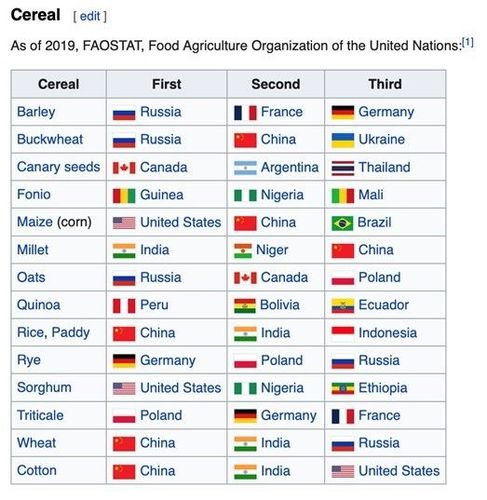
This article originally appeared on the SKU Food website . By @Peter Chapman Whether we like it or not our food industry is global and events around the world impact what happens here at home. The unprovoked attack on Ukraine has had impacts on the supply and cost of food around the world. The global supply chain we operate in really has evolved in recent years to adapt and work hard to feed a growing population. Google can provide definitions, but it does not always help you understand the importance of the term or perhaps even a specific meaning in our industry. We are going to share some food and beverage industry terms and explain how they can benefit or impact your business. Global supply chain is the complicated international production, processing and delivery of food, from farm to table. The food industry does operate on supply and demand. Food is essential to life and it has become a massive machine, with so many interlocking links. In the end, it is driven by consumer demand and producer and processor ability to supply. There are so many complexities that an event such as the invasion of Ukraine impacts the supply of basic commodities and the cost of energy. Both will likely be in shorter supply, which will drive costs up. West meets east We have all seen the chilling images coming from Ukraine. It is also scary to see the allies in the west line up against Russia and their allies. We do have a sophisticated supply chain for food, that has been tested in the last two years with the pandemic. Now it’s being tested again as many countries of the world unite in their opposition to Russia. When you think about food the truth is Russia and China produce vast amounts of food, much more than many of the western allies. Two other countries that have not lined up with the western allies are India and Brazil. They also produce huge quantities of food. The majority of this food from China and India is used to feed their own populations, but it is all part of the global supply chain. We know all food has it’s origin in primary agriculture, with the exception of some new lab produced items. It is enlightening to explore where primary agriculture happens around the world. Obviously, climate, arable land, labour and technology impact the amount of food that can be produced. Even if processing is done in North America, many of the raw materials can be or are being produced elsewhere. Diet also has a huge impact on the global supply chain. Demand for certain items is much higher in some areas. One of the complexities of the global supply chain is when products produced in other parts of the world are ingredients. If supply is short or costs increase significantly it can impact production of many processed items. According to the Food and Agriculture Organization of the United Nations, the following nations produced the largest quantities of food in each category. These charts do not provide amounts so they do not illustrate the proportion from each country. Although our population in Canada is small, compared to some other countries it is surprising how few times we see Canada in the top food producing countries, given the land mass we have. Cereals include the top three producers and in 14 categories Canada is only there for canary seeds and oats. The top three wheat producing countries are China, India and Russia. In the 27 vegetable categories, which include the top five producers, Canada only appears twice. We lead the world in the production of lentils and rapeseed. In the 27 fruit categories Canada only appears once with blueberries. When you review the vegetables and fruit categories China leads in 13 vegetable categories and nine fruit categories. India is in the top two in 14 vegetable categories and only five fruit categories. Animal protein is another primary agriculture to consider when understanding the global supply chain for food. Again, Canada is not within the top five for any categories. Brazil has made significant investments in these items and they export considerable quantities. China are one of the top three in every category except turkeys. Not surprisingly Canada does not appear in the drinks category either. Coffee and tea are dominated by southern hemisphere countries. Dairy is interesting given the different diets in different countries. In Canada we might be looking for some of these items but probably not too much of the camel milk. I can honestly say I have not tried it so perhaps I should reserve judgement until I do! As you can see the supply of food is global and we do rely on different parts of the world for a lot of the food we consume. If the invasion of Ukraine separates the world into two sides, it will have significant impacts on our global supply chain. One of the tactics employed by the west is to impose economic sanctions. In many cases this means we do not purchase products from Russia and allies. Given the source of food in the world we will have to make some changes to what we eat and how we process food. It is true our global supply chain is already somewhat aligned with our allies, but some items will not be available and costs will increase on others. If you are interested in global food production, I have a website for you. In 2019 I had the opportunity to speak at the CRAAQ conference in Drummondville, QC. George Steinmetz also spoke at the conference. He is a photojournalist from the U.S. He was tasked by National Geographic to explore how the world will feed itself. His images of food production around the world were fascinating. The images are beautiful and so interesting to see how things are done in different places and the scale at which they are doing them. What does this mean for suppliers in Canada? It is ironic to talk about the impact of a global supply chain when I would also tell you food produced in Canada is more popular than ever. The fact is many Canadian products include ingredients from all over the world. Just when the pandemic is easing up, food producers now have to be concerned if any of their ingredients or other inputs such as packaging or even fertilizer are at risk. Russia supplies huge amounts of natural gas used to make nitrogen fertilizer. With the economic sanctions in place, we have already seen energy costs rising and it is staggering when you understand the amount of agriculture inputs that come from eastern Europe. Your cost of inputs could increase (again) and supply could be a challenge. Time to review with your suppliers (again) that they will have what you need it, when you will need it and how much it will cost. Keep your customers informed of any challenges you see on the horizon. Consider shifting the sourcing of inputs, if possible, to countries more aligned with the view in the west. To date China seems to be quietly supporting Russia but wanting to do business with the west. Obviously if this changes, it would have a huge impact. Food security will be in the news and remember to tell your own story. If your products are produced in Canada consumers want to know about it more than ever. Remember this causes great upheaval for your customers too. Retailers are sourcing products from all over the world and this will cause them more work. It is not easy bringing fresh produce from all over the world. I remember someone at Loblaw wiring money in advance for a container of cherries from across the world. The money went but the cherries never came. Global sourcing is not for the faint of heart! We can all hope for a change and peace in the region and a chance for our global supply chain to breathe and recover from the pandemic. #supplychain #war #technology

Shop to the future!
Grocers are blending convenience with smart technology to create a more seamless instore shopping experience that will keep customers coming back. When Amazon Fresh -- Amazon’s first bricks and mortar grocery store and an evolution of its Amazon Go cashierless convenience stores -- opened in 2020, it offered the leading edge in grocery retailing technology in North America. Designed to blend the online and instore shopping experience, the store creates a seamless and convenient experience for consumers that retailers hope will entice them back to in-person shopping. With Amazon Fresh, shopping starts at home as consumers use the Amazon app to create grocery lists categorized by department and continues in the store when consumers connect to Alexa kiosks to help them locate items, search food facts and access recipes suggestions. Amazon’s Dash Cart uses cameras, sensors and a scale to know what items are placed in it and automatically bills their Amazon account when shoppers exit through the Dash Cart Lane. Amazon Fresh stores lets you scan a QR code to use their Dash Cart smart cart to automatically pay for your items as you exit the store in a cashierless transaction. Although not all consumers are ready to embrace this sort of smart technology experience, acceptance grew significantly during the pandemic, as even tech-wary shoppers turned to online ordering, delivery and cashless payments. Canadians now expect larger grocers to offer options such as self-checkout, contactless payment, and automated delivery and pickups to make their experience more convenient. Aisle 24 is Canada’s first cashierless grocery and convenience store. The chain’s locations in Montreal and Toronto are open 24/7 to members who have already downloaded an app and created an account with the company. Members then scan and pay for their items at a self-checkout. Other in-store technology being testing in Canada include Instacart’s Caper AI powered shopping cart with its own checkout technology, and electronic shelf labels that not only allow operators to make faster price adjustments, but also add value to the instore experience by offering consumers nutritional or promotional information. Around the world, grocery retailers are exploring a wide range of creative technology that adds value to the instore experience. The COOP Supermarket in Milan, Italy was unveiled at Expo Milano in 2015 as the “supermarket of the future,” and features technology such as digital screen mirrors offering interactive displays on products, robots that sort and pack food, and Xbox Kinect technology that allows customers to point at products to learn more about them. In fall 2021, Carrefour opened its first cashierless convenience store in Paris, France , using machine-vision powered checkout technology to create a personal digital avatar for each customer entering the store. The Hema Supermarket in Shanghai, China is part of a chain of stores launched by internet retailer Alibaba that combine online and in-person shopping to create a seamless experience for customers. Consumers use an app to scan barcodes on products for information while shopping, order products that employees will then prepare and pack for delivery, and even choose and order fresh seafood to eat at the in-store restaurant. As similar concepts appear in the Canadian market, it will be interesting to see how Canadian shoppers react, food businesses adapt, and how the shopping experiences evolves.

The Tablesetter: June 27
Happy Monday CFIN members! Every Monday, we’ll give you a heads up on what will be appearing on YODL this week and around the food world. The YODL Menu: This week watch for articles on: Monday: The YODL Menu, Something to Celebrate, Food Facts. Monday: Shop to the Future: S mart technology is creating a more seamless instore shopping experience. Tuesday: Current challenges to Canada’s food supply chain, and digitization solutions for building resilience in the food system. Tuesday: Guest Post: How events in Ukraine impact global supply chains. Wednesday: 5G is coming to Canada – what will this mean for the food industry? Thursday: Blockchain technology has the potential to offer food businesses greater transparency, efficiency and productivity. Friday: Weekly News Roundup Something to celebrate June 27 marks National Ice Cream Cake day. The first ice cream cakes on record were the fruity frozen ice cream dessert bombes enjoyed during the Victorian era, created in a round mould and named for their resemblance to cannonballs. Biscuit or cake-lined bombes evolved into ice cream cakes, with the first recipes appearing in the 1870s. Food Facts According to a 2021 survey the most popular ice cream flavours are: Chocolate Vanilla Strawberry Butter Pecan Mint Chocolate Chip Other Cookies n’ Crème Chocolate chip cookie dough Rocky Road Coffee
New Pathways to the Pantry – Top Five Takeaways
Canadian consumers expect to access food conveniently, efficiently and safely. Thanks to the increase in online ordering, delivery and other cashless transactions they’re finding innovative options to meet their demands. And if one food business isn’t offering those options, they’ll quickly move to one that can. During the pandemic, Canadians increasingly turned to their smartphones to order groceries, meal kits, and food subscriptions , and the lines between restaurant and grocery store continued to blur. Consumers increasingly began segmenting their shopping lists into categories like online shopping, subscription deliveries, or a trip to the club store. Exploring these new ways consumers access food was the focus of CFIN’s first members-only experience, held virtually on March 17, 2022 . The one-hour session was moderated by Dana McCauley, CFIN’s Chief Experience Officer, in discussion with food entrepreneurs: Khalil Khamis, CEO of Crafty Ramen , a restaurant and meal kit subscription service with locations in Guelph and Kitchener, ON; Kris Linney, co-founder Toronto’s GoodGood, a café grocery chain retailing locally made products; and Matthieu Vincent, co-founder of Paris, France-based food tech consultant Digital Food Lab . Curious about what they had to say? Here are the top five takeaways from the session: 1. Post-pandemic, Canadians will continue to purchase food in a variety of ways The need for convenience isn’t going away, so demand for online ordering, meal kits and subscription services that offer a unique or new at-home experience will only increase. 2. Consumers don’t want to pay extra for online ordering and delivery That means operators will have to incorporate the costs of delivery services into their ecommerce modelling for now. Having a hybrid (in-person and online) model or diversified revenue channels can help offset costs. 3. Companies are investing in more creative and efficient ecommerce and delivery models Food startups are considering delivery models as part of their business plan, rather than as a loss leader. Existing businesses can reinvent their ecommerce offering through third-party providers such as Shopify, which also help offset consumer concerns about cybersecurity. 4. Companies can leverage technology to enhance the customer experience and connection Keeping in touch with customers through apps to offer personalized samples, and offering options like pre-ordering online, can drive repeat visits and visits during different parts of the day. 5. New technology is making the delivery process safer, more efficient and transparent Food safety can be a major barrier to delivery. Companies are overcoming this challenge by using third-party apps and tools like sensors to schedule delivery, track product movement, monitor temperature, and keep customers notified with links to tracking. Expect more innovations to emerge around food safety and delivery. Want to re-live the event? Check out the full-length recording on your YouTube page .

EXPLAINED: Machine Learning
What is it? Machine learning is defined by IBM as “a branch of artificial intelligence (AI) and computer science which focuses on the use of data and algorithms to imitate the way that humans learn, gradually improving its accuracy.” In other words, the system collects data and learns from it on its own by creating algorithms. The main goal of machine learning is to make learning easier and faster, while gaining accuracy in data analysis, with little or no human intervention. Why you should care There are numerous applications for machine learning. This technology has notably allowed the development of voice and image recognition systems, and has been used by social media to optimize user experience through customized advertising and news feeds. In the food industry, machine learning can be used to: Determine and track the changing taste preferences of different customers. Analyze inventories, transportation times, and raw material price fluctuations to adjust ingredient purchasing to ensure timely supply, better pricing and less waste. Optically sort ingredients according to their physical characteristics and freshness to determine their best use. For example, to determine if a potato should be made into french fries or chips. Identify factors that affect the performance of production equipment and predict maintenance needs before problems arise. Jointly analyze the food preferences, purchasing habits and consumption patterns of a restaurant or caterer’s customers to help build the menu and manage inventory. Help facilitate more efficient, cost-effective and time-efficient dispatching of drivers for food and meal delivery. Create unique recipes from available ingredients. Detect odours and other characteristics affecting food safety. Opportunities in Canada Most companies producing AI solutions are also developing machine learning technology. Here are a few examples of local and international companies specializing in this field. See our article on AI for more companies working in AI and machine learning. GastrographAI is a New York, NY-based company that has designed the first AI platform to interpret and predict flavour preferences for more than a billion unique consumer groups. Attabotics , a Calgary, AB-based company offering the world’s first 3D robotic supply chain system, specializes in supply chain automation and e-commerce optimization on a global scale. One of its Canadian partners, FoodX Technologies , offers a scalable end-to-end eGrocery Management Solution (eGMS) designed to meet the needs of large and small grocery retailers while providing profitable unit economics. Its mission includes enabling retailers to eliminate plastics, minimize food waste and reduce costs while creating a healthier food ecosystem. FGF Brands describes itself as a technology company that bakes. The company uses advanced robotics, integrated artificial intelligence and machine learning to custom engineer processes around each product to improve recipes, operational efficiency, and production capacity. Dana’ s Take: Adding connected and automated technology based on AI and machine learning can help food executives to overcome challenges such as l abour shortages, supply chain disruptions, higher input costs, and changing consumer expectations. As a marketer, this consumer insight is very exciting; it will make positioning and targeted selling more accurate than ever before! Meanwhile, the costs of implementing machine learning enabled systems such as robotics have fallen, while performance and consistency have increased dramatically. (For more insight on how robotics are changing food operations, see Robotics in Action – Top Five Takeaways.) If you have a digital solution to make supply chains safer and more agile, apply for our Food Innovation Challenge . Applications are due July 7th.

EXPLAINED: Artificial Intelligence (AI)
What is it? Machines and systems that are programmed with AI can simulate human intelligence , can acquire and apply knowledge in order to perform tasks, solve complex problems, and improve performance. Machine learning is a subset of AI algorithms. Why you should care New food technologies and the introduction of AI programs in the computers that control production lines have the potential to change the way the food industry works, especially as businesses look for automated solutions to address issues such as supply chain traceability, production efficiency, food safety and quality control, and waste reduction. Some of the manufacturing technology included under the category Industry 4.0 relies on AI to process the data captured by Industrial Internet of Things (IIoT) devices, enterprise resource planning (ERP) systems, and connected remote access monitoring software. By using AI, businesses can collect and analyze data that enables them to generate business intelligence, giving them a competitive advantage. Most AI-driven functions are machine-to-machine transactions. AI-driven systems can add value and efficiency to many areas in food operations, including to: Automate tasks across different departments, such as accounting, IT, customer service and marketing. Streamline resource tracking throughout the supply chain and ensure compliance from vendors. Provide data for forecasting sales, resource demand and R&D on consumer trends. Automate production activities, including management work. Provide more effective quality and safety control in real time. Help create “smart” factories that run more efficiently with less downtime, using less energy and lower operating costs. Help drive greenhouse gas emission reduction targets. Help scale operations using predictive technology. Offer real-time monitoring of security systems. Provide technical support for employees and customers. Monitor and automate social media activity. Provide customized offers for consumers based on data analysis. Perform self-service analytics. Opportunities in Canada There are a range of companies offering AI-enabled software and equipment to Canadian food and beverage companies. Saint John, NB-based independent brewery Moosehead uses a conveyor belt at its bottling plant embedded with Internet-enabled sensors and data analytics software to monitor pasteurization, filling, labelling, capping and packaging, increasing capacity while lowering costs. Sobeys ’ fully automated Customer Fulfillment Centre, a $150-million, 500,000-sq.-ft. warehouse and distribution centre in Vaughan, ON, features AI-driven automated case picking and palletizing systems. The system can stack up to 10 per cent more products on each pallet, saving up to 40 per cent on labour costs. Fredericton, NB-based Eigen Innovations produces machine vision solutions powered by AI to help businesses automate their quality control system. Toronto, ON-based Canvass AI provides industrial AI software such as its Canvass Platform that can help food companies boost production efficiency and output, while reducing waste. If you have a digital solution to make supply chains safer and more agile, apply for our Food Innovation Challenge . Applications are due July 7th. Nestor ’s Take: AI, automation and robotics are already changing how food manufacturers and foodservice operators work. To see some of this technology in action, check out Burlington, ON-based Gastronomous Technologies Inc., a provider of automated solutions for foodservice. Gastronomous is one of five winners of CFIN’s recent Food Innovation Challenge for the development, in partnership with Recipe Unlimited and Sodexco Canada Ltd., of smart/connected kitchen equipment for food ingredient preparation, cold storage, and accurate automated portioning/dispensing of ingredients.

Meet YODL
Meet YODL, an exciting new interactive online platform designed to help Canadian food and beverage professionals from all sectors of the industry connect, learn, and grow their businesses. We created YODL as a place for entrepreneurs to discover cutting-edge technology and solutions, meet new business partners throughout the Canadian supply chain, and access government funding opportunities. On YODL you’ll find: Unique daily content Access to CFIN’s innovation challenges and members-only events Access to direct mentorship from CFIN’s five Regional Innovation Directors Opportunities to network and collaborate with other food and beverage professionals from across Canada Information on CFIN members, staff and board of directors Business resources, including original research and information on best business practices, consumer trends, R&D, training and much more

Q&A for Robotics in Action
Robotics in Action – Seeing is Believing generated lots of questions from CFIN Members who were eager to learn more about the innovative companies that were featured during the event. So, to help answer these questions, we thought we’d tap into the founders and executives at the companies to get the answers to your most pressing questions. Stefan Glibetic, lead engineer and CTO, Mycionics Inc. Q: Are there any processing effects of robots and scanning on mushrooms? A: Since the mushrooms are very fragile, one of the biggest challenges in the mushroom harvesting industry is picking mushrooms without damage. Our system was designed from the ground up with this in mind, hence why we developed custom soft gripping technology instead of using commonly seen end-effectors on the market. Our system is able to pick and process mushrooms with damage rates equal to skilled human harvesters. Additionally, our scanning technology is very low-powered, safe, and doesn’t affect the mushrooms. Q: How can this technology be commercialized in other fruit and vegetable picking environments? A: Our systems are highly modular, and structured in a way that can be easily applied to other crops and industries, especially those with tight space restrictions. Right now, we are focusing our efforts on mushrooms, but the same technology and principles can be applied to new applications in the future. Q: Are the mushroom robotics currently using AI? A: Yes, our machine vision system applies a combination of algorithms, including AI, to process the vision data in order to determine mushroom properties, and how to pick those mushrooms effectively and without damage. We also capture environmental microclimate data, such us temperature, humidity and CO 2 , which helps the farmer visualize their growing environment and grow higher-quality mushrooms. Q: With an increase in consistent delivery of mushrooms, will we see more umami products on shelves? A: Although it's no a current goal of ours, we do hope that through the use of our technology, the mushroom quality will increase over time as farmers will be able to focus more of their efforts on growing, rather than on harvesting logistics. Kristian Tazbazian, co-founder and COO Gastronomous Technologies Q: Which parts of Gastronomous robots use AI ? A: The AI side of food automation lies in software and the way that data is analyzed in order to improve both operational as well as user efficiency. Nipun Sharma, CEO, SJW Robotics Q: How do you monitor inventory levels/replenishments? A: The system has full traceability and product data recorded at the point of refill via bar scan. Along with temperature controls, volume/weight dispensing sensors and recipe metrics, we can accurately measure inventory levels and shelf-life to allow us to trigger timely refills. Q: How is nutritional quality maintained in these systems? A: The nutritional quality will be determined by selection of input ingredients, and our temperature controls will measure shelf-life pertaining to that ingredient. Q: How do you keep the machine clean? A: The machine has scheduled self-cleaning mechanism utilizing high pressure hot water and steam, and our equipment certification conforms to the highest food safety standards. Q: How adaptable is this technology? Can you switch out the wok for a cold application? A: Yes. The wok is the replacement module, and can be switched by a grill, deep fryer or conveyor oven for all hot food alternatives. While the hot area can be bypassed for all cold bowls such as salads and yogurt. The current version can do any variation of starches that include noodles, pasta and rice. Tharwat Fouad, founder and president, Anubis 3D Q: Can Anubis print EOAT for direct contact with food that is FDA approved? A: Yes, the Nylon 12 (PA2200) we use to build most of our EOAT is FDA approved for food contact. When we build tools for food contact, we do not stain them with any colour, we keep them at their original white colour. We also add a finishing process called vapour finish that closes the porosities and makes the tool easy to clean.

CFIN Announces Food Innovation Challenge Call for Proposals focused on Supply Chain Digitization
The last 36 months have demonstrated significant weaknesses in global, national, provincial, and regional supply chains. COVID-19 resulted in the movement restrictions of workers, changes in demand of consumers, closure of food production facilities, restricted food trade policies, and financial pressures in the food supply chain. Russia’s war on Ukraine has exposed vulnerabilities in global supply chains and pushed nations across the globe to push additional grain, corn, and fertilizer supplies into world markets to make up for the disruption of more than a quarter of the worlds grain trade. Restaurants reopening post COVID-19 closures also felt significant supply chain impacts, with increased food costs and shortages of main ingredients, such as chicken and corn. Supply lines are jammed, which has created pockets of scarcity and added costs that are eventually passed on to consumers. A recent National Restaurant Association survey revealed that 95% of restaurants in the US had experienced considerable supply delays or shortages in recent months, which is concerning. Rise of omni-channel sales has also pushed fulfillment capabilities to the maximum at all points throughout the supply chain. Channel mismatches as consumer buying trends shifted from restaurants to in-home eating. As a result of these challenges, CFIN is issuing their Spring 2022 Food Innovation Challenge Call with a theme of Digitization and digitalization solutions that create safer, more secure, and more agile food supply chains. Digitization and digitalization of the supply chain enables food sector resilience with new tools to address the increasing volatility in customer requirements and supply availability, while also addressing overall efficiency improvement expectations and food safety needs. With Supply Chain 4.0 solutions, Canadian firms can move products faster, with more flexibility, granularity, accuracy and ultimately with less risk of disruptions. Key Program Priorities: As a result of these challenges and the opportunities presented by Supply Chain 4.0 technologies, this CFIN-led call is dedicated to the research, development, and demonstration of digital and digitalized solutions for Canada’s food supply chain. Key program priorities include: Data capture and management Predictive analytics and demand planning Automation of the physical flow of goods Digital order management Driving improved capacity utilization in food processing Food safety and traceability throughout the supply chain All projects should: Address the food supply chain from farm-gate to consumer’s plate Result in cross-firm solutions Offer accessible solutions to small and medium sized enterprises All applicants must be CFIN members and submit their application online at: https://cfin-rcia.smartsimple.ca/ Call Timelines: Letter of intent application opens –June 1, 2022 Info Session – June 7, 12-1 EST Letters of intent due: July 8, 2022 Full proposals due: September 16, 2022 Projects start: November 1, 2022 Projects complete - no later than Mar 31, 2025 More Program Details are available here
Robotics in Action – Top Five Takeaways
The Canadian food industry is currently facing numerous challenges, from labour shortages and supply chain disruptions, to increasing input costs and changing consumer expectations. Many of these challenges are common to manufacturing, grocery and foodservice sectors, and can be addressed by automating processes so that they are faster, safer and more reliable. While the shift to automation has been slower in the food industry than in other industries, the use of automation, robotics and data analytics has the potential to transform Canada’s food and beverage industry. By investing in technology, the industry could become more agile, traceable and transparent, while growing capacity and ensuring our food supply chain remains strong, sustainable, and competitive in the world market. On May 12, 2022 CFIN presented its second members-only event, Robotics in Action: Seeing is Believing . The virtual event was sponsored by Farm Credit Canada and hosted by Jim Beretta, president of Customer Attraction, a marketing consultancy which focuses on robotics, automation and applications. Beretta spoke with several Canadian entrepreneurs whose companies are leading technological change in the food industry, and demonstrated cutting-edge automation solutions at Western University, Mycionics , Ghost Kitchen Brands and 168 Sushi , and robotic systems from SJW Robotics , Anubis 3D , Gastronomous Technologies , JMP Solutions , Armo Tool and Tiny Mile Robotics . Here are the top five takeaways from the session: 1. Automation and robots don’t reduce jobs Robots and automatic systems are designed to do the tasks that are dangerous, dirty or repetitive and are a solution to current labour shortages in the industry. While robots perform tasks such as picking and packing, employees are freed up to complete more value-added and skilled duties. Collaborative robotic systems are designed with added safeguards so that they work side-by-side with their human counterparts. 2. Automation is becoming more efficient and less costly In the last decade, costs of implementing automatic systems or robotics have fallen, while performance and consistency have increased dramatically. There are also many new advancements in gripping technology, resolving older robotic challenges such as distinguishing between different sized and shaped products or boxes. 3. Robotic systems can be integrated into existing operations Automation systems and robotics are now easier to integrate into food operations, and are often designed so that companies can add one piece of technology at a time to ensure success and worker comfort. Working together with technology companies, food businesses can integrate plug-and-play components or create unique, custom-designed system featuring different technology modified to fit their needs. 4. Automation can lead to lower energy and input costs, while boosting food safety and capacity Technology that provides food producers with real-time data analytics enables them to optimize the use of energy and raw materials, reduce food and energy waste, and achieve higher production capacities. Data analytics can also be used to predict preventative maintenance in the system and prevent drops in throughput. Many companies rely on robotics that target sanitary compliance to safely and reliably assemble foods such as protein and uncooked ready-to-eat meals for retail or healthcare, where safe food handling is crucial. 5. Automated foodservice offerings go far beyond vending Quick-service kiosks that offer a wide range of hot and cold food choices like salad, pizza and cooked noodles are appearing on campuses, in malls and in other public spaces. Far beyond vending machines, the kiosks offer made-to-order meals prepared while you watch in just minutes, with a variety of customizations and payment options available. With a low carbon footprint and minimal labour needs, the kiosks have the potential of replacing QSR units in some locations. If you have a digital solution to make supply chains safer and more agile, apply for our Food Innovation Challenge . Applications are due July 7th.

The Tablesetter: June 20, 2022
Happy Monday CFIN members! Every Monday, we’ll give you a heads up on what will be appearing on YODL this week and around the food world. The YODL Menu Monday: The Tablesetter Tuesday: Takeaways from CFIN’s second members-only virtual event, Robotics in Action: Seeing is Believing Wednesday: Artificial Intelligence (AI) and machine learning are changing the food industry Thursday: CFIN’s most recent Food Innovation Challenge, which focuses on creating safer, more secure food supply chains Friday: Weekly News Roundup Around the Food World PIC, NPC, Protein Highway, and Humane Society International Canada, has released Game Changers: Canadian Opportunities In Alternative Protein a report outlining how Canada is translating the challenges of the alternative protein industry into competitive growth opportunities. The Golden Pencil Award winners have been announced. Collision takes place Jun 20, 2022 09:00 (ET) to Jun 23, 2022 17:00 (ET). Something to Celebrate June 24 is the Seventh Annual National Food Truck Day , celebrating the more than 35,000 entrepreneurs who own and operate food trucks across Canada and the U.S. The food truck industry was estimated to be worth $1.16 billion as of 2021, and has grown at an average rate of 12.1 per cent since 2016. Consumers aged 25 to 44 account for 43 per cent of food truck spending, with those aged 18 to 34 more likely to frequent food trucks. Food Facts According to Zippia Research, the most profitable food truck menu items to serve are: Burgers Indian street food Stone baked pizza Loaded fries Grilled cheese Falafel Macaroni and Cheese