

Articles & Reports
Featured

One Consumer, Dozens of Touchpoints, One Campaign
Every new touchpoint used to mean another campaign to build, budget, and measure. Brands pulling ahead in retail media reach consumers across all of them with one campaign and no extra workload.

Where Crunch Meets Clean Label: Sunflower Kernels for the Next Generation of Better-for-You Snacks
Canada’s healthy snacks market is experiencing strong growth. According to Grand View Research, the market generated $3,713.6 million (USD) in 2025 and is projected to reach $7,282.5 million (USD) by 2033, growing at a compound annual growth rate (CAGR) of 8.8% from 2026 to 2033.¹ The research also identifies Canada as the fastest-growing regional market in North America, highlighting significant opportunities for food manufacturers looking to innovate in the category. For food scientists and product developers, this growth presents a complex formulation challenge. Consumers increasingly seek snacks that deliver nutritional value, convenience and recognizable ingredients, without sacraficing the taste,texture and overall eating experience they expect. Success depends on balancing these priorities to create better-for-you products that satisfy both nutritional goals and consumer expectations. Why Texture Matters in Snack Innovation Texture is a powerful influence on how consumers experience food, shaping everything from first impressions to repeat purchases. Puratos’s Taste Tomorrow research found that nearly half of consumers prioritize texture over ingredients when purchasing food, while 68% of millennials say texture directly influences their choices.² Ingredion research further indicates that 70% of global consumers would switch to a different product or brand if they were dissatisfied with its texture.³ For snack food manufacturers, these findings underscore the importance of getting texture right from the outset. Crunch, crispness and contrast can help distinguish a product in a competitive market, while combinations of complementary textures can create a more engaging and premium eating experience. Innova Market Insights’ Global Texture Trends 2026 report highlights the appeal of combining textures such as creamy, crunchy, and soft. Its research also revealed that one in four consumers globally is interested in trying snacks in formats that are new to them.⁴ Together, these insights point to opportunities for food manufacturers to explore fresh ingredient combinations and textural experiences that make better-for-you snacks stand out. Where Sunflower Kernels Fit In U.S.-grown sunflower kernels give food manufacturers a practical way to build that contrast. Their mild flavour and satisfying crunch add dimension to both sweet and savoury product innovations without overpowering other ingredients. They also bring plant-based protein, fibre and healthy fats, along with vitamin E, zinc, folate, iron and magnesium, so the texture upgrade comes with a nutritional one. Available raw, roasted and ready-to-eat, sunflower kernels can be used across a wide range of applications, including: • Better-for-you snack bars • Granola and trail mixes • Crackers and savoury snacks • Bakery products and breakfast cereals • Plant-based snacks and bites Clean Label and Allergen-Friendly by Design Consumers worldwide are increasingly prioritizing clean-label products made with recognizable ingredients and greater transparency. Innova Market Insights reports that more than two in three consumers globally say they are at least somewhat influenced by clean ingredient decks, and that nearly one in three new products now carries some type of clean label claim.⁵ Innova also notes that non-GMO claims are most established in North America.⁵ Sunflower kernels are naturally non-GMO and sustainably grown, which supports the transparency and recognizable-ingredient positioning shoppers respond to. They are also an allergen-friendly alternative to tree nuts, delivering the crunch consumers expect from nuts and seeds. Unlike tree nuts, sunflower kernels are not considered a priority allergen in Canada, making them a versatile option for manufacturers developing new products or reformulating existing ones. Turning Texture Trends into Product Opportunities As Canada's healthy snacks market continues to expand, food manufacturers have an opportunity to differentiate their products through thoughtful ingredient choices and more engaging eating experiences. Texture is an important part of that equation, influencing consumer appeal while creating opportunities to innovate across familiar snack formats. U.S.-grown sunflower kernels bring together satisfying crunch, plant-based nutrition and application versatility, making them a valuable ingredient to consider for the next generation of healthy snacks. From bars and granola to crackers and savoury mixes, they can help product developers create food innovations that balance texture, taste and nutritional value. Explore how U.S.-grown sunflower kernels can add texture, nutrition and versatility to your next snack innovation. Connect with a supplier today > {link to lead to the NSA Kernel suppliers page} References: 1. Grand View Research, Canada Healthy Snacks Market Size & Outlook, 2026–2033. https://www.grandviewresearch.com/horizon/outlook/healthy-snacks-market/canada 2. Puratos, “Why texture is important in food,” February 19, 2025. https://www.puratos.com/blog/why-texture-is-important-in-food 3. Ingredion research, as reported in “New approaches to texture innovation,” Food Business News, May 7, 2026. https://www.foodbusinessnews.net/articles/30275-new-approaches-to-texture-innovation

Inside SIAL Canada 2026: Driving Food Innovation Through Connection and Collaboration
CFIN had the honour of taking a bite out of SIAL Canada 2026 in Montréal 🍎—connecting with partners, members, and industry leaders shaping the future of food innovation across Canada and beyond. Representing CFIN on site were CEO @Dana McCauley and @Julie Daigle , Regional Innovation Director (Quebec), who engaged with the ecosystem throughout the event. Their presence reflected CFIN’s ongoing commitment to strengthening Canada’s food innovation ecosystem and supporting high-potential foodtech ventures. Attendees could also catch Julie as a Foodtech Focus expert at the SIAL Canada Expert Hub, where she connected directly with innovators and shared insights with the community. Dana also took the stage as part of the Dairy Talks program, contributing to a forward-looking discussion on innovation as a driver of market leadership in the Canadian dairy sector. Her session explored the shift from incremental product development toward a broader innovation mindset—highlighting next-generation ingredients, value-added dairy formats, new go-to-market strategies, and the role of Industry 4.0 technologies like AI, robotics, automation, and digital supply chains in strengthening productivity and global competitiveness. A key highlight of the week was CFIN’s involvement in the 7th edition of the Startup Pitch Competition, held on April 30 on the Food & Bev Connect stage. Julie Daigle participated as the President of the Foodtech jury, joining a panel of industry experts evaluating promising entrepreneurs from the Startup Village. Beyond the competition, the Startup Pitch stage served as a strategic platform connecting entrepreneurs with buyers, investors, and key decision-makers across the agri-food ecosystem. A standout moment for the CFIN community was the recognition of Maia Farms, a CFIN member and funding recipient, which earned the Gold Prize in the foodtec h competition 🍄🏆 CFIN’s presence at SIAL Canada underscored the momentum of Canada’s food innovation sector and the value of convening the ecosystem to accelerate ideas from concept to commercialization. 📖 Explore more from SIAL Canada 2026 R elive the stories, innovations, and key moments captured throughout the show in the official SIAL Canada Daily: SIAL Canada Daily – 2026 Edition (Photos Courtesy of SIAL)
Five Years of CFIN: A Letter to the Network
Thirty years ago, I worked as a chef in the kitchen of one of Canada’s top restaurants standing should er to shoulder with people who ca red about the sensory experience of food above all else . Our tech stack was al most all analog and , to be honest, we didn’t give our ordering system or the way we did inventory a lot of thought. My career broadened over time , and I ’ ve also held roles where I developed recipes at Canadian Living and wrote about food trends; built innovation strategies and products for national brands, founded a business incubator, and ran a venture creation office at a prestigious Canadian u niversity . Food was always the thread , and technology was always present but in most of the food focused businesses I’ve worked for, it was taken for granted, and creativity and hard work were what drove the businesses forward. While smart people with great ideas are essential to food business success, it’s not enough to be competitive in today’s world. Old ways of running restaurants, innovation labs and food and beverage processi ng businesses can’t compete internationally or absorb the trade shocks that have become commonpla ce in recent history. That’s why I feel l ik e CFIN is the perfect place for me to be today and why we’re adding dozens of new members per week. When CFIN was created in 2021, the mandate was intentionally broad : cata lyze Canadian food innovation with funding , build community, connect an ecosystem that had been operating in silos for decades. The funding programs took shape quickly. Since 2022, we’ve awar ded $23.3 million to 133 projects across six program s. For every $1 CFIN invested, our members committed $7.65 of their own capital toward innovation. This leverage ratio of nearly 8-to-1 has unlocked over $140 m illion in private sector spending on R&D and capital infrastructure. The other work was harder to define . What do "build community" and "connect an ecosystem" mean in practice for a sector span ning startups, processors, researchers, investors, policymakers, and operators spread across this vast country ? Th at question didn't have a tidy answer. As a result , fostering and serving this network was (and remains ) an exercise in innovation itself : something new to be built , and then tested, adjusted, and iterated upon , ad infinitum . I’m immensely proud of what we’ve built so far . A team of Regional Innovation Directors who've supported more than 2,200 organizations, brokering the introductions that became commercial partnerships, strategic investments, leadership hires, and research collaborations. A digital platform , YODL, connecting Canada's food sector across industry silos and bridging interprovincial barriers . The first comprehensive analysis of Canadian foodtech . A network of 8,500 members from every province, every part of the food value chain, every stage of business . On any given week, our community is discussing topics ranging from precision fermentation bioreactor designs and funding stacks to food packaging labeling regulations and export strategies, all in the same space. Members benefit from purpose-built tools and resources — like our Funding Finder that aggregates food and beverage funding opportunities across the country and a growing library of original sector research and analysis — alongside direct access to our Regional Innovation Directors. Canada has strong regional funders, accelerators, trade associations, and tech transfer offices, each doing necessary work in a defined lane. What this sector didn't have was a place where the conversation s , the tools, and the connections all showed up at once — where the range of problems and the range of capabilities were dense enough that the right solutions could emerge . That's what CFIN has built. That foundation is important because the next five years will be even more dynamic, and often more challenging, than the last five . To keep pace and flourish in an increasingly volatile world, Canada's food sector needs to modernize faster and more strategic ally than ever before . Trade disruption is dramaticall y reshaping supply chains . L abour constraints are compounding a productivity gap that was widening long before tariffs became front-page news. Climate pressures are intensifying. Food 4.0 — a tech-enabled food s ector that's more collaborative, productive, resilient, and competitive — is the framework CFIN is building toward, and the case for it gets more urgent by the quarter. I ’m confident that we’re up to the task . Five years ago, Canada's food innovation ecosystem was fragmented, underleveraged, and often invisible to the investors, operators, policymakers, and media who needed to see it. That's no longer true. The capacity to respond to the challenges ahead is here. Not in any single program or policy, but in the breadth of this network — the founders , processors , researchers , and investo rs who are hungry to innovate and build a better Canadian food sector . My own wide-ranging path through the food sector taught me that no single role ever showed me the full picture. It took working across kitchens, labs, newsrooms, boardrooms, and startups to understand how innovation really moves through this industry — and where it get s stuck. CFIN was built on the same insight. A sector this complex, facing challenges this urgent, needs more than funding or advice or connections in isolation. It needs all of them in the same room. That's what we've spent five years building, and I'm betting the next five will prove its value at a scale none of us can yet imagine. Thank you for being part of it. Dana McCauley, CEO, Canadian Food Innovation Network
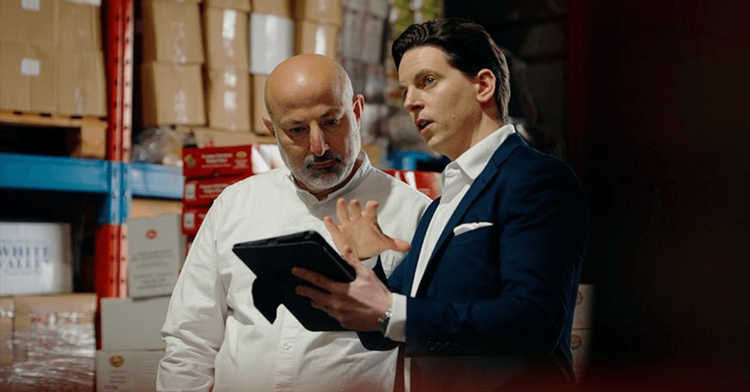
How BC is Becoming a National Foodtech Hub
Editor's Note: This article was o riginally published in the Vancouver Tech Journal on March 13, 2026 The province has a diverse food processing industry, world-class research facilities, and a deep bench of tech talent — everything a foodtech ecosystem needs to thrive. Foodtech builds the software, automation, and applied science for how food gets processed, manufactured, packaged, distributed, and sold. The industry behind it is enormous — food and beverage processing alone is Canada's largest manufacturing sub-sector , bigger than automotive, bigger than aerospace. It's a serious market, and in British Columbia, it's growing fast. But if you work in the province's broader tech ecosystem, you might not even know that. Foodtech hasn't traditionally drawn the same attention as sectors like cleantech or enterprise SaaS despite being a comparable market in scale and complexity — and one where demand for new technology is accelerating fast. What BC brings to the table BC's food processing sector is substantial — over 3,200 companies producing roughly $12.6 billion in value-added products annually. And it's being treated as a strategic priority. The province has funded a network of shared food processing hubs, UBC just opened a Food and Beverage Innovation Centre with pilot-scale production labs that processors and startups previously had to leave BC to access, and SFU's BC Centre for Agritech Innovation is partnering directly with SMEs on cost-shared R&D. At the same time, much of what the food industry needs is already being built in BC for other thriving tech sectors. Process automation, energy management, supply chain software, safety and traceability systems, data-driven quality control — these are cleantech and software problems applied to production floors and distribution networks. The talent, research base, and trade infrastructure to support a serious foodtech cluster are all here. A different kind of tech sector Foodtech doesn't work like enterprise SaaS or consumer tech. Processors and manufacturers adopt slowly and carefully, because failure is expensive in ways that go beyond lost revenue — a food safety issue, a botched line integration, a regulatory problem. Sales cycles run in quarters. The investor community that understands food is small and specialized. And the industry's own networks run through trade associations, existing supply relationships, and sector-specific events that sit well outside the broader tech community's orbit. None of this means foodtech is closed off. It means that if you want in — as a founder, investor, developer, or potential partner — you need a way to access the conversations, the deal flow, and the operating knowledge that don't surface through the usual channels. The Canadian Food Innovation Network The Canadian Food Innovation Network is a national not-for-profit, established in 2021 that functions as the operating infrastructure for Canada's foodtech sector. CFIN runs cost-shared funding programs that help companies de-risk R&D and move technology into commercial settings. Since launch , the organization has awarded over $22 million to 122 Canadian foodtech projects, matched by $25 million in industry co-investment. Those funded companies have generated $90 million in economic impact, created over 355 jobs and co-op placements, and attracted more than $82 million in follow-on investment. The network's 8,000-plus members include food processors, technology companies, ingredient suppliers, retailers, researchers, and investors — connected through YODL, CFIN's member platform, and supported by Regional Innovation Directors embedded across the country, who work directly with members to broker introductions, navigate funding, and connect emerging technology with the processors and buyers who need it. CFIN also produces the sector's most detailed intelligence . The Foodtech in Canada 2025 Ecosystem Report mapped investment flows, identified sector strengths, and gave both companies and investors a clearer picture of where the Canadian foodtech market stands. And then there's Foodtech Frontier , CFIN's annual program identifying the country's highest-potential foodtech companies. The inaugural cohort of 35 winners included eight BC companies. For investors, it works as curated, vetted deal flow in a sector where sourcing is otherwise hard. For the companies, it's structured national visibility. Plug into Canada’s foodtech ecosystem If you work in technology or investment and you've been curious about the food sector, then signing up for a free CFIN membership is the best place to start. Members get access to funding programs, sector intelligence, a national innovation community, and regional team members that know the BC landscape specifically.
Other Articles
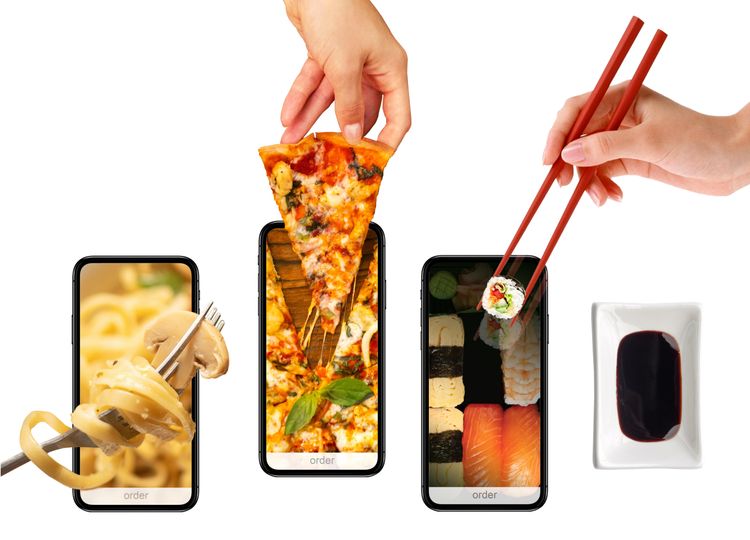
The rise of food apps
Anyone with a smartphone knows that there are an infinite number of mobile food apps available. As well as the usual food apps that help people cook dishes, review restaurants, and order groceries, consumers are downloading apps that allow them to purchase discounted products that would otherwise become food waste or recover upcycled items destined for the dump. Here are a few cool food apps worth knowing about: Too Good to Go Described as the world’s top anti-food waste app, Too Good to Go launched in Canada in 2021, and has spread to about 2,000 food businesses in Toronto, Montreal, Quebec City and Vancouver. The app allows restaurants and other foodservice businesses to offer surprise bags of surplus prepared food and ingredients at end of the day for up to a third off the price. Caddle This 100-per-cent Canadian app for couponing and surveys offers customers cash back on purchases (between $1 and $20), surveys (between five and 25 cents per 30 second survey), and for watching ads. Through the app, companies can access valuable customer reviews while increasing engagement with their customers. Foupon Canada’s number-one restaurant app isn’t connected to any one chain, but offers consumers digital coupons for more than 10,000 major fast-food restaurants that can be scanned instore. Flashfood Flashfood allows consumers to search for local grocers offering between 30 and 50 per cent discounts on perishable foods that may otherwise end up in landfills. Consumers order and pick up their products on the same day at the store, where grocers say customers typically add to their overall purchase. The Yuka App The concept behind the Yuka App isn’t necessarily unique, but it’s proven to have a direct influence on sales and consumer choices and is growing in popularity across the globe. Here’s what you need to know about the Yuka App. What it is An app developed in France that allows users to scan a barcode to access information about food and personal care products and lets consumers know if the product is worth purchasing. Why you should care It’s independent, free and the information is science-based Over 1.5 million food products have been analyzed so far Over 27 million people are using the app It was launched in Canada in 2020 and is also accessible in Belgium, Switzerland, Luxembourg, Spain, Italy, Germany, Great-Britain, Ireland, USA and Australia. According to a study conducted in France, 92% of consumers who read a negative review on a product put it back on the shelf The app has become so popular in Europe that some food companies are sending their new product recipe to Yuka to get their score before they even launch. Whether or not the app becomes as popular in Canada remains to be seen, but one thing we do know – the Yuka App can make the difference between securing a new customer or losing an existing one.
Guest Blog: Time to say good-bye? When to exit a business
This article originally appeared on Birgit Blain & Associates' Food Biz Blog . By @Birgit Blain Food is a tough business, and it takes big bucks to build a sustainable brand. We only hear the jaw-dropping stories about food start-ups getting seven-figure offers. But don’t be mislead. We seldom hear about businesses declaring bankruptcy or shutting down due to mounting debt. Others have been scooped up for a pittance by opportunists, never recouping the money spent trying to grow the business. This article is about two business owners who tried valiantly and eventually came to the realization that success can be illusive. What they tried Launching more products is a common strategy when sales don’t meet expectations. However, new products increase expenses, disrupt production, and can lead to inefficiencies and loss of focus. Research and planning is needed to avoid pitfalls. And new products must generate additional profit to cover development costs. Rebranding and packaging redesign, if done right, can breathe new life into a brand. But it’s expensive and does not guarantee a sales lift. In fact, it can erode sales if loyal customers no longer recognize the brand. Giving product away or selling it below cost is never a good idea without a concrete ROI. Sampling programs to raise awareness and drive trial should pay for themselves. Three things they needed more of Money. You can never have enough to build a brand. Sad but true. A team to manage production and distribution, thereby enabling them to focus on marketing and sales. Business experience, especially in the grocery trade, marketing and sales. What they learned It’s a numbers game. Only profitable businesses survive. Well-meaning people doling out advice to “never quit” won’t pay the bills. Cash goes out faster than it comes in, with no guarantee of sales growth and profitability. Timing is key; maybe it was the right product at the wrong time. Building a thriving business in the highly competitive food space can be daunting. Red flags The situation is dire when: Growth stagnates and it’s a constant struggle to get new listings and retain existing ones. Strong, well-funded competitors eat your market share. With the competitive landscape changing daily, resting on your laurels leads to business failure. Credit card debt mounts and desperate measures are taken to procure cash: multiple lines of credit, high interest loans, cashing in retirement savings, remortgaging property. Family or friends who have generously provided financial support can’t be reimbursed. Stress levels are intolerable. It’s not healthy. And it affects personal and business relationships. Sleepless nights are a frequent occurrence. With sleep deprivation comes impaired decision-making, causing further damage to the business. Wisdom of hindsight In the words of a former brand owner, “Saying farewell to my business was comparable to ending a long-term relationship which no longer served me. Despite the heartache and disappointment of the losses, it’s critical to have a plan in place should the risks become more than you can afford to lose.” Planning the exit It may seem counterintuitive but the ideal time to exit a business is when things are going well. To attract buyers, a business must be in growth mode. What’s the silver lining? All is not lost. The experience and knowledge gained are invaluable and transferrable to the next career or business. There is no shame in exiting a struggling business. It’s good business sense. And good for your physical and mental health. As a packaged foods consultant, Birgit Blain helps clients think strategically to build a sustainable brand. Her experience includes 17 years with Loblaw Brands and President’s Choice®. Contact her at Birgit@BBandAssoc.com or learn more at www.BBandAssoc.com © Birgit Blain

Roundtable: Should Start Ups Treat their Companies Like Products?
Dana McCauley recently began a lively discussion on YODL about merger and acquisition activity in the food industry, noting that for some time now larger food companies have chosen to expand into new categories and markets through acquisitions of innovative start ups and SMEs rather than through internal investment. As a result, some entrepreneurs are adopting an exit-strategy mindset as part of their initial start-up plans. If the trend continues, Dana believes it will result in great branding and marketing expertise being required to create new categories; and that more co-packers will be needed to provide plants and equipment for exit-minded entrepreneurs looking to keep their operations as simple as possible to make acquisition attractive. We wanted to know more about what YODLers thought about the topic, and how it will affect your businesses and the food industry in Canada. Here’s what some of you had to say. Participants: Gunjan Syal , founder and chief strategy officer, GoEmerald , ON Marc Wandler , co-founder/CEO, Susgrainable , Vancouver, BC Does having an exit-strategy mindset limit the company’s potential in terms of innovation and growth? @Gunjan : I do not believe having an exit strategy mindset always limits the innovation or growth. It is practical for companies to have the worst-case options identified, including practical exit strategies to ensure the business can survive. On the other hand, it is important to note where the connections are between the firm’s overall growth strategy, the leadership, values and the skillset on the team. These are ingredients to create a culture of innovation. Circularity ensures the innovation culture can be resilient during the desperate times. Some businesses may create products or services with the intent of exiting from the start; others may be committed to drive long-term growth by investing in, what I call a culture of circular innovation. @Marc : I would argue it often has the opposite effect. Having an exit-strategy makes you focus on creating something valuable enough for someone else to want to purchase what you have created. This ensures you constantly have an end customer in mind. Having an exit-strategy can also indicate that your company has thought of innovation and growth up to a certain point and through the exit, the mission could potential be advanced even further with the resources from the acquirer. Do difficult economic times push companies to become more efficient and innovative, or do they push more entrepreneurs to exit the industry? @Gunjan : T he uncertainty during difficult economic times may propel companies to reflect back on their underlying values and mission. When resources are dwindling, companies will need to strategically choose where to focus for the greatest impact and alignment towards the right consumers – these are the consumers who will benefit from the services/ products. The difference in the post-pandemic world is that the rapid changes in consumer behaviours are creating a new layer of uncertainty. Inflation is also impacting drastic changes in supply chain operations. This will propel companies to invest in innovation, when resources are available and investments appear to drive long-term value. At the same time, innovation will suffer because ROI cannot always be calculated in advance – it requires trial-and-error to some degree. Novel partnerships, simplifying business models and solutions that can be pivoted quickly, will thrive in the difficult economic times. @Marc : It does both in my opinion. Difficult economic times push customers to really evaluate where their dollars will go. For those companies who don’t panic and focus on their core offerings it will push them to become more focused and efficient. Any company that becomes spread too thin is at risk during these difficult times. At the same time, other entrepreneurs may get pushed out for several reasons – sometimes for the better and sometimes for the worse. For those entrepreneurs whose mission or vision is completely wiped out, exit may be the best strategy. Are M&As beneficial in the long run for the industry, or do they impede innovation? @Gunjan : M&As can be beneficial when there is alignment in product strategy as well as the end user impact among the firms. However, M&A strategy may also severely limit a company’s ability to innovate as the culture of circular innovation may dwindle over time, if not deliberately harnessed after M&A. It will be key to ensure special attention is allocated to developing and aligning a culture of circularity, human capital and profit along with the customer needs. @Marc : Again, it could be either. If the acquisition is between two values-aligned companies focused on growing the mission together, and they can leverage the skills and resources that each brings, then it will foster innovation. In other cases, it may be a strategic acquisition made by a bigger entity acquiring a smaller company that could be a threat in the future but isn’t quite there yet. Depending on how this acquisition is managed, especially when there are big differences in culture, this type of acquisition can impede innovation. @Dana’s take: I would say that if, as many predict, a recession comes and our interest rates climb, that we will absolutely see M&A decrease. In my opinion, it is the very low interest rates that have encouraged many high-net-worth individuals to become angels and venture capitalists. If they can invest in safer products that get them a good return, they will abandon M&A activity for savings products. Disruptive technology and products that solve truly unmet pain points are always marketable. Unfortunately, they are pretty few and far between! Have your say! Tell us what you think about merger and acquisition activity in the food industry. Add your comments here .

The Tablesetter - July 11
Happy Monday CFIN members! Every Monday, we’ll give you a heads up on what will be appearing on YODL this week and around the food world. The YODL Menu This week watch for articles on: Monday: The YODL Menu, Something to Celebrate, Food Facts. Tuesday: Roundtable: Mergers and acquisitions in the food industry. Wednesday: Guest blog: Time to say goodbye? When to exit a business. Thursday: The rise of food apps, plus the Yuka app. Friday: Friday News File Something to Celebrate July 13 is national French fry day. French fries are thought to have originated in Belgium, and grew in popularity in France during the 1700s where fat-fried frittes were served as a snack from street vendors. While Belgium boasts the world’s only French fry museum, the Frietmuseum the Canadian Potato Museum in O’Leary, PEI includes exhibits on all things potato, as well as an onsite restaurant featuring a mouth-watering variety of loaded fries. Food Facts McCain Foods Ltd. is the world’s l argest manufacturer of frozen potato specialties. The Florenceville, NB-based company harvests nearly 6.8 million tons of potatoes annually and produces roughly one third of all frozen fries in the world, earning its hometown the title of French fry capital of the world. A 2017 survey of Canadians on behalf of McCain found that: 33% of respondents preferred straight cut fries over curly, shoestring or waffle cut versions. 63% of women reported sharing their fries, but only 49% of men said they share. Almost 50% of respondents said they like to dip their fries in a topping, while 35% pour their topping over the fries, and 15% do both. 52% of respondents nationally said they would choose plain French fries over poutine, but in Quebec 65% said they preferred poutine. Happy YODLing!

News File – July 8
Each Friday we’ll bring you a roundup of news from CFIN, YODL and around the food world. As seen on YODL Check out this week’s most viewed discussions: Digital transformation in food and beverage: why is it important? A Critical Time for Plant-based Meat CFIN Call for Reviewers/Appel ouvert aux examinateurs YODL Poll We asked what your biggest challenge was in growing your food business? Here’s what you had to say: Access to capital: 61% Access to talent: 13% Access to partners: 17.3% None of the above: 8.7% What’s happening at CFIN? Joe Lake , CEO of CFIN, recently spoke to GovInsider about how the organization is helping to catalyze innovation for the growth of Canada’s agriculture and agri-food sectors. Around the Food World Health Canada announces it will require nutrition warnings on pre-packaged foods containing more than 15 per cent of the suggested daily value of saturated fat, sugar or sodium, beginning in 2026. Proteins Industries Canada unveils a project to create a clean-label soy protein Researchers in Greece are using blockchain technology to create a genetic barcode to fight food fraud in olive oil. Did you know? Fraud is rampant in the fish and seafood industry, with incidents occurring worldwide. Food & Allergy Consulting & Testing Services (FACTS) estimates that one in five seafood samples in mislabelled. One reason is a lack of proper traceability measures and/or documentation, making it easier to intentionally mislabel species. Fish and seafood aren’t the only products affected by fraud. As this infographic from FACTS shows, food fraud is a challenge in many categories across different countries. #foodfraud #FoodSafety

Are Screens The New Stores?
In the last few years, e-commerce has seen tremendous growth throughout the world. According to a 2020 study by Euromonitor International, which was also published by the Government of Canada, the e-commerce market for packaged foods has boomed from 149 million dollars in 2015 to almost 1.6 billion dollars in 2020. The historic rate of annual growth was 59.1%. The non-alcoholic beverage sector also showed remarkable growth, with the size of its e-commerce market having grown from 203 to 596 million dollars for the same time period. Still, the food and beverage industry in Canada has stalled in developing its e-commerce offerings in comparison to other consumer goods. Despite the unexpected bump brought about by the pandemic, in 2021, online sales of food and beverages represented only 3% of total online sales in Canada . So, why are Canadians still so hesitant to purchase food products online, given that consumers are familiar with the technology and the majority of them have access to the Internet? Grocery Shopping: A Complex Multi-sensory Experience As soon as we walk into a grocery store, our instinct and all our senses awaken: we see, we touch, we smell, we compare, and we imagine how each coveted food will be transformed… Then images and ideas emerge from our minds, only to be brought down to earth by the price tag. We make a decision and confirm our choice, a fluid choice, one that may change if inspired by something else on the way to the checkout counter… You don't have to look any further to understand how difficult it is to transpose this ritual and all the reflexes attached to it in two dimensions on a screen. Ironically, even though large Canadian retailers understand this phenomenon better than anyone else, it's Amazon, not them, that holds the largest share of the online grocery market. And the same goes for the US, the UK and France. While there are many reasons that explain why Amazon holds the number one spot, certain sensibilities of grocery consumers are not being met by the experience that Amazon is offering. It is clear that there is room for innovation and to transform a dehumanized mechanical experience into a real "multi-sensory" experience. So, what is it that brings us back to the grocery store instead of buying our food online? The colourful and attractive displays of fresh products. The direct access to an array of options, all easy to see in the same field of vision. The ability to make a decision quickly when a product meets our needs (for example, allergies). The ability to interact with an employee to request a service, ask for help finding a product, or to simply ask them for their opinion. A purchasing context that fosters inspiration and spontaneous purchases. An interesting example of this type of innovation was developed by Inabuggy . In November of 2020, they launched the first 3D virtual reality online grocery platform in Canada for McEwan Fine Foods, an upscale grocery store in Toronto. That being said, for online grocery shopping to reach a new level, we need to think even bigger. What if buying food became human again? Think of the sounds, the smells, tasting samples, even the meeting of new people (real people, not robots!)? In 2011, Tesco, a market leader in Europe, saw tremendous success with the launch of a virtual store in a South Korean subway station. We would be willing to bet that sales would have been even higher if the smell of freshly baked bread just out of the oven had accompanied the screen showing all of the bakery items! For their part, storefronts aren't going anywhere. They'll always be ahead of the curve in providing a real and personable food buying experience. Now that the pandemic is in the rear-view mirror, their biggest challenge will be providing consumers with a feeling of safety again, in an environment conducive to exploration and the joy of sharing a meal.
Industry Roundtable: Consumer demands, technology and changing access to food
CFIN’s first Executive Roundtable looks at consumer demands and changing access to food, with input from Ken Keelor, CEO of Calgary Co-op , and Arjan Stephens, president of Que Pasa Mexican Foods and executive vice-president of Nature’s Path Foods . How has technology such as ecommerce, QR codes and mobile apps changed how consumers access your products? Ken Keelor: Technology has greatly improved the customer experience and allowed for two-way communication with our members, so we immediately know what our members are looking for and how we can help them with their day-to-day shopping decisions. For example: Digital communication was used by us throughout the pandemic for health and safety, as well as to share value/couponing/information/inspiration through regular communication such as social media channels, our flyer, website and member emails. Apps: Our Calgary Co-op app allows members to stay in touch, update their own personal information, receive valuable offers exclusive to them through our Mewards program and access to exclusive member pricing on tickets including the Calgary Flames and Hitmen. E-commerce makes it easy for our members to shop remotely and have their items delivered or picked up at a time and location that is convenient for them. Our shop online programs continue to evolve to offer even more convenience and choice on our Food, Wine Spirits Beer and Cannabis sites. Arjan Stephens: Ecommerce has allowed consumers to access our products through several channels including online marketplaces, grocery delivery apps like Instacart and our website. This has shifted the way we think about user experience. We are focusing on content creation and search optimization to ensure we’re giving the customer a robust user experience, which includes easily searching and accessing our products. QR codes on products and packaging create an easy, rapid and touch-free transaction for consumers. There are about twice as many scans of barcodes at points of sale each day as there are Google searches. Our customers currently use them to purchase our products through Amazon Fresh stores in the U.S., and we are currently looking at how implementing QR codes on our packaging could provide more product and brand information, ultimately building another channel for connecting directly with our consumers. Additionally, the sunset of Google’s third-party cookie in 2023 makes analytics less accessible. QR codes can significantly help our business identify important customer data to inform our overall business. What new experiences are consumers looking for when they shop or dine in person? Keelor: Convenience, choice and freshness, along with local and healthy options. We are pleased to be re-opening our salad bars, curry and olive bars and self-serve kombucha stations. In many of our locations we have seating areas where members can enjoy a light lunch, coffee with friends, or a few moments to themselves. We are also pleased to see in-person events coming back, including our famous pancake breakfasts in the summer, our Grape Escape event in 2023, in-person tastings at our Wine Spirits Beer locations, and partnering with our vendors to offer unique sampling opportunities for our members. We are proud to offer a unique experience to members when they come into our stores and know that they are looking for more from us than just a simple shopping trip! Stephens: When it comes to dining, consumers are looking for elements that support the storytelling aspect of a dining experience. This creates a unique, memorable experience that is shareable with their friends and on social media. These elements could be part of the food itself, the restaurant space, the customer service or other methods. Examples include unique food creations, robot-waiters, personalized chef cooking-at-table and more. What will grocery stores look like in 2035? Keelor: It’s hard to say exactly what stores will look like that far down the road but we certainly expect multi-channel shopping to continue to evolve with more choice, convenience, delivery options and support to help meal plan and budget accordingly. We have also seen a number of recent trends emerge from the pandemic that we expect will continue including: Bigger baskets, but less trips to the stores Less families shopping, more single-person trips for the household More focus on health and wellness More focus on value, budgets and “what do I need to prepare meals” Even more focus on locally sourced products Reduced assortment in some categories because suppliers have narrowed the number of lines they are manufacturing ie: paper category Stephens: The future of grocery stores will be focused on providing experiences versus things. It will be a seamless online/offline mobile enabled, high tech, high convenience food shopping experience. Touch-free transactions will become commonplace and Augmented Reality (AR) and Artificial Intelligence (AI) will be indispensable. The grocery store of the future will enable customers to use apps to input dietary needs and taste profiles to be connected to products through advanced AR features providing audible information about the products selected, almost like having a personal assistance accompanying you to the store. There will be a large influx of plant-based alternatives to animal products created through 3D printing and AI technologies. Grocery stores like Alibaba’s Hema and Amazon Fresh are really just the beginning of the grocery store revolution. If you have a digital solution to make supply chains safer and more agile, apply for our Food Innovation Challenge . Applications are due July 7th.
Guest Post: The Future of E-Commerce: Health Canada and CFIA Propose Changes to Online Requirements for the Sale of Food
This article originally appeared on the G.S. Jameson & Company blog . By @Glenford Jameson Consumers are protected against false, misleading, or deceptive representations of goods or services intended to be purchased; food and food products are no exception. Per the Food and Drugs Act (FDA) and the Safe Food for Canadians Act (SFCA), false, misleading or deceptive labelling or advertising is prohibited on food; consumers have the right to make well-informed and safe food choices, which often results from reading an accurate and compliant label. But what happens when a consumer does not handle a food product before purchase? What happens if a consumer cannot read the physical label in front of them? What happens if they are dropping groceries into an online basket, and checking out of a grocery store via the Internet? Should they have the same protections against false, misleading or deceptive advertising? Health Canada and the Canadian Food Inspection Agency (CFIA) think so. On May 9, 2022, Health Canada and the CFIA launched a consultation on the development of voluntary guidance for providing food information for foods sold to consumers for ecommerce. Their proposal is to require all ecommerce sites to provide the same food information that is required to appear on any label of food offered for sale in a physical store. This includes: common name, net quantity, storage instructions, country of origin, a Nutrition Facts table, a list of ingredients, food allergen information and precautionary statements, caution statements, a period of minimum durability (similar to a “best before” date), and commodity specific information such as the percentage of moisture for dairy or the percentage of alcohol by volume (ABV) for alcohol products. The list is quite extensive. In addition, Health Canada and the CFIA would like to see product images for all foods sold through ecommerce, an indication of how the delivered food may differ from the food being offered for sale online, food information presented in the same way online as it would be on a physical label, a consistent layout for product information pages, food information that is readable by screen readers, and the design of ecommerce platforms as user-friendly and easy to navigate. Again, quite an extensive list. These intentions are good – consumers deserve transparency – and the decision arose to conduct this consultation because of an increase in online shopping during the early stages of the pandemic (we also suspect far too many undeclared allergens on ecommerce sites). Health Canada and the CFIA also point to the growing, international recognition of the need to extend food information to consumers through ecommerce sites. The Codex Committee on Food Labelling, for example, has convened a working group to develop guidance for food labelling and ecommerce; the European Union provides regulatory oversight to distance selling, and requires mandatory labelling. And yet, we must question how these new requirements might affect small business, especially those in the hospitality industry that pivoted to an online model when faced with pandemic closures, and have maintained their ecommerce presence to re-coup losses. Paying a UX designer to develop a user-friendly interface is expensive. Paying a photographer to take recent photographs of your food products can also be costly. Consulting a lawyer to review your labels is also not cheap (we should know!). Small businesses that did not require a SFCA licence prior to the pandemic, and therefore were not subject to mandatory labelling requirements because their food products never travelled across borders, will now be required to pivot further because their ecommerce platform might reach someone in another province. All of this has us asking whether this consultation might be too soon? Regardless, we are pleased to see that Health Canada and the CFIA have provided an online survey and link with questions to answer. Question six is of particular importance: “if you are a business that sells or is considering selling foods to Canadian consumers through ecommerce, please describe any challenges regarding displaying and maintaining current information on product information pages.” Question five also asks for commentary related to the mandatory labelling requirements. If you would like to voice your experiences, concerns, comments, or questions regarding this proposal, you can access the Consultation here . The Consultation is open until July 8, 2022.

The Tablesetter - July 4
Happy Monday CFIN members! Every Monday, we’ll give you a heads up on what will be appearing on YODL this week and around the food world. The YODL Menu This week watch for articles on: Monday: The YODL Menu, Something to Celebrate, Food Facts. Tuesday: Guest Blog: The Future of Ecommerce. Wednesday: Cons umer demands, technology and changing access to food. Thursday: Are screens the new stores? Friday: Weekly News File Around the Food World IFT First takes place July 10 to 13 at McCormick Place in Chicago, IL. Festival StreetFood Montreal happens July 7 to 10 in Montreal, QC. Summerlicious begins July 7 and runs until July 23 in Toronto, ON. Something to Celebrate July 4 is independence from meat day around the world, which began as a way for vegetarian groups to raise awareness of the benefits of eating a meat-free diet. A 2020 Statista survey showed that there are 2.3 million Canadians are vegetarians, while 850,000 Canadians follow a vegan diet. The researcher expects Canadian retail sales of meat substitutes to reach approximately US $226.7 million in 2022, compared to $119.9 million in 2015. Food Facts The NPD Group/CREST recently revealed how Canadians eating habits have changed in the past two years. Here are consumer’s most loved restaurant menu items today: French fries Burgers Breakfast sandwiches https://www.cfin-rcia.ca/network/members/profile?UserKey=b800c223-a09d-49c9-a3e4-a1b7781d9f6c Chicken Doughnuts Pizza Chicken sandwiches Happy YODLing!

Friday News File – July 1
Each Friday we’ll bring you a roundup of news from CFIN, YODL and around the food world. This week to commemorate Canada Day we’re celebrating iconic Canadian cuisine and products. Coast-To-Coast Cuisine If you want to celebrate Canada Day with a unique dish or product from across the country, here are a few ideas: British Columbia – Nanaimo bars, salmon Alberta – Perogies Saskatchewan – Saskatoon berry pie Manitoba – Bannock, Schmoo torte, flapper pie Ontario – Butter tarts, peameal bacon Quebec – Tourtière, poutine Nova Scotia - Donair PEI – Lobster roll New Brunswick – Rappie pie Newfoundland and Labrador – Toutons, seal flipper pie Yukon – Sourdough pancakes Northwest Territories - Muktuk Nunavut – Arctic char Top 10 Best Rated Canadian products According to Taste Atlas , which looks at food products and cuisine around the world, the highest-rated Canadian food and beverage products worldwide are: Maple syrup B-52 shooter cocktail Vidal Blanc wine from Ontario Canadian whiskey Montreal Steak Seasoning from McCormick McIntosh Apples Caesar cocktail Peameal bacon Piacere cheese from Monteforte Dairy in Stratford, ON Yukon Gold potatoes Kraft Dinner is the most popular grocery item in Canada, according to TasteAtlas . In fact, Canadians eat 55 per cent more Kraft Dinner than Americans, purchasing 1.7 million boxes each week, and consuming an average 3.2 boxes annually. The boxes of pasta and powdered cheese first appeared in 1937 and sold for 19 cents each. Eight million boxes were sold that year. For a cool Canada Day meal option, check out this recipe for Marinated Greek Salad from Dana McCauley. Around the Food World Walmart is testing Walmart Now , a 30-minute delivery service, starting with about 4,000 of its most popular items at 10 stores in the Greater Toronto Area, one day after Loblaws announced a similar service through DoorDash. Coca-Cola Canada Bottling is investing almost $42 million in its production and warehousing and distribution facilities in Richmond, BC. The Veal Farmers of Ontario announce the winner of Ontario’s Best Veal Sandwich contest.

EXPLAINED: Blockchain Technology
The international trade of goods and services related to the food industry is very complex and poses great logistical challenges. Knowing where these goods and services come from, how they were produced and by whom are only a fraction of the crucial information needed to be able to ensure the authenticity as well as the safety and security of what will be offered to consumers. Although it was not created for the food industry, blockchain technology lends itself perfectly to it and has immense potential for the industry. What is it? Export Development Canada (EDC) defines blockchain as “a distributed database holding encrypted ledgers that reside on a network.” Well established in the cryptocurrency sector, this technology allows network members to consult and share a register of transactions, data entries or documents called blocks. This network can be public (for example, through the Internet) or private (such as between a group of companies). Data must be verified by members in a private ledger, and when all agree on the validity of the information the block becomes a permanent record that no one can change. Why you should care Food fraud continues to occur worldwide at an alarming rate. No commodity or country seems to be spared, and all sectors are affected, from the farm to the final point of sale. According to the U.S. Grocery Manufacturers Association, fraud costs the global food industry between $10 and $15 billion a year. Other organizations estimate that the industry loses up to $40 billion a year. At the same time, consumers are demanding more transparency from the industry about their products and business practices, a demand that can be difficult to meet if we don’t know the full history of the food we produce and process ourselves. Blockchain technology offers a complex but powerful solution to optimize and secure the entire supply chain. Benefits of using this technology include: Complete traceability of all interventions made on a commodity. Real-time supply management, including precise monitoring of a commodity’s journey and transport conditions such as temperature or humidity. Centralization of information about a commodity. Anticipation and simplification of recalls. Accountability of all stakeholders. Helps build a solid reputation, facilitating local and international trade. Not surprisingly, the cost of implementing this technology is high, which is also the main obstacle to its expansion. Opportunities in Canada Here are some examples of local and international companies with expertise in blockchain development for the food industry: FuturistIQ and Appinventiv are two international companies specialized in digital transformation. They operate in many sectors, including the food industry. IBM , a well-known computer and digital giant, also offers consulting services for the implementation of various technologies, including blockchains. As for TraceFood , their main focus and expertise is the creation of blockchains and they serve exclusively the food sector. If you have a digital solution to make supply chains safer and more agile, apply for our Food Innovation Challenge . Applications are due July 7th. @Dana’s Take: When it comes to traceability, consumers want to know that their food is safe, and increasingly, that it was produced in a sustainable way. By digitizing operations and using technology such as blockchain, food companies can track every ingredient and product in their supply chain, ensuring vendor compliance on sustainability measures, while offering consumers transparency on how products are sourced, processed, transported and retailed. The real potential of this technology will be realized when its use of energy is optimized or mitigated. An inspiring collaboration in North Vancouver, sees that municipality, using the heat generated by block chain activity to heat buildings!
EXPLAINED: 5G and the food industry
As 5G technology is rolled out by internet providers around the world, companies in a wide variety of industries are exploring how higher-speed connectivity will change production and operations. In the food industry, manufacturers are already examining how to leverage 5G to add smart technology designed to improve sustainability, efficiency, capacity and food safety. What is it? 5G technology is the fifth generation of wireless networks, which enables faster and more powerful connectivity between machines and devices. The technology allows for faster response times (latency) and higher bandwidth capacities, allowing companies to transfer more data at one time. Why you should care Implementing a 5G-enabled system for automation and smart technology will eventually become a competitive advantage for Canadian food businesses, especially as operators begin to see rewards such as a more streamlined system, lower operating costs, and greater production efficiency and capacity. With a 5G network and the use of sensors, food companies will be able to: Make better use of Internet of Things (IoT) devices, artificial intelligence (AI) and machine learning to create smarter operating systems. Monitor and send warehouse and production data in real time. Boost automation efforts. More easily operate robotics, drones and other advanced technology. Create faster, more accurate communications, especially when companies are also using enterprise resource planning (ERP) systems to track material throughout the supply chain. Monitor and improve safety throughout the system. Allow for faster and more accurate recalls. Allow companies to store information in blockchain, which adds transparency for consumers. Encourage more online ordering, payment and delivery due to the higher bandwidth and latency. Opportunities in Canada Canada’s 5G network is already fairly advanced, and as companies continue to innovate with smart technology they will increasingly discover ways to leverage the network while offering consumers more transparency around their supply chains. 5G network coverage in Canada is led by companies such as Bell Canada , Rogers and Telus , connection and coverage is expanding, starting primarily with urban centres. @Joe Lake 's Take: Faster and more reliable networks will be required to properly leverage the connected technology often referred to as the Internet of Things (IoT) and the Industrial Internet of Things (IIoT). As opposed to consumer-oriented IoT applications such as smart thermostats, IIoT devices are networked through sensors to other devices and with industrial software and cloud computing to manage production, monitor quality assurance, control energy use, and more. Within this controlled, connected system operators can view real-time data, allowing them to make needed adjustments and improve overall efficiency. One challenge for Canada is its larger geographical size vs. population density. Additionally, a large portion of the country’s agriculture and food processing is rural. It’s imperative that both farming and manufacturing in rural areas are serviced to ensure that processing innovation requiring 5G can thrive and advance competitiveness nationally. If you have a digital solution to make supply chains safer and more agile, apply for our Food Innovation Challenge . Applications are due July 7th.