

Articles & Reports
Featured

One Consumer, Dozens of Touchpoints, One Campaign
Every new touchpoint used to mean another campaign to build, budget, and measure. Brands pulling ahead in retail media reach consumers across all of them with one campaign and no extra workload.
Where Crunch Meets Clean Label: Sunflower Kernels for the Next Generation of Better-for-You Snacks
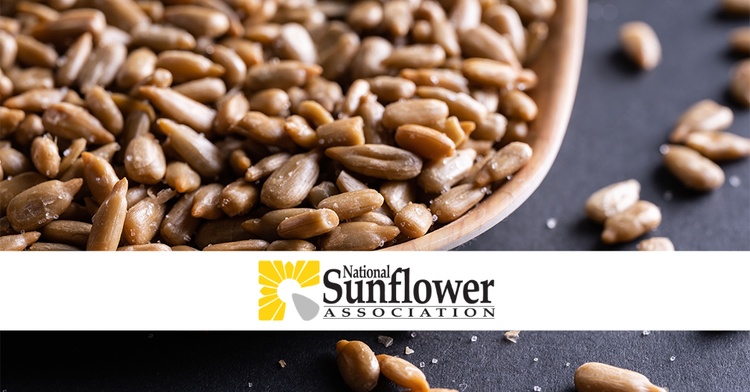
Canada’s healthy snacks market is experiencing strong growth. According to Grand View Research, the market generated $3,713.6 million (USD) in 2025 and is projected to reach $7,282.5 million (USD) by 2033, growing at a compound annual growth rate (CAGR) of 8.8% from 2026 to 2033.¹ The research also identifies Canada as the fastest-growing regional market in North America, highlighting significant opportunities for food manufacturers looking to innovate in the category. For food scientists and product developers, this growth presents a complex formulation challenge. Consumers increasingly seek snacks that deliver nutritional value, convenience and recognizable ingredients, without sacraficing the taste,texture and overall eating experience they expect. Success depends on balancing these priorities to create better-for-you products that satisfy both nutritional goals and consumer expectations. Why Texture Matters in Snack Innovation Texture is a powerful influence on how consumers experience food, shaping everything from first impressions to repeat purchases. Puratos’s Taste Tomorrow research found that nearly half of consumers prioritize texture over ingredients when purchasing food, while 68% of millennials say texture directly influences their choices.² Ingredion research further indicates that 70% of global consumers would switch to a different product or brand if they were dissatisfied with its texture.³ For snack food manufacturers, these findings underscore the importance of getting texture right from the outset. Crunch, crispness and contrast can help distinguish a product in a competitive market, while combinations of complementary textures can create a more engaging and premium eating experience. Innova Market Insights’ Global Texture Trends 2026 report highlights the appeal of combining textures such as creamy, crunchy, and soft. Its research also revealed that one in four consumers globally is interested in trying snacks in formats that are new to them.⁴ Together, these insights point to opportunities for food manufacturers to explore fresh ingredient combinations and textural experiences that make better-for-you snacks stand out. Where Sunflower Kernels Fit In U.S.-grown sunflower kernels give food manufacturers a practical way to build that contrast. Their mild flavour and satisfying crunch add dimension to both sweet and savoury product innovations without overpowering other ingredients. They also bring plant-based protein, fibre and healthy fats, along with vitamin E, zinc, folate, iron and magnesium, so the texture upgrade comes with a nutritional one. Available raw, roasted and ready-to-eat, sunflower kernels can be used across a wide range of applications, including: • Better-for-you snack bars • Granola and trail mixes • Crackers and savoury snacks • Bakery products and breakfast cereals • Plant-based snacks and bites Clean Label and Allergen-Friendly by Design Consumers worldwide are increasingly prioritizing clean-label products made with recognizable ingredients and greater transparency. Innova Market Insights reports that more than two in three consumers globally say they are at least somewhat influenced by clean ingredient decks, and that nearly one in three new products now carries some type of clean label claim.⁵ Innova also notes that non-GMO claims are most established in North America.⁵ Sunflower kernels are naturally non-GMO and sustainably grown, which supports the transparency and recognizable-ingredient positioning shoppers respond to. They are also an allergen-friendly alternative to tree nuts, delivering the crunch consumers expect from nuts and seeds. Unlike tree nuts, sunflower kernels are not considered a priority allergen in Canada, making them a versatile option for manufacturers developing new products or reformulating existing ones. Turning Texture Trends into Product Opportunities As Canada's healthy snacks market continues to expand, food manufacturers have an opportunity to differentiate their products through thoughtful ingredient choices and more engaging eating experiences. Texture is an important part of that equation, influencing consumer appeal while creating opportunities to innovate across familiar snack formats. U.S.-grown sunflower kernels bring together satisfying crunch, plant-based nutrition and application versatility, making them a valuable ingredient to consider for the next generation of healthy snacks. From bars and granola to crackers and savoury mixes, they can help product developers create food innovations that balance texture, taste and nutritional value. Explore how U.S.-grown sunflower kernels can add texture, nutrition and versatility to your next snack innovation. Connect with a supplier today > {link to lead to the NSA Kernel suppliers page} References: 1. Grand View Research, Canada Healthy Snacks Market Size & Outlook, 2026–2033. https://www.grandviewresearch.com/horizon/outlook/healthy-snacks-market/canada 2. Puratos, “Why texture is important in food,” February 19, 2025. https://www.puratos.com/blog/why-texture-is-important-in-food 3. Ingredion research, as reported in “New approaches to texture innovation,” Food Business News, May 7, 2026. https://www.foodbusinessnews.net/articles/30275-new-approaches-to-texture-innovation

Inside SIAL Canada 2026: Driving Food Innovation Through Connection and Collaboration
CFIN had the honour of taking a bite out of SIAL Canada 2026 in Montréal 🍎—connecting with partners, members, and industry leaders shaping the future of food innovation across Canada and beyond. Representing CFIN on site were CEO @Dana McCauley and @Julie Daigle , Regional Innovation Director (Quebec), who engaged with the ecosystem throughout the event. Their presence reflected CFIN’s ongoing commitment to strengthening Canada’s food innovation ecosystem and supporting high-potential foodtech ventures. Attendees could also catch Julie as a Foodtech Focus expert at the SIAL Canada Expert Hub, where she connected directly with innovators and shared insights with the community. Dana also took the stage as part of the Dairy Talks program, contributing to a forward-looking discussion on innovation as a driver of market leadership in the Canadian dairy sector. Her session explored the shift from incremental product development toward a broader innovation mindset—highlighting next-generation ingredients, value-added dairy formats, new go-to-market strategies, and the role of Industry 4.0 technologies like AI, robotics, automation, and digital supply chains in strengthening productivity and global competitiveness. A key highlight of the week was CFIN’s involvement in the 7th edition of the Startup Pitch Competition, held on April 30 on the Food & Bev Connect stage. Julie Daigle participated as the President of the Foodtech jury, joining a panel of industry experts evaluating promising entrepreneurs from the Startup Village. Beyond the competition, the Startup Pitch stage served as a strategic platform connecting entrepreneurs with buyers, investors, and key decision-makers across the agri-food ecosystem. A standout moment for the CFIN community was the recognition of Maia Farms, a CFIN member and funding recipient, which earned the Gold Prize in the foodtec h competition 🍄🏆 CFIN’s presence at SIAL Canada underscored the momentum of Canada’s food innovation sector and the value of convening the ecosystem to accelerate ideas from concept to commercialization. 📖 Explore more from SIAL Canada 2026 R elive the stories, innovations, and key moments captured throughout the show in the official SIAL Canada Daily: SIAL Canada Daily – 2026 Edition (Photos Courtesy of SIAL)

Five Years of CFIN: A Letter to the Network
Thirty years ago, I worked as a chef in the kitchen of one of Canada’s top restaurants standing should er to shoulder with people who ca red about the sensory experience of food above all else . Our tech stack was al most all analog and , to be honest, we didn’t give our ordering system or the way we did inventory a lot of thought. My career broadened over time , and I ’ ve also held roles where I developed recipes at Canadian Living and wrote about food trends; built innovation strategies and products for national brands, founded a business incubator, and ran a venture creation office at a prestigious Canadian u niversity . Food was always the thread , and technology was always present but in most of the food focused businesses I’ve worked for, it was taken for granted, and creativity and hard work were what drove the businesses forward. While smart people with great ideas are essential to food business success, it’s not enough to be competitive in today’s world. Old ways of running restaurants, innovation labs and food and beverage processi ng businesses can’t compete internationally or absorb the trade shocks that have become commonpla ce in recent history. That’s why I feel l ik e CFIN is the perfect place for me to be today and why we’re adding dozens of new members per week. When CFIN was created in 2021, the mandate was intentionally broad : cata lyze Canadian food innovation with funding , build community, connect an ecosystem that had been operating in silos for decades. The funding programs took shape quickly. Since 2022, we’ve awar ded $23.3 million to 133 projects across six program s. For every $1 CFIN invested, our members committed $7.65 of their own capital toward innovation. This leverage ratio of nearly 8-to-1 has unlocked over $140 m illion in private sector spending on R&D and capital infrastructure. The other work was harder to define . What do "build community" and "connect an ecosystem" mean in practice for a sector span ning startups, processors, researchers, investors, policymakers, and operators spread across this vast country ? Th at question didn't have a tidy answer. As a result , fostering and serving this network was (and remains ) an exercise in innovation itself : something new to be built , and then tested, adjusted, and iterated upon , ad infinitum . I’m immensely proud of what we’ve built so far . A team of Regional Innovation Directors who've supported more than 2,200 organizations, brokering the introductions that became commercial partnerships, strategic investments, leadership hires, and research collaborations. A digital platform , YODL, connecting Canada's food sector across industry silos and bridging interprovincial barriers . The first comprehensive analysis of Canadian foodtech . A network of 8,500 members from every province, every part of the food value chain, every stage of business . On any given week, our community is discussing topics ranging from precision fermentation bioreactor designs and funding stacks to food packaging labeling regulations and export strategies, all in the same space. Members benefit from purpose-built tools and resources — like our Funding Finder that aggregates food and beverage funding opportunities across the country and a growing library of original sector research and analysis — alongside direct access to our Regional Innovation Directors. Canada has strong regional funders, accelerators, trade associations, and tech transfer offices, each doing necessary work in a defined lane. What this sector didn't have was a place where the conversation s , the tools, and the connections all showed up at once — where the range of problems and the range of capabilities were dense enough that the right solutions could emerge . That's what CFIN has built. That foundation is important because the next five years will be even more dynamic, and often more challenging, than the last five . To keep pace and flourish in an increasingly volatile world, Canada's food sector needs to modernize faster and more strategic ally than ever before . Trade disruption is dramaticall y reshaping supply chains . L abour constraints are compounding a productivity gap that was widening long before tariffs became front-page news. Climate pressures are intensifying. Food 4.0 — a tech-enabled food s ector that's more collaborative, productive, resilient, and competitive — is the framework CFIN is building toward, and the case for it gets more urgent by the quarter. I ’m confident that we’re up to the task . Five years ago, Canada's food innovation ecosystem was fragmented, underleveraged, and often invisible to the investors, operators, policymakers, and media who needed to see it. That's no longer true. The capacity to respond to the challenges ahead is here. Not in any single program or policy, but in the breadth of this network — the founders , processors , researchers , and investo rs who are hungry to innovate and build a better Canadian food sector . My own wide-ranging path through the food sector taught me that no single role ever showed me the full picture. It took working across kitchens, labs, newsrooms, boardrooms, and startups to understand how innovation really moves through this industry — and where it get s stuck. CFIN was built on the same insight. A sector this complex, facing challenges this urgent, needs more than funding or advice or connections in isolation. It needs all of them in the same room. That's what we've spent five years building, and I'm betting the next five will prove its value at a scale none of us can yet imagine. Thank you for being part of it. Dana McCauley, CEO, Canadian Food Innovation Network

How BC is Becoming a National Foodtech Hub
Editor's Note: This article was o riginally published in the Vancouver Tech Journal on March 13, 2026 The province has a diverse food processing industry, world-class research facilities, and a deep bench of tech talent — everything a foodtech ecosystem needs to thrive. Foodtech builds the software, automation, and applied science for how food gets processed, manufactured, packaged, distributed, and sold. The industry behind it is enormous — food and beverage processing alone is Canada's largest manufacturing sub-sector , bigger than automotive, bigger than aerospace. It's a serious market, and in British Columbia, it's growing fast. But if you work in the province's broader tech ecosystem, you might not even know that. Foodtech hasn't traditionally drawn the same attention as sectors like cleantech or enterprise SaaS despite being a comparable market in scale and complexity — and one where demand for new technology is accelerating fast. What BC brings to the table BC's food processing sector is substantial — over 3,200 companies producing roughly $12.6 billion in value-added products annually. And it's being treated as a strategic priority. The province has funded a network of shared food processing hubs, UBC just opened a Food and Beverage Innovation Centre with pilot-scale production labs that processors and startups previously had to leave BC to access, and SFU's BC Centre for Agritech Innovation is partnering directly with SMEs on cost-shared R&D. At the same time, much of what the food industry needs is already being built in BC for other thriving tech sectors. Process automation, energy management, supply chain software, safety and traceability systems, data-driven quality control — these are cleantech and software problems applied to production floors and distribution networks. The talent, research base, and trade infrastructure to support a serious foodtech cluster are all here. A different kind of tech sector Foodtech doesn't work like enterprise SaaS or consumer tech. Processors and manufacturers adopt slowly and carefully, because failure is expensive in ways that go beyond lost revenue — a food safety issue, a botched line integration, a regulatory problem. Sales cycles run in quarters. The investor community that understands food is small and specialized. And the industry's own networks run through trade associations, existing supply relationships, and sector-specific events that sit well outside the broader tech community's orbit. None of this means foodtech is closed off. It means that if you want in — as a founder, investor, developer, or potential partner — you need a way to access the conversations, the deal flow, and the operating knowledge that don't surface through the usual channels. The Canadian Food Innovation Network The Canadian Food Innovation Network is a national not-for-profit, established in 2021 that functions as the operating infrastructure for Canada's foodtech sector. CFIN runs cost-shared funding programs that help companies de-risk R&D and move technology into commercial settings. Since launch , the organization has awarded over $22 million to 122 Canadian foodtech projects, matched by $25 million in industry co-investment. Those funded companies have generated $90 million in economic impact, created over 355 jobs and co-op placements, and attracted more than $82 million in follow-on investment. The network's 8,000-plus members include food processors, technology companies, ingredient suppliers, retailers, researchers, and investors — connected through YODL, CFIN's member platform, and supported by Regional Innovation Directors embedded across the country, who work directly with members to broker introductions, navigate funding, and connect emerging technology with the processors and buyers who need it. CFIN also produces the sector's most detailed intelligence . The Foodtech in Canada 2025 Ecosystem Report mapped investment flows, identified sector strengths, and gave both companies and investors a clearer picture of where the Canadian foodtech market stands. And then there's Foodtech Frontier , CFIN's annual program identifying the country's highest-potential foodtech companies. The inaugural cohort of 35 winners included eight BC companies. For investors, it works as curated, vetted deal flow in a sector where sourcing is otherwise hard. For the companies, it's structured national visibility. Plug into Canada’s foodtech ecosystem If you work in technology or investment and you've been curious about the food sector, then signing up for a free CFIN membership is the best place to start. Members get access to funding programs, sector intelligence, a national innovation community, and regional team members that know the BC landscape specifically.
Other Articles
CFIN Members Exhibiting at ADM Montreal 2022
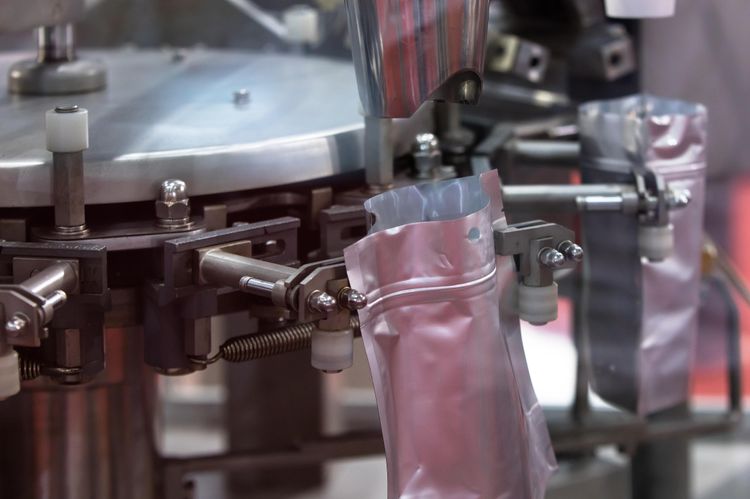
The CFIN team will be visiting the Advanced Design & Manufacturing Expo (ADM Montreal) on November 9 and 10 at the Palais des Congrès de Montréal in Montreal, QC. The event includes five manufacturing areas – Design & Manufacturing (D&M), Automation Technology Expo (ATX), PACKEX, EXPOPLAST and Powder & Bulk Solids – featuring the latest equipment and technology for advanced design and manufacturing across several industries, including packaging, automation and robotics, energy efficiency, plastics, and processing. As well as hosting more than 200 exhibitors, the Expo will include live demos, panel discussions, and thought leadership presentations. Registration is free for qualified attendees. Click here for more information about the show and to register. Here are the CFIN members who will be displaying at ADM Montreal. INO Booth: Exhibit Hall, 1517, ATX Montréal 2022 INO is a design, development, prototyping, and small-run production house specialized in optics and biophotonics. The company develops biomedical systems, including specialized microscopes, optical and optomechanical design of light delivery systems, surgical navigation, flow cytometry, fluorescence readers, spectroscopy systems, specialized fiber endoscopy, NIR tissue optics and sensors, optical dosimetry, fiber lasers and custom LED systems.

INFOGRAPHICS: CFIN's Survey on Plastics Use in the Food Industry
Editor's Note: This article originally appeared on August 9, 2022. Plastics reduction and disposal is a hot topic in many industries, including ours. But because we need to move forward and find solutions, we recently surveyed our members to find out where they stand in their intentions and actions to eliminate plastic as we know it today. The results speak for themselves! Here's what we've learned from you about the subject: Key learning #1 There’s clearly a need for sustainable alternatives to plastics. 62% of Canadian food companies see an increase in requests for more sustainable alternatives. Key learning #2 Finding solutions is a priority for most companies, and many are already turning this into action. It’s a corporate priority for 73% of our respondents and 65% are already working on it. This is great news! Key learning #3 Food companies are exploring a diversity of options. Alternative materials and compostable plastics are the top two options mentioned. It’s also interesting to see that plastic is not systematically pushed aside: 16% of respondents explored higher quality/more recyclable plastics instead of trying to replace it. Could that be a more accessible, yet sustainable way to reduce plastics…? Key learning #4 The main barrier to adopting solutions is money - either the existing solutions are too expensive or the companies don’t have the budget to invest in finding solutions. The lack of solutions suitable for one’s products, equipment and/or needs, the lack of time to search for solutions, and the lack of knowledge around who can help are other important barriers, with all three scoring equally. Key learning #5 Google and research centres (including academia) are companies’ best friends when it comes to finding info on plastics reduction. Suppliers and collaborators are also a good source of info. And CFIN is now one to! Finally, although the topic is quite new, several great resources already exist to support your work towards plastics reduction and elimination. The Canada Plastics Pact (CPP) is one of them. The non-for-profit organization and member of the Ellen MacArthur Foundation’s Global Plastics Pact network, “unites diverse leaders and experts in the national plastics value chain to collaborate and rethink the way we design, use, and reuse plastic packaging to realize a circular economy for plastic in Canada.” Unfortunately, the CPP doesn’t seem to be on the radar for most Canadian food companies, with 79% of respondents saying they have never heard of it. For more on the CPP read CFIN’s article Explained: The Canada Plastics Pact . Check out more coverage on plastics, including: Canada's Plastic Problem , and Auditing your Operations and Moving Towards a Circular Economy in Plastics, Part 1 , and Part 2. Here are a few more findings from CFIN's plastics survey: #Plastics #plasticwaste #circulareconomy #plasticpackaging #nonplasticpackaging #recycling

Blockchain and the Food Industry
Technology Management & Entrepreneurship Program at the University of New Brunswick to discuss blockchain and the food industry.

The Tablesetter – October 17
Happy Monday CFIN members! Here’s your weekly heads up on what’s happening on YODL and around the food world this week. The YODL Menu Did you notice we added a YODL Menu widget to our homepage? Now you can easily access all of our articles and keep track of what’s coming up. Monday: The Tablesetter – October 17 Tuesday: More on blockchain, algorithms and the food industry (Video) Wednesday: Plastics use survey results and infographics Thursday: CFIN Celebrates its First Anniversary – Part 2 Friday: News File Something to Celebrate October 17 is National Pasta Day! Pasta is thought have been made as early as the fifth century, and by the later 13 th century it was a staple across the Italian Peninsula. Because there are so many regional varieties, estimates of the number of pastas out there range from 350 to more than 600 different shapes and sizes. According to Share the Pasta , the average North American eats approximately 20 lbs of pasta annually. Food Facts A poll by the Restaurant Marketing Agency on pasta preferences found: 75% of people surveyed eat pasta at least once a week, and one in 20 say they eat pasta every day. 2.8% of people say they never eat pasta. 51.95% of respondents say they prefer red sauce (marinara or Bolognese), 43.72% prefer white sauce (alfredo), and 4.32% prefer green sauce (pesto). 25% of people say spaghetti is their favourite type of pasta. Happy YODLing!

News File – October 14
Each Friday we’ll bring you a roundup of news from CFIN, YODL and around the food world. As seen on YODL Check out this week’s most viewed discussions: Extended shelf life for fresh produce | Open Forum (cfin-rcia.ca) Business in Vancouver Article: Food waste innovators take aim at West Coast farms | Open Forum (cfin-rcia.ca) New fertilizer product | Open Forum (cfin-rcia.ca) Around the Food World United Caps has developed recyclable bottle cap Mimica Touchcap with label innovator Mimica, that provides consumers with real-time information about the freshness of food, and helping to prevent food waste. Organic Meadow is Canada’s first dairy to use Elopak’s unbleached paperboard milk carton packaging with net-zero carbon emissions. IGA has chosen 18 innovative Quebec companies for its inaugural Local Accelerator program. Did you Know? The Retail Council of Canada’s Halloween 2022 Shopping in Canada Survey found that 45% of Canadians celebrate Halloween. And 86% of them plan to buy the same or more amount of Halloween treats as they did last year. Here’s what else the survey found: 54% of Canadians who celebrate Halloween spend more than $50 on Halloween. Most people who celebrate Halloween make purchases up to four weeks before Halloween (16.1%), while 15.4% make purchases about two weeks before. 56% buy Halloween products at big box retailers, 37% buy them at food retailers, and 24% buy them at drug stores. 31% of Canadians say they search for Halloween products in regular grocery store aisles, while 21.1% say they look for them in front-of-store displays. They also look in free-standing displays (18.5%), in end cap displays (15.3%); in entryway displays (13.7%); in the checkout aisle (8.4%); and in dump bins (7.9%). About 28% of Canadians make a trip specifically to buy Halloween products. 45.6% of respondents say they will shop at local at brick and mortar businesses for Halloween products instead of online this year to support businesses impacted by the pandemic.

The future of plastic in food packaging
Interview by @Isabelle Marquis with Isabelle Des Chênes, Executive Vice-President of the Chemistry Industry Association of Canada, on the innovations being developed to make plastic a material that is both high-performing and environmentally responsible.
CFIN at One - Building an Organization
After a full year of operations, CFIN has a lot to be proud of – from building a national organization in a virtual environment, to creating a community of food innovators, and funding innovative food projects across Canada. CEO @Joe Lake spoke with @CarolynCooper about some of CFIN’s accomplishments over the past 12 months. Here’s part one of the three-part series. In part two we’ll discuss how CFIN has created a community in the past year, and in p art three we'll look at how CFIN has funded innovation. Building an Organization CFIN was designed to operate as a virtual organization with national scope, with representatives spread across the country coming together online with one goal: to champion and catalyze food innovation across Canada. Differentiating CFIN from other funding organizations, which often focus on one region or sector, is the fact that CFIN has no limits. “Geographical or sectoral boundaries are usually irrelevant when it comes to innovation – innovation doesn’t know boundaries,” explains CEO Joe Lake. “Working virtually is a very different way of working that has become more normalized through COVID, but it goes back to about 2017, 2018, when the proposal for this organization was created. It’s by design” Lake says there are two key reasons CFIN was designed without a physical headquarters. “Brick and mortar in a particular location has the risk of signalling to that region that you have a kind of unconscious bias towards that area,” he says. “Plus the organization was always designed to be a blend of boots on the ground - people actually out there connecting – with technology used as a home base.” Building a team of full-time staff, including five regional innovation directors (RIDs), was CFIN’s first priority. Without the need to focus on a brick-and-mortar location, CFIN was able to hire 16 full-time employees with a rich variety of professional expertise and backgrounds, working virtually across every Canadian time zone. “What I’m most proud about is really getting this team together around the proverbial virtual table,” says Lake. “And even as a young group, the culture that we’re putting together, the ability for folks to contribute, and their passion being reflected back, is up there with some of the most exciting groups I’ve ever been part of in my working career. CFIN is a place where people feel like they can contribute and take part, and to me that’s just as important as what we’re doing as an organization. Because if an organization is not striving to be open and collaborative, it won’t be able to create an open and collaborative food innovation community. So that emphasis on bringing together the team for me is really exciting.” This culture extends to CFIN’s Executive Board and its subcommittee the Innovation Advisory Council (IAC). “They are responsible for the governance of developing and approving our program themes, and the program criteria, the way they’re assessed and how submissions are scored,” says Lake about the IAC. “This independent committee made up of experts advises CFIN to ensure that we are creating relevant programs and supporting the most impactful projects. And then in certain cases, such as for our Food Innovation Challenges, they are tied to the reviewing process as well. We’re hyper sensitive around issues like confidentiality and conflict of interest, like if you’ve golfed with this person at a charity event let’s be aware of that, did you work together in the same company 10 years ago? Because that’s not unusual in the food business, it’s not as big as you think.” When it came to hiring RIDs, Lake says the collective vision was for them “to be diverse in terms of geography, but also in terms of their experience in the food industry and also their personality types, their behaviour and skills. We thought of them almost like an ‘80s cartoon where they had their individual superpowers, but together they could rise up to form something greater,” laughs Lake. “You know, one’s got a business degree, one has entrepreneurial experience, one’s got marketing, one’s got an R&D technical, one’s got business development. So yes, the RIDs have regional representation, but the team is stronger together for that cross-sectional understanding. Collectively we are going to look at the whole industry and country. I think we achieved it fairly well.” Click here to see more about CFIN’s team, Board of Directors and Industry Advisory Council. Get in touch with one of CFIN’s RIDs in your region: @Lavina Gully (BC), @Hubba Khatoon (Prairies), @Linda Fox (Ontario), @Julie Daigle (Quebec), and @Tyson MacInnis (Atlantic). #CFIN #firstanniversary #Innovation
Explained - Upcycling
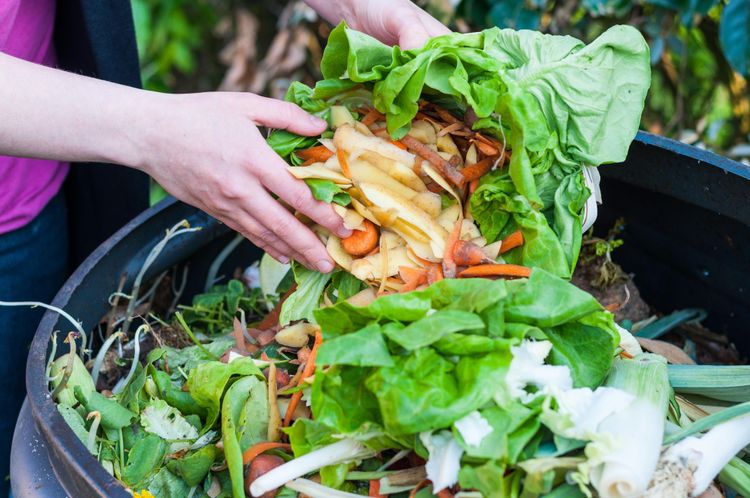
Are you familiar with upcycling? We are hearing more and more about it, and this is only the beginning of a major new area of innovation in food, as in many other sectors. Here is a brief overview of what you need to know. What it is Upcycling involves using products or materials that are no longer of use to their original user, transforming them and giving them a new purpose whose value is equal to or greater than that of the original product. In food, upcycling mainly applies to raw materials that a processor uses only in part (e.g. broccoli where only the florets are used) or to a processing by-product (e.g. nut pulp, or oilcake, left after the oil has been extracted). Unlike recycling, whose purpose is essentially environmental, upcycling offers both economic and environmental benefits. Why this matters to you Food waste is a major issue: one-third of the world’s food is believed to be thrown away each year. Estimated potential annual economic value of food upcycling, according to the Ellen MacArthur Foundation: 700 billion dollars In Canada alone, food waste results in estimated losses of 31 billion dollars each year. More than half of this waste is thought to be attributable to industry (food processing, retail, agriculture, food service and hospitality, transport and storage). A large share of the food waste generated by industry is thought to consist of processing by-products that can be upcycled. As you can see, food upcycling is a real and concrete opportunity to generate new revenue and innovate. You will also have understood that upcycling begins with a matchmaking stage between companies that wish to offer their “waste” or take that of others. Many initiatives are being introduced across the country to enable and facilitate this matchmaking. For example, Université Laval in Quebec and the University of Guelph in Ontario have both launched pilot projects to bring companies in their regions together and support them in finding economically viable outlets for their by-products. Would you like to explore this topic further or find out about initiatives in place in your region? Contact your regional director today!

News File – October 7
Each Friday we’ll bring you a roundup of news from CFIN, YODL and around the food world. As seen on YODL Check out this week’s most viewed discussions: Governor General's Innovation Awards | Open Forum (cfin-rcia.ca) Retail Insider Magazine: Creating a network of innovation and inspiration | Open Forum (cfin-rcia.ca) Food packaging/Co Packer | Open Forum (cfin-rcia.ca) Around the Food World The S.Pellegrino Young Chef Academy has announced Canada’s top 10 2022/23 regional finalists. The new report GAME CHANGERS: Canadian Opportunities In Alternative Protein reveals that alternative proteins in Canada could be a $290 billion industry by 2035. The 2022 World Steak Challenge declares Wagyu steak from Japan's Starzen Co. as the winner. Did you Know? Hellmann’s and WRAP, a climate action NGO, recently released a report on food waste and consumer behaviour. Here are a few of the findings: 45% of people polled say they’re throwing away the same amount of food or more per week than this time last year. 29% of Canadians report throwing away the equivalent to one shopping bag of food per week. Food waste costs families approximately $1,352 per year. One in two respondents underestimating the cost savings of reducing their waste. To minimize food waste, 74% of respondents say they’re using a shopping list; 61% are planning meals in advance; and 58% are freezing fresh food and leftover food. 39% of people don't know where to find helpful information when it comes to reducing food waste. When asked, 60% of Canadians said they would like brands to help them be more resourceful with food.
What if we gave plastic a second chance? Part 1
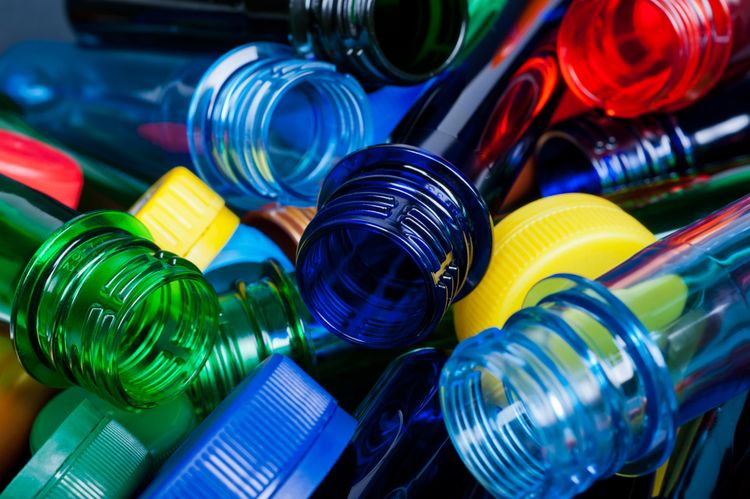
We have talked a lot about this on YODL in recent weeks: plastic packaging is a major environmental issue, particularly because it is almost everlasting. While many companies are working hard to find alternatives to this near-perfect material for food, others are instead looking for ways to make it more sustainable. When recently asked about the future of plastic in food packaging, Simon Chrétien, General Manager of Alliance Polymères Québec, is clear: Plastic is an essential material for the food industry and provides, and will continue to provide, major benefits to it in the future. The challenge is to ensure intelligent sourcing based on an eco-design approach, combined with an effective recovery stream and therefore sound end-of-life management of products. And this recovery and revalorisation stream is precisely beginning to take shape. The best-known example is undoubtedly Loop Industries ,a company founded in Quebec in 2014 with the mission of accelerating the transition towards a circular plastics economy. Loop Industries’ experts have developed an innovative technology that breaks down PET plastic and polyester fibres into their base components, before recreating virgin-quality material with no loss of quality. In September 2021, Evian announced the launch of a prototype plastic bottle made using Loop Industries’ technology, and more recently Loop announced a commercial supply agreement with Danone and the construction of a plant in Europe. We can therefore expect to see plastic packaging identified as “Loop” appearing soon! Another area of research that is bubbling with innovation is making plastic packaging easier to recycle. From creating resins to designing packaging, and from label management to sorting used materials, every aspect of plastic packaging is being studied and is the subject of research projects around the world. In Canada alone, the plastics industry is a major contributor to the local economy, with annual revenues of nearly $29 billion. The Plastics Division of the Chemistry Industry Association of Canada is particularly active in research and development for innovations that make plastic packaging sustainable. We will be speaking with its Executive Vice-President, Ms Isabelle Des Chênes, next week. Join us to learn more about the future of plastic in food packaging!
EXPLAINED: Compostable and Biodegradable Plastics
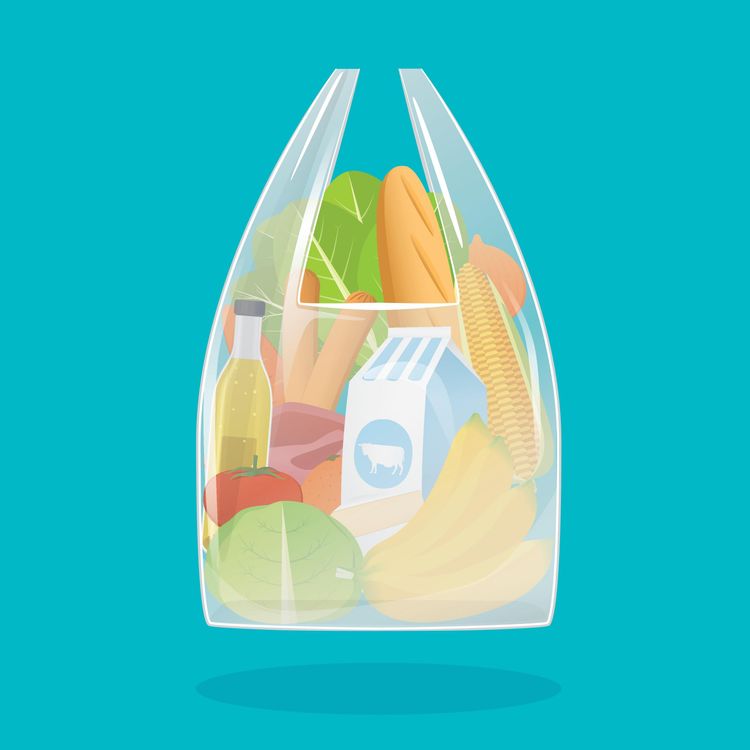
When the federal government published the Single-use Plastics Prohibition Regulations in June 2022, some food retailers and producers were surprised to learn that the incoming ban on single-use plastic (SUP) products will extend to compostable plastic bags and those made with oxo-degradable plastic. Compostable and biodegradable plastic have been touted as an eco-friendly solution for food operators and grocers moving away from SUP bags and utensils. But there’s still confusion over the terms and how this type of plastic affects the environment. What is it? The terms compostable, oxo-biodegradable (which break down in the air) and biodegradable plastic refer to plastic products formed by combining bio-additives such as plant starch with polyethylene, so that it “breaks down.” While most are bio-based, some are still fossil-fuel based, for example oxo-biodegradable plastics are made from oil refining waste. Biodegradable products should eventually break down into their natural state, while products labelled as compostable should completely degrade in compost in a reasonable amount of time. However, the terms are misleading as these plastic products do not degrade the same way as natural materials. Instead, says Michelle Saunders, vice president of Sustainability for Food, Health & Consumer Products of Canada, these products are designed to degrade to a set standard or speed, and they still leach chemicals into the environment. Bio-based products made from plants should also be accredited through third-party field tests showing that the product breaks down in the earth. Why you should care The Single-use Plastics Prohibition Regulations are intended to divert plastic waste from becoming pollution by banning the manufacture, import and sale of six types of SUPs. That includes checkout bags “made entirely or in part from plastic, that is formed in the shape of a bag that is designed to carry purchased goods from a business,” and whose fabric will break or tear if used to carry 10 kg over a distance of 53 m 100 times, or washed in accordance with the washing procedures specified for a single domestic wash in the International Organization for Standardization standard ISO 6330.” The Regulations also include single-use plastic cutlery made entirely or in part from plastic, that is formed in the shape of a fork, knife, spoon, spork or chopstick.” Utensils that “change their physical properties after being run through an electrically operated household dishwasher 100 times” will also be banned. The regulations banning SUP checkout bags, cutlery, foodservice ware, stir sticks, and straws come into effect over the next three years: for manufacture and import on December 20, 2022, for sale on December 20, 2023, and for export on December 20, 2025. Click here for more about the technical requirements under the Regulations.
Guest Blog: Plastics Packaging Innovation – Nine Strategies Transforming the Food Industry Today
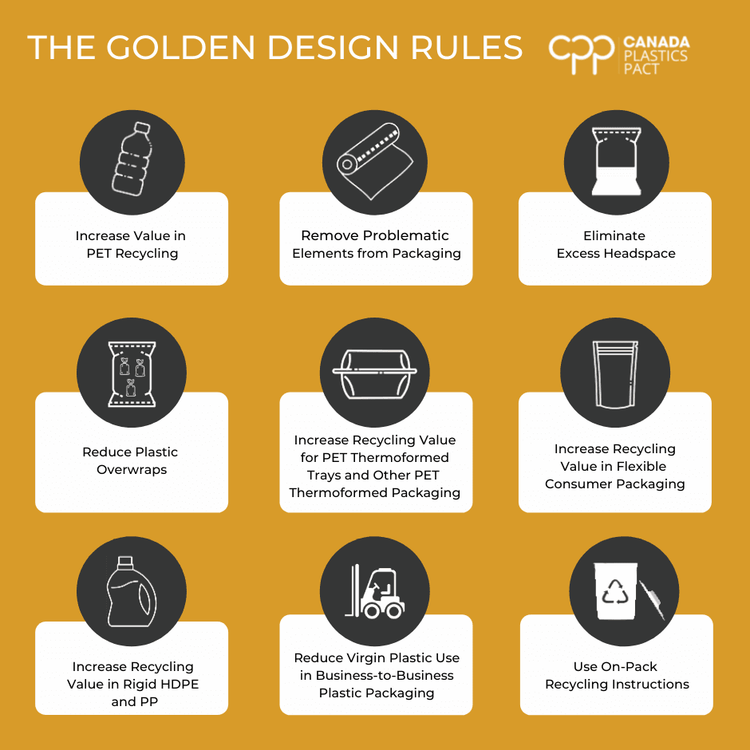
By Paul Shorthouse The demand to improve logistics, reduce costs, improve food safety, and maintain food freshness with less food spoilage are some of the top reasons fuelling the demand for single-use and, too often than not, hard-to-recycle packaging. However, this linear approach to packaging is contributing to the millions of tonnes of plastic waste ending up in our landfills and the environment each year. Poor packaging design, problematic materials, and excess packaging are disrupting the plastics recycling industry – but it doesn’t have to be this way. On a global scale, we’ve identified design interventions and innovative approaches that are more in line with circular economy principles and evolving recycling systems. How is the Canada Plastics Pact (CPP) leading food and beverage companies towards innovation? The Golden Design Rules (GDR) for Plastics Packaging , launched by the Consumer Goods Forum Coalition of Action on Plastic Waste, were developed collaboratively with 41 global companies in response to the New Plastics Economy Global Commitment led by the Ellen MacArthur Foundation and the UN Environment Programme. Since April 2022, the CPP with the support of its Redesign Working Group has been leading the consultation and implementation of these nine packaging rules in Canada, following the development of some Canadian-specific guidance. Key actors across the plastics value chain are working collaboratively to drive innovation and scale action to ensure problematic or unnecessary plastics are eliminated by 2025, while also improving the way packaging is designed for recyclability. CPP partners within the food and beverage sector that have innovated their product designs to become more sustainable have noticed how big of an impact a small change can have to reduce plastic waste and pollution. For example, Club Coffee, one of the largest coffee roasters and sustainable packaging innovators in North America, has set new benchmarks for coffee packaging by implementing the GDRs. Design changes to its R&G coffee packaging have reduced plastic use by 48 per cent compared to a similar foil quad seal bag, 83 per cent compared to a similar plastic canister, and reduced carbon emissions by 78 per cent compared to plastic canisters. Similarly, Bimbo Canada, the nation’s leading bakery, has also reduced its use of single-use plastic by approximately 200 metric tonnes annually when it transitioned to compostable cardboard bread tag clips. In addition to the GDRs, a number of strategies are being adopted within the food and beverage industry, including: Design for recyclability , such as replacing multi-resin laminates in flexible packaging with mono-resin packaging such as polyethylene; Lightweighting , with a focus on reducing the volume of plastic per unit sold; Elimination and alternatives , such as edible or dissolvable packaging; Inclusion of post-consumer recycled (PCR) content in produce packaging where safe (particularly in beverage containers); and Reuse models , which provide customers with the opportunity to buy bulk items in reusable and refillable containers. All in all, moving the entire system – from large to small food manufacturers – forward within a collaborative ecosystem will be essential to ensuring success. Learn more or join the Canada Plastics Pact The CPP is a unique, multi-stakeholder, industry-led, cross-value chain collaboration platform which aims to create a circular economy for plastic packaging in Canada by bringing businesses, government, non-governmental organizations, and other key actors across the value chain. CPP partners are united and working together on achieving clear, actionable targets as part of its Roadmap to 2025 . The CPP supports member and non-member companies to address and/or amplify their progress to circular packaging solutions. The CPP encourages companies looking to adjust their packaging design to join the CPP and sign on to the Golden Design Rules . Reach out to info@plasticspact.ca for more information and visit CPP’s website to sign up to receive monthly newsletters, or follow @CanadaPact on Instagram for the latest updates on the Canadian plastics industry. Paul Shorthouse is interim managing director of CPP. #plasticwaste #packagingdesign #nonplasticpackaging #plastic #Goldendesignrules #recycling