

Articles & Reports
Featured

One Consumer, Dozens of Touchpoints, One Campaign
Every new touchpoint used to mean another campaign to build, budget, and measure. Brands pulling ahead in retail media reach consumers across all of them with one campaign and no extra workload.

Where Crunch Meets Clean Label: Sunflower Kernels for the Next Generation of Better-for-You Snacks
Canada’s healthy snacks market is experiencing strong growth. According to Grand View Research, the market generated $3,713.6 million (USD) in 2025 and is projected to reach $7,282.5 million (USD) by 2033, growing at a compound annual growth rate (CAGR) of 8.8% from 2026 to 2033.¹ The research also identifies Canada as the fastest-growing regional market in North America, highlighting significant opportunities for food manufacturers looking to innovate in the category. For food scientists and product developers, this growth presents a complex formulation challenge. Consumers increasingly seek snacks that deliver nutritional value, convenience and recognizable ingredients, without sacraficing the taste,texture and overall eating experience they expect. Success depends on balancing these priorities to create better-for-you products that satisfy both nutritional goals and consumer expectations. Why Texture Matters in Snack Innovation Texture is a powerful influence on how consumers experience food, shaping everything from first impressions to repeat purchases. Puratos’s Taste Tomorrow research found that nearly half of consumers prioritize texture over ingredients when purchasing food, while 68% of millennials say texture directly influences their choices.² Ingredion research further indicates that 70% of global consumers would switch to a different product or brand if they were dissatisfied with its texture.³ For snack food manufacturers, these findings underscore the importance of getting texture right from the outset. Crunch, crispness and contrast can help distinguish a product in a competitive market, while combinations of complementary textures can create a more engaging and premium eating experience. Innova Market Insights’ Global Texture Trends 2026 report highlights the appeal of combining textures such as creamy, crunchy, and soft. Its research also revealed that one in four consumers globally is interested in trying snacks in formats that are new to them.⁴ Together, these insights point to opportunities for food manufacturers to explore fresh ingredient combinations and textural experiences that make better-for-you snacks stand out. Where Sunflower Kernels Fit In U.S.-grown sunflower kernels give food manufacturers a practical way to build that contrast. Their mild flavour and satisfying crunch add dimension to both sweet and savoury product innovations without overpowering other ingredients. They also bring plant-based protein, fibre and healthy fats, along with vitamin E, zinc, folate, iron and magnesium, so the texture upgrade comes with a nutritional one. Available raw, roasted and ready-to-eat, sunflower kernels can be used across a wide range of applications, including: • Better-for-you snack bars • Granola and trail mixes • Crackers and savoury snacks • Bakery products and breakfast cereals • Plant-based snacks and bites Clean Label and Allergen-Friendly by Design Consumers worldwide are increasingly prioritizing clean-label products made with recognizable ingredients and greater transparency. Innova Market Insights reports that more than two in three consumers globally say they are at least somewhat influenced by clean ingredient decks, and that nearly one in three new products now carries some type of clean label claim.⁵ Innova also notes that non-GMO claims are most established in North America.⁵ Sunflower kernels are naturally non-GMO and sustainably grown, which supports the transparency and recognizable-ingredient positioning shoppers respond to. They are also an allergen-friendly alternative to tree nuts, delivering the crunch consumers expect from nuts and seeds. Unlike tree nuts, sunflower kernels are not considered a priority allergen in Canada, making them a versatile option for manufacturers developing new products or reformulating existing ones. Turning Texture Trends into Product Opportunities As Canada's healthy snacks market continues to expand, food manufacturers have an opportunity to differentiate their products through thoughtful ingredient choices and more engaging eating experiences. Texture is an important part of that equation, influencing consumer appeal while creating opportunities to innovate across familiar snack formats. U.S.-grown sunflower kernels bring together satisfying crunch, plant-based nutrition and application versatility, making them a valuable ingredient to consider for the next generation of healthy snacks. From bars and granola to crackers and savoury mixes, they can help product developers create food innovations that balance texture, taste and nutritional value. Explore how U.S.-grown sunflower kernels can add texture, nutrition and versatility to your next snack innovation. Connect with a supplier today > {link to lead to the NSA Kernel suppliers page} References: 1. Grand View Research, Canada Healthy Snacks Market Size & Outlook, 2026–2033. https://www.grandviewresearch.com/horizon/outlook/healthy-snacks-market/canada 2. Puratos, “Why texture is important in food,” February 19, 2025. https://www.puratos.com/blog/why-texture-is-important-in-food 3. Ingredion research, as reported in “New approaches to texture innovation,” Food Business News, May 7, 2026. https://www.foodbusinessnews.net/articles/30275-new-approaches-to-texture-innovation

Inside SIAL Canada 2026: Driving Food Innovation Through Connection and Collaboration
CFIN had the honour of taking a bite out of SIAL Canada 2026 in Montréal 🍎—connecting with partners, members, and industry leaders shaping the future of food innovation across Canada and beyond. Representing CFIN on site were CEO @Dana McCauley and @Julie Daigle , Regional Innovation Director (Quebec), who engaged with the ecosystem throughout the event. Their presence reflected CFIN’s ongoing commitment to strengthening Canada’s food innovation ecosystem and supporting high-potential foodtech ventures. Attendees could also catch Julie as a Foodtech Focus expert at the SIAL Canada Expert Hub, where she connected directly with innovators and shared insights with the community. Dana also took the stage as part of the Dairy Talks program, contributing to a forward-looking discussion on innovation as a driver of market leadership in the Canadian dairy sector. Her session explored the shift from incremental product development toward a broader innovation mindset—highlighting next-generation ingredients, value-added dairy formats, new go-to-market strategies, and the role of Industry 4.0 technologies like AI, robotics, automation, and digital supply chains in strengthening productivity and global competitiveness. A key highlight of the week was CFIN’s involvement in the 7th edition of the Startup Pitch Competition, held on April 30 on the Food & Bev Connect stage. Julie Daigle participated as the President of the Foodtech jury, joining a panel of industry experts evaluating promising entrepreneurs from the Startup Village. Beyond the competition, the Startup Pitch stage served as a strategic platform connecting entrepreneurs with buyers, investors, and key decision-makers across the agri-food ecosystem. A standout moment for the CFIN community was the recognition of Maia Farms, a CFIN member and funding recipient, which earned the Gold Prize in the foodtec h competition 🍄🏆 CFIN’s presence at SIAL Canada underscored the momentum of Canada’s food innovation sector and the value of convening the ecosystem to accelerate ideas from concept to commercialization. 📖 Explore more from SIAL Canada 2026 R elive the stories, innovations, and key moments captured throughout the show in the official SIAL Canada Daily: SIAL Canada Daily – 2026 Edition (Photos Courtesy of SIAL)

Five Years of CFIN: A Letter to the Network
Thirty years ago, I worked as a chef in the kitchen of one of Canada’s top restaurants standing should er to shoulder with people who ca red about the sensory experience of food above all else . Our tech stack was al most all analog and , to be honest, we didn’t give our ordering system or the way we did inventory a lot of thought. My career broadened over time , and I ’ ve also held roles where I developed recipes at Canadian Living and wrote about food trends; built innovation strategies and products for national brands, founded a business incubator, and ran a venture creation office at a prestigious Canadian u niversity . Food was always the thread , and technology was always present but in most of the food focused businesses I’ve worked for, it was taken for granted, and creativity and hard work were what drove the businesses forward. While smart people with great ideas are essential to food business success, it’s not enough to be competitive in today’s world. Old ways of running restaurants, innovation labs and food and beverage processi ng businesses can’t compete internationally or absorb the trade shocks that have become commonpla ce in recent history. That’s why I feel l ik e CFIN is the perfect place for me to be today and why we’re adding dozens of new members per week. When CFIN was created in 2021, the mandate was intentionally broad : cata lyze Canadian food innovation with funding , build community, connect an ecosystem that had been operating in silos for decades. The funding programs took shape quickly. Since 2022, we’ve awar ded $23.3 million to 133 projects across six program s. For every $1 CFIN invested, our members committed $7.65 of their own capital toward innovation. This leverage ratio of nearly 8-to-1 has unlocked over $140 m illion in private sector spending on R&D and capital infrastructure. The other work was harder to define . What do "build community" and "connect an ecosystem" mean in practice for a sector span ning startups, processors, researchers, investors, policymakers, and operators spread across this vast country ? Th at question didn't have a tidy answer. As a result , fostering and serving this network was (and remains ) an exercise in innovation itself : something new to be built , and then tested, adjusted, and iterated upon , ad infinitum . I’m immensely proud of what we’ve built so far . A team of Regional Innovation Directors who've supported more than 2,200 organizations, brokering the introductions that became commercial partnerships, strategic investments, leadership hires, and research collaborations. A digital platform , YODL, connecting Canada's food sector across industry silos and bridging interprovincial barriers . The first comprehensive analysis of Canadian foodtech . A network of 8,500 members from every province, every part of the food value chain, every stage of business . On any given week, our community is discussing topics ranging from precision fermentation bioreactor designs and funding stacks to food packaging labeling regulations and export strategies, all in the same space. Members benefit from purpose-built tools and resources — like our Funding Finder that aggregates food and beverage funding opportunities across the country and a growing library of original sector research and analysis — alongside direct access to our Regional Innovation Directors. Canada has strong regional funders, accelerators, trade associations, and tech transfer offices, each doing necessary work in a defined lane. What this sector didn't have was a place where the conversation s , the tools, and the connections all showed up at once — where the range of problems and the range of capabilities were dense enough that the right solutions could emerge . That's what CFIN has built. That foundation is important because the next five years will be even more dynamic, and often more challenging, than the last five . To keep pace and flourish in an increasingly volatile world, Canada's food sector needs to modernize faster and more strategic ally than ever before . Trade disruption is dramaticall y reshaping supply chains . L abour constraints are compounding a productivity gap that was widening long before tariffs became front-page news. Climate pressures are intensifying. Food 4.0 — a tech-enabled food s ector that's more collaborative, productive, resilient, and competitive — is the framework CFIN is building toward, and the case for it gets more urgent by the quarter. I ’m confident that we’re up to the task . Five years ago, Canada's food innovation ecosystem was fragmented, underleveraged, and often invisible to the investors, operators, policymakers, and media who needed to see it. That's no longer true. The capacity to respond to the challenges ahead is here. Not in any single program or policy, but in the breadth of this network — the founders , processors , researchers , and investo rs who are hungry to innovate and build a better Canadian food sector . My own wide-ranging path through the food sector taught me that no single role ever showed me the full picture. It took working across kitchens, labs, newsrooms, boardrooms, and startups to understand how innovation really moves through this industry — and where it get s stuck. CFIN was built on the same insight. A sector this complex, facing challenges this urgent, needs more than funding or advice or connections in isolation. It needs all of them in the same room. That's what we've spent five years building, and I'm betting the next five will prove its value at a scale none of us can yet imagine. Thank you for being part of it. Dana McCauley, CEO, Canadian Food Innovation Network

How BC is Becoming a National Foodtech Hub
Editor's Note: This article was o riginally published in the Vancouver Tech Journal on March 13, 2026 The province has a diverse food processing industry, world-class research facilities, and a deep bench of tech talent — everything a foodtech ecosystem needs to thrive. Foodtech builds the software, automation, and applied science for how food gets processed, manufactured, packaged, distributed, and sold. The industry behind it is enormous — food and beverage processing alone is Canada's largest manufacturing sub-sector , bigger than automotive, bigger than aerospace. It's a serious market, and in British Columbia, it's growing fast. But if you work in the province's broader tech ecosystem, you might not even know that. Foodtech hasn't traditionally drawn the same attention as sectors like cleantech or enterprise SaaS despite being a comparable market in scale and complexity — and one where demand for new technology is accelerating fast. What BC brings to the table BC's food processing sector is substantial — over 3,200 companies producing roughly $12.6 billion in value-added products annually. And it's being treated as a strategic priority. The province has funded a network of shared food processing hubs, UBC just opened a Food and Beverage Innovation Centre with pilot-scale production labs that processors and startups previously had to leave BC to access, and SFU's BC Centre for Agritech Innovation is partnering directly with SMEs on cost-shared R&D. At the same time, much of what the food industry needs is already being built in BC for other thriving tech sectors. Process automation, energy management, supply chain software, safety and traceability systems, data-driven quality control — these are cleantech and software problems applied to production floors and distribution networks. The talent, research base, and trade infrastructure to support a serious foodtech cluster are all here. A different kind of tech sector Foodtech doesn't work like enterprise SaaS or consumer tech. Processors and manufacturers adopt slowly and carefully, because failure is expensive in ways that go beyond lost revenue — a food safety issue, a botched line integration, a regulatory problem. Sales cycles run in quarters. The investor community that understands food is small and specialized. And the industry's own networks run through trade associations, existing supply relationships, and sector-specific events that sit well outside the broader tech community's orbit. None of this means foodtech is closed off. It means that if you want in — as a founder, investor, developer, or potential partner — you need a way to access the conversations, the deal flow, and the operating knowledge that don't surface through the usual channels. The Canadian Food Innovation Network The Canadian Food Innovation Network is a national not-for-profit, established in 2021 that functions as the operating infrastructure for Canada's foodtech sector. CFIN runs cost-shared funding programs that help companies de-risk R&D and move technology into commercial settings. Since launch , the organization has awarded over $22 million to 122 Canadian foodtech projects, matched by $25 million in industry co-investment. Those funded companies have generated $90 million in economic impact, created over 355 jobs and co-op placements, and attracted more than $82 million in follow-on investment. The network's 8,000-plus members include food processors, technology companies, ingredient suppliers, retailers, researchers, and investors — connected through YODL, CFIN's member platform, and supported by Regional Innovation Directors embedded across the country, who work directly with members to broker introductions, navigate funding, and connect emerging technology with the processors and buyers who need it. CFIN also produces the sector's most detailed intelligence . The Foodtech in Canada 2025 Ecosystem Report mapped investment flows, identified sector strengths, and gave both companies and investors a clearer picture of where the Canadian foodtech market stands. And then there's Foodtech Frontier , CFIN's annual program identifying the country's highest-potential foodtech companies. The inaugural cohort of 35 winners included eight BC companies. For investors, it works as curated, vetted deal flow in a sector where sourcing is otherwise hard. For the companies, it's structured national visibility. Plug into Canada’s foodtech ecosystem If you work in technology or investment and you've been curious about the food sector, then signing up for a free CFIN membership is the best place to start. Members get access to funding programs, sector intelligence, a national innovation community, and regional team members that know the BC landscape specifically.
Other Articles

Talking Innovation: Artificial intelligence serving the food industry
Welcome to YODL! In addition to daily original content, YODL helps CFIN Members find new partners , resources , and funding opportunities to grow their food business. Learn more about this growing community and become a CFIN Member (for free!) today . Welcome to Talking Innovation with Isabelle Marquis, a French-language video covering all areas of food innovation. Today, Isabelle speaks with Michel Dubois, Senior Director, AI Activation at the Mila research centre, about artificial intelligence and its applications and potential for the food industry.

What YODLers are Saying and Reading – The Top YODL Content for May 2023
Welcome to YODL! In addition to daily original content, YODL helps CFIN Members find new partners , resources , and funding opportunities to grow their food business. Learn more about this growing community and become a CFIN Member (for free!) today . YODL was heating up last month with discussions and articles on industry events, trends, and networking opportunities. In case you missed them, here are the top five discussions and most read articles on YODL in May 2023. Top YODL Discussions in May 2023 Number 5 IFAB Introduction: We design and engineer specifically for the food and bev industry Cambridge, ON-based IFAB Engineering offers a range of facilities services for food businesses. Number 4 Seeking an expert for a Channel assessment Many food companies are looking for expert help and advice for strategic planning, product evaluation and other retail-focused services. Number 3 Debate about Sustainability of Cellular Food Cellular food has been a popular subject on YODL, with numerous articles and discussions ar ound cultivated products. Number 2 Looking for food-grade spray dryer CFIN members are coming to YODL to source a range of equipment and services. Number 1 Introduction & Some Exciting News! Manage My Groceries offers a Canadian online ecommerce platform designed to help retailers, distributors, importers and manufacturers find suppliers and grow their businesses. Most Read YODL Articles in May 2023 Number 5 50 Canadian FoodTech Resources – Canada’s Advanced M anufacturing Cluster Hamilton, ON-based research centre Canada’s Advanced Manufacturing Cluster supports businesses develop ing and scal ing new technology . Number 4 Meet a Member – Leonardo Calcagno The Meet a Member series is popular with YODLers ! This article features Leonardo Calcagno, editor of BaronMag.com/Boisson Québec . Number 3 Parlons d'innovation: SIAL Canada dévoile les inspirations de 2023 In her series Parlons d’innovation, Isabelle Marquis talks with the g eneral m anager of the SIAL network, Nicolas Trenteseaux, about this year’s SIAL Innovation competition. Number 2 50 Canadian FoodTech Resources - The BC Beverage Technology Access Centre The BTAC works with businesses to develo p beverages, including fermented, brewed, distilled and non-alcoholic products. Number 1 IN 30 – Robotics in the food and beverage industry The IN 30 series gives you all you need to know about new technology and trends affecting the Canadian food and beverage industry in 30 minutes or less. This article looks at the use of robotics in different sectors of the industry.
50 Canadian FoodTech Resources - NRC Marine Research Station
Welcome to YODL! In addition to daily original content, YODL helps CFIN Members find new partners , resources , and funding opportunities to grow their food business. Learn more about this growing community and become a CFIN Member (for free!) today . Canada has an extensive range of research centres, food incubators, accelerators and labs supporting food and beverage innovation through the research they do and/or the services they offer. Each week throughout 2023, we’ll be highlighting an organization that’s supporting food innovation in Canada. Name: N ational Research Council (NRC) Marine R esearch Station Location: Ketch Harbour, NS Mission: To deliver specialized research solutions for collaborators and clients. Focus: The Marine Research Station has experts in algal biology, marine biology, aquaculture, analytical chemistry, and applied nutrition. The algal research facility provides resources and expertise for the cultivation of seaweeds and microalgae to produce bioactives and other compounds. Services: The station offers : a dvanced biomass processing equipment , including three high-speed centrifuges with up to 5000 L per hour processing capacity , and industrial freeze-drying capacity . A n a dvanced chemostat laboratory for continuous cultivation and monitoring of microalgae Advanced instrumentation for biomass and lipid analysis including: automated Soxhlet lipid extractor ; bench top lyophilizer ; bomb calorimeter ; elemental analyzer ; fluorometer ; gas chromatograph ; membrane inlet mass spectrometer ; micro-osmometer ; and nitrogen analyzer Continuous photobioreactor capacity for intensive continuous cultivation of microalgae ( Biofence photobioreactor with a 2,400 - L capacity ) Conviron environmental growth chambers for controlled cultivation of algae Dynasep supercritical CO 2 bioactive extraction system Extensive marine organism cultivation and holding capacity (for example, seaweed, microalgae, zooplankton) Gas mixing and containment system for delivering specific gas mixtures to algal cultures High-capacity seawater pumping station servicing multiple buildings on site; seawater chilling and heating capacity Intensive microalgae batch cultivation capacity (multiple Brite -Box photobioreactors with a total volume of approximately 12,000 L) Laboratory-scale feed production facility for post-harvest processing of aquatic and crop-based resources and for on-site formulation and production of test diets and research feeds for animal and/or aquaculture nutrition studies Wet labs for algal growth media preparation and cell counting What you need to know: Using an in-house collection of strains, the station is exploring potential commercial applications of microalgae, including aquaculture feeds, protein concentrates, anti-microbial compounds, and anti-oxidants like carotenoid pigments. Harvesting and biochemical analysis of algal biomass is done on site and advanced tools for more detailed analyses of algal biomass and the extraction of specific bioactives can be tailored to the needs of our research partners. Notable News: Cascadia Seaweed , Canada’s largest vertically integrated ocean kelp cultivator, ran a pilot study in 2021 testing its kelp restoration method, called the green gravel method. The company will be testing its Green Gravel Production System (GGPS) this summer at the Marine Research Station . The production system include s electrical and plumbing systems, equipment, protocols, and training for reforesting Saccharina latissima (Sugar kelp). The system can also be modified for other kelp species. Get involved: Contact Laurel O ’ Connor at ( 306) 975-4573 , or at Laurel.oconnor@nrc-cnrc.gc.ca , o r reach out to our Regional Innovation Director for Atlantic Canada Tyson MacInnis . #microalgae #R&D #foodresearch #FoodInnovation #AtlanticCanada #marinebiology #microalgae #R&D #foodresearch #FoodInnovation #AtlanticCanada #marinebiology CFIN Members get exclusive access to funding opportunities , five Regional Innovation Directors , and YODL . Learn more about what it’s like to be a CFIN Member and how you can join our growing community of food professionals.
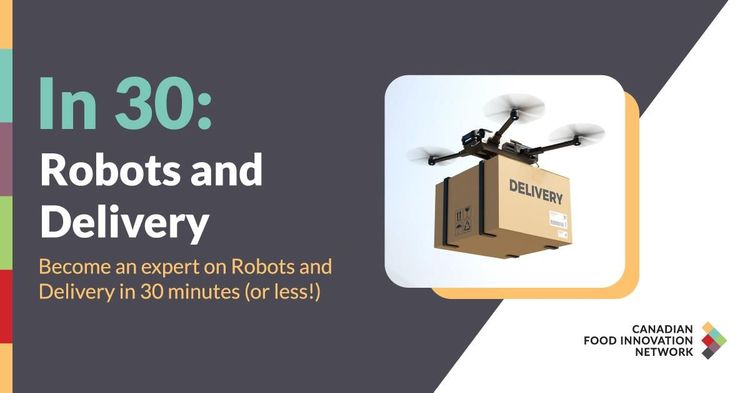
IN 30 – Robots and Food Delivery
Welcome to YODL! In addition to daily original content, YODL helps CFIN Members find new partners , resources , and funding opportunities to grow their food business. Learn more about this growing community and become a CFIN Member (for free!) today . Sometimes, all it takes is 30 minutes to learn the ins and outs of new food technologies and trends that are transforming the food and beverage industry. In this series, we’ll dig into a food innovation topic and link you to content and resources so you can become a master on the topic in 30 minutes (or less!). This week, we’re looking at the use of autonomous and remote-controlled robots for “last mile/kilometer” food delivery service. The Overview Businessinsider.com - Self-driving delivery startup Nuro is partnering with Domino's to deliver pizzas in Houston— see how it works Nuro is a self-driving delivery service using electric autonomous vehicles. The Verge - Amazon stops field tests of its delivery robot Scout - The Verge Amazon launched its Scout robot delivery service in 2019, but scaled back the program in late 2022 in favour of trials for Amazon Prime Air’s drone delivery service . Forbes - The Future Of Delivery Robots Robot delivery is becoming more familiar in cities around the world, offering an efficient, environmentally-friendly alternative to vehicle delivery. The Canadian Connection Tiny Mile – Food businesses and consumers are using Geoffrey, small remotely-controlled robot couriers, from Toronto, ON-based Tiny Mile to make deliveries of less than 20 lbs. to customers within a specific delivery area. DM Magazine – The Last-Mile Challenge in Canada Customer demand for delivery has become a competitive edge for food companies and grocers. Digital, non-traditional delivery methods such as robots and drones could be a game-changer . InDro Robotics – This Victoria, BC-based company produces unmanned robotic technology including drones and robot s for air, land and water. Its ROLL-E is a remote-controlled UVG (unmanned ground vehicle) designed specifically for last mile deliveries. Social Media @starshiprobots – (Instagram) Founded in 2014, Starship has completed more than four million autonomous deliveries around the world. @kiwicampus – (Facebook) Columbia-based Kiwi Campus is a food delivery service for school campuses which delivers meals to students via Kiwibots . @ServeRobotics – (Twitter) San Francisco, CA-based Serve Robotics offers robot delivery with Uber Eats and other companies, and was testing its delivery service with Pizza Hut Canada in Vancouver, BC in September 2022. Overtime If you’ve got more than 30 minutes, these are for you: YouTube - Tiny Mile Delivery Robot, Geoffrey, Makes Friends in Charlotte

Staff Picks - Rajiv Ramalingam
Welcome to YODL! In addition to daily original content, YODL helps CFIN Members find new partners , resources , and funding opportunities to grow their food business. Learn more about this growing community and become a CFIN Member (for free!) today . A lot of material comes across our desks at CFIN, and we love to share new information with YODLers ! This one in a series of articles highlighting what CFIN staff are reading, listening to, watching, and posting. This time we’re checking in with CFIN’s IT Lead Support, Rajiv Ramalingam. What technology is out there right now that really excites? A rtificial intelligence (AI) is a wide-ranging tool that enables people to rethink how we integrate information, analyze data, and use the resulting insights to improve decision making , and already it is transforming every walk of life . AI ’ s application across a variety of sectors address es issues in its development, and offer s recommendations for getting the most out of AI while still protecting important human values. What tech tools do you think food and beverage companies should be investing in? Food and beverage businesses continue to be affected by industry trends and must contend with evolving regulatory compliance and changing consumer preferences. To manage it all, food and beverage companies should invest in technologies like m achine learning and AI that enables them to keep pace. What tech companies interest you the most and why? I love all the Microsoft products , e specially t he Windows operating system and Microsoft Office Suite , which have been responsible for the digital transformation of the modern world. Though Microsoft had a humble beginning, it has played a critical role in shaping the world of technology as we experience it toda y. The other company that interests me is Google. It has changed how search engine s work, by using a PageRank algorithm which prioritized a website’s popularity over its relevance. This led to websites becoming more connected to each other, popular websites coming up more often during Google searches , and unpopular ones promptly dying off. Now, most websites work together and link to each other in what’s called backlinking, a process that contributed to Google’s growth. Also , by creating products and services like Gmail and Google Maps, Google arguably became the most centralized hub on the internet to get all those services in single place. Google has leaned into that description by expanding into online communication with Google Hangouts and online storage like the Google Cloud. Products like Google Docs, Google Sheets and the Android operating system for mobile devices have also helped Google become a “lifestyle brand . ” They’ve already got 75 per cent of search traffic and 90 per cent of mobile search traffic. They’re going to be everywhere , including in sensors and in self-driving cars. What are you currently reading, watching, or listening to? I read technology related articles, especially from a tech website name called How to Geek – where experts will explain us technology . I started to follow them since 2008, until today I am getting their daily email notification about new technologies and problem-solving techniques. I highly recommend to anyone to visit their page who needs tech support or to learn about the latest technologies in the market. I enjoy watching action and thriller movies together with my six-year-old daughter on Netflix and Amazon. We repeatedly watch Grizzy and the Lemmings and Paw Patrol . I love listening to podcasts. I have been listening to The Phoen i x Project , A N ovel about IT DevOps, and Helping Your Business Win written by Gene Kim, Kevin Behr and George Spafford. You came to Canada from Singapore. What are the biggest differences you’ve noticed – from both a food and tech perspective? Locally grown fresh food (vegetables, fruits, grains, etc.) are available in Canada. In Singapore all the items related to food are imported from various countries and most of the time I noticed they were not fresh. On the other hand, Singapore adapts to the latest technologies that are available in the market both in private and public sectors very quickly. In Canada, I’ve noticed some of the businesses are often slow to adapt to new technologies.

AI and the Food Industry – An interview with the Alberta Machine Intelligence Institute (AMII)
Welcome to YODL! In addition to daily original content, YODL helps CFIN Members find new partners , resources , and funding opportunities to grow their food business. Learn more about this growing community and become a CFIN Member (for free!) today . CFIN’s Chief Technology Officer Nestor Gomez recently sat down with Russ Erickson, vice president of Investment and Partnerships at the Alberta Machine Intelligence Institute (AMII) to discuss how innovative businesses are using artif icia l intell igence to optimize and scale their endeavors. AMII is a non-profit research institute driving world leading AI studies and translating those findings into scientific breakthroughs and industry adoption and commercial applications.They partner with companies of all sizes, across industries, to drive innova tion st rategy and provide practical guidance and advice to help businesses unlock the true potential of AI.
50 Canadian FoodTech Resources - Investment Agriculture Foundation of BC
Welcome to YODL! In addition to daily original content, YODL helps CFIN Members find new partners , resources , and funding opportunities to grow their food business. Learn more about this growing community and become a CFIN Member (for free!) today . Canada has an extensive range of research centres, food incubators, accelerators and labs supporting food and beverage innovation through the research they do and/or the services they offer. Each week throughout 2023, we’ll be highlighting an organization that’s supporting food innovation in Canada. Name: Investment Agriculture Foundation of BC (IAF) Location: Victoria, BC Mission: To offer support and funding opportunities to BC companies in the agriculture and food sector. Focus: IAF delivers programs a nd services to support the agriculture and agri-food sector in BC. Services: The foundation offers customized, end-to-end program administration solutions for programs that support operational and environmental concerns of the agriculture and agri-food sector in BC. That includes: Program planning and implementation design Program promotion and marketing Planning and implementation Program monitoring, evaluation and auditing Quality a ssurance Communications and stakeholder engagement Training and knowledge-base management The foundation also helps guide applicants through: Guidance on program eligibility and project structure Project due diligence and funding decisions Writing and executing contracts Project assessment and monitoring Payments and claims processing What you need to know: IAF has delivered many strategic initiatives through collaboration with government in recent years, including AgriChain , an agriculture specific blockchain, and the Growing Agriculture Trust created in 2021 with $19.3 million in funding available . The sustainable Trust enables AIF to develop programs to help grow agriculture and agri-food in BC. Notable News: IAF delivers a wide range of funding opportunities through government programs aimed at different sectors of the agriculture, agri-food, and food and beverage processing industries. Get Involved: Contact IAF at info@iafbc.ca or at (250) 940-6150, or reach out to our Regional Innovation Director for BC Lavina Gully .

Cultivating Success – Takeaways from YEX Serums
Welcome to YODL! In addition to daily original content, YODL helps CFIN Members find new partners , resources , and funding opportunities to grow their food business. Learn more about this growing community and become a CFIN Member (for free!) today . Last week CFIN released its latest member virtual experience, Cultivating Success: Canada's Big Biomanufacturing Opportunity . The experience was hosted by cellular food experts Dr. Lenore Newman of the Food and Agriculture Institute at the University of the Fraser Valley in BC, and Dr. Evan Fraser of the Arrell Food Institute at the University of Guelph in Ontario. The event featured many examples of Canadian cellular food companies, including YEX Serums , a Toronto, ON-based biotechnology research company developing media and nutrients for cellular culture growth. Here’s YEX co-founder Dr. Hon Leong talking about what it was like participating in the experience. Q: Tell us a bit about your company and what you do. Leong: YEX is a company that is manufacturing a product that will enable companies to make their lab-grown meat products profitably and in an environmentally friendly way. Q: Y ou were onsite at Immersion Room for the shooting of the documentary. What was that experience like? Leong: Honestly, it was one the most incredible experiences of my life. I enjoyed every minute of it. Being in an office and in a lab all day – it was such a contrast. All of the equipment and professional filmmakers that day made it feel so glamorous. It was a wonderful experience for me. Q: Why do you think it’s important to explain what the cellular food industry is and to showcase Canadian companies in this space? Leong: I think that its going to be the future of meat and in Canada there are several companies that are involved in innovation and production. Canada is not lagging behind , and with more exposure and time, Canada could be helping lead the frontier of this new food industry. Q: H ow do you see the cellular food sector progressing in the short and long term? Leong: Its hard to say but I am optimistic. As I learn about more and more Canadian companies involved in this, I am becoming optimistic that in the short term there will be some Canadian successes. In the long term, I’m hoping that food grocers will take notice and help Canadian companies better market and communicate the benefits of this new type of food. Q: Anything else you’d like to add? Leong: YEX is hoping to be a major player in the cell ag field by helping others with their media needs. We offer something that is truly innovative and will lead to delicious tasting food products. To connect with YEX , reach out to your Regional Innovation Director. In case you missed it, here's Cultivating Success: Canada's Big Biomanufacturing Opportunity .

Cultivating Success – Takeaways from Evolved Meats
Welcome to YODL! In addition to daily original content, YODL helps CFIN Members find new partners , resources , and funding opportunities to grow their food business. Learn more about this growing community and become a CFIN Member (for free!) today . Last week CFIN released its latest member virtual experience, Cultivating Success: Canada's Big Biomanufacturing Opportunity. The event was hosted by cellular food experts Dr. Lenore Newman of the Food and Agriculture Institute at the University of the Fraser Valley in BC, and Dr. Evan Fraser of the Arrell Food Institute at the University of Guelph in Ontario. The event featured many examples of Canadian cellular food companies, including Evolve d Meats , a cultivated meat company based in Kitchener, ON. Here’s Evolve d Meats co-founder John Cappuccitti talking about what it was like participating in the experience. Q: Tell us a bit about your company and what you do. Cappuccitti : We are a cultivated meat company that creates whole cuts of meat that are both structurally and biochemically identical to conventional meat. Q: Why do you think it’s important to explain what the cellular food industry is and to showcase Canadian companies in this space? Cappuccitti : It is important for two reasons: c onsumers need to get educated on the safety of these products ; and Canada has an opportunity to be at the forefront of a major technological wave . Q: H ow do you see the cellular food sector progressing in the short and long term? Cappuccitti : Over the short term we expect very little market penetration by cellular foods. There is still a lot of work that needs to be done to scale the industry. Over the longer term, we believe that cellular agriculture could start to displace a significant amount of protein consumption globally. Q: Anything else you’d like to add? Cappuccitti : Thank you for having us involved! To connect with Evolved Meats, reach out to your Regional Innovation Director.

IN 30 – Ghost Kitchens
Welcome to YODL! In addition to daily original content, YODL helps CFIN Members find new partners , resources , and funding opportunities to grow their food business. Learn more about this growing community and become a CFIN Member (for free!) today . Sometimes, all it takes is 30 minutes to learn the ins and outs of new food technologies and trends that are transforming the food and beverage industry. In this series, we’ll dig into a food innovation topic and link you to content and resources so you can become a master on the topic in 30 minutes (or less!). This week, we’re looking at ghost kitchens, a commercial foodservice operation without a traditional storefront or restaurant . Also known as virtual restaurants or dark kitchens , i n many of these establishments food is ordered online and food is prepared for delivery only, for a cashless transaction. The Overview Canadian Institute of Food Safety - What is A Ghost Kitchen? Learn the key differences between a ghost kitchen and a traditional foodservice operation. Kickfin - What Are Ghost Kitchens: Everything You Need to Know More about the pros and cons of using or setting up a ghost kitchen. Medium - Cloud Kitchens: The Underdogs Of The Food Industry Statista says the cloud kitchen format is expected to grow 12% through 2024. The Restaurant Times - 7 Pitfalls to Avoid when Running a Cloud Kitchen Business in 2023 Some common mistakes operators may face when running a ghost kitchen. The Canadian Connection Ghost Kitchens Brand is a Canadian company that partners with fast food brands to create scalable , multi-tenant ghost kitchen concepts across North America for third-party delivery, as well as offering standalone, mall and big box store locations for walk-in customers and customer pick up. Wandereater - 9 Best Ghost Kitchens in Canada Nine independent Canadian brands which rely on ghost kitchens. Social Media @virtualdiningco (Facebook) Virtual Dining Concepts works with existing restaurants and startups to establish delivery-only brands around the world. Nextbite (LinkedIn) Nextbite Brands matches companies with under-utilized kitchens to help them enter the virtual restaurant space. @freshmenu (Instagram) Ghost kitchens are thriving in India, where FreshMenu is based. The company offers an extensive menu of international cuisine prepared fresh daily. Overtime If you’ve got more than 30 minutes, these are for you: Spotify – Ghost Kitchen Trends This podcast looks at the business trends and concepts driving the ghost kitchen phenomenon. YouTube – CloudKitchens : How it Works
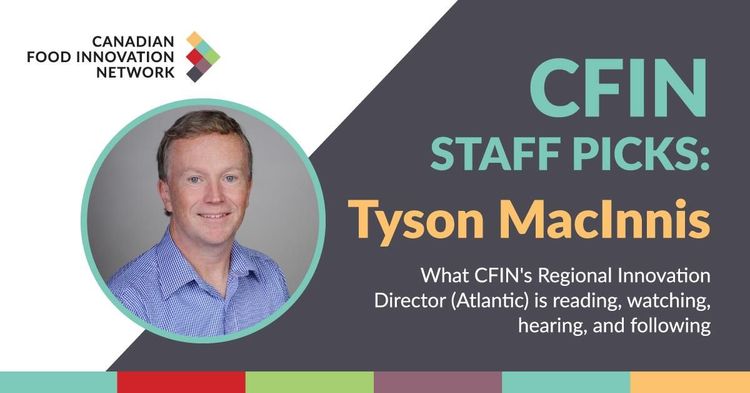
Staff Picks – Tyson MacInnis
Welcome to YODL! In addition to daily original content, YODL helps CFIN Members find new partners , resources , and funding opportunities to grow their food business. Learn more about this growing community and become a CFIN Member (for free!) today . A lot of material comes across our desks at CFIN, and we love to share new information with YODLers ! This one in a series of articles highlighting what CFIN staff are reading, listening to, watching, and posting. This week we’re checking in with Regional Innovation Director for Atlantic Canada, Tyson MacInnis. What are you reading? I just finished reading Blink by Malcolm Gladwell. I ’ve enjoyed a couple of his books in the past such as the Tipping Point and Outliers , but I somehow had missed reading Blink . In a nutshell , it’s about how and why we make gut decisions – when it’s a good thing and sometimes when it’s not. Prior to that, I brushed up on an old personal finance classic on our bookshelf The Wealthy Barber , as I was helping my son out with some money strategy tips. Next on my list is the realization that doing the same things and expecting different results clearly isn’t working for my golf game, so I’m going to turn to Ben Hogan’s F ive L essons : The Modern Fundamentals of Golf for some help! What are you listening to? I listen to Freakonomics on a regular basis as I like that it covers a range of interesting subjects that you otherwise wouldn’t think of. Also, most recently I occasionally listen to How I B uilt T his , Next in Travel & Dining , and Mid-Day Squares . Who are you following? I usually do a quick review of Entrevestor to keep up with the latest start-up and investment news in Atlantic Canada and The Spoon for their quick summary of foodtech news. What are you watching? Not the Maple Leafs or the Oilers which is very disappointing since it’s been 30 years since a Canadian team won the Stanley C up. What are you posting about? I like to post about member achievements and help members with requests they post in YODL.
AI + Food – Mycionics
Welcome to YODL! In addition to daily original content, YODL helps CFIN Members find new partners , resources , and funding opportunities to grow their food business. Learn more about this growing community and become a CFIN Member (for free!) today . This series showcases Canadian foodtech companies that are using AI to solve a wide variety of industry challenges, including improving efficiency, pricing analysis, inventory management, quality control, food safety assurance and more. In this installment , we’re featuring Putnam, ON -based Mycionics. What T hey D o Mycionics has developed a fully automated mushroom harvesting system using novel advanced robotics and automation. The entire harvesting process is optimized through the application of data analytics, machine learning and artificial intelligence. The system , which is highly modular and structured in a way that can be easily applied to other crops and industries , offers mushroom farms a competitive edge against the global labour shortage afflicting the industry. Mycionics is the first company in the world to successfully automate the end-to-end mushroom harvesting process for the fresh market. How T he y’re U sing AI Stefan Glibetic , lead engineer and CTO for Mycionics , says the company’s machine vision system applies a combination of algorithms, including AI, to process the vision data to determine mushroom properties, and how to pick those mushrooms effectively and without damage. The system also capture s environmental microclimate data, such us temperature, humidity and C O 2 , which helps the farmer visualize their growing environment and grow higher - quality mushrooms. In the Media YODL – Robotics in Action