

Articles & Reports
Featured

One Consumer, Dozens of Touchpoints, One Campaign
Every new touchpoint used to mean another campaign to build, budget, and measure. Brands pulling ahead in retail media reach consumers across all of them with one campaign and no extra workload.
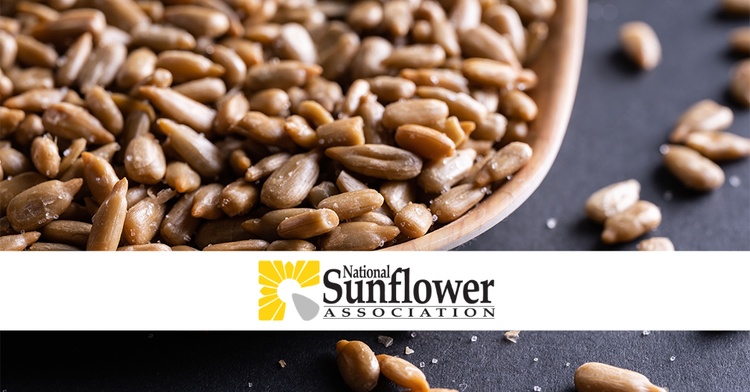
Where Crunch Meets Clean Label: Sunflower Kernels for the Next Generation of Better-for-You Snacks
Canada’s healthy snacks market is experiencing strong growth. According to Grand View Research, the market generated $3,713.6 million (USD) in 2025 and is projected to reach $7,282.5 million (USD) by 2033, growing at a compound annual growth rate (CAGR) of 8.8% from 2026 to 2033.¹ The research also identifies Canada as the fastest-growing regional market in North America, highlighting significant opportunities for food manufacturers looking to innovate in the category. For food scientists and product developers, this growth presents a complex formulation challenge. Consumers increasingly seek snacks that deliver nutritional value, convenience and recognizable ingredients, without sacraficing the taste,texture and overall eating experience they expect. Success depends on balancing these priorities to create better-for-you products that satisfy both nutritional goals and consumer expectations. Why Texture Matters in Snack Innovation Texture is a powerful influence on how consumers experience food, shaping everything from first impressions to repeat purchases. Puratos’s Taste Tomorrow research found that nearly half of consumers prioritize texture over ingredients when purchasing food, while 68% of millennials say texture directly influences their choices.² Ingredion research further indicates that 70% of global consumers would switch to a different product or brand if they were dissatisfied with its texture.³ For snack food manufacturers, these findings underscore the importance of getting texture right from the outset. Crunch, crispness and contrast can help distinguish a product in a competitive market, while combinations of complementary textures can create a more engaging and premium eating experience. Innova Market Insights’ Global Texture Trends 2026 report highlights the appeal of combining textures such as creamy, crunchy, and soft. Its research also revealed that one in four consumers globally is interested in trying snacks in formats that are new to them.⁴ Together, these insights point to opportunities for food manufacturers to explore fresh ingredient combinations and textural experiences that make better-for-you snacks stand out. Where Sunflower Kernels Fit In U.S.-grown sunflower kernels give food manufacturers a practical way to build that contrast. Their mild flavour and satisfying crunch add dimension to both sweet and savoury product innovations without overpowering other ingredients. They also bring plant-based protein, fibre and healthy fats, along with vitamin E, zinc, folate, iron and magnesium, so the texture upgrade comes with a nutritional one. Available raw, roasted and ready-to-eat, sunflower kernels can be used across a wide range of applications, including: • Better-for-you snack bars • Granola and trail mixes • Crackers and savoury snacks • Bakery products and breakfast cereals • Plant-based snacks and bites Clean Label and Allergen-Friendly by Design Consumers worldwide are increasingly prioritizing clean-label products made with recognizable ingredients and greater transparency. Innova Market Insights reports that more than two in three consumers globally say they are at least somewhat influenced by clean ingredient decks, and that nearly one in three new products now carries some type of clean label claim.⁵ Innova also notes that non-GMO claims are most established in North America.⁵ Sunflower kernels are naturally non-GMO and sustainably grown, which supports the transparency and recognizable-ingredient positioning shoppers respond to. They are also an allergen-friendly alternative to tree nuts, delivering the crunch consumers expect from nuts and seeds. Unlike tree nuts, sunflower kernels are not considered a priority allergen in Canada, making them a versatile option for manufacturers developing new products or reformulating existing ones. Turning Texture Trends into Product Opportunities As Canada's healthy snacks market continues to expand, food manufacturers have an opportunity to differentiate their products through thoughtful ingredient choices and more engaging eating experiences. Texture is an important part of that equation, influencing consumer appeal while creating opportunities to innovate across familiar snack formats. U.S.-grown sunflower kernels bring together satisfying crunch, plant-based nutrition and application versatility, making them a valuable ingredient to consider for the next generation of healthy snacks. From bars and granola to crackers and savoury mixes, they can help product developers create food innovations that balance texture, taste and nutritional value. Explore how U.S.-grown sunflower kernels can add texture, nutrition and versatility to your next snack innovation. Connect with a supplier today > {link to lead to the NSA Kernel suppliers page} References: 1. Grand View Research, Canada Healthy Snacks Market Size & Outlook, 2026–2033. https://www.grandviewresearch.com/horizon/outlook/healthy-snacks-market/canada 2. Puratos, “Why texture is important in food,” February 19, 2025. https://www.puratos.com/blog/why-texture-is-important-in-food 3. Ingredion research, as reported in “New approaches to texture innovation,” Food Business News, May 7, 2026. https://www.foodbusinessnews.net/articles/30275-new-approaches-to-texture-innovation

Inside SIAL Canada 2026: Driving Food Innovation Through Connection and Collaboration
CFIN had the honour of taking a bite out of SIAL Canada 2026 in Montréal 🍎—connecting with partners, members, and industry leaders shaping the future of food innovation across Canada and beyond. Representing CFIN on site were CEO @Dana McCauley and @Julie Daigle , Regional Innovation Director (Quebec), who engaged with the ecosystem throughout the event. Their presence reflected CFIN’s ongoing commitment to strengthening Canada’s food innovation ecosystem and supporting high-potential foodtech ventures. Attendees could also catch Julie as a Foodtech Focus expert at the SIAL Canada Expert Hub, where she connected directly with innovators and shared insights with the community. Dana also took the stage as part of the Dairy Talks program, contributing to a forward-looking discussion on innovation as a driver of market leadership in the Canadian dairy sector. Her session explored the shift from incremental product development toward a broader innovation mindset—highlighting next-generation ingredients, value-added dairy formats, new go-to-market strategies, and the role of Industry 4.0 technologies like AI, robotics, automation, and digital supply chains in strengthening productivity and global competitiveness. A key highlight of the week was CFIN’s involvement in the 7th edition of the Startup Pitch Competition, held on April 30 on the Food & Bev Connect stage. Julie Daigle participated as the President of the Foodtech jury, joining a panel of industry experts evaluating promising entrepreneurs from the Startup Village. Beyond the competition, the Startup Pitch stage served as a strategic platform connecting entrepreneurs with buyers, investors, and key decision-makers across the agri-food ecosystem. A standout moment for the CFIN community was the recognition of Maia Farms, a CFIN member and funding recipient, which earned the Gold Prize in the foodtec h competition 🍄🏆 CFIN’s presence at SIAL Canada underscored the momentum of Canada’s food innovation sector and the value of convening the ecosystem to accelerate ideas from concept to commercialization. 📖 Explore more from SIAL Canada 2026 R elive the stories, innovations, and key moments captured throughout the show in the official SIAL Canada Daily: SIAL Canada Daily – 2026 Edition (Photos Courtesy of SIAL)
Five Years of CFIN: A Letter to the Network
Thirty years ago, I worked as a chef in the kitchen of one of Canada’s top restaurants standing should er to shoulder with people who ca red about the sensory experience of food above all else . Our tech stack was al most all analog and , to be honest, we didn’t give our ordering system or the way we did inventory a lot of thought. My career broadened over time , and I ’ ve also held roles where I developed recipes at Canadian Living and wrote about food trends; built innovation strategies and products for national brands, founded a business incubator, and ran a venture creation office at a prestigious Canadian u niversity . Food was always the thread , and technology was always present but in most of the food focused businesses I’ve worked for, it was taken for granted, and creativity and hard work were what drove the businesses forward. While smart people with great ideas are essential to food business success, it’s not enough to be competitive in today’s world. Old ways of running restaurants, innovation labs and food and beverage processi ng businesses can’t compete internationally or absorb the trade shocks that have become commonpla ce in recent history. That’s why I feel l ik e CFIN is the perfect place for me to be today and why we’re adding dozens of new members per week. When CFIN was created in 2021, the mandate was intentionally broad : cata lyze Canadian food innovation with funding , build community, connect an ecosystem that had been operating in silos for decades. The funding programs took shape quickly. Since 2022, we’ve awar ded $23.3 million to 133 projects across six program s. For every $1 CFIN invested, our members committed $7.65 of their own capital toward innovation. This leverage ratio of nearly 8-to-1 has unlocked over $140 m illion in private sector spending on R&D and capital infrastructure. The other work was harder to define . What do "build community" and "connect an ecosystem" mean in practice for a sector span ning startups, processors, researchers, investors, policymakers, and operators spread across this vast country ? Th at question didn't have a tidy answer. As a result , fostering and serving this network was (and remains ) an exercise in innovation itself : something new to be built , and then tested, adjusted, and iterated upon , ad infinitum . I’m immensely proud of what we’ve built so far . A team of Regional Innovation Directors who've supported more than 2,200 organizations, brokering the introductions that became commercial partnerships, strategic investments, leadership hires, and research collaborations. A digital platform , YODL, connecting Canada's food sector across industry silos and bridging interprovincial barriers . The first comprehensive analysis of Canadian foodtech . A network of 8,500 members from every province, every part of the food value chain, every stage of business . On any given week, our community is discussing topics ranging from precision fermentation bioreactor designs and funding stacks to food packaging labeling regulations and export strategies, all in the same space. Members benefit from purpose-built tools and resources — like our Funding Finder that aggregates food and beverage funding opportunities across the country and a growing library of original sector research and analysis — alongside direct access to our Regional Innovation Directors. Canada has strong regional funders, accelerators, trade associations, and tech transfer offices, each doing necessary work in a defined lane. What this sector didn't have was a place where the conversation s , the tools, and the connections all showed up at once — where the range of problems and the range of capabilities were dense enough that the right solutions could emerge . That's what CFIN has built. That foundation is important because the next five years will be even more dynamic, and often more challenging, than the last five . To keep pace and flourish in an increasingly volatile world, Canada's food sector needs to modernize faster and more strategic ally than ever before . Trade disruption is dramaticall y reshaping supply chains . L abour constraints are compounding a productivity gap that was widening long before tariffs became front-page news. Climate pressures are intensifying. Food 4.0 — a tech-enabled food s ector that's more collaborative, productive, resilient, and competitive — is the framework CFIN is building toward, and the case for it gets more urgent by the quarter. I ’m confident that we’re up to the task . Five years ago, Canada's food innovation ecosystem was fragmented, underleveraged, and often invisible to the investors, operators, policymakers, and media who needed to see it. That's no longer true. The capacity to respond to the challenges ahead is here. Not in any single program or policy, but in the breadth of this network — the founders , processors , researchers , and investo rs who are hungry to innovate and build a better Canadian food sector . My own wide-ranging path through the food sector taught me that no single role ever showed me the full picture. It took working across kitchens, labs, newsrooms, boardrooms, and startups to understand how innovation really moves through this industry — and where it get s stuck. CFIN was built on the same insight. A sector this complex, facing challenges this urgent, needs more than funding or advice or connections in isolation. It needs all of them in the same room. That's what we've spent five years building, and I'm betting the next five will prove its value at a scale none of us can yet imagine. Thank you for being part of it. Dana McCauley, CEO, Canadian Food Innovation Network
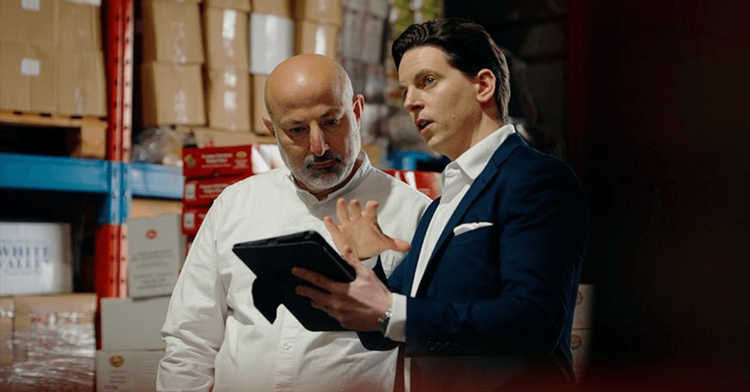
How BC is Becoming a National Foodtech Hub
Editor's Note: This article was o riginally published in the Vancouver Tech Journal on March 13, 2026 The province has a diverse food processing industry, world-class research facilities, and a deep bench of tech talent — everything a foodtech ecosystem needs to thrive. Foodtech builds the software, automation, and applied science for how food gets processed, manufactured, packaged, distributed, and sold. The industry behind it is enormous — food and beverage processing alone is Canada's largest manufacturing sub-sector , bigger than automotive, bigger than aerospace. It's a serious market, and in British Columbia, it's growing fast. But if you work in the province's broader tech ecosystem, you might not even know that. Foodtech hasn't traditionally drawn the same attention as sectors like cleantech or enterprise SaaS despite being a comparable market in scale and complexity — and one where demand for new technology is accelerating fast. What BC brings to the table BC's food processing sector is substantial — over 3,200 companies producing roughly $12.6 billion in value-added products annually. And it's being treated as a strategic priority. The province has funded a network of shared food processing hubs, UBC just opened a Food and Beverage Innovation Centre with pilot-scale production labs that processors and startups previously had to leave BC to access, and SFU's BC Centre for Agritech Innovation is partnering directly with SMEs on cost-shared R&D. At the same time, much of what the food industry needs is already being built in BC for other thriving tech sectors. Process automation, energy management, supply chain software, safety and traceability systems, data-driven quality control — these are cleantech and software problems applied to production floors and distribution networks. The talent, research base, and trade infrastructure to support a serious foodtech cluster are all here. A different kind of tech sector Foodtech doesn't work like enterprise SaaS or consumer tech. Processors and manufacturers adopt slowly and carefully, because failure is expensive in ways that go beyond lost revenue — a food safety issue, a botched line integration, a regulatory problem. Sales cycles run in quarters. The investor community that understands food is small and specialized. And the industry's own networks run through trade associations, existing supply relationships, and sector-specific events that sit well outside the broader tech community's orbit. None of this means foodtech is closed off. It means that if you want in — as a founder, investor, developer, or potential partner — you need a way to access the conversations, the deal flow, and the operating knowledge that don't surface through the usual channels. The Canadian Food Innovation Network The Canadian Food Innovation Network is a national not-for-profit, established in 2021 that functions as the operating infrastructure for Canada's foodtech sector. CFIN runs cost-shared funding programs that help companies de-risk R&D and move technology into commercial settings. Since launch , the organization has awarded over $22 million to 122 Canadian foodtech projects, matched by $25 million in industry co-investment. Those funded companies have generated $90 million in economic impact, created over 355 jobs and co-op placements, and attracted more than $82 million in follow-on investment. The network's 8,000-plus members include food processors, technology companies, ingredient suppliers, retailers, researchers, and investors — connected through YODL, CFIN's member platform, and supported by Regional Innovation Directors embedded across the country, who work directly with members to broker introductions, navigate funding, and connect emerging technology with the processors and buyers who need it. CFIN also produces the sector's most detailed intelligence . The Foodtech in Canada 2025 Ecosystem Report mapped investment flows, identified sector strengths, and gave both companies and investors a clearer picture of where the Canadian foodtech market stands. And then there's Foodtech Frontier , CFIN's annual program identifying the country's highest-potential foodtech companies. The inaugural cohort of 35 winners included eight BC companies. For investors, it works as curated, vetted deal flow in a sector where sourcing is otherwise hard. For the companies, it's structured national visibility. Plug into Canada’s foodtech ecosystem If you work in technology or investment and you've been curious about the food sector, then signing up for a free CFIN membership is the best place to start. Members get access to funding programs, sector intelligence, a national innovation community, and regional team members that know the BC landscape specifically.
Other Articles
50 Canadian FoodTech Resources – Platform Calgary
Welcome to YODL! In addition to daily original content, YODL helps CFIN Members find new partners , resources , and funding opportunities to grow their food business. Learn more about this growing community and become a CFIN Member (for free!) today . Canada has an extensive range of research centres, food incubators, accelerators and labs supporting food and beverage innovation through the research they do and/or the services they offer. Each week throughout 2023, we’ll be highlighting an organization that’s supporting food innovation in Canada. Name: Platform Calgary Location: Calgary, AB Mission: Platform Calgary is a non-profit, member - based organization with a mandate to bring together the resources of Calgary ’s tech ecosystem to help startups launch and grow , from ideation through to scale. Focus: The organization offers innovators access to Calgary’s tech sector through its alignment with a collaborative ecosystem o f 100+ local, national and international partners. Services: Platform Calgary provides: F ounder training and mentorship for entrepreneurs with the goal of starting and scaling the number of companies in Calgary by 10; H elp with investor development and engagement; C onnections with local tech startups; and , T alent development and hiring help. The organization offers a range of programs designed to help entrepreneurs at different stages of their companies, from startup to launch and scale up. It also features a 50,000-sq.-ft. Platform Innovation Centre which acts as a community hub and meeting place for members, as well providing members with access to resources, seminars, classes , workshops and more. What you need to know: Platform Calgary’s members are tech-driven or tech-enable d companies of all sizes with headquarters or a presence in Calgary. Member ship for companies with fewer than 20 employees is free. Notable News: Platform Calgary and Digital Commerce Bank launched the Digital Commerce Calgary Fintech Award in 2022 and distributed $310,000 in cash to help fintech (financial technology) startups. Its current call for entries is open until June 5, 2023. Get Involved : Contact Mina Demian , startup advisor, at the centre at ( 403 ) 284-6400 , or reach out to CFIN’s Regional Innovation Directo r for the Prairies, Hubba Khatoon .

Cultivating Success – Top 5 Takeaways
Welcome to YODL! In addition to daily original content, YODL helps CFIN Members find new partners , resources , and funding opportunities to grow their food business. Learn more about this growing community and become a CFIN Member (for free!) today . Yesterday , CFIN premiered i ts latest virtual experience -- Cultivating Succes s : Canada's Big Biomanufacturing Opportunity . The experience was hosted by cellular food experts Dr. Lenore Newman of the Food and Agriculture Institute at the University of the Fraser Valley in BC, and Dr. Evan Fraser of the Arrell Food Institute at the University of Guelph in Ontario . Many Ca nadian cellular food companies were featured in the experience a nd explained the potential of this emerging technology to change how we produce, purchase and consume food. Here are the top five takeaways from the experience : 1. Cellular food techniques such as precision fermentation have been used for decades. V egetable rennet created through precision fermentation has been used in cheesemaking s ince the 1990s. Cellular agriculture is a new tool to ensure there is enough protein to feed the world, as well as in-demand products with limited supply, such as coffee , vanilla and chocolate. It won’t necessarily replace traditional agriculture and food processing; it will supplement it. 2 . The cost of cellular food technology has decreased significantly in the past 10 years . The first hamburger created through cellular food processes in 201 3 cost more than $300,000. Today that same hamburger costs approximately $10 to create in the lab. The cost of producing cellular food will continue to decrease as new processes , technology , growth mediums , and companies enter the space and create a localized, sustainable supply chain. 3. Harvesting cells from an animal through a biopsy doesn’t harm the animal. Cells can then be modified to create immortalized cells that multiply indefinitely, meaning no more animal samples are required . Other animal products, like leather and silk, can also be created through the cellular process. Lab- grown products taste identical to the original animal product and have the same nutrition profile . 4. C anada is poised to become a global leader in cellular food. Canada currently exports many of its raw materials for processing elsewhere. Using cellular techniques means that more raw materials would stay in Canada for local processing, while helping the food industry lower its greenhouse gas emissions and its environmental and carbon footprint. Having a made-in-Canada solution for food processing would also help mitigate food scarcity and inflation, and boost supply chain resilience. 5. There are already several Canadian companies innovating to develop cellular food products, including protein and value-added ingredients such as fat and glutamates. Canada has a natural advantage in this field as we have a plentiful supply of biomass (organic material from plants and animals), technical knowledge, foodtech resources, a stable market, and a strong regulatory system . Here’s more about the companies featured in Cutivating Success: Ardra Inc. - Ardra produces sustainable, natural ing r edients through precision fermentation. Ardra is now developing a process for the fermentation-based production of heme as a natural flavour ingredient. Evolved Meats - Evolved Meats is a cultivated meat company based in Kitchener, ON. The company is creating cultivated pork belly that will be identical to conventional pork belly. Liven Proteins – Liven Proteins Corp. makes animal-free, f unctional and sustainable protein ingredients. The company is currently o ptimizing its bioprocess for upcycling starch streams and to test a dditional side streams in the food industry as a starting material to build a fermentation platform for animal-free protein manufacturing. YEX Serums – YEX Serums is a biotechnology research company developing media and nutrients for cellular culture growth.

Meet a Member – Rebecca Prime
Welcome to YODL! In addition to daily original content, YODL helps CFIN Members find new partners , resources , and funding opportunities to grow their food business. Learn more about this growing community and become a CFIN Member (for free!) today . Since launching in 2022, CFIN has grown to more than 2,600 members, which includes professionals from every sector of the food industry. This series highlights the many different CFIN members across Canada who visit YODL to learn, make connections, find funding, and discover new ways to grow their businesses. Beckie Prime Founder, Beck’s Bro t h Kitchener, ON Tell us a bit about your job Beck’s Broth has joined the circular food economy to deliver delicious bone broths infused with chocolate or cold brew coffee. We supply our neighbours with the nourishment of bone broth mixed with the delicious richness of soothing beverages you’ve enjoyed your whole life. How is YODL helping you do your job ? Through the connections I have met on YODL, we have learned how to become more efficient with product production and gain clarity during our product development stage. How often do you visit YODL ? Once or twice a week. Can you tell us something you’ve learned on YODL ? We learned how to cook our bone broth down quickly using brewing equipment. What type of connection partners are you looking for ? Experts in product development and manufacturing. What is your favourite aspect of YODL ? The community of like-minded individuals. What area of food innovation interests you the most ? How there are endless opportunities when it comes to upcycled ingredients! What’s been your favourite discussion post or article? I really enjoyed reading topics that focus on co-packing. I’ve never worked with a co-packer before. I know Beck’s Broth will be making the shift soon enough. What is your favourite food and/or beverage? Bone broth, of course! Interested in participating in our Meet a Member series? Contact your Regional Innovation Director for more information!
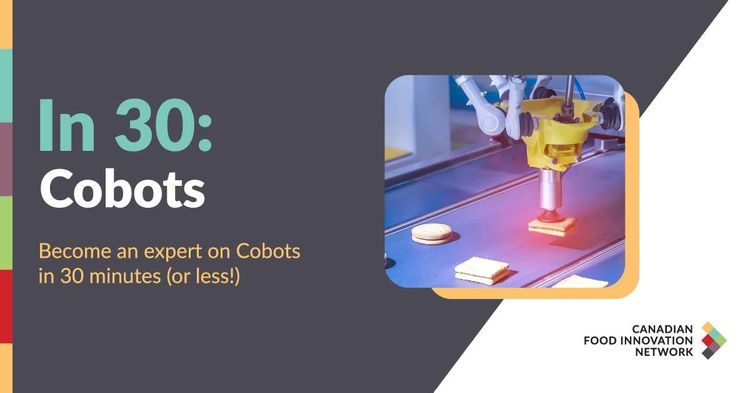
IN 30 – Cobots
Welcome to YODL! In addition to daily original content, YODL helps CFIN Members find new partners , resources , and funding opportunities to grow their food business. Learn more about this growing community and become a CFIN Member (for free!) today . Sometimes, all it takes is 30 minutes to learn the ins and outs of new food technologies and trends that are transforming the food and beverage industry. In this series, we’ll dig into a food innovation topic and link you to content and resources so you can become a master on the topic in 30 minutes (or less!). This week, we’re looking at the use of cobots , collaborative robotic systems that work alongside human workers, and their use in the food industry . The Overview WiredWorkers - What is a cobot? The ultimate collaborative robot guide Learn how cobots differ from robots, and how their use can benefit any manufacturing operation. WiredWorkers - Cobots in the foo d industry A deeper dive into the ways cobots are being used in the food and beverage industry to solve common challenges such as labour shortages and safety concerns. Collaborative Robotics - 7 reasons why manufacturers should invest in cobots Even more reasons why food companies are looking at cobots to boost efficiency and ensure product consistency. The Canadian Connection Cyberworks Robotics provides autonomous self-driving technology for material handling forklifts and tow-tuggers as well as industrial floor scrubbers. Kinova produces robotics including the Link 6, a collaborative robot designed to work with grippers, vacuum applications, weld tips and other cobot tools. Social Medi a @Universal_Robot (Twitter) Denmark’s Universal Robot offers cobots for food manufacturing worldwide. Cobotnation (Instagram) Cobot Nation creates custom designed automation systems for a range of industries. Overtime If you’ve got more than 30 minutes, these are for you: YouTube – What are Cobots?
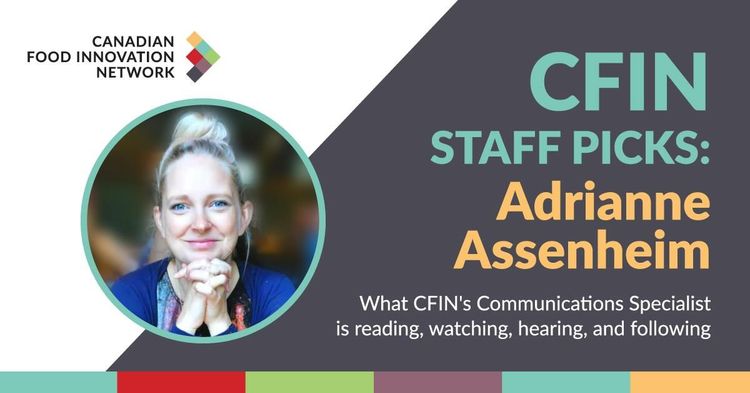
Staff Picks – Adrianne Assenheim
Welcome to YODL! In addition to daily original content, YODL helps CFIN Members find new partners , resources , and funding opportunities to grow their food business. Learn more about this growing community and become a CFIN Member (for free!) today . A lot of material comes across our desks at CFIN, and we love to share new information with YODLers! This one in a series of articles highlighting what CFIN staff are reading, listening to, watching, and posting. This time we’re checking in with CFIN’s Communications Specialist Adrianne Assenheim . What are you reading? Lately I have been devouring Lenore Newman’s Lost Feast: Culinary Extinction and the Future of Food . Her books are as delicious as a beach read, and as filling as the OG Noma tasting menu! I also spend a lot of time leafing through my cookbooks (which I never follow but am very inspired by) to soak up tips on zero-waste cooking, foraged / local / seasonal produce and preserving. Most recently I have been gravitating to Love and Lemons Everyday in preparation from what I hope will be a big heirloom veg gie haul from our garden this year. I’ve also been reading up on using foraged plants for pigments in art . What are you listening to? I’ll be honest, I spend most of my spare listening time turning my dogged curiosity to pondering cold cases , so lately it’s been a lot of Buried Bones , Tenfold More Wicked and CBC True Crime podcasts. Otherwise, you’ll find me on Spotify listening to anything I can belt out. Singing keeps me present. Who are you following? It’s officially veggie gardening time in Ontario, so I am mostly following heirloom gardeners like @poppy.okotcha . I can’t get enough of her content. What are you watching? When I need a hit of dreamy regenerative ag, I’ll watch The Biggest Little Farm again and again, but I’ve been catching up on Schmigadoon! and Only Murders in the Building lately as I get ready for a juicy summer of The Great and Bridgerton . I am always interested in how creatives choose to tell stories visually, so I tend to consume anything and everything I can, when I’m not chasing my two kiddos, shoemaking or gardening. What are you posting about? I’ve been turning to YODL for great advice on podcasts to listen to now that the weather is nice enough to walk the dog for more than a minute. Our members always have their fingers on the pulse of the food industry, and are so open with their advice!
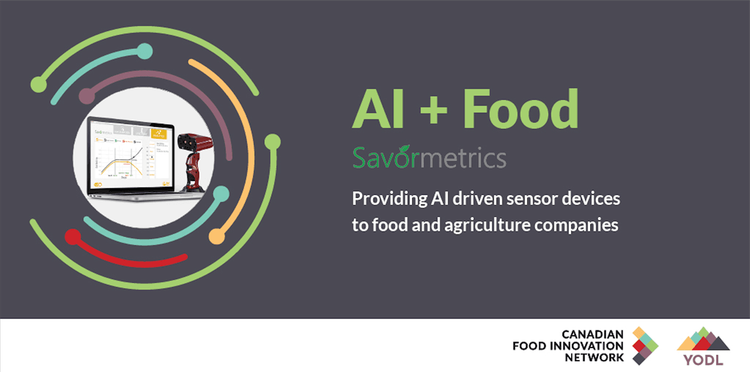
AI + Food – Savormetrics
Welcome to YODL! In addition to daily original content, YODL helps CFIN Members find new partners , resources , and funding opportunities to grow their food business. Learn more about this growing community and become a CFIN Member (for free!) today . This series showcases Canadian foodtech companies that are using AI to solve a wide variety of industry challenges, including improving efficiency, pricing analysis, inventory management, quality control, food safety assurance and more. In this installment, we’re featuring Mississauga, ON-based Savormetrics . What They Do The company offers r eal- t ime bi ophysical and b iochemical q uality a nalysis through FoodSafe Analyzers, a fully integrated, food quality analysis tool. The integration of cutting-edge hardware and software technology allows for non-destructive quantitative and qualitative measurements of fresh food products. The tool works by extracting and analyzing t he desired biochemical and biophysical quality metrics using advanced artificial intelligence algorithms. The company’s team of food scientists and engineers then train the algorithms to help achieve the desired business outcomes. How They're Using AI Savormetrics applies advanced artificial intelligence and machine learning algorithms to: Develop new, more meaningful food quality metrics Develop taste metrics Predict shelf-life Predict best time to harvest Predict ripening processes Predict yields for food processing applications Identify contaminants Track the movement of foods and predict its impact on quality metrics through the food supply chain Develop efficient grading classifications In the Media Foodservice & Hospitality - Technology innovations for Canada’s foodservice industry - Foodservice and Hospitality Magazine YouTube - Savormetrics 2022 RIT Pitch Competition
50 Canadian FoodTech Resources – Canada’s Advanced Manufacturing Cluster
Welcome to YODL! In addition to daily original content, YODL helps CFIN Members find new partners , resources , and funding opportunities to grow their food business. Learn more about this growing community and become a CFIN Member (for free!) today . Canada has an extensive range of research centres, food incubators, accelerators and labs supporting food and beverage innovation through the research they do and/or the services they offer. Each week throughout 2023, we’ll be highlighting an organization that’s supporting food innovation in Canada. Want to catch up? Click here to view our master list of foodtech resources. Name: Canada’s Advanced Manufacturing Cluster Location: Hamilton, ON Mission: T hrough Next Generation Manufacturing Canada ( NGen ) , the cluster’s goal is t o build up next-generation manufacturing capabilities, such as advanced robotics and 3D printing. Focus : The c luster is positioning Canadian companies to lead industrial digitalization, maximizing competitiveness and participation in global markets . The cluster’s technology focus includes I nternet of Things, machine learning, cybersecurity, and additive manufacturing (3D printing) . Services: There are several different program streams offered through the cluster. They include: High Potential Technology Development — Developing and scaling new technologies with significant commercial potential. Ground Breaking Process Transformation — Adopting advanced technologies to transform existing manufacturing processes. Technology Diffusion — Expanding the user base for new and unique applications of technologies developed in Canada. Ecosystem Development — Support for training, collaboration, and the development of tools and test beds. SME Capacity Building — Strengthening and scale up for SME partners. What you need to know: Some of the recent projects supported by the Advanced Manufacturing Cluster include the d evelopment of bacterial frameworks for biomanufacturing of industrial and therapeutic products with partners Mediphage Bioceuticals Inc., Ardra Inc. ; g lobal l eadership in l ife s ciences by e nabling c ommercial s cale m anufacture of c ell and g ene t herapies ; and development of a m icro- p ower p lant a dvanced m anufacturing d emonstrator . Notable News: The impact of programs and services offered through the cluster are expected to include the creation of more than 13,500 jobs and more than $13.5 billion in GDP over 10 years. Get Involved: Contact NGen at info@ngen.ca, or through Bridget Bohan , director of the cluster accelerator. Or reach out to our Regional Innovation Director Linda Fox .

EXPLAINED: Artificial Intelligence (AI)
Welcome to YODL! In addition to daily original content, YODL helps CFIN Members find new partners , resources , and funding opportunities to grow their food business. Learn more about this growing community and become a CFIN Member (for free!) today . What is it? Machines and systems that are programmed with AI can simulate human intelligence , can acquire and apply knowledge in order to perform tasks, solve complex problems, and improve performance. Machine learning is a subset of AI algorithms. Why you should care New food technologies and the introduction of AI programs in the computers that control production lines have the potential to change the way the food industry works, especially as businesses look for automated solutions to address issues such as supply chain traceability, production efficiency, food safety and quality control, and waste reduction. Some of the manufacturing technology included under the category Industry 4.0 relies on AI to process the data captured by Industrial Internet of Things (IIoT) devices, enterprise resource planning (ERP) systems, and connected remote access monitoring software. By using AI, businesses can collect and analyze data that enables them to generate business intelligence, giving them a competitive advantage. Most AI-driven functions are machine-to-machine transactions. AI-driven systems can add value and efficiency to many areas in food operations, including to: Automate tasks across different departments, such as accounting, IT, customer service and marketing. Streamline resource tracking throughout the supply chain and ensure compliance from vendors. Provide data for forecasting sales, resource demand and R&D on consumer trends. Automate production activities, including management work. Provide more effective quality and safety control in real time. Help create “smart” factories that run more efficiently with less downtime, using less energy and lower operating costs. Help drive greenhouse gas emission reduction targets. Help scale operations using predictive technology. Offer real-time monitoring of security systems. Provide technical support for employees and customers. Monitor and automate social media activity. Provide customized offers for consumers based on data analysis. Perform self-service analytics. Opportunities in Canada There are a range of companies offering AI-enabled software and equipment to Canadian food and beverage companies. Saint John, NB-based independent brewery Moosehead uses a conveyor belt at its bottling plant embedded with Internet-enabled sensors and data analytics software to monitor pasteurization, filling, labelling, capping and packaging, increasing capacity while lowering costs. Sobeys ’ fully automated Customer Fulfillment Centre, a $150-million, 500,000-sq.-ft. warehouse and distribution centre in Vaughan, ON, features AI-driven automated case picking and palletizing systems. The system can stack up to 10 per cent more products on each pallet, saving up to 40 per cent on labour costs. Fredericton, NB-based Eigen Innovations produces machine vision solutions powered by AI to help businesses automate their quality control system. Toronto, ON-based Canvass AI provides industrial AI software such as its Canvass Platform that can help food companies boost production efficiency and output, while reducing waste.
IN 30 – Machine Learning
Welcome to YODL! In addition to daily original content, YODL helps CFIN Members find new partners , resources , and funding opportunities to grow their food business. Learn more about this growing community and become a CFIN Member (for free!) today . Sometimes, all it takes is 30 minutes to learn the ins and outs of new food technologies and trends that are transforming the food and beverage industry. In this series, we’ll dig into a food innovation topic and link you to content and resources so you can become a master on the topic in 30 minutes (or less!). This week, we’re looking at the use of machine learning in the food and beverage industry. The Overview YODL - EXPLAINED: Machine Learning Computer sciences are responsible for revolutionary process changes in many sectors, including the food industry. Every year, new innovative solutions emerge that can improve the efficiency and profitability of companies, and machine learning is a prime example. SPD Group - Machine Learning and AI in Food Industry: Solutions and Potential Artificial Intelligence and Machine Learning solutions offer many possibilities to optimize and automate processes, save money, and reduce human error for many industries. Softwaretestinghelp.com - Top 13 BEST Machine Learning Companies An in-depth look at how machine learning is used, and how to select the best machine learning company to meet your company’s needs. The Canadian Connection Canadian Grocer - What ChatGPT and AI could do for the food industry Sylvain Charlebois discusses C hatGPT , machine learning and AI, and it’s potential impact on how the food industry embraces new technologies in the future . YODL - 50 Canadian FoodTech Resources – EMILI Manitoba’s Enterprise Machine Intelligence and Learning Initiative (EMILI) works with industry organizations and academic institutions from across the technology sector to increase integration of intelligent technologies, empower people with digital skills, support scale-ups to grow in the Prairies, and accelerate Canada’s growth as a leader in digital agriculture. Social Medi a @ vividmachines (Instagram) Toronto-based Vivid Machines has developed a multispectral computer vision platform to digitize fruit production. TheoryMesh (LinkedIn) Winnipeg-based TheoryMesh is working through the entire supply chain from growers to consumers to revolutionize traceability through application. @InData Labs (Facebook) InData Labs is one of the world’s top machine learning companies. Overtime If you’ve got more than 30 minutes, these are for you: YODL - Interview with Nestor Gomez on Algorithms
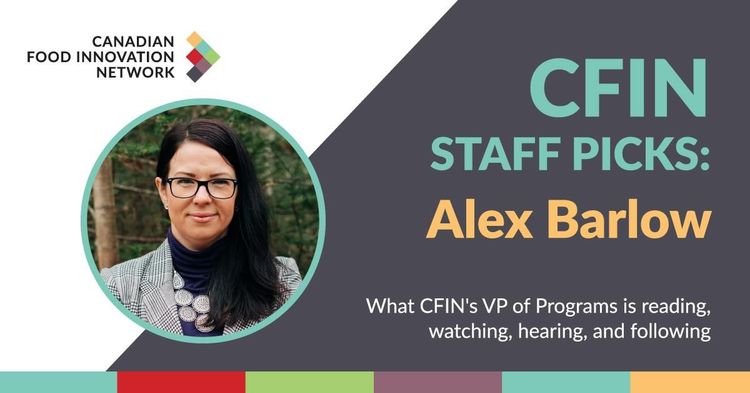
Staff Picks – Alex Barlow
Welcome to YODL! In addition to daily original content, YODL helps CFIN Members find new partners , resources , and funding opportunities to grow their food business. Learn more about this growing community and become a CFIN Member (for free!) today . A lot of material comes across our desks at CFIN, and we love to share new information with YODLers ! This one in a series of articles highlighting what CFIN staff are reading, listening to, watching, and posting. This time we’re checking in with CFIN’s vice president of Programs, Alex Barlow . What are you reading? I just finished a C.S. Sansom book called Tombland . C.S. Sansom writes these huge books about a lawyer back in the 1500s. I’ve always been a sucker for long mysteries set in the way back times , I inherited that interest from my father. What are you listening to? Recently I’m obsessed with a band called Lake Street Dive that a friend introduced me to. Podcast wise, I really like The Big Story which is a daily 20 - to 30 - min ute episode on Canadian topics – recent ones around grocery prices, single - use plastics, or how our cup of coffee helps us understand global inflation are some favo u rites. My listening habits, unlike my reading habits, are all about short and sweet ! Who are you following? Most of my “following” these days happens on Instagram. I really enjoy Dr. Rhonda Patrick , who focuses a lot on the science behind health and longevity . On a more professional basis, I follow groups like Foresight Canada and many of the “Top 50” style lists on LinkedIn to understand who the great up and comers are in this country. What are you watching? Yellowjackets and RuPaul’s Drag Race . What are you posting about? Anything to do with our great members, funded products, as well as new opportunities for funding and commercialization support. You can find me on LinkedIn !

Meet a Member – Leonardo Calcagno
Welcome to YODL! In addition to daily original content, YODL helps CFIN Members find new partners , resources , and funding opportunities to grow their food business. Learn more about this growing community and become a CFIN Member (for free!) today . Since launching in 2022, CFIN has grown to more than 2,600 members, which includes professionals from every sector of the food industry. This series highlights the many different CFIN members across Canada who visit YODL to learn, make connections, find funding, and discover new ways to grow their businesses. Leonardo Calcagno Editor, podcaster, marketing for BaronMag.com / Boisson Québec Laval, QC Tell us about your job I'm the editor of BaronMag , a trade publication about the beer and beverage industry. I’m also a podcaster, guest speaker and industry consultant. How is YODL helping you do your job? I use YODL to find interesting topics for my podcasts, to get news , and meet people . How often do you visit YODL ? On a d aily basis . What is your favo u rite aspect of YODL ? The f orum . Can you tell us something you learned on YODL? For now, getting info rmation and meeting with people to better understand the industry. What type of connection partners are you looking for? All of them! We need to meet as many people to better understand the industry. What areas of food innovation interests you the most? Packaging , sales, distribution , and innovation . What has been your favourite discussion post? The articles on packaging. Favourite food and/or beverage ? Gin, beer and wine.
50 Canadian FoodTech Resources – InBe NomadLab
Welcome to YODL! In addition to daily original content, YODL helps CFIN Members find new partners , resources , and funding opportunities to grow their food business. Learn more about this growing community and become a CFIN Member (for free!) today . Canada has an extensive range of research centres, food incubators, accelerators and labs supporting food and beverage innovation through the research they do and/or the services they offer. Each week throughout 2023, we’ll be highlighting an organization that’s supporting food innovation in Canada. Want to catch up? Click here to view our master list of foodtech resources. Name: InBe NomadLab Location: Québec Ci ty, QC Mission: To connect innovators to their consumers in real time and provide actionable insights to guide decision making. Focus: InBe works with innovative consumer brands from a variety of industries, including food and beverage manufacturing, to provide consumer feedback on concepts, products and services. Services: The company offers different methods of capturing consumer interests, including through testing based on client concepts, value propositions and products, as well as market research and validation. Clients receive customized on consumer responses in real time. It also offers workshops on how to design, implement and optimize a front-end innovation system. What you need to know: InBe provides a platform for users to give feedback, allowing clients to stay connected with consumers during innovation projects, gain consumer insights, and send targeted surveys. This could include home testing to fine-tune strategies. Notable News: InBe stands for “in between,” and symbolizes the organization’s role as a catalyst between innovators and consumers. Get Involved: Contact Sebastien Leduc , h ead o f S trategic Development and p artner at InBe , at (418) 263-4760 , or reach out to our Regional Innovation Directo r Julie Daigle .