

Articles & Reports
Featured

One Consumer, Dozens of Touchpoints, One Campaign
Every new touchpoint used to mean another campaign to build, budget, and measure. Brands pulling ahead in retail media reach consumers across all of them with one campaign and no extra workload.

Where Crunch Meets Clean Label: Sunflower Kernels for the Next Generation of Better-for-You Snacks
Canada’s healthy snacks market is experiencing strong growth. According to Grand View Research, the market generated $3,713.6 million (USD) in 2025 and is projected to reach $7,282.5 million (USD) by 2033, growing at a compound annual growth rate (CAGR) of 8.8% from 2026 to 2033.¹ The research also identifies Canada as the fastest-growing regional market in North America, highlighting significant opportunities for food manufacturers looking to innovate in the category. For food scientists and product developers, this growth presents a complex formulation challenge. Consumers increasingly seek snacks that deliver nutritional value, convenience and recognizable ingredients, without sacraficing the taste,texture and overall eating experience they expect. Success depends on balancing these priorities to create better-for-you products that satisfy both nutritional goals and consumer expectations. Why Texture Matters in Snack Innovation Texture is a powerful influence on how consumers experience food, shaping everything from first impressions to repeat purchases. Puratos’s Taste Tomorrow research found that nearly half of consumers prioritize texture over ingredients when purchasing food, while 68% of millennials say texture directly influences their choices.² Ingredion research further indicates that 70% of global consumers would switch to a different product or brand if they were dissatisfied with its texture.³ For snack food manufacturers, these findings underscore the importance of getting texture right from the outset. Crunch, crispness and contrast can help distinguish a product in a competitive market, while combinations of complementary textures can create a more engaging and premium eating experience. Innova Market Insights’ Global Texture Trends 2026 report highlights the appeal of combining textures such as creamy, crunchy, and soft. Its research also revealed that one in four consumers globally is interested in trying snacks in formats that are new to them.⁴ Together, these insights point to opportunities for food manufacturers to explore fresh ingredient combinations and textural experiences that make better-for-you snacks stand out. Where Sunflower Kernels Fit In U.S.-grown sunflower kernels give food manufacturers a practical way to build that contrast. Their mild flavour and satisfying crunch add dimension to both sweet and savoury product innovations without overpowering other ingredients. They also bring plant-based protein, fibre and healthy fats, along with vitamin E, zinc, folate, iron and magnesium, so the texture upgrade comes with a nutritional one. Available raw, roasted and ready-to-eat, sunflower kernels can be used across a wide range of applications, including: • Better-for-you snack bars • Granola and trail mixes • Crackers and savoury snacks • Bakery products and breakfast cereals • Plant-based snacks and bites Clean Label and Allergen-Friendly by Design Consumers worldwide are increasingly prioritizing clean-label products made with recognizable ingredients and greater transparency. Innova Market Insights reports that more than two in three consumers globally say they are at least somewhat influenced by clean ingredient decks, and that nearly one in three new products now carries some type of clean label claim.⁵ Innova also notes that non-GMO claims are most established in North America.⁵ Sunflower kernels are naturally non-GMO and sustainably grown, which supports the transparency and recognizable-ingredient positioning shoppers respond to. They are also an allergen-friendly alternative to tree nuts, delivering the crunch consumers expect from nuts and seeds. Unlike tree nuts, sunflower kernels are not considered a priority allergen in Canada, making them a versatile option for manufacturers developing new products or reformulating existing ones. Turning Texture Trends into Product Opportunities As Canada's healthy snacks market continues to expand, food manufacturers have an opportunity to differentiate their products through thoughtful ingredient choices and more engaging eating experiences. Texture is an important part of that equation, influencing consumer appeal while creating opportunities to innovate across familiar snack formats. U.S.-grown sunflower kernels bring together satisfying crunch, plant-based nutrition and application versatility, making them a valuable ingredient to consider for the next generation of healthy snacks. From bars and granola to crackers and savoury mixes, they can help product developers create food innovations that balance texture, taste and nutritional value. Explore how U.S.-grown sunflower kernels can add texture, nutrition and versatility to your next snack innovation. Connect with a supplier today > {link to lead to the NSA Kernel suppliers page} References: 1. Grand View Research, Canada Healthy Snacks Market Size & Outlook, 2026–2033. https://www.grandviewresearch.com/horizon/outlook/healthy-snacks-market/canada 2. Puratos, “Why texture is important in food,” February 19, 2025. https://www.puratos.com/blog/why-texture-is-important-in-food 3. Ingredion research, as reported in “New approaches to texture innovation,” Food Business News, May 7, 2026. https://www.foodbusinessnews.net/articles/30275-new-approaches-to-texture-innovation

Inside SIAL Canada 2026: Driving Food Innovation Through Connection and Collaboration
CFIN had the honour of taking a bite out of SIAL Canada 2026 in Montréal 🍎—connecting with partners, members, and industry leaders shaping the future of food innovation across Canada and beyond. Representing CFIN on site were CEO @Dana McCauley and @Julie Daigle , Regional Innovation Director (Quebec), who engaged with the ecosystem throughout the event. Their presence reflected CFIN’s ongoing commitment to strengthening Canada’s food innovation ecosystem and supporting high-potential foodtech ventures. Attendees could also catch Julie as a Foodtech Focus expert at the SIAL Canada Expert Hub, where she connected directly with innovators and shared insights with the community. Dana also took the stage as part of the Dairy Talks program, contributing to a forward-looking discussion on innovation as a driver of market leadership in the Canadian dairy sector. Her session explored the shift from incremental product development toward a broader innovation mindset—highlighting next-generation ingredients, value-added dairy formats, new go-to-market strategies, and the role of Industry 4.0 technologies like AI, robotics, automation, and digital supply chains in strengthening productivity and global competitiveness. A key highlight of the week was CFIN’s involvement in the 7th edition of the Startup Pitch Competition, held on April 30 on the Food & Bev Connect stage. Julie Daigle participated as the President of the Foodtech jury, joining a panel of industry experts evaluating promising entrepreneurs from the Startup Village. Beyond the competition, the Startup Pitch stage served as a strategic platform connecting entrepreneurs with buyers, investors, and key decision-makers across the agri-food ecosystem. A standout moment for the CFIN community was the recognition of Maia Farms, a CFIN member and funding recipient, which earned the Gold Prize in the foodtec h competition 🍄🏆 CFIN’s presence at SIAL Canada underscored the momentum of Canada’s food innovation sector and the value of convening the ecosystem to accelerate ideas from concept to commercialization. 📖 Explore more from SIAL Canada 2026 R elive the stories, innovations, and key moments captured throughout the show in the official SIAL Canada Daily: SIAL Canada Daily – 2026 Edition (Photos Courtesy of SIAL)

Five Years of CFIN: A Letter to the Network
Thirty years ago, I worked as a chef in the kitchen of one of Canada’s top restaurants standing should er to shoulder with people who ca red about the sensory experience of food above all else . Our tech stack was al most all analog and , to be honest, we didn’t give our ordering system or the way we did inventory a lot of thought. My career broadened over time , and I ’ ve also held roles where I developed recipes at Canadian Living and wrote about food trends; built innovation strategies and products for national brands, founded a business incubator, and ran a venture creation office at a prestigious Canadian u niversity . Food was always the thread , and technology was always present but in most of the food focused businesses I’ve worked for, it was taken for granted, and creativity and hard work were what drove the businesses forward. While smart people with great ideas are essential to food business success, it’s not enough to be competitive in today’s world. Old ways of running restaurants, innovation labs and food and beverage processi ng businesses can’t compete internationally or absorb the trade shocks that have become commonpla ce in recent history. That’s why I feel l ik e CFIN is the perfect place for me to be today and why we’re adding dozens of new members per week. When CFIN was created in 2021, the mandate was intentionally broad : cata lyze Canadian food innovation with funding , build community, connect an ecosystem that had been operating in silos for decades. The funding programs took shape quickly. Since 2022, we’ve awar ded $23.3 million to 133 projects across six program s. For every $1 CFIN invested, our members committed $7.65 of their own capital toward innovation. This leverage ratio of nearly 8-to-1 has unlocked over $140 m illion in private sector spending on R&D and capital infrastructure. The other work was harder to define . What do "build community" and "connect an ecosystem" mean in practice for a sector span ning startups, processors, researchers, investors, policymakers, and operators spread across this vast country ? Th at question didn't have a tidy answer. As a result , fostering and serving this network was (and remains ) an exercise in innovation itself : something new to be built , and then tested, adjusted, and iterated upon , ad infinitum . I’m immensely proud of what we’ve built so far . A team of Regional Innovation Directors who've supported more than 2,200 organizations, brokering the introductions that became commercial partnerships, strategic investments, leadership hires, and research collaborations. A digital platform , YODL, connecting Canada's food sector across industry silos and bridging interprovincial barriers . The first comprehensive analysis of Canadian foodtech . A network of 8,500 members from every province, every part of the food value chain, every stage of business . On any given week, our community is discussing topics ranging from precision fermentation bioreactor designs and funding stacks to food packaging labeling regulations and export strategies, all in the same space. Members benefit from purpose-built tools and resources — like our Funding Finder that aggregates food and beverage funding opportunities across the country and a growing library of original sector research and analysis — alongside direct access to our Regional Innovation Directors. Canada has strong regional funders, accelerators, trade associations, and tech transfer offices, each doing necessary work in a defined lane. What this sector didn't have was a place where the conversation s , the tools, and the connections all showed up at once — where the range of problems and the range of capabilities were dense enough that the right solutions could emerge . That's what CFIN has built. That foundation is important because the next five years will be even more dynamic, and often more challenging, than the last five . To keep pace and flourish in an increasingly volatile world, Canada's food sector needs to modernize faster and more strategic ally than ever before . Trade disruption is dramaticall y reshaping supply chains . L abour constraints are compounding a productivity gap that was widening long before tariffs became front-page news. Climate pressures are intensifying. Food 4.0 — a tech-enabled food s ector that's more collaborative, productive, resilient, and competitive — is the framework CFIN is building toward, and the case for it gets more urgent by the quarter. I ’m confident that we’re up to the task . Five years ago, Canada's food innovation ecosystem was fragmented, underleveraged, and often invisible to the investors, operators, policymakers, and media who needed to see it. That's no longer true. The capacity to respond to the challenges ahead is here. Not in any single program or policy, but in the breadth of this network — the founders , processors , researchers , and investo rs who are hungry to innovate and build a better Canadian food sector . My own wide-ranging path through the food sector taught me that no single role ever showed me the full picture. It took working across kitchens, labs, newsrooms, boardrooms, and startups to understand how innovation really moves through this industry — and where it get s stuck. CFIN was built on the same insight. A sector this complex, facing challenges this urgent, needs more than funding or advice or connections in isolation. It needs all of them in the same room. That's what we've spent five years building, and I'm betting the next five will prove its value at a scale none of us can yet imagine. Thank you for being part of it. Dana McCauley, CEO, Canadian Food Innovation Network

How BC is Becoming a National Foodtech Hub
Editor's Note: This article was o riginally published in the Vancouver Tech Journal on March 13, 2026 The province has a diverse food processing industry, world-class research facilities, and a deep bench of tech talent — everything a foodtech ecosystem needs to thrive. Foodtech builds the software, automation, and applied science for how food gets processed, manufactured, packaged, distributed, and sold. The industry behind it is enormous — food and beverage processing alone is Canada's largest manufacturing sub-sector , bigger than automotive, bigger than aerospace. It's a serious market, and in British Columbia, it's growing fast. But if you work in the province's broader tech ecosystem, you might not even know that. Foodtech hasn't traditionally drawn the same attention as sectors like cleantech or enterprise SaaS despite being a comparable market in scale and complexity — and one where demand for new technology is accelerating fast. What BC brings to the table BC's food processing sector is substantial — over 3,200 companies producing roughly $12.6 billion in value-added products annually. And it's being treated as a strategic priority. The province has funded a network of shared food processing hubs, UBC just opened a Food and Beverage Innovation Centre with pilot-scale production labs that processors and startups previously had to leave BC to access, and SFU's BC Centre for Agritech Innovation is partnering directly with SMEs on cost-shared R&D. At the same time, much of what the food industry needs is already being built in BC for other thriving tech sectors. Process automation, energy management, supply chain software, safety and traceability systems, data-driven quality control — these are cleantech and software problems applied to production floors and distribution networks. The talent, research base, and trade infrastructure to support a serious foodtech cluster are all here. A different kind of tech sector Foodtech doesn't work like enterprise SaaS or consumer tech. Processors and manufacturers adopt slowly and carefully, because failure is expensive in ways that go beyond lost revenue — a food safety issue, a botched line integration, a regulatory problem. Sales cycles run in quarters. The investor community that understands food is small and specialized. And the industry's own networks run through trade associations, existing supply relationships, and sector-specific events that sit well outside the broader tech community's orbit. None of this means foodtech is closed off. It means that if you want in — as a founder, investor, developer, or potential partner — you need a way to access the conversations, the deal flow, and the operating knowledge that don't surface through the usual channels. The Canadian Food Innovation Network The Canadian Food Innovation Network is a national not-for-profit, established in 2021 that functions as the operating infrastructure for Canada's foodtech sector. CFIN runs cost-shared funding programs that help companies de-risk R&D and move technology into commercial settings. Since launch , the organization has awarded over $22 million to 122 Canadian foodtech projects, matched by $25 million in industry co-investment. Those funded companies have generated $90 million in economic impact, created over 355 jobs and co-op placements, and attracted more than $82 million in follow-on investment. The network's 8,000-plus members include food processors, technology companies, ingredient suppliers, retailers, researchers, and investors — connected through YODL, CFIN's member platform, and supported by Regional Innovation Directors embedded across the country, who work directly with members to broker introductions, navigate funding, and connect emerging technology with the processors and buyers who need it. CFIN also produces the sector's most detailed intelligence . The Foodtech in Canada 2025 Ecosystem Report mapped investment flows, identified sector strengths, and gave both companies and investors a clearer picture of where the Canadian foodtech market stands. And then there's Foodtech Frontier , CFIN's annual program identifying the country's highest-potential foodtech companies. The inaugural cohort of 35 winners included eight BC companies. For investors, it works as curated, vetted deal flow in a sector where sourcing is otherwise hard. For the companies, it's structured national visibility. Plug into Canada’s foodtech ecosystem If you work in technology or investment and you've been curious about the food sector, then signing up for a free CFIN membership is the best place to start. Members get access to funding programs, sector intelligence, a national innovation community, and regional team members that know the BC landscape specifically.
Other Articles
What YODLers are Saying and Reading – Top YODL content for August 2023
Welcome to YODL! In addition to daily original content, YODL helps CFIN Members find new partners , resources , and funding opportunities to grow their food business. Learn more about this growing community and become a CFIN Member (for free!) today . The weather may be getting cooler, but YODL was hot throughout August with networking opportunities, articles and discussion posts about industry issues, trends, events and more. In case you missed them, here are the top five discussions and most read articles on YODL in August 2023. Top YODL Discussions in August 2023 Number 5 Affordable AI-generated images to promote your food products Artificial intelligence is being used by food and beverage producers for a wide range of applications. Number 4 Upcycling connections Discovering collaboration partners is just one of the benefits of being on YODL. Number 3 22% of Canadians NOT co n cerned that Climate Change will Affect our Food Supply A recent survey shows that almost a quarter of Canadians are unaware of how climate change is affecting food security. Number 2 Looking for dry food blender and packer to pillow pack pouches of powders CFIN members can source ingredients and equipment through YODL. Number 1 Upcoming Pilot Cohort for Emergin g Food and Beverage Businesses Good to Grow is launching a two-part pilot program to support food and beverage companies in the late-emerging / early growth stage of business. Most Read YODL Articles in August 2023 Number 5 Canadian FoodTech Trends: Interest and C u riosity in Cellular Food Continues to Grow – Three Key Takeaways CFIN ’s new research report p rovides insight into the potential adoption of cellular meat in Canada. Number 4 Member Picks – Cheryl Appleton Want to highlight your food-related company, organization or program? Contact your Regional Innovation Director to find out how to get involved. Number 3 An Interview with Land Lovers Land Lovers produces high-protein, plant-based meat alternatives with the flavour and texture of steak. Number 2 IN 30: BC’s Food Ecosystem Learn about BC’s food ecosystem, including resources, food companies and events, in 30 minutes or less. Number 1 50 Canadian FoodTech Resources – Pere n nia Food and Agriculture Corporation Perennia Food and Agriculture Corporation helps support growth, transformation and economic development in Nova Scotia’s agriculture, seafood, and food and beverage sectors.
AI + Food – BetterCart Analytics
Welcome to YODL! In addition to daily original content, YODL helps CFIN Members find new partners , resources , and funding opportunities to grow their food business. Learn more about this growing community and become a CFIN Member (for free!) today . This series showcases Canadian foodtech companies that are using AI to solve a wide variety of industry challenges, including improving efficiency, pricing analysis, inventory management, quality control, food safety assurance and more. In this installment, we’re featuring Saskatoon, SK-based BetterCart Analytics . What They Do BetterCart offers real-time, hyper-local price analytics and competitive intelligence to independent grocers, CPG manufacturers, and food and beverage processors in order to help them to increase their profit margins, operational efficiencies, and ROI. BetterCart’s founder and CEO, Melanie Morrison, is also the winner of the 2023 Women Entr epreneurs of Saskatchewan (WESK) Innovation Award. How They’re Using AI The company uses machine learning and artificial intelligence to search online grocery product records and gather advanced pricing analytics at the store level so that grocers and manufacturers can make data-driven decisions in real time. The data also allows clients to set and achieve performance and profitability goals. The company’s platform seamlessly integrates with clients’ existing software. In the Media Innovation Saskatchewan - BetterCart Analytics Is Transforming The Grocery Industry With Its Competitive Intelligence Platform An interview with BetterCart CEO and founder Melanie Morrison during the 2023 Canadian Innovation Week. Betakit - Saskatoon startups SolusGuard , BetterCart win a combined $75,000 at Uniting the Prairies 2023 BetterCart was one of two startups winning funding at the 2023 Uniting the Prairies (UP) conference. If you’d like to connect with BetterCart , reach out to your Regional Innovation Director.
50 Canadian FoodTech Resources – Technology Access Centre for Aerospace & Manufacturing (TACAM), at Red River College
Welcome to YODL! In addition to daily original content, YODL helps CFIN Members find new partners , resources , and funding opportunities to grow their food business. Learn more about this growing community and become a CFIN Member (for free!) today . Canada has an extensive range of research centres, food incubators, accelerators and labs supporting food and beverage innovation through the research they do and/or the services they offer. Each week throughout 2023, we’ll be highlighting an organization that’s supporting food innovation in Canada. Name: Technology Access Centre for Aerospace & Manufacturing (TACAM), at Red River College Polytechnic - Notre Dame Campus. Location: Winnipeg, MB Mission: T ACAM supports innovation in the manufacturing and aerospace sectors through technolog y , applied research expertise and specialized training. Focus: The centre helps organizations innovate by allowing them to carry out proof-of-concept and technology validation without having to invest in new technologies . It has expertise in advanced manufacturing and materials, smart factory operations, automation and robotics, r apid prototyping technologies , n on-destructive inspection , and phy sical and computer-based simulations Services: TACAM offers services in applied research and development, technical and business operations , and training and technology. The centre also hosts events, interactive workshops and customized training, a s well as assistance with grants and funding. Some s pecific services include: 3D design, modelling and simulation Additive manufacturing (metals, polymers and composites) Manufacturing automation and robotics Manufacturing systems control, sensors and electromechanical systems Composite part manufacturing Composite tooling design and manufacturing Industrial - scale prototyping Laboratory/pilot - scale prototyping Manufacturing process design and development Performance monitoring and analysis Product design and development Reverse engineering Assistance with product development and commercialization Concept ideation , design services, and design review Mechanical testing Field trials/simulation Proof - of - concept Scientific and technological monitoring Technology and workflow consultation Quality inspection Project management What You Need to Know: TACAM is a part of the Natural Sciences and Engineering Research Council of Canada’s (NSERC) Technolo g y Access Centre (TAC) program . TACs help local companies, particularly small- and medium-sized enterprises, become more productive and innovative by providing them with access to college expertise , technology and equipment. Notable News: The Centre has worked with many Canadian manufacturers, including Cascade Manufacturing, Kelso En ergy , and Parker Hannifin. Get Involved: Contact TACAM at (204) 632-3960 , or reach out to our Regional Innovation Director for the Prairies, Hubba Khatoon .
CFIN Funded Projects: One Year Updates - Evolved Meats
Welcome to YODL! In addition to daily original content, YODL helps CFIN Members find new partners , resources , and funding opportunities to grow their food business. Learn more about this growing community and become a CFIN Member (for free!) today . CFIN has provided funding for many projects over the past two years. Now we’re catching up with the Canadian companies leading CFIN-funded projects to chat about how their innovations have advanced in the year since funding. In this video CFIN's Regional Innovation Director for Ontario, Linda Fox, sits down with John Cappuccitti, co-founder and COO of Evolved Meats, as well as Laura Riley, director of Sector Innovations and Programs, and Elaine Corbett, director of Strategic Partnership at Ontario Genomics, to discuss how Evolved Meats is using the funding.

IN 30: Food and Beverage Associations across Canada
Welcome to YODL! In addition to daily original content, YODL helps CFIN Members find new partners , resources , and funding opportunities to grow their food business. Learn more about this growing community and become a CFIN Member (for free!) today . Sometimes, all it takes is 30 minutes to learn the ins and outs of new food technologies and trends that are transforming the food and beverage industry. In this series, we’ll dig into a food innovation topic and link you to content and resources so you can become a master on the topic in 30 minutes (or less!). This week, we’re taking a look at some of the food and beverage associations across Canada that provide support and resources for members . There are many more sector- or region-specific, member-driven organizations across the country. National Associations BAC – Baking Association of Canada BAC’s mission is to empower members (Canadian bakers, large and small) in providing nutritious and delicious baked goods to consumers in Canada and around the world through leading public policy, knowledge transfer and networking. BIOTECanada BIOTECanada is a Canada-wide association with members from Canada’s health, industrial, and agricultural biotechnology sectors. CBA – Canadian Beverage Association The voice across Canada for the non-alcoholic refreshment beverage sector. CFIG – Canadian Federation of Independent Grocers CFIG is a non-profit trade association that helps independent, franchised and specialty grocers find sustainable success. CFIN – Canadian Food Innovation Network The Canadian Food Innovation Network (CFIN) is a national, member-based organization that’s stimulating innovation across the Canadian food sector. CHFA – Canadian Health Food Association The CHF A is CANADA’S largest trade association dedicated to natural, organic and wellness. CIFST – Canadian Institute of Food Science & Technology The national association for food and beverage sector professionals includes members such as scientists and technologists in industry, government and academia . CM&E – Canadian Manufacturers & Exporters CM&E works to influence and recommend effective policies that will allow manufacturers to compete at home and abroad. CMA – Canadian Meat Council CMC represents Canada’s federally licensed meat packers, meat processors and suppliers of good and services to the meat industry. FHCP – Food, Health & Consumer Products of Canada FHCP members include large and small companies that provide Canadians with food, health, and consumer products. FPC – Food Producers of Canada FPC’s mandate is to advocate on behalf of Canadian owners and leaders of food - based companies. PAC – PAC Global The national organization fosters a community where companies from across the packaging value chain can come together to collaborate, innovate, and educate. Restaurants Canada The association is the national voice of the foodservice industry in Canada. Provincial Associations AFPA - Alberta Food Processors Association The association represents the interests of its members in the Alberta food and beverage industry. Ag-West Bio Ag-West Bio helps move research to the market and grow agri-food business in Saskatchewan by supporting businesses, catalyzing initiatives, creating connections, and promoting science. BCFB - BC Food & Beverage BC Food & Beverage a not-for-profit industry association representing food and beverage manufacturers in British Columbia . CTAQ – Conseil de la transformation alimentaire du Québec Le CTAQ a pour mission d’orchestrer l’excellence et la croissance durable du secteur de la transformation alimentaire en appuyant ses parties prenantes et en unifiant l’écosystème du Québec. FBA - Food & Beverage Atlantic FBA is committed to driving the success of food and beverage companies across the region. FBM – Food & Beverage Manitoba Food and Beverage Manitoba provide s services and resources to members to strengthen the local food and beverage processing industry. FBO – Food and Beverage Ontario Food and Beverage Ontario is the provincial professional leadership organization for food and beverage processors across Ontario. Small Scale Food Processor Association Small Scale Food Processor Association stands as the leading advocate and support network for businesses driving innovation and sustainability in food processing across Canada. Overtime If you’ve got more than 30 minutes, these are for you. YODL – Meet YODL! Find out more about our one-of-a-kind online platform.

Member Picks – Isabelle Marquis
Welcome to YODL! In addition to daily original content, YODL helps CFIN Members find new partners , resources , and funding opportunities to grow their food business. Learn more about this growing community and become a CFIN Member (for free!) today . In the past we’ve highlighted what CFIN staff are reading, listening to, and posting about. This time we’re checking in with CFIN member and YODL collaborator Isabelle Marquis to uncover a few of her favourite picks. Isabelle Marquis is a nutritionist, food marketing and innovation expert . According to Isabelle, “F ood is not just at the heart of my work; it’s a passion. Simply said, I’m very curious and love every aspect of food: what it’s made of, where it comes from, what it tastes like , what’s the story and history behind it , what we can do with it, who’s processing it and selling it, how and why . F or me, each food product is like a little miracle . H ealth and sustainability are of particular in terest for me these day s.” What are you reading? Climate changes being a great concern, I’m trying to learn and understand what got us to this point and what can we do about it, individually and collectively. The Carbon Almanac is a great reference to gain knowledge as well as tools and motivation to be part of the solution. Another great book I just started is What your food ate . I have always believed that the way we grow food and raise animals influence their nutritional value. With the rise of health issues in populations all around the globe, scientists are digging into this more and more, and it seems like my intuition was right! I predict that the nutrition facts table we present on food packaging today will change in a few years to better reflect the reality. One last pick, lighter this time: l’Encyclopédie du chocolat! I LOVE chocolate, real top-quality chocolate. I have a bunch of books about chocolate and this is one of them. When I have time to spare, I grab one of my books and read a couple pages about the history, the techniques, or a recipe. All this, of course, while enjoying a piece or two! What are you listening to? Most of what I listen to is in French (my mother tongue). The podcast On s ’appelle et on déjeune , hosted by my colleagues and friends Catherine Lefebvre and Bernard Lavallée, is always fun to listen to. It’s a 30-minute relaxed yet very thoughtful conversation between two friends that reflect on anything related to food. When I’m in my car, if I don’t listen to music, I like to listen to Moteur de recherche , a radio show that tackles all sorts of questions about consumption, technology, science, environment and health. I love when questions come from kids and teenagers . They are so clever and curious at that age! M usic is by far what I prefer to listen to. When I want to change my mind, relax, sing, or dance, I put on classics from the 19 30s to the ‘ 60s . Who are you following? I’ll be honest, I lack time to regularly follow people and companies. One organi z ation that attracts my attention these days is Team for th e planet . If groundbreaking, audacious innovations are your cup of tea, you want to follow these guys! And why not participate in one of their project s? Besides that, entrepreneurs like Helle Bank Jorg e nsen , Sébasti e n Angers , Guil l aume Cantin , and my colleague Linda Montp e tit are great inspirations. What are you watching? Because I watch my computer screen all day, I try not to spend too much time in front of a screen when my work is done. I prefer to watch the birds flying around in my backyard ! We are lucky to have many species living in the area, and I find it funny and interesting to discover their habits or even their personality (yes, birds have a personality). And when I watch TV, I like to watch shows about design or National Geographic and BBC documentaries . Finally, here are two of my favourite food movies: the Pixar classic Ratatouille , and the brilliant French movie Delicious . What are you posting about? In the past year, I have mostly posted about the events I have participated in or the interviews on innovation I do for CFIN each month called Parlons d’innovation . (Note to myself: I should make time to post more often!) When I have the time, I like to share a fresh look at a news or an interesting initiative, like that of the Dutch supermarket Jumbo , which dared to go against the grain by setting up "slow" checkout lanes. Have a story you want to tell us? W ant to get more involved with CFIN? Contact one of our Regional Innovation Directors .
CFIN Funded Projects: One Year Updates – Henry's Tempeh
Welcome to YODL! In addition to daily original content, YODL helps CFIN Members find new partners , resources , and funding opportunities to grow their food business. Learn more about this growing community and become a CFIN Member (for free!) today . CFIN has provided funding for many projects over the past two years. Now we’re catching up with the Canadian companies leading CFIN-funded projects to chat about how their innovations have advanced in the year since funding. In this video Tyson MacInnis, CFIN's Regional Innovation Director for Atlantic Canada, talks with Jason Jurchuk, president of Kitchener, ON-based Henry's Tempeh, to discuss the company's progress in creating an automated incubation system.
50 Canadian FoodTech Resources – TransBIOTech
Welcome to YODL! In addition to daily original content, YODL helps CFIN Members find new partners , resources , and funding opportunities to grow their food business. Learn more about this growing community and become a CFIN Member (for free!) today . Canada has an extensive range of research centres, food incubators, accelerators and labs supporting food and beverage innovation through the research they do and/or the services they offer. Each week throughout 2023, we’ll be highlighting an organization that’s supporting food innovation in Canada. Name: TransBIOtech Location: Levis, QC Mission: TransBIOtech is a multisectoral research centre that helps small and medium-sized business es innovate by providing access to cutting-edge expertise in biotechnology. Focus: The centre’s research professionals in chemistry, biochemistry, biology and pharmacology help companies manage and carry out the various steps of a project . Services: TransBIOtech has a $16-million, state-of-the-art laboratory and a newly renovated, federally approved animal facility at its applied research and technology transfer cent re . As well as project management and f inancial support, it offers R&D and technical expertise in immunology, mass spectrometry, analytical chemistry and biochemistry, microbiology, cellular biology, animal models, and bioanalysis (ADME) to create solutions for natural and nutraceutical products, biopharmaceuticals, pre and probiotics, cosmeceutic al s , and digital health. What you need to know: The centre is a member of several professional and sectoral associations, including BIOQuébec , ADRIQ, CTAQ, BIOTECanada and BIO.org . Notable News: TransBIOTech has collaborated with companies such as Bio-K+ , Feldan Therapeutics , BD Canada and SiliCycle . Get Involved: Contac t TransBIOtech at info@tbt.qc.ca or (418) 833-8876, or reach out to our Regional Innovation Director for Quebec Julie Daigle .
Let’s talk innovation: Packaging innovation, beyond design and functionality
Welcome to Let’s Talk Innovation with Isabelle Marquis, a French-language video series covering all areas of food innovation. Today, Isabelle speaks with Stéphane Crevier, Vice-President, Brand Strategy and Growth, at Pigeon, about innovation in packaging. Packaging was long considered an expense, but that is clearly no longer the case. New materials and new technologies now allow brands to tell their stories and establish an ongoing, dynamic relationship with their consumers.
IN 30: Packaging Innovations
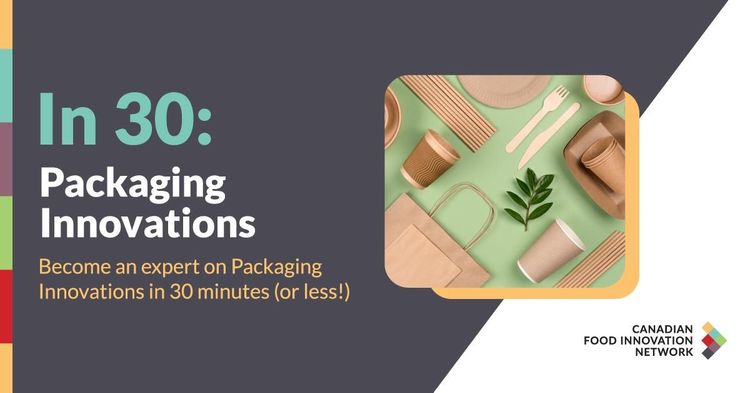
Welcome to YODL! In addition to daily original content, YODL helps CFIN Members find new partners , resources , and funding opportunities to grow their food business. Learn more about this growing community and become a CFIN Member (for free!) today . Sometimes, all it takes is 30 minutes to learn the ins and outs of new food technologies and trends that are transforming the food and beverage industry. In this series, we’ll dig into a food innovation topic and link you to content and resources so you can become a master on the topic in 30 minutes (or less!). This week, we’re looking at packaging innovations designed to reduce plastic waste and extend shelf life. The Overview YODL - Innovation in the circular economy of plastic packaging I nnovative packaging solutions continue to be introduced as alternatives to trad itional plastics, to reduce landfill waste , and to lessen the impact on the environment. Mintel – Global Packaging Trends for 2023 The macro-environmental factors impacting the packaging industry in 2023 and beyond. YODL - From biowaste to sustainable packaging Lobster shells left over from processing are being used to create a biopolymer that can be incorporated into environmentally friendly packaging with antimicrobial properties. YODL - Plastics Packaging Innovation – Nine Strategies Transforming the Food Industry Today Design interventions and innovative approaches that are more in line with circular economy principles and evolving recycling systems. YODL - Packaging Misconceptions Unwrapped The consumer conscience is shifting in favour of sustainable packaging , affecting purchase decisions. The Canadian Connection YODL – The Canada Plastics Pact The Canada Plastics Pact (CPP) is an independent, not-for-profit organization working with Canadian businesses, policymakers, associations and NGOs to create a circular economy for plastic packaging by 2030. YODL – Copol International North Sydney, NS-based Copol International Ltd. manufactures cast polypropylene film for the flexible packaging industry, mostly for food packaging and often for high heat applications such as sterilizing. YODL – Rapid Aid Corp Rapid Aid's TempAid division specializes in design and manufacturing of highly engineered packaging solutions for shipping temperature-sensitive goods. Social Media Friendlier (Facebook) – Guelph, ON-based Friendlier offers low-cost reusable containers for foodservice in more than 200 locations across Ontario and Western Quebec. MySuppli (Instagram) Toronto, ON-based Suppli makes it easy for food vendors to swap in high-quality reusable food containers for their single-use containers in a way that drives additional revenue. Relocalize (LinkedIn) Montreal, QC’s Relocalize Inc. hyper-localizes packaged food manufacturing with autonomous factories that eliminate middle mile logistics and CO 2 emissions, while reducing product costs and cutting waste. Overtime If you’ve got more than 30 minutes, these are for you: YouTube - The future of plastic in food packaging CFIN’s Isabelle Marquis speaks with Isabelle Des Chênes , executive vice president of the Chemistry Industry Association of Canada, on the innovations being developed to make plastic packaging more efficient and eco-responsible.
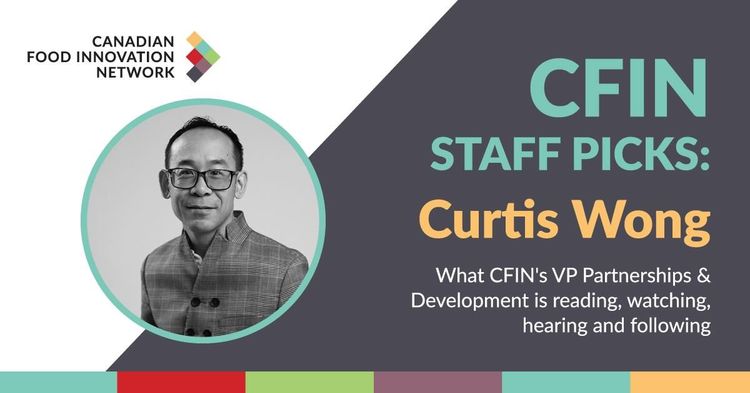
Staff Picks – Curtis Wong
Welcome to YODL! In addition to daily original content, YODL helps CFIN Members find new partners , resources , and funding opportunities to grow their food business. Learn more about this growing community and become a CFIN Member (for free!) today . A lot of material comes across our desks at CFIN, and we love to share new information with YODLers ! This one in a series of articles highlighting what CFIN staff are reading, listening to, watching, and posting. This week we’re checking in with CFIN’s vice president of partnerships and development Curtis Wong . What are you reading? I r ecently finished Less is More: How Degrowth Will Save the World . In my second week at CFIN, in Guelph, ON I was recommended Dinner on Mars and Reality Check: Straight Talk About Sponsorship Marketing – I have not started either. I am now on Quit: The Power of Knowing When to Walk Away What are you listening to? Earlier this year, I read that as we get older, we listen to less and less new music , yet new music keeps us openminded and open to ideas and creativity as a generality. I find myself driving or w alking listening to music either familiar or exploring new artists . I have always been on and off with podcasts, depending on what I am working on or going through i n life – I’m open to suggestions. Who are you following? I took a very extended break from social media, including closing two accounts , to spend less time on my phone. My last role before CFIN was engaged in the fight against food loss. With social support from the team, I found myself back on LinkedIn meeting great people educating about the challenges the entire food supply chain is having on every corner of the globe. I’m not following anyone per se, but I am constantly reading articles or reports from scientists, professors, farmers and others on what we all need to do to rid the unnecessary food insecurity everywhere. What are you watching? With so much heav iness in the world, lately I’ve been seek ing out standup comedy. There is so much great writing out there, I wish I could delve into seasons and seasons of shows, but I tend to gravitate to movies or limited series. And I watch PokerGo – different styles and formats of the game have varied levels of my attention, but I love the psychology, math, the mental focus and everything poker teaches you about your own self, weaknesses, disciplines and areas I need to work on to be better at the game, but also life ( I miss the freedom and time to play). What are you posting about? Again, I do not post too often. When I do it ’ s when I’m at a conference, economic development cohort or a speaking opportunity and want to express my gratitude to be able to work, travel and educate people about something I care about .
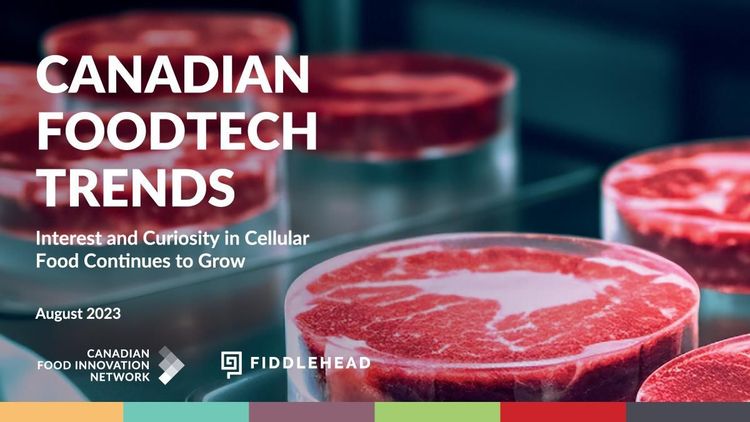
Canadian FoodTech Trends: Interest and Curiosity in Cellular Food Continues to Grow – Three Key Takeaways
Welcome to YODL! In addition to daily original content, YODL helps CFIN Members find new partners , resources , and funding opportunities to grow their food business. Learn more about this growing community and become a CFIN Member (for free!) today . Cellular food technology has the potential to dramatically alter how we produce, purchase and consume food, while offering enormous financial opportunities to Canadian producers and exporters. CFIN worked with Moncton, NB-based data science company Fiddlehead Technolog y to develop Canadian FoodTech Trends: Interest and Curiosity in Cellular Food Continues to Grow , a report providing insight into the potential adoption of cellular meat in Canada. The report examined interest in cellular meat, as well as the progress of and research and development in the sector by Canadian companies. What it found was that although Canada lags behind countries like the U.S. and Singapore, research and interest in cellular food has jumped dramatically since 2000. Here are three key takeaways from the report: 1. Researchers are prioritizing cellular food Food scientists and engineers world wide are diving into the cellular food sector . Fiddlehead found that there were 22,800 academic papers related to cultivated meat published in the past five years, roughly the same number of papers published in total before 2000. 2. Patent applications for cellular meat are increasing The U.S., where cultivated meat recently hit the market, had 596 patent applications for c ellular meat in 2022, compared to just 48 before 2000. By comparison, there were no Canadian patent applications for cellular meat before 2000, and just 22 by 2022. At the same time the number of Canadian companies producing cultivated meat continues to grow. 3 . Regulatory hurdles still exist While countries like the U.S. and Singapore already have regulatory approval for the sale of lab-grown meat, products for sale in Canada will need to go through the lengthy approval process for novel foods, as well as meeting requirements for food safety, labelling, marketing and other existing regulations. That could mean products will be slower to hit the market, while Canadian regulators re-examine the framework for cultivated meat and develop new regulations specific to the category. Find out more by downloading the report here . Read more about cellular food , regulations covering cellular food, and commercialization of cellular food.