

Articles & Reports
Featured

One Consumer, Dozens of Touchpoints, One Campaign
Every new touchpoint used to mean another campaign to build, budget, and measure. Brands pulling ahead in retail media reach consumers across all of them with one campaign and no extra workload.

Where Crunch Meets Clean Label: Sunflower Kernels for the Next Generation of Better-for-You Snacks
Canada’s healthy snacks market is experiencing strong growth. According to Grand View Research, the market generated $3,713.6 million (USD) in 2025 and is projected to reach $7,282.5 million (USD) by 2033, growing at a compound annual growth rate (CAGR) of 8.8% from 2026 to 2033.¹ The research also identifies Canada as the fastest-growing regional market in North America, highlighting significant opportunities for food manufacturers looking to innovate in the category. For food scientists and product developers, this growth presents a complex formulation challenge. Consumers increasingly seek snacks that deliver nutritional value, convenience and recognizable ingredients, without sacraficing the taste,texture and overall eating experience they expect. Success depends on balancing these priorities to create better-for-you products that satisfy both nutritional goals and consumer expectations. Why Texture Matters in Snack Innovation Texture is a powerful influence on how consumers experience food, shaping everything from first impressions to repeat purchases. Puratos’s Taste Tomorrow research found that nearly half of consumers prioritize texture over ingredients when purchasing food, while 68% of millennials say texture directly influences their choices.² Ingredion research further indicates that 70% of global consumers would switch to a different product or brand if they were dissatisfied with its texture.³ For snack food manufacturers, these findings underscore the importance of getting texture right from the outset. Crunch, crispness and contrast can help distinguish a product in a competitive market, while combinations of complementary textures can create a more engaging and premium eating experience. Innova Market Insights’ Global Texture Trends 2026 report highlights the appeal of combining textures such as creamy, crunchy, and soft. Its research also revealed that one in four consumers globally is interested in trying snacks in formats that are new to them.⁴ Together, these insights point to opportunities for food manufacturers to explore fresh ingredient combinations and textural experiences that make better-for-you snacks stand out. Where Sunflower Kernels Fit In U.S.-grown sunflower kernels give food manufacturers a practical way to build that contrast. Their mild flavour and satisfying crunch add dimension to both sweet and savoury product innovations without overpowering other ingredients. They also bring plant-based protein, fibre and healthy fats, along with vitamin E, zinc, folate, iron and magnesium, so the texture upgrade comes with a nutritional one. Available raw, roasted and ready-to-eat, sunflower kernels can be used across a wide range of applications, including: • Better-for-you snack bars • Granola and trail mixes • Crackers and savoury snacks • Bakery products and breakfast cereals • Plant-based snacks and bites Clean Label and Allergen-Friendly by Design Consumers worldwide are increasingly prioritizing clean-label products made with recognizable ingredients and greater transparency. Innova Market Insights reports that more than two in three consumers globally say they are at least somewhat influenced by clean ingredient decks, and that nearly one in three new products now carries some type of clean label claim.⁵ Innova also notes that non-GMO claims are most established in North America.⁵ Sunflower kernels are naturally non-GMO and sustainably grown, which supports the transparency and recognizable-ingredient positioning shoppers respond to. They are also an allergen-friendly alternative to tree nuts, delivering the crunch consumers expect from nuts and seeds. Unlike tree nuts, sunflower kernels are not considered a priority allergen in Canada, making them a versatile option for manufacturers developing new products or reformulating existing ones. Turning Texture Trends into Product Opportunities As Canada's healthy snacks market continues to expand, food manufacturers have an opportunity to differentiate their products through thoughtful ingredient choices and more engaging eating experiences. Texture is an important part of that equation, influencing consumer appeal while creating opportunities to innovate across familiar snack formats. U.S.-grown sunflower kernels bring together satisfying crunch, plant-based nutrition and application versatility, making them a valuable ingredient to consider for the next generation of healthy snacks. From bars and granola to crackers and savoury mixes, they can help product developers create food innovations that balance texture, taste and nutritional value. Explore how U.S.-grown sunflower kernels can add texture, nutrition and versatility to your next snack innovation. Connect with a supplier today > {link to lead to the NSA Kernel suppliers page} References: 1. Grand View Research, Canada Healthy Snacks Market Size & Outlook, 2026–2033. https://www.grandviewresearch.com/horizon/outlook/healthy-snacks-market/canada 2. Puratos, “Why texture is important in food,” February 19, 2025. https://www.puratos.com/blog/why-texture-is-important-in-food 3. Ingredion research, as reported in “New approaches to texture innovation,” Food Business News, May 7, 2026. https://www.foodbusinessnews.net/articles/30275-new-approaches-to-texture-innovation

Inside SIAL Canada 2026: Driving Food Innovation Through Connection and Collaboration
CFIN had the honour of taking a bite out of SIAL Canada 2026 in Montréal 🍎—connecting with partners, members, and industry leaders shaping the future of food innovation across Canada and beyond. Representing CFIN on site were CEO @Dana McCauley and @Julie Daigle , Regional Innovation Director (Quebec), who engaged with the ecosystem throughout the event. Their presence reflected CFIN’s ongoing commitment to strengthening Canada’s food innovation ecosystem and supporting high-potential foodtech ventures. Attendees could also catch Julie as a Foodtech Focus expert at the SIAL Canada Expert Hub, where she connected directly with innovators and shared insights with the community. Dana also took the stage as part of the Dairy Talks program, contributing to a forward-looking discussion on innovation as a driver of market leadership in the Canadian dairy sector. Her session explored the shift from incremental product development toward a broader innovation mindset—highlighting next-generation ingredients, value-added dairy formats, new go-to-market strategies, and the role of Industry 4.0 technologies like AI, robotics, automation, and digital supply chains in strengthening productivity and global competitiveness. A key highlight of the week was CFIN’s involvement in the 7th edition of the Startup Pitch Competition, held on April 30 on the Food & Bev Connect stage. Julie Daigle participated as the President of the Foodtech jury, joining a panel of industry experts evaluating promising entrepreneurs from the Startup Village. Beyond the competition, the Startup Pitch stage served as a strategic platform connecting entrepreneurs with buyers, investors, and key decision-makers across the agri-food ecosystem. A standout moment for the CFIN community was the recognition of Maia Farms, a CFIN member and funding recipient, which earned the Gold Prize in the foodtec h competition 🍄🏆 CFIN’s presence at SIAL Canada underscored the momentum of Canada’s food innovation sector and the value of convening the ecosystem to accelerate ideas from concept to commercialization. 📖 Explore more from SIAL Canada 2026 R elive the stories, innovations, and key moments captured throughout the show in the official SIAL Canada Daily: SIAL Canada Daily – 2026 Edition (Photos Courtesy of SIAL)

Five Years of CFIN: A Letter to the Network
Thirty years ago, I worked as a chef in the kitchen of one of Canada’s top restaurants standing should er to shoulder with people who ca red about the sensory experience of food above all else . Our tech stack was al most all analog and , to be honest, we didn’t give our ordering system or the way we did inventory a lot of thought. My career broadened over time , and I ’ ve also held roles where I developed recipes at Canadian Living and wrote about food trends; built innovation strategies and products for national brands, founded a business incubator, and ran a venture creation office at a prestigious Canadian u niversity . Food was always the thread , and technology was always present but in most of the food focused businesses I’ve worked for, it was taken for granted, and creativity and hard work were what drove the businesses forward. While smart people with great ideas are essential to food business success, it’s not enough to be competitive in today’s world. Old ways of running restaurants, innovation labs and food and beverage processi ng businesses can’t compete internationally or absorb the trade shocks that have become commonpla ce in recent history. That’s why I feel l ik e CFIN is the perfect place for me to be today and why we’re adding dozens of new members per week. When CFIN was created in 2021, the mandate was intentionally broad : cata lyze Canadian food innovation with funding , build community, connect an ecosystem that had been operating in silos for decades. The funding programs took shape quickly. Since 2022, we’ve awar ded $23.3 million to 133 projects across six program s. For every $1 CFIN invested, our members committed $7.65 of their own capital toward innovation. This leverage ratio of nearly 8-to-1 has unlocked over $140 m illion in private sector spending on R&D and capital infrastructure. The other work was harder to define . What do "build community" and "connect an ecosystem" mean in practice for a sector span ning startups, processors, researchers, investors, policymakers, and operators spread across this vast country ? Th at question didn't have a tidy answer. As a result , fostering and serving this network was (and remains ) an exercise in innovation itself : something new to be built , and then tested, adjusted, and iterated upon , ad infinitum . I’m immensely proud of what we’ve built so far . A team of Regional Innovation Directors who've supported more than 2,200 organizations, brokering the introductions that became commercial partnerships, strategic investments, leadership hires, and research collaborations. A digital platform , YODL, connecting Canada's food sector across industry silos and bridging interprovincial barriers . The first comprehensive analysis of Canadian foodtech . A network of 8,500 members from every province, every part of the food value chain, every stage of business . On any given week, our community is discussing topics ranging from precision fermentation bioreactor designs and funding stacks to food packaging labeling regulations and export strategies, all in the same space. Members benefit from purpose-built tools and resources — like our Funding Finder that aggregates food and beverage funding opportunities across the country and a growing library of original sector research and analysis — alongside direct access to our Regional Innovation Directors. Canada has strong regional funders, accelerators, trade associations, and tech transfer offices, each doing necessary work in a defined lane. What this sector didn't have was a place where the conversation s , the tools, and the connections all showed up at once — where the range of problems and the range of capabilities were dense enough that the right solutions could emerge . That's what CFIN has built. That foundation is important because the next five years will be even more dynamic, and often more challenging, than the last five . To keep pace and flourish in an increasingly volatile world, Canada's food sector needs to modernize faster and more strategic ally than ever before . Trade disruption is dramaticall y reshaping supply chains . L abour constraints are compounding a productivity gap that was widening long before tariffs became front-page news. Climate pressures are intensifying. Food 4.0 — a tech-enabled food s ector that's more collaborative, productive, resilient, and competitive — is the framework CFIN is building toward, and the case for it gets more urgent by the quarter. I ’m confident that we’re up to the task . Five years ago, Canada's food innovation ecosystem was fragmented, underleveraged, and often invisible to the investors, operators, policymakers, and media who needed to see it. That's no longer true. The capacity to respond to the challenges ahead is here. Not in any single program or policy, but in the breadth of this network — the founders , processors , researchers , and investo rs who are hungry to innovate and build a better Canadian food sector . My own wide-ranging path through the food sector taught me that no single role ever showed me the full picture. It took working across kitchens, labs, newsrooms, boardrooms, and startups to understand how innovation really moves through this industry — and where it get s stuck. CFIN was built on the same insight. A sector this complex, facing challenges this urgent, needs more than funding or advice or connections in isolation. It needs all of them in the same room. That's what we've spent five years building, and I'm betting the next five will prove its value at a scale none of us can yet imagine. Thank you for being part of it. Dana McCauley, CEO, Canadian Food Innovation Network

How BC is Becoming a National Foodtech Hub
Editor's Note: This article was o riginally published in the Vancouver Tech Journal on March 13, 2026 The province has a diverse food processing industry, world-class research facilities, and a deep bench of tech talent — everything a foodtech ecosystem needs to thrive. Foodtech builds the software, automation, and applied science for how food gets processed, manufactured, packaged, distributed, and sold. The industry behind it is enormous — food and beverage processing alone is Canada's largest manufacturing sub-sector , bigger than automotive, bigger than aerospace. It's a serious market, and in British Columbia, it's growing fast. But if you work in the province's broader tech ecosystem, you might not even know that. Foodtech hasn't traditionally drawn the same attention as sectors like cleantech or enterprise SaaS despite being a comparable market in scale and complexity — and one where demand for new technology is accelerating fast. What BC brings to the table BC's food processing sector is substantial — over 3,200 companies producing roughly $12.6 billion in value-added products annually. And it's being treated as a strategic priority. The province has funded a network of shared food processing hubs, UBC just opened a Food and Beverage Innovation Centre with pilot-scale production labs that processors and startups previously had to leave BC to access, and SFU's BC Centre for Agritech Innovation is partnering directly with SMEs on cost-shared R&D. At the same time, much of what the food industry needs is already being built in BC for other thriving tech sectors. Process automation, energy management, supply chain software, safety and traceability systems, data-driven quality control — these are cleantech and software problems applied to production floors and distribution networks. The talent, research base, and trade infrastructure to support a serious foodtech cluster are all here. A different kind of tech sector Foodtech doesn't work like enterprise SaaS or consumer tech. Processors and manufacturers adopt slowly and carefully, because failure is expensive in ways that go beyond lost revenue — a food safety issue, a botched line integration, a regulatory problem. Sales cycles run in quarters. The investor community that understands food is small and specialized. And the industry's own networks run through trade associations, existing supply relationships, and sector-specific events that sit well outside the broader tech community's orbit. None of this means foodtech is closed off. It means that if you want in — as a founder, investor, developer, or potential partner — you need a way to access the conversations, the deal flow, and the operating knowledge that don't surface through the usual channels. The Canadian Food Innovation Network The Canadian Food Innovation Network is a national not-for-profit, established in 2021 that functions as the operating infrastructure for Canada's foodtech sector. CFIN runs cost-shared funding programs that help companies de-risk R&D and move technology into commercial settings. Since launch , the organization has awarded over $22 million to 122 Canadian foodtech projects, matched by $25 million in industry co-investment. Those funded companies have generated $90 million in economic impact, created over 355 jobs and co-op placements, and attracted more than $82 million in follow-on investment. The network's 8,000-plus members include food processors, technology companies, ingredient suppliers, retailers, researchers, and investors — connected through YODL, CFIN's member platform, and supported by Regional Innovation Directors embedded across the country, who work directly with members to broker introductions, navigate funding, and connect emerging technology with the processors and buyers who need it. CFIN also produces the sector's most detailed intelligence . The Foodtech in Canada 2025 Ecosystem Report mapped investment flows, identified sector strengths, and gave both companies and investors a clearer picture of where the Canadian foodtech market stands. And then there's Foodtech Frontier , CFIN's annual program identifying the country's highest-potential foodtech companies. The inaugural cohort of 35 winners included eight BC companies. For investors, it works as curated, vetted deal flow in a sector where sourcing is otherwise hard. For the companies, it's structured national visibility. Plug into Canada’s foodtech ecosystem If you work in technology or investment and you've been curious about the food sector, then signing up for a free CFIN membership is the best place to start. Members get access to funding programs, sector intelligence, a national innovation community, and regional team members that know the BC landscape specifically.
Other Articles

An Interview with a Food Recruiter
Welcome to YODL! In addition to daily original content, YODL helps CFIN Members find new partners , resources , and funding opportunities to grow their food business. Learn more about this growing community and become a CFIN Member (for free!) today . As part of CFIN's series on Talent and Training Carolyn Cooper sat down with Allan Hills , a senior hiring consultant with CPG Executive Search , specialists in hiring for the food and beverage manufacturing industry, to discuss the issues food companies now face when hiring and retaining skilled employees.
IN 30: Post-Secondary Food Research
Welcome to YODL! In addition to daily original content, YODL helps CFIN Members find new partners , resources , and funding opportunities to grow their food business. Learn more about this growing community and become a CFIN Member (for free!) today . Sometimes, all it takes is 30 minutes to learn the ins and outs of new food technologies and trends that are transforming the food and beverage industry. In this series, we’ll dig into a food innovation topic and link you to content and resources so you can become a master on the topic in 30 minutes (or less!). This week, we’re looking at some of the food , foodtech and food-related work taking place at research centres and departments of post-secondary institutions in Canada. Th is is just a small sample of the fascinating projects underway across the country. Atlantic Canada School Canada's Smartest Kitchen (CSK) at Holland College , Charlottetown, PEI Canada’s Smartest Kitchen is a food product development centre specializing in moving projects from concept to commercialization. It is also the research division of the Culinary Institute of Canada and an NSERC Technology Access Centre. What’s New? A number of staff members from Canada’s Smartest Kitchen (CSK) participated in the regional Kelp Connector workshop this year in Halifax, NS organized by its collaborative partners at the Nova Scotia Community College (NSCC) Applied Research unit. CSK, NSCC and the College of the North Atlantic (CNA) have received two years of funding from NSERC to complete an Applied Research and Technology Partnership project in regards to observation, cultivation, and innovation of the kelp industry in the Atlantic Canada region. School Centre for Aquaculture and Seafood Development , School of Fisheries at the Fisheries and Marine Institute of Memorial University of Newfoundland, St. John’s, NL. The centre focuses on t echnical services in seafood processing, aquaculture, and marine bioprocessing, in the areas of applied research, product and process development, advisory services, and training. What’s New? Memorial University will hold its sixth annual Research Week from November 20 to 24, 2023. Researchers, staff, students, postdoctoral fellows and community partners are invited to organize and host sessions with the goal of celebrating and raising awareness of the university’s internationally renowned research expertise and encourag ing more multidisciplinary collaboration among the research community. Last year during Research Week the Centre for Aquaculture and Seafood Development showcased a series to discuss new innovations in seafood for the blue economy. One of the centre’s goals is to be a global catalyst for accelerating marine bio-product innovation . Quebec School Innofibre: Centre d’innovation des produits cellulosiques , Cégep de Trois-Rivières, Trois- Rivières, QC Innofibre helps companies develop innovative cellulosic and biomass-based products. It works with clients in its analytical laboratories and pilot facilities to carry out applied research on cellulosic products, such as functional and bioactive papers and thermoformed products, as well as bioproducts such as biomass. What’s New? Innofibre hosts the NSERC College Industrial Research Chair in Ecodesign for a Circular Economy of Thermoformed Cellulose Packaging Materials. Innofibre researcher Tarik Jabrane is the chair. The centre is currently working on r aw materials development for thermoformed fiber packaging ; f unctional adjuvants development for thermoformed fiber packaging ; p erformance analysis of thermoformed fiber packaging ; and t hermoforming pilot trials of cellulosic fiber packaging . School Kemitek , Cégep de Thetford, Thetford Mines, QC Kemitek focuses on green and sustainable chemistry, process scale up and oleochemistry . Kemitek’s vision is to be the premier centre for technology development and support for green chemistry commercialization in Canada by 2030. It offers services to a number of sector s, including food and nutraceuticals; materials, coatings and adhesives; and cleaning agents. In 2020 t he centre changed its name from O LEOTEK to Kemitek to better represent its mission and its innovation and technological development features. What’s New? In November 2022 Kemitek , in partnership with Innofibre , the CRPTQ, Agrinova, CEPROCQ, UQTR and manufacturers Sani-Marc Group, Adalia Group, McCain Foods, Greenleaf Power, Quali-ferme companies, MRC du Domaine-du-Roy, Saint-Arneault, and Société de cogénération de St-Félicien , were nominated in two categories – Collaboration Prize with a CCTT and Partnership Prize for the project Active agents (anti-germinative and antimicrobial) used for potatoes – at the 32nd ADRIQ 2022 Innovation Awards Gala at the Palais des congrès de Montréal. Th e gala is the most prestigious event that highlights innovation in Quebec. The Kemitek team and its partners won the 2022 Partnership Prize . According to the centre, the project is a good example of a circular economy as f orest residues were used in the project to manufacture two active ingredients (anti-germinative and anti-microbial) to preserve potatoes for longer after harvest. School The Institute of Nutrition and Functional Foods at Laval University in Quebec City, QC. The centre is committed to improving the food supply and creating a more sustainable food system, including accessible, safe, healthy, diverse, and environmentally-friendly food. It is dedicated to enhancing human nutrition and fostering the growth of a thriving bio-food sector, collaborating and sharing expertise . What’s New? In August 2023 nearly 80 teams from Laval University received $12.9 million from the Natural Sciences and Engineering Research Council (NSERC) and $6.4 million from the Social Sciences and Humanities Research Council (SSHRC) for innovative research. Projects related to food that received funding include: The s tudy of interactions in complex food microbiota ; m ixed protein-polysaccharide systems – assembly in complex environments and functionalities ; a gas chromatography system coupled to a mass spectrometer for the development of a volatilomics platform intended for the biofood sector ; th e project “ Examining the experience of stigmatization linked to body weight within families and its long-term effects ”; and the project “ Beyond effectiveness, is the appeal to fear promising for reducing the consumption of sugary drinks? ” Ontario School Centre for Research and I nnovation , Fanshawe College, London, ON. CRI is the only research facility amongst Ontario’s colleges specializing in nutritional and shelf-life testing for product development and validation. The facility also includes the Centre for Applied Research and Innovation in Biotechnology (CARIB) that helps emerging agri-food businesses launch new food, beverage and cannabis products. What’s New? CRI has worked with many local and national companies to produce or improve food and beverage products . The centre worked with Aspire Food Group, a global leader in advanced insect agriculture, to determine a more economical method to best preserve the nutritional benefits of their products. It also partnered with Geissberger Farmhouse Cider to improve the shelf stability of the company’s sweet apple cider. The end result was a product that was more stable after being opened. Working with Booch, one of the largest kombucha breweries in Ontario, the centre devised a method to control ethanol levels throughout the brewing, fermenting, and flavouring processes, in order to maintain a final ethanol level below regulatory requirements . School Food Innovation & Research Studio (FIRSt) at George Brown College , Toronto, ON FIRSt is a Technology Access Centre that supports the food and beverage sector with research and development services. The lab works with clients to troubleshoot product development challenges and help bring new ideas to market. What’s New? The centre has worked with a wide range of Canadian food and beverage companies . It worked with Aware Beverages , producers of SoCIAL LITE vodka beverages, to introduce three new flavours to its lineup; with Sweetness Sugar Cookies to make changes to their product formulations, improve their shelf life, and develop new products; and Choose Life Foods to optimize the pastry used for the company’s vegan Jamaican patties, and the filling for their products. School Technology Access Centre in Bio-Inno v ation (TAC-B) , La Cité College , Ottawa, ON The centre is comprised of a team with expertise in biophysics, bioprocesses, biotechnology, analytical chemistry and genetic engineering that c ollaborate s with businesses and institutions to offer solutions to specific challenges. What’s New? TAC-B’s Dr. Nathalie Méthot is the 2022 winner of the Synergy Award for Innovation in the Colleges category for her work with RISEHop , a start-up company developing an innovative system for producing mycorrhizae fungi that form symbiotic associations with plants to contribute to their growth and health, while improving agricultural crop yields. The partnership resulted in the development of MyConnect , sustainable technology for producing mycorrhizae that are pure, resistant and effective. This expertise also led to the production of a line of mycorrhizae-based products for agriculture in Canada and around the world. School Food & Beverage Innovation Centre (formerly named the Canadian Food and Wine Institute Innovation Centre), Niagara College , Niagara-on-the-Lake, ON The FBIC works with businesses and the community to provide real-world solutions through innovation activities. It offers services to support industry innovation and commercialization of new products and processes for food, beverages and cannabis edibles. What’s New? This year Niagara College was named the number 1 top research college in Ontario and the number 2 top research college in Canada by Research Infosource Inc. in its annual Top 50 Research Colleges report. Niagara College has attracted more than $18.1 million in funding to conduct innovative projects with industry partners in the food and beverage, advanced manufacturing, horticulture and the environment, and business sectors. The school has completed 228 research projects, with 190 total research partnerships . School Animal Biosciences , University of Guelph , Guelph, ON The Department of Animal Biosciences conducts research by faculty members, graduate and undergraduate students. The department is an integral part of Ontario's agriculture and food industry, supplying new ideas , research solutions and graduates to the sector. Its research and teaching programs include basic and applied sciences to do with the feeding, breeding, housing and care of animals used by humans. This includes the ethical and sustainable production of food and other animal products that can improve the health and well-being of people. What ’s New? The department’s Food from Thought research program is working on how to realize the full potential of data from sensor technology that measures everything from global shifts in climate, to variations in food quality, to microscopic evolution of pests and pathogens . The program seeks to understand the complex interaction between farming practices, the genetic potential of livestock and crops, and the ecosystem. The $76.7 - million, seven- year research program started in 2016, and is funded by the Canada First Research Excellence Fund. Th e research is designed to understand how to increase the capacity , sustainability and safety of food production systems. Prairies School Prairie Research Kitchen in the Paterson GlobalFoods Institute at Red River College Polytechnic , Winnipeg, MN The Prairie Research kitchen supports food processors and foodservice businesses through R&D, technical services and training, with a unique approach that blends food science with culinary skills. What’s New? T he Research Kitchen has worked with approximately 70 companies in Western Canada to generate more than 120 food product ideas. A n ongoing partnership between the Prairie Research Kitchen, Glenboro , MN food start-up Prairie Fava and Big Mountain Foods, a Vancouver-based innovator of plant-based consumer packaged goods, resulted in an award-winning product in the p ast year. School Richardson Centre for Food Technology and Research , at the University of Manitoba , Winnipeg, MB The centre advance s food quality and human nutrition through traditional and innovative food processing techniques. It partners with the food and agri-food industries on collaborative research and pre-commercial development activities. What’s New? The centre was formerly known as the Richardson Centre for Functional Foods and Nutraceuticals. The name was changed in July 2022 to reflect its focus on collaborating with the food and agri-food industry to advance food quality and human nutrition through research and pre-commercial product development. Its researchers are currently working on numerous projects including: a project on the structure-function properties of food protein-derived antioxidant, antihypertensive, anti-diabetic, anti-obesity and anti-acetylcholinesterase peptides and polyphenols; a project on in-line structural, textural and nutritional quality monitoring and manipulation during processing of plant-based meats; and innovations in protein-lipid conjugation and novel technologies for developing protein-based nanodelivery systems to improve the delivery mechanism, efficacy, and bioavailability of bioactives . British Columbia School The BC Beverage Technology Access Centre (BC BTAC) at Okanagan College , Penticton, BC BC BTAC works with companies and organizations to exchange ideas and resources to create real-world solutions for the development of beverages, including fermented, brewed, distilled and non-alcoholic products. What’s New? This summer BC BTAC and Cellar Dweller Mobile Filter Service hosted a smoke taint removal trial using two industry-leading technologies available for use by the sector. Cellar Dweller has a licencing agreement with Amaea to use its MIPs (molecular imprinted polymer) technology which tailors polymers to target and remove specific molecules, smoke taint being the first application that Amaea has introduced for wineries. School Food and Agriculture Institute , (FAI) University of the Fraser Valley , Abbotsford, BC The University of the Fraser Valley’s Food and Agricultural Institute explores emerging agricultural technologies, techniques and methods , including cellular food and indoor farming, and their potential for contributing to sustainable food systems. FAI partners with diverse range of researchers, industry leaders, and governments to build knowledge and tools for moving toward sustainable, resilient food systems for communities and regions in BC, Canada, and worldwide. FAI conducts research under two major themes: agricultural technology and innovation, and food systems planning and policy. What’s New? On September 6, 2023 the federal government, through Genome Canada, announced an almost $27-million investment in nine Interdisciplinary Challenge Teams (ICTs) comprised of researchers from different disciplines whose genomics research and innovation into sustainable solutions will help create a more resilient national food system and supply chains. The ICTs include one based at the University of the Fraser Valley for a project titled “The social implications of genomic agri-food technologies: Ensuring equity, diversity and inclusion in the transition to climate-resilient Canadian agricultural and food systems,” led by Evan Bowness, Lenore Newman and Stefania Pizzirani . School Centre of Seafood Innovation at Vancouver Island University (CSI) , Bowser, BC CSI is an innovation hub that helps companies extract more value from sustainable seafood harvests. The centre supports entrepreneurs with business development, public education, and workforce attraction projects to foster ongoing innovation. It focuses on companies producing value - added seafood products, and products that complement seafood products such as sauces, dips or seasonings. What’s New? Each month CSI hosts a public lunch-and-learn series called Let’s Talk Seafood…and eat it too! designed to highlight the impacts of food - based public education on citizens’ perceptions of shellfish farming. Recent projects include the Oyster Challenge, which showcased the use of oysters processed with High Pressure Processing (HPP); a partnership with Omega Pacific Hatcheries to help capture maximum value for its farmed sturgeon harvest; and a project to assess Modified Atmosphere Packaging (MAP) as a treatment to keep Japanese scallops alive for transportation. Is there a research project taking place that YODL members should know about? Reach out to your Regional Innovation Director to let us know!
Emerging Food and Foodtech Jobs – Part 2
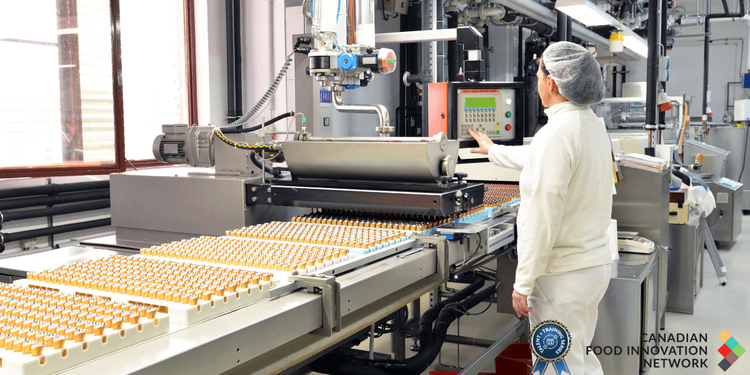
Welcome to YODL! In addition to daily original content, YODL helps CFIN Members find new partners , resources , and funding opportunities to grow their food business. Learn more about this growing community and become a CFIN Member (for free!) today . New food technology and changing operating requirements are transforming the way food and beverage companies work, as well as the employee skills they require . Following are just a few of the emerging and in-demand jobs now available in food and beverage manufacturing. Production Manager What They Do: Production managers are responsible for overseeing the food and beverage manufacturing process during production shifts, ensuring it runs effectively. That may include ensuring orders are met, managing staff, reviewing shift reports, and scheduling production activities. Necessary Skills & Education: Good organizational and leadership skills, ability to work in a fast-paced environment, strong communication skills . Production managers may need technical expertise in areas such as food and occupational safety. Sanitation Supervisor/ Lead What They Do: The sanitation supervisor or team lead ensures sanitation practices are in compliance with government regulations , food safety , and company standards . They may be involved in designing, implementing , completing and inspecting sanitation processes, programs and documentation, as well as training, scheduling and supervising sanitation staff. Necessary Skills & Education: Good organizational and leadership skills, ability to work in a fast-paced environment, strong communication skills. The role may require technical expertise in areas such as technology, cleaning chemicals used in the food industry , and food safety . Millwright What They Do: Millwrights , also known as industrial mechanics, install, maintain , disassemble, reassemble and repair industrial and mechanical equipment and components i n the production facility. They may use computer-assisted design (CAD) software, computerized maintenance management systems (CMMS) and other technology to monitor , diagnose and file reports on production equipment. Necessary Skills & Education: A millwright is a Red Seal occupation requiring qualification through education and/or apprenticeship programs. It requires strong problem-solving , p lanning and organizational abilities .

An Interview with FoodGrads
Welcome to YODL! In addition to daily original content, YODL helps CFIN Members find new partners , resources , and funding opportunities to grow their food business. Learn more about this growing community and become a CFIN Member (for free!) today . As part of CFIN's series on Talent and Training Carolyn Cooper sat down with Veronica Hislop of FoodGrads to discuss closing the gap between students, graduates and employers in the food and beverage industry. FoodGrads is dedicated to educating students and new graduates on the various opportunities and career paths in the food industry, as well as sharing the stories of the people that make up this amazing industry. Click here to listen to the FoodGrads podcast, and here to learn more about FoodGrads.
50 Canadian FoodTech Resources – National Center for Electrochemistry and Environmental Technologies (CNETE)
Welcome to YODL! In addition to daily original content, YODL helps CFIN Members find new partners , resources , and funding opportunities to grow their food business. Learn more about this growing community and become a CFIN Member (for free!) today . Canada has an extensive range of research centres, food incubators, accelerators and labs supporting food and beverage innovation through the research they do and/or the services they offer. Each week throughout 2023, we’ll be highlighting an organization that’s supporting food innovation in Canada. Name: National Center for Electrochemistry and Environmental Technologies at Shawinigan College (CNETE) Location: Shawinigan, QC. Mission: The CNETE carries out applied research, technical assistance , training and information activities for Quebec companies , organizations and municipalities in order to contribute to the improvement and development of environmentally friendly processes and products . Focus: The centre helps its customers to develop and implement innovation projects and technological applications in the areas of bioprocesses, membrane separation technologies and electrochemistry. Services: CNETE helps companies by offering applied research, adaptation and technology transfer services, new product development of bio-based products, development of production bioprocesses, reduction and recovery of wastewater and gaseous pollutants, support with regulatory compliance and labelling, technical support and analysis, staff training, help finding funding, and more. What you need to know: The centre has experts in bioprocesses, membrane technologies and environmental chemistry, as well as close collaborations with a network of researchers with complementary expertise , including research ers at Shawinigan College. Notable News: CNETE’s analytical and microbiological laboratories feature $10 million worth of state-of-the-art equipment for every stage of innovation. The centre offers three platforms dedicated to anaerobic digestion, including a lab, 300-L pilot plant, and a 4,500-L mobile platform. Get Involved : Contact CNETE at ( 819 ) 539-8508 or info@cnete.qc.ca , or reach out to our Regional Innovation Director for Quebec Julie Daigle .

From a Hiring Perspective: A Q&A with Gastronomous Technologies
Welcome to YODL! In addition to daily original content, YODL helps CFIN Members find new partners , resources , and funding opportunities to grow their food business. Learn more about this growing community and become a CFIN Member (for free!) today . Oakville, ON-based Gastronomous Technologies creates smart commercial kitchens using automation, interconnected robotics and software to solve foodservice challenges such as labour shortages, consistency, profitability, supply chain management and waste disposal. In June 2022 Gastronomous received $1.9 million in funding through CFIN’s Food Innovation Challenge to develop a connected and autonomous foodservice kitchen . C o-founders Kevork Sevadjian and Andrew Skrepnek recently sat down with Regional Innovation Director for Ontario Linda Fox to discuss their progress . Like other growing foodtech companies, G astronomous now requires additional staff . We asked co-founder and CEO Kevork Sevadjian to discuss the search for talent. Q: What sort of positions are you looking to fill in your company? A: We’re looking for s oftware programmers , mechatronics engineering, service tech nician s and professionals in sales and business development. Q: How and where are you looking for candidates? A: Through LinkedIn and personal networks. Q: Have you faced any challenges attracting candidates? A: No we haven’t , because o ur hires come from outside the food industry . The nature of our business – a thriving startup in a hot new space – makes it easy to attract top talent. We are also able to attract top talent because the younger generation is more willing to work for a risky startup with huge upside as opposed to a more stable job with a big company. However, on the customer side, we constantly hear about the difficulties of finding labour. Q: Do you offer any special benefits to attract new hires, or to retain employees ? A: We offer competitive salaries, benefits and stock options. The stock options are very attractive and because they vest over four years, they tend to create a retention effect . Q: When hiring technology professionals what do they generally need to understand about working in the food industry? A: They need to understand customer requirements. We find that technology professionals are not familiar with the food industr y, o ther than what they know personally. Q: How does working in the food industry differ from other industries when it comes to roles that involve technology? A: T here are no existing technology standards in this industry. Q: Anything else to add about finding and retaining employees? A: Culture is everything. B uild the right culture in your business and always hire for attitude and character before skills . The rest can be taught. Once you have a core team that understands the company culture, it becomes like a self-perpetuating flywheel that constantly gains momentum. Have a story you want to tell? What to get more involved with CFIN? Contact one of our Regional Innovation Directors .
IN 30: Post-Secondary Food and Beverage Programs Across Canada
Welcome to YODL! In addition to daily original content, YODL helps CFIN Members find new partners , resources , and funding opportunities to grow their food business. Learn more about this growing community and become a CFIN Member (for free!) today . Sometimes, all it takes is 30 minutes to learn the ins and outs of new food technologies and trends that are transforming the food and beverage industry. In this series, we’ll dig into a food innovation topic and link you to content and resources so you can become a master on the topic in 30 minutes (or less!). This week, we’re looking at some of the post-secondary food and beverage programs available across Canada by region . There are many more STEM , business and non- food related courses that may prepare graduates for a career in the food industry offered through colleges , universities and private facilities throughout the country. Listed locations are for each schools’ main campus. All p rograms may not be running during the current school year . Atlantic Canada Acadia University , Wolfville, NS – Nutrition and Dietetics . Cape Breton University , Sydney, NS – Nutrition . Holland College/The Culinary Institute of Canada , Charlottetown, PEI – Culinary Arts, Hotel and Restaurant Operations Management, Pastry Arts. Memorial University of Newfoundland , St. John’s, NL - Food Studies. New Brunswick Community College, Fredericton, NB - Cooking, Culinary Arts . University of Prince Edward Island , Charlottetown, PEI – Foods and Nutrition . Quebec Bishops University, Sherbrooke - Sustainable Agriculture and Food Systems , Brewing Science. Cégep de Lanaudière , Repentigny - Technologie des procédés et de la qualité des aliments . Collège de Maisonneuve , M ontreal – Technologie des procédés et de la qualité des aliments. La Salle College , Montreal – Food Service Management , Professional Cooking . McGill University , Montreal – Global Food Security , Food Science and Nutritional Science . Ontario Algonquin College , Ottawa – Culinary A rts and Food Science , Bartending , Baking and Pastry Arts, Culinary Skills, Sommelier . Brescia University College at Western University , London - C hemical Engineering, Nutrition and Dietetics; Foods and Nutrition, Dietetics, Engineering/Food Processing. Brock University , St. Catharines – Oenology and Viticulture , Biological Sciences. Canadore College , Toronto – Culinary Management , Culinary Skills . Centennial College , Toronto – Baking and Pastry Arts Management , Baking Skills , Culinary Management, Culinary Skills, Food Media, Food Tourism, Restaurant Operations – Food and Beverage Management , Food Science Technology , Nutrition and Food Service Management. Conestoga College , Waterloo – Bartending, Culinary Management, Culinary Skills, Food and Beverage Management – Hotel and Restaurant Operations, Professional Cheese Making , Food Service Worker , Food Processing Technician. Confederation College , Thunder Bay – Culinary Management. Durham College , Whitby – Culinary Management, Culinary Skills. Fanshawe College , London – Culinary Management, Culinary Skills, Food and Beverage Management, Food Processing – Operational Leadership , Professional Butchery Techniques , Baking and Pastry Arts Management. George Brown College , Toronto – Wine and Beverage Business Management, Food Studies, Culinary Management, Food and Beverage Management – Restaurant Management, Food and Nutrition Management, Food Tourism Entrepreneurship , French Patisserie, Baking, Culinary Arts, Culinary Management – Nutrition, Culinary Skills, Commerce – Culinary Management . Georgian College , Barrie – Culinary Management, Culinary Skills , Baking and Pastry Arts. Humber College , Toronto – Culinary Management, Culinary Skills . La Cité , Ottawa – Gestion c ulinarire – en mode coopératif, Gestion de la nutrition et des services alimentaires. Lambton College , Sarnia – Culinary M anagement. Le Cordon Bleu , Ottawa – Cuisine, Pastry and Co nfectionery, Culinary Arts and Business, Plant-Based Culinary Arts; Bakery, Danish Pastries and Artisan Breads. Loyalist College , Belleville - Culinary M anagement, Culinary Management – Vegetarian, Culinary Skills, Culinary Skills – Vegetarian. Niagara College , Niagara-on-the-Lake – Artisan Distilling, Brewmaster and Brewery Operations Management, Culinary Management, Culinary Skills, Culinary Skills – Chef Training, Culinary Innovation and Food Technology, Baking Skills, Winery and Viticulture Management, Beverage Business Management, Commercial Cannabis, Greenhouse Management. Sault College , Sault Ste. Marie – Culinary Skills – Chef Training . St. Clair College , Windsor – Culinary Management. St. Lawrence College , Kingston – Culinary Skills – Chef Training . Trent University , Peterborough – Sustainable Agriculture and Food Systems. Toronto Metropolitan University , Toronto – Nutrition and Food. University of Guelph , Guelph – Nutrition and Nutraceutical Sciences , Food Industry Management, Food and Agriculture Business, Food Science , Applied Human Nutrition . University of Ottawa , Ottawa – Integrated Food Sciences in partnership with Le Cordon Bleu. Prairies Canada International College Manitoba , Winnipeg, MB – Agricultural and Food Sciences . Manitoba Institute of Trades and Technology , Winnipeg, MB – Culinary Arts and Design . Northern Alberta Institute of Technology (NAIT), Edmonton, AB – Baking and Pastry Arts, Culinary Arts . Red River College Polytechnic , Winnipeg, MB – Pharmaceutical and Food Manufacturing , Culinary Skills International, Professional Baking and Pastry, Culinary Arts. Saskatchewan Polytechnic , Saskatoon , SK – Agriculture and Food Production , Food and Nutrition Management , Professional Cooking . Southern Alberta Institute of Technology (SAIT), Calgary, AB – Butchery and Charcuterie Management , Baking and Pastry Arts, Culinary Arts. University of Alberta , Edmonton , AB – Food Business Management , Food Science and Technology Specialization , Food Science, Food Animals , Dietetics Specialization, Nutrition and Food Science . University of Manitoba , Winnipeg, MB – Food Science . University of Saskatchewan , Saskatoon , SK – Food Science , Food and Bioproduct Sciences , Agribusiness , Nutrition . British Columbia and Yukon British Columbia Institute of Technology , Burnaby - Food Technology, Food Safety, Food Safety Management, Food Safety Preventative Controls and HACCP Plans. Coast Mountain College , Terrace - Food and Drink Production. Kwantlen Polytechnic University , Surrey – Brewing and Brewery Operations. LaSalle College , Vancouver - Culinary Arts and Restaurant Ownership , Baking and Pastry Arts, Culinary Arts . North Island College , Courtenay – Culinary Business Operations, Culinary Business Operations . Northern Lights College , Dawson – Culinary Arts, Professional Cook . Ok an agan College , Kelowna – Food and Drink Production. Selkirk College , Castlegar - Culinary Management. Thompson Rivers University , Kamloops – Professional Cook . University of British Columbia , Vancouver – Food and Resource Economics, Food and Nutritional Sciences, Nutritional Sciences , Dietetics ; Food, Nutrition and Health, Food Science . Vancouver Community College , Vancouver – Artisan Baking, Ba king and Pastry Arts, Culinary Arts, Pastry. Vancouver Island University , Nanaimo – Culinary Arts, Culinary Management , Professional Baking and Pastry Arts , Baking and Pastry Arts Management, Wine Business . Yukon University , Whitehorse, YK – Culinary Arts . Is there a post- secondary food and beverage program we’ve missed? Reach out to your Regional Innovation Director to let us know!

Emerging Food and Foodtech Jobs
Welcome to YODL! In addition to daily original content, YODL helps CFIN Members find new partners , resources , and funding opportunities to grow their food business. Learn more about this growing community and become a CFIN Member (for free!) today . New food technology and changing operating requirements are transforming the way food and beverage companies work , as well as the employee skills they require . Following are just a few of the emerging and in-demand jobs now available in food and beverage manufacturing. Automation Controls Specialist/Engineer What They Do: An automation controls specialist or engineer works to develop and maintain the control systems that operate automated manufacturing systems. Specialists and engineers may also implement automation, design and develop software applications, and manage and monitor mechanical and electrical automation. Necessary Skills & Education : An engineering degree or a degree in a related field such as systems control, automation, robotics and computer science , experience in electrical and control system design, algorithms and software programming, project management, ability to prioritize and multi-task. Continuous Improvement Manager What They Do: A continuous improvement manager monitors training, quality assurance, and production processes in order to identify areas requiring improvement , while helping to develop and implement changes that will increase efficiency and reduce expenses and waste. Necessary Skills & Education : A degree in business or engineering, experience in business development and/or project management, Lean manufacturing or Six Sigma certification, communication and organizational skills. Director of Sustainability What They Do: A director of sustainability identifies the environmental impact of a company’s policies and practices, as well as its consumption of resources, water and energy . They monitor ecological performance and carbon footprint reduction throughout the company and its supply chain, while balancing the need for corporate productivity and profitability. Necessary Skills & Education : A science degree or other degree that emphasizes environmental knowledge and sustainable business , good written and verbal communication skills, experience with IT systems and sustainably-related tech , knowledge of data analytics.
AI, Foodtech and Talent: Reskilling workers
Welcome to YODL! In addition to daily original content, YODL helps CFIN Members find new partners , resources , and funding opportunities to grow their food business. Learn more about this growing community and become a CFIN Member (for free!) today . A new global study by the IBM Institute for Business Value, Augme n t ed work for an automated, AI-driven world , reveals that advancements in artificial intelligence are upending traditional business models and transforming the workplace. The study is based on two surveys of 3,000 executive leaders in 28 countries, and 21,000 workers in 22 countries. T he study found that business leaders are refocusing on revamping their operating models with automation and AI technologies , upgrading specific employee skills, and hiring next-generation talent to address skilled labour shortages. According to the World Economic Forum, AI and automation will disrupt 85 million jobs globally between 2020 and 2025, while creating 97 million new job roles. In total, 44% of workers’ skills will be disrupted between 2023 and 2028 at all levels of employment, from entry-level to executive and senior-level management. The Canadian Connection Canadian ex ecutives participating in the survey believe that 42% of the workforce will need to be reskilled due to the implementation of AI and automation over the next three years . As a result, 58% of Canadian executives are investing in reskilling internally instead of opting to hire employees from outside the company . Overall, 87% of executives believe jobs will be augmented rather than replaced by AI. Workforce skills and needs The survey found that the most critical skills required of the global workforce in 2023 are: Time management skills and ability to prioritize ( 42% ) Ability to work effectively in team environments ( 40% ) Ability to communicate effectively ( 38% ) Willingness to be flexible, agile, adaptable to change ( 38% ) Analytics skills with business acumen ( 35% ) Ethics and integrity ( 33% ) Industry/occupation specific skills ( 33% ) Proficiency in reading, writing, and mathematics ( 32% ) Foreign language ( 32% ) Capacity for innovation and creativity ( 31% ) Basic computer and software application skills ( 31% ) Proficiency in STEM ( 28% ) In Canada, time management and the ability to prioritize was cited by executives as the most in-demand skills (44%), followed by analytical skills with business acumen (41%) and ethics and integrity (39%). The survey also found that employees are motivated by much more than factors such as salary, benefits and job security, citing the importance of: Impactful work (45%) Growth opportunities (43%) Compensation aligned to performance (38%) Autonomy (38%) Flexible work arrangements (38%) Clear performance metrics (20%) Experience with latest technology (16%) To help address changes in the workplace caused by the adoption of AI and automation , the report recommends that business leaders take steps such as increasing the technical knowledge of their employees , invest ing in talent as much as technology, making work more rewarding, and draw ing clear connections between job roles and business outcomes. Click here to download the report.
50 Canadian FoodTech Resources – Food Innovation & Research Studio (FIRSt), George Brown College
Welcome to YODL! In addition to daily original content, YODL helps CFIN Members find new partners , resources , and funding opportunities to grow their food business. Learn more about this growing community and become a CFIN Member (for free!) today . Canada has an extensive range of research centres, food incubators, accelerators and labs supporting food and beverage innovation through the research they do and/or the services they offer. Each week throughout 2023, we’ll be highlighting an organization that’s supporting food innovation in Canada. Name: Food Innovation & Research Studio ( FIRSt ) at George Brown College . Location: Toronto, ON Mission: FIRSt is a Technology Access Centre that supports the food and beverage sector with research and development services. Focus: The lab works with clients to troubleshoot product development challenges and help bring new ideas to market. Services: FIRSt helps companies with recipe and product development; product validation and support through consumer sensory research, focus groups and in-plant trials and pilot testing; and t esting and compliance services such as shelf-life validation, nutritional analysis, and review of claims, regulatory issues and packaging. The centre specializes in: Dips and s preads Soups and s auces Baked goods and mixes Carbonated and alcoholic b everages Snacks such as protein bars Frozen d esserts and i ce c ream Coffee and tea Powders and flavours What You Need to Know: The team at FIRSt includes food scientists, chefs and industry professionals . The 4,000 - sq. - ft. facility featur es a test kitchen , factory-scale processing equipment , and a quantitative sensory testing facility. Notable News: The centre has worked with a wide range of Canadian food and beverage companies, including Aware Beverages, Healthy Crunch Company, Imago Foods, and NONA Vegan Foods. Get Involved: Contact FIRSt at first@georgebrown.ca or ( 416 ) 415 - 5000 , ext. 6400 , or r each out to our Regional Innovation Director for Ontario Linda Fox .

Explained: Food Processing Skills Canada
Welcome to YODL! In addition to daily original content, YODL helps CFIN Members find new partners , resources , and funding opportunities to grow their food business. Learn more about this growing community and become a CFIN Member (for free!) today . What It Is Food Processing Skills Canada ( FPSC ) is a non-profit organization dedicated to professionalizing the food and beverage manufacturing industry by providing leadership on labour, skills and workforce development . FPSC has developed a national skills strategy based on long-term approach es used in other professional sectors that builds on collaborations with industry, government, academia, unions, associations, community organizations and other stakeholders. What it Does FPSC is helping the food and beverage industry to remain competitive through : Research into the labour market to define the needs of the industry; Setting competencies by defining the skills needed by the industry; Training to increase the pool of workers with relevant skills; Accredited courses to increase relevant training for the industry; and Certifying professionals to increase long-term commitment to a career in food processing. The organization offers numerous resources to support talent attraction and retention, skills training , and education to career pathways. That includes events , a Succeeding at Work program that train s job seekers and matches them with employers, and the Food Skills Library . The library lists areas of work in the food manufacturing industry, job descriptions and competencies, national occupational standards, skills manuals and essential skills for different jobs, courses, certifications, assessments, and career ladders in different sectors. FPSC also operates the Canadian Food Processors Institute . D esigned for food professionals, food and beverage companies, and newcomers to the industry , the Institute offers resources such as e - learning courses and good manufacturing practices . Why You Should Care According to FPSC , the food and beverage manufacturing industry will require 65,000 more employees by 2025 in order to meet consumer demands. At the same time, t he vacancy rate in the industry is approximately 3.8% higher than the overall manufacturing sector ’s 3% vacancy rate , and one-fifth of that workforce is aged between 55 and 64, meaning that many of these employees will be eligible to retire within the next decade. What Else you Need to Know The organization collaborates with provincial and national food industry associations; post-secondary institutions; and community, immigration and food industry leaders. Employers and food and beverage manufacturing professionals can also participate in the Rapid Results Panel . The panel gathers real-time labour market information, while offering participants early access to surveys and reports, as well as access to the HR Ready Portal featuring learning tools and resources.

IN 30: Addressing Labour Challenges
Welcome to YODL! In addition to daily original content, YODL helps CFIN Members find new partners , resources , and funding opportunities to grow their food business. Learn more about this growing community and become a CFIN Member (for free!) today . Sometimes, all it takes is 30 minutes to learn the ins and outs of new food technologies and trends that are transforming the food and beverage industry. In this series, we’ll dig into a food innovation topic and link you to the best content and resources so you can become a master on the topic in 30 minutes (or less!). Finding and retaining skilled workers is an ongoing problem in all sectors of the food industry. As experienced workers retire, food businesses are often struggling to attract younger employees to replace them. And with more companies adding automation, digitization and other food technology, finding workers with the skills and training needed to succeed has become even more challenging . This week we’re looking at some of the labour issues, opportunities and resources accessible both to food and beverage entrepreneurs looking for talent, and skilled professionals hoping to enter the industry . The Overview Government of Canada – What We Heard Report – Agricultural Labour Strategy Agriculture and Agri-Food Canada’s summary of consultations with stakeholders on the development of a National Agriculture Labour Strategy. The report outlines the challenges facing the agriculture and food industries surrounding labour, as well as next steps. Statistics Canada – Labour market imbalances: Evidence from the Canadian Economic Tracker Data from June 2023 suggests labour vacancies in foodservice and manufacturing have decreased, meaning that while there are challenges, skilled workers are out there. Just Food - Canada Extends Agri-food Sector Labour Scheme Industries eligible under the scheme include meat product manufacturing, food processing and greenhouse production. Restaurants Canada - How Restaurants are Responding to Labour Shortages A July 2021 report on challenges of staff shortages in the foodservice industry. Food in Canada – Success Factors when Hiring Newcomers The role of immigration in addressing labour market challenges. YODL - How Networking on YODL Led to a New Career Path and the Growth of Ontario's Laplace Robotics Jeff Hetherington forged a new career through a connection on YODL. Resources FBO – Skilled Trades Study & Recommendations Ontario's food and beverage processing industry is seeking to increase education, employment opportunities, and access to qualified foreign workers to make up for a shortage of skilled trade workers. FPSC – At the Crossroad to Greatness Key insights and labour market research about Canada’s food and beverage processing industry. FPSC – 2020 Labour Market Information Survey A report addressing labour challenges in the Canadian food and beverage m anufacturing industry. Social Media @FoodGrads – (Facebook) FoodGrads supports students beginning their careers in the food and beverage industry. Food and Beverage Canada – Aliments et boissons Canada – (LinkedIn) The association advocates for the food and beverage manufacturing industry on many issues, including labour and workforce development . @jobsthatfeed – (Instagram) – Jobs That Feed connects people to employment in the food industry. Overtime If you’ve got more than 30 minutes, these are for you: PodBean – Food and Beverage Processor Forum A discussion on the industry’s labour gaps. Spotify – The FoodGrads Podcast The FoodGrads podcast shares insights from food and beverage professionals at all stages in their careers.