

Articles & Reports
Featured

One Consumer, Dozens of Touchpoints, One Campaign
Every new touchpoint used to mean another campaign to build, budget, and measure. Brands pulling ahead in retail media reach consumers across all of them with one campaign and no extra workload.

Where Crunch Meets Clean Label: Sunflower Kernels for the Next Generation of Better-for-You Snacks
Canada’s healthy snacks market is experiencing strong growth. According to Grand View Research, the market generated $3,713.6 million (USD) in 2025 and is projected to reach $7,282.5 million (USD) by 2033, growing at a compound annual growth rate (CAGR) of 8.8% from 2026 to 2033.¹ The research also identifies Canada as the fastest-growing regional market in North America, highlighting significant opportunities for food manufacturers looking to innovate in the category. For food scientists and product developers, this growth presents a complex formulation challenge. Consumers increasingly seek snacks that deliver nutritional value, convenience and recognizable ingredients, without sacraficing the taste,texture and overall eating experience they expect. Success depends on balancing these priorities to create better-for-you products that satisfy both nutritional goals and consumer expectations. Why Texture Matters in Snack Innovation Texture is a powerful influence on how consumers experience food, shaping everything from first impressions to repeat purchases. Puratos’s Taste Tomorrow research found that nearly half of consumers prioritize texture over ingredients when purchasing food, while 68% of millennials say texture directly influences their choices.² Ingredion research further indicates that 70% of global consumers would switch to a different product or brand if they were dissatisfied with its texture.³ For snack food manufacturers, these findings underscore the importance of getting texture right from the outset. Crunch, crispness and contrast can help distinguish a product in a competitive market, while combinations of complementary textures can create a more engaging and premium eating experience. Innova Market Insights’ Global Texture Trends 2026 report highlights the appeal of combining textures such as creamy, crunchy, and soft. Its research also revealed that one in four consumers globally is interested in trying snacks in formats that are new to them.⁴ Together, these insights point to opportunities for food manufacturers to explore fresh ingredient combinations and textural experiences that make better-for-you snacks stand out. Where Sunflower Kernels Fit In U.S.-grown sunflower kernels give food manufacturers a practical way to build that contrast. Their mild flavour and satisfying crunch add dimension to both sweet and savoury product innovations without overpowering other ingredients. They also bring plant-based protein, fibre and healthy fats, along with vitamin E, zinc, folate, iron and magnesium, so the texture upgrade comes with a nutritional one. Available raw, roasted and ready-to-eat, sunflower kernels can be used across a wide range of applications, including: • Better-for-you snack bars • Granola and trail mixes • Crackers and savoury snacks • Bakery products and breakfast cereals • Plant-based snacks and bites Clean Label and Allergen-Friendly by Design Consumers worldwide are increasingly prioritizing clean-label products made with recognizable ingredients and greater transparency. Innova Market Insights reports that more than two in three consumers globally say they are at least somewhat influenced by clean ingredient decks, and that nearly one in three new products now carries some type of clean label claim.⁵ Innova also notes that non-GMO claims are most established in North America.⁵ Sunflower kernels are naturally non-GMO and sustainably grown, which supports the transparency and recognizable-ingredient positioning shoppers respond to. They are also an allergen-friendly alternative to tree nuts, delivering the crunch consumers expect from nuts and seeds. Unlike tree nuts, sunflower kernels are not considered a priority allergen in Canada, making them a versatile option for manufacturers developing new products or reformulating existing ones. Turning Texture Trends into Product Opportunities As Canada's healthy snacks market continues to expand, food manufacturers have an opportunity to differentiate their products through thoughtful ingredient choices and more engaging eating experiences. Texture is an important part of that equation, influencing consumer appeal while creating opportunities to innovate across familiar snack formats. U.S.-grown sunflower kernels bring together satisfying crunch, plant-based nutrition and application versatility, making them a valuable ingredient to consider for the next generation of healthy snacks. From bars and granola to crackers and savoury mixes, they can help product developers create food innovations that balance texture, taste and nutritional value. Explore how U.S.-grown sunflower kernels can add texture, nutrition and versatility to your next snack innovation. Connect with a supplier today > {link to lead to the NSA Kernel suppliers page} References: 1. Grand View Research, Canada Healthy Snacks Market Size & Outlook, 2026–2033. https://www.grandviewresearch.com/horizon/outlook/healthy-snacks-market/canada 2. Puratos, “Why texture is important in food,” February 19, 2025. https://www.puratos.com/blog/why-texture-is-important-in-food 3. Ingredion research, as reported in “New approaches to texture innovation,” Food Business News, May 7, 2026. https://www.foodbusinessnews.net/articles/30275-new-approaches-to-texture-innovation

Inside SIAL Canada 2026: Driving Food Innovation Through Connection and Collaboration
CFIN had the honour of taking a bite out of SIAL Canada 2026 in Montréal 🍎—connecting with partners, members, and industry leaders shaping the future of food innovation across Canada and beyond. Representing CFIN on site were CEO @Dana McCauley and @Julie Daigle , Regional Innovation Director (Quebec), who engaged with the ecosystem throughout the event. Their presence reflected CFIN’s ongoing commitment to strengthening Canada’s food innovation ecosystem and supporting high-potential foodtech ventures. Attendees could also catch Julie as a Foodtech Focus expert at the SIAL Canada Expert Hub, where she connected directly with innovators and shared insights with the community. Dana also took the stage as part of the Dairy Talks program, contributing to a forward-looking discussion on innovation as a driver of market leadership in the Canadian dairy sector. Her session explored the shift from incremental product development toward a broader innovation mindset—highlighting next-generation ingredients, value-added dairy formats, new go-to-market strategies, and the role of Industry 4.0 technologies like AI, robotics, automation, and digital supply chains in strengthening productivity and global competitiveness. A key highlight of the week was CFIN’s involvement in the 7th edition of the Startup Pitch Competition, held on April 30 on the Food & Bev Connect stage. Julie Daigle participated as the President of the Foodtech jury, joining a panel of industry experts evaluating promising entrepreneurs from the Startup Village. Beyond the competition, the Startup Pitch stage served as a strategic platform connecting entrepreneurs with buyers, investors, and key decision-makers across the agri-food ecosystem. A standout moment for the CFIN community was the recognition of Maia Farms, a CFIN member and funding recipient, which earned the Gold Prize in the foodtec h competition 🍄🏆 CFIN’s presence at SIAL Canada underscored the momentum of Canada’s food innovation sector and the value of convening the ecosystem to accelerate ideas from concept to commercialization. 📖 Explore more from SIAL Canada 2026 R elive the stories, innovations, and key moments captured throughout the show in the official SIAL Canada Daily: SIAL Canada Daily – 2026 Edition (Photos Courtesy of SIAL)

Five Years of CFIN: A Letter to the Network
Thirty years ago, I worked as a chef in the kitchen of one of Canada’s top restaurants standing should er to shoulder with people who ca red about the sensory experience of food above all else . Our tech stack was al most all analog and , to be honest, we didn’t give our ordering system or the way we did inventory a lot of thought. My career broadened over time , and I ’ ve also held roles where I developed recipes at Canadian Living and wrote about food trends; built innovation strategies and products for national brands, founded a business incubator, and ran a venture creation office at a prestigious Canadian u niversity . Food was always the thread , and technology was always present but in most of the food focused businesses I’ve worked for, it was taken for granted, and creativity and hard work were what drove the businesses forward. While smart people with great ideas are essential to food business success, it’s not enough to be competitive in today’s world. Old ways of running restaurants, innovation labs and food and beverage processi ng businesses can’t compete internationally or absorb the trade shocks that have become commonpla ce in recent history. That’s why I feel l ik e CFIN is the perfect place for me to be today and why we’re adding dozens of new members per week. When CFIN was created in 2021, the mandate was intentionally broad : cata lyze Canadian food innovation with funding , build community, connect an ecosystem that had been operating in silos for decades. The funding programs took shape quickly. Since 2022, we’ve awar ded $23.3 million to 133 projects across six program s. For every $1 CFIN invested, our members committed $7.65 of their own capital toward innovation. This leverage ratio of nearly 8-to-1 has unlocked over $140 m illion in private sector spending on R&D and capital infrastructure. The other work was harder to define . What do "build community" and "connect an ecosystem" mean in practice for a sector span ning startups, processors, researchers, investors, policymakers, and operators spread across this vast country ? Th at question didn't have a tidy answer. As a result , fostering and serving this network was (and remains ) an exercise in innovation itself : something new to be built , and then tested, adjusted, and iterated upon , ad infinitum . I’m immensely proud of what we’ve built so far . A team of Regional Innovation Directors who've supported more than 2,200 organizations, brokering the introductions that became commercial partnerships, strategic investments, leadership hires, and research collaborations. A digital platform , YODL, connecting Canada's food sector across industry silos and bridging interprovincial barriers . The first comprehensive analysis of Canadian foodtech . A network of 8,500 members from every province, every part of the food value chain, every stage of business . On any given week, our community is discussing topics ranging from precision fermentation bioreactor designs and funding stacks to food packaging labeling regulations and export strategies, all in the same space. Members benefit from purpose-built tools and resources — like our Funding Finder that aggregates food and beverage funding opportunities across the country and a growing library of original sector research and analysis — alongside direct access to our Regional Innovation Directors. Canada has strong regional funders, accelerators, trade associations, and tech transfer offices, each doing necessary work in a defined lane. What this sector didn't have was a place where the conversation s , the tools, and the connections all showed up at once — where the range of problems and the range of capabilities were dense enough that the right solutions could emerge . That's what CFIN has built. That foundation is important because the next five years will be even more dynamic, and often more challenging, than the last five . To keep pace and flourish in an increasingly volatile world, Canada's food sector needs to modernize faster and more strategic ally than ever before . Trade disruption is dramaticall y reshaping supply chains . L abour constraints are compounding a productivity gap that was widening long before tariffs became front-page news. Climate pressures are intensifying. Food 4.0 — a tech-enabled food s ector that's more collaborative, productive, resilient, and competitive — is the framework CFIN is building toward, and the case for it gets more urgent by the quarter. I ’m confident that we’re up to the task . Five years ago, Canada's food innovation ecosystem was fragmented, underleveraged, and often invisible to the investors, operators, policymakers, and media who needed to see it. That's no longer true. The capacity to respond to the challenges ahead is here. Not in any single program or policy, but in the breadth of this network — the founders , processors , researchers , and investo rs who are hungry to innovate and build a better Canadian food sector . My own wide-ranging path through the food sector taught me that no single role ever showed me the full picture. It took working across kitchens, labs, newsrooms, boardrooms, and startups to understand how innovation really moves through this industry — and where it get s stuck. CFIN was built on the same insight. A sector this complex, facing challenges this urgent, needs more than funding or advice or connections in isolation. It needs all of them in the same room. That's what we've spent five years building, and I'm betting the next five will prove its value at a scale none of us can yet imagine. Thank you for being part of it. Dana McCauley, CEO, Canadian Food Innovation Network

How BC is Becoming a National Foodtech Hub
Editor's Note: This article was o riginally published in the Vancouver Tech Journal on March 13, 2026 The province has a diverse food processing industry, world-class research facilities, and a deep bench of tech talent — everything a foodtech ecosystem needs to thrive. Foodtech builds the software, automation, and applied science for how food gets processed, manufactured, packaged, distributed, and sold. The industry behind it is enormous — food and beverage processing alone is Canada's largest manufacturing sub-sector , bigger than automotive, bigger than aerospace. It's a serious market, and in British Columbia, it's growing fast. But if you work in the province's broader tech ecosystem, you might not even know that. Foodtech hasn't traditionally drawn the same attention as sectors like cleantech or enterprise SaaS despite being a comparable market in scale and complexity — and one where demand for new technology is accelerating fast. What BC brings to the table BC's food processing sector is substantial — over 3,200 companies producing roughly $12.6 billion in value-added products annually. And it's being treated as a strategic priority. The province has funded a network of shared food processing hubs, UBC just opened a Food and Beverage Innovation Centre with pilot-scale production labs that processors and startups previously had to leave BC to access, and SFU's BC Centre for Agritech Innovation is partnering directly with SMEs on cost-shared R&D. At the same time, much of what the food industry needs is already being built in BC for other thriving tech sectors. Process automation, energy management, supply chain software, safety and traceability systems, data-driven quality control — these are cleantech and software problems applied to production floors and distribution networks. The talent, research base, and trade infrastructure to support a serious foodtech cluster are all here. A different kind of tech sector Foodtech doesn't work like enterprise SaaS or consumer tech. Processors and manufacturers adopt slowly and carefully, because failure is expensive in ways that go beyond lost revenue — a food safety issue, a botched line integration, a regulatory problem. Sales cycles run in quarters. The investor community that understands food is small and specialized. And the industry's own networks run through trade associations, existing supply relationships, and sector-specific events that sit well outside the broader tech community's orbit. None of this means foodtech is closed off. It means that if you want in — as a founder, investor, developer, or potential partner — you need a way to access the conversations, the deal flow, and the operating knowledge that don't surface through the usual channels. The Canadian Food Innovation Network The Canadian Food Innovation Network is a national not-for-profit, established in 2021 that functions as the operating infrastructure for Canada's foodtech sector. CFIN runs cost-shared funding programs that help companies de-risk R&D and move technology into commercial settings. Since launch , the organization has awarded over $22 million to 122 Canadian foodtech projects, matched by $25 million in industry co-investment. Those funded companies have generated $90 million in economic impact, created over 355 jobs and co-op placements, and attracted more than $82 million in follow-on investment. The network's 8,000-plus members include food processors, technology companies, ingredient suppliers, retailers, researchers, and investors — connected through YODL, CFIN's member platform, and supported by Regional Innovation Directors embedded across the country, who work directly with members to broker introductions, navigate funding, and connect emerging technology with the processors and buyers who need it. CFIN also produces the sector's most detailed intelligence . The Foodtech in Canada 2025 Ecosystem Report mapped investment flows, identified sector strengths, and gave both companies and investors a clearer picture of where the Canadian foodtech market stands. And then there's Foodtech Frontier , CFIN's annual program identifying the country's highest-potential foodtech companies. The inaugural cohort of 35 winners included eight BC companies. For investors, it works as curated, vetted deal flow in a sector where sourcing is otherwise hard. For the companies, it's structured national visibility. Plug into Canada’s foodtech ecosystem If you work in technology or investment and you've been curious about the food sector, then signing up for a free CFIN membership is the best place to start. Members get access to funding programs, sector intelligence, a national innovation community, and regional team members that know the BC landscape specifically.
Other Articles

AI + Food – xpertSea
Welcome to YODL! In addition to daily original content, YODL helps CFIN Members find new partners , resources , and funding opportunities to grow their food business. Learn more about this growing community and become a CFIN Member (for free!) today . This series showcases Canadian food and beverage businesses and foodtech companies that are using AI to solve a wide variety of industry challenges, including improving efficiency, pricing analysis, inventory management, quality control, food safety assurance and more. In this installment, we’re looking at Quebec City, QC-based xpertSea. What They Do xpertSea uses data and technology to bring trust, transparency and productivity to aquaculture, and incentivize sustainable production. The company builds tech and financial solutions that transform how seafood is farmed and traded , with a mission to build a better, fairer and more sustainable aquaculture industry by using reliable data to bring transparency and insights from farm to fork. The company has customers in more than 50 countries. How They’re Using AI xpertSea leverage s AI technology to help aquaculture farmers modernize their operations and boost profits by providing access to fast payments, valuable production insights and a data-driven marketplace of vetted sellers and buyers. Other technology used by the company includes v ision s ystems, o ptics, i nventory m anagement, SaaS, Internet of Things, a g t ech , c omputer vision, c loud computing, m achine learning and b ig data . In The Media Global Seafood Alliance - Seafood traceability partnership tackles mangrove restoration and better shrimp farming practices in Ecuador Conservation International and xpertSea announce a Climate Smart Shrimp pilot in Ecuador – an innovative solution to champion regenerative farming practices. AquaCultura Magazine - xpertSea featured on cover of AquaCultura magazine The article looks at the ways xpertSea is changing the shrimp industry in Ecuador through continuous improvement in production practices based on AI. T hefishsite.com - New tool facilitates sourcing sustainably farmed shrimp xpertSea launches a new data-driven solution designed to make sourcing sustainable shrimp easy for international buyers.
50 Canadian FoodTech Resources – Good to Grow
Welcome to YODL! In addition to daily original content, YODL helps CFIN Members find new partners , resources , and funding opportunities to grow their food business. Learn more about this growing community and become a CFIN Member (for free!) today . Canada has an extensive range of research centres, food incubators, accelerators and labs supporting food and beverage innovation through the research they do and/or the services they offer. Each week throughout 2023, we’ll be highlighting an organization that’s supporting food innovation in Canada. Name: Good to Grow Location: North Vancouver, BC Mission: Good to Grow is a team of food industry experts and business educators who create success for food and beverage brands. Focus: The company has supported hundreds of food and beverage brands in realizing business success through workshops, cohorts, one-on-one coaching, and signature events . Services: Good to Grow offers one-on-one business coaching for growth and business development at all steps of the client’s business. It offers one-day workshops that cover topics such as business and financial planning, market access, product development, distribution, and trade, consumer and digital marketing. The Sprout Series , a seven-part workshop series, prepares new and emerging brands to diversify their market channels and sell into grocery retail, foodservice, and institutional foodservice. The Hatch Your Farm & Food Business workshop is a six-part workshop starting on November 4, 2023 in collaboration with BC Association of Farmers’ Markets, with support from the Island Coastal Economic Trust . The company also offers commercial kitchen space for food and beverage businesses to create and store products. Good to Grow also offers product development and production services including nutritional labelling, ingredient sourcing, product improvement, sensory analysis, scale up support, co-packing support, setting uniform standards for production , food safety and quality support, development of a HACCP plan, and support with regulatory compliance and certifications. What you Need to Know: Good to Grow is involved with several larger events, including the From The Ground Up Trade Show , featuring BC food and beverage brands; the From The Ground Up Conference , featuring a day of interactive panel discussions on expanding a growing food and beverage business; and Pitch & Plate, a Feed BC initiative, delivered by the Ministry of Agriculture and Food in collaboration with B.C. food industry educators, Good to Grow and Feed BC public sector institutions. It is a platform for BC institutional foodservice organizations to learn about and connect with local food and beverage producers and processors. The next Pitch & Plate events take place online on November 23, 2023, with a deadline to apply by October 9, 2023 , and in-person and online on February 7, 2024, with a deadline to apply by November 3, 2023. Notable News: Good to Grow offers The Alison Emily Resilience Award supporting businesses owned by women, LGBTQ2+ and persons with disabilities. Get Involved: Contact Good to Grow at ( 604 ) 454-8806 or info@goodtogrowproducts.com or reach out to our Regional Innovation Director for BC, Lavina Gully .

An Interview with a Product Manager
Welcome to YODL! In addition to daily original content, YODL helps CFIN Members find new partners , resources , and funding opportunities to grow their food business. Learn more about this growing community and become a CFIN Member (for free!) today . Lavina Gully , Regional Innovation Director for BC and Yukon, sits down with Jeff Epstein of North Vancouver, BC’s 16 Volts and Grants for Growth , to discuss the role of a product manager, the importance of product management, and the significant advantages it offers food and beverage companies . Following the video is a Q&A between Lavina and Jeff with details from their discussion, as well as more information on product management.
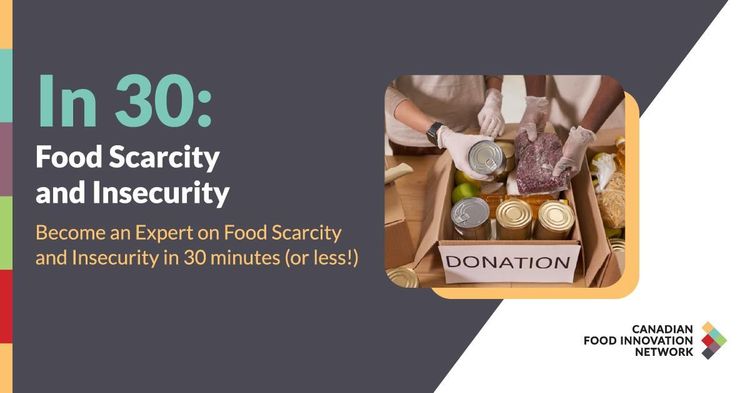
IN 30: Food Scarcity and Insecurity
Welcome to YODL! In addition to daily original content, YODL helps CFIN Members find new partners , resources , and funding opportunities to grow their food business. Learn more about this growing community and become a CFIN Member (for free!) today . Sometimes, all it takes is 30 minutes to learn the ins and outs of new food technologies and trends that are transforming the food and beverage industry. In this series, we’ll dig into a food innovation topic and link you to content and resources so you can become a master on the topic in 30 minutes (or less!). This week, we’re looking at the issues of food scarcity and insecurity in Canada and around the world, and some of the ways organizations, businesses and technology are helping to address these challenges . The Overview Food and Agriculture Organization (FAO) of the United Nations – Hunger and Food Insecurity A definition of food insecurity, world hunger and the consequences of malnutrition. The FAO explains the relation between f ood insecurity and hunger. Forbes - How AI-Driven Technology Is Increasing Food Security, And Improving The Lives Of Farmers Worldwide Innovative businesses are finding ways t o leverage new technology , machine learning and AI to address global food insecurity . The World Bank – Food Security Update An update on international food inflation and other issues affecting nutrition security. The Canadian Connection KPMG – Fighting Food Insecurity Innovation, leveraging technology and using analytic insights are ways Canada can produce more food domestically and help combat food insecurity . University of Toronto – Household Food Inse c urity in Canada An overview of how food insecurity affects Canadian households, and what can be done to reduce food scarcity in Canada. The University’s most recent study on food insecurity in Canada was released in May 2023. Niriqatiginnga – The Niriq a tig i nng a project explores northern food supply chains and food insecurity through arts and cultural entrepreneurship, emerging technologies and traditional knowledge. Social Media @foodbankscanada – (Instagram) FoodBanksCanada produces an annual HungerCount report . Food Secure Canada – (LinkedIn) Food Secure is an alliance of organizations and individuals working together to advance food security and sovereignty in Canada. Global Agriculture & Food Security Program – (Twitter/X) GAFSP funds public and private sector projects around the world that support farmers, businesses and countries in fighting hunger and malnutrition. Overtime If you’ve got more than 30 minutes, these are for you: YouTube - Non-profit develops app to fight food insecurity The FoodLink app from United Way BC c onnects food suppliers with non-profits , making it easier for food banks to access the supplies they need.

What YODLers are Saying and Reading – Top YODL content for September 2023
Welcome to YODL! In addition to daily original content, YODL helps CFIN Members find new partners , resources , and funding opportunities to grow their food business. Learn more about this growing community and become a CFIN Member (for free!) today . YODL ers had a lot to say over the past month! In case you missed them, here are the top five discussions and most read articles on YODL in September 2023. Top YODL Discussions in September 2023 Number 5 Let's Talk About Sustainability Sustainability is an issue most YODLers are concerned about today. Number 4 Raw Sliced Swe e t Potato Manufacturer or Distributor YODL is an ideal platform for sourcing ingredients and equipment. Number 3 Branding and Compliance - Getting Shelf-Ready Finding new business partners is just one of the benefits of being a CFIN member. Number 2 Funding Opportunity: $50,000 for food/bev processors to implement new tech! Bioenterprise’s FoodShift Program is a funding opportunity for projects focused on clean technology adoption, food waste reduction, or process optimization. Number 1 Looking for vendors, partners, industry connections CFIN members look to YODL for networking and to find collaboration partners. Most Read YODL Articles in September 2023 Number 5 From a Hiring Perspective: A Q&A w ith Gastronomous Technologies Like other growing foodtech companies, Oakville, ON-based Gastronomous Technologies now requires additional staff. We asked co-founder and CEO Kevork Sevadjian to discuss the search for talent. Number 4 50 Canadian FoodTech Resources – Food Innov a tion & Research Studio (FIRSt), George Brown College FIRSt is a Technology Access Centre that supports the food and beverage sector with research and development services. The lab works with clients to troubleshoot product development challenges and help bring new ideas to market. Number 3 Explained: Food Processing S k ills Canada Food Processing Skills Canada is a non-profit organization dedicated to professionalizing the food and beverage manufacturing industry by providing leadership on labour, skills and workforce development. Number 2 Emerging Food and Foo d tech Jobs New food technology and changing operating requirements are transforming the way food and beverage companies work, as well as the employee skills they require . Here are just a few of the emerging and in-demand jobs now available in food and beverage manufacturing. Number 1 IN 30: Food and Beverage Associat i ons across Canada In this series, we dig into a food innovation topic and link you to content and resources so you can become a master on the topic in 30 minutes (or less!). This week, we’re looking at some of the food and beverage associations across Canada that provide support and resources for members.
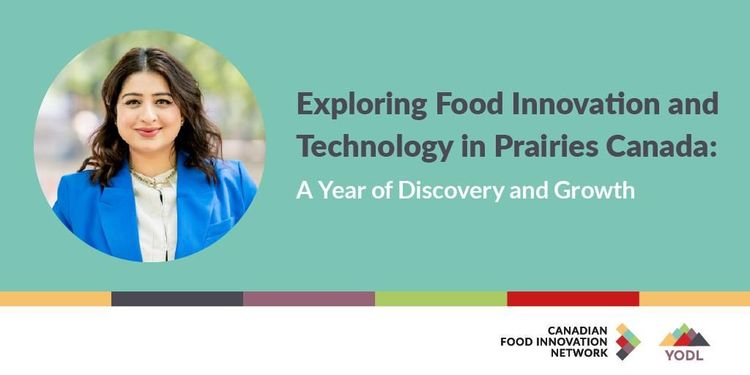
Exploring Food Innovation and Technology in Prairies Canada: A Year of Discovery and Growth
Welcome to YODL! In addition to daily original content, YODL helps CFIN Members find new partners , resources , and funding opportunities to grow their food business. Learn more about this growing community and become a CFIN Member (for free!) today . By Hubba Khatoon The past year immersing myself in the food and beverage industry h as been exhilarating and enlightening journey . In my role a s the Regional Innovation Director at the Canadian Food Innovation Network (CFIN) covering Alberta, Manitoba, and Saskatchewan, I am thrilled to share my insights and observations on the dynamic trends and support network that thrive within the Prairie region's food industry. A Thriving Support Ecosystem Over the past year, I've been struck by the impressive growth of a collaborative culture. In this growing ecosystem, ind ustry leaders, research institutions, government entities , and visionary entrepreneurs are converging to share ideas, nurture innovation, and drive impactful transformation. Not iceably , the Prairies region has displayed impressive enthusiasm for embracing challenges and entrepreneurial endeavors , which holds great promise for the future of food innovation. The Prairies are home to a vibrant community of over 500 CFIN members actively engaged in food innovation across diverse sectors. This dynamic region has also seen an outstanding response, with 34 applications received thus far for CFIN funding and support . This not only highlight s the entrepreneurial zeal and innovation thriving here but also reflects the nurturing ecosystem that provides invaluable mentorships, resources, and financial backing to empower these food innovators on their journey. In addition to research centers like Centre for Culinary Innovation at Northern Alberta Institute for Technology in Edmonton, AB, and the Prairie Research Kitchen at Red River College Polytechnic in Winnipeg, and Manitoba Food Development Centre in Manitoba, Saskatchewan Food Industry Development Centre , Food Processing Development Centre (FPDC) in Leduc, the region’s food companies have access to a diverse array of resources including incubators, accelerators, and funding programs. Notable examples include the Plug and Play Food Vertical , SVG Ventures/Thrive , CDL Rockies Ag Vertical , Bioenterprise , Venturepark L abs , and Cultivator AGTECH ACCELERATOR . Government Support for Food Innovation It's also evident that federal, provincial, and municipal governments across the Prairies region are deeply committed to supporting food entrepreneurs, acknowledging the significant potential of food innovation and technology to drive economic growth across the region. Governments are actively implementing supportive policies and allocating resources to research and development initiatives, creating a favorable regulatory environment, and facilitating collaborative efforts between public and private sectors. This includes supporting a wide array of events and dialogue specifically crafted to enrich the food ecosystem. A prime example is Inventures 2023, organized by Alberta Innovates, which featured dedicated sessions addressing food systems, security, innovation, and technology. Sustainable Solutions Sustainability has taken center stage in the Prairies' food innovation landscape, as companies progressively embrace responsible production practices. These include practices like upcycling, as seen in Okotoks, AB's Ground-up eco-ventures , as well as efforts to minimize food waste. Additionally, businesses like Edmonton's TerraVerdae Bioworks and Calgary's Earthware Reusables are pioneering eco-friendly packaging solutions, while others, like CarbonGraph , are working diligently to reduce their carbon footprint. This commitment to sustainability not only aligns with consumer demands but also secures the long-term viability of our food system. Plant-Based Food Innovation One of the most notable areas of innovation in the Prairies is the significant expansion of plant-based foods, encompassing everything from meat alternatives to dairy-free options. Given the global shift towards sustainability and healthier dietary choices , the Prairies naturally excel in this domain, thanks to its rich agricultural h istory and extensive fertile lands. This unique positioning empowers the Prairie region to take the lead in plant-based food production, the cultivation of plant proteins, and the advancement of research and development initiatives. For instanc e, Phyto O rganix Foods Inc. i s currently constructing a cutting-edge, net-zero p lant processing facility in Strathmore, AB, with substantial support from both provincial and federal funding. Set to launch in 2024, this facility will process 40,000 metric tonnes of locally sourced yellow peas annually. From these peas, it will produce soluble and insoluble protein isolates, processed fiber and starch, as well as high-quality dietary pea hull fiber. In addition, the presence of the Protein Industries Canada supercluster, an industry-driven initiative focused on establishing Canada as a global leader in plant protein and plant-based products, further elevates the region's international standing in this burgeoning sector. Growing Global Footprint Prairies Canada is extending its global impact as significant entities such as the Trade Commissioner Service , Agriculture and Agri-Food Canada, r egional- i nternational trade organizations, and economic development organizations including Calgary Economic Development , Economic Development Regina , Edmonton Global , Economic Development Winnipeg , and Economic Development Lethbridge , are proactively integrating food technology and innovation into their strategies . These organizations are not only attracting international companies to establish operations in the Prairies but also fostering the creation of international partnerships for local food businesses. Food-Tech Solutions Another prominent area of expansion has been the emergence of foodtech solutions, where the Prairie region is establishing itself as a leader . Two remarkable examples involve companies supported by CFIN funding: Winnipeg-based TheoryMesh which employs blockchain applications to ensure traceability and transparency in the supply chain, and Saskatoon's BetterCart Analytics , utilizing AI-po wered ana lytics to enhance purchasing expe riences. These technologies enhance efficiency, boost food safety, and enrich consumer interactions. Addressing Labor and Technology Challenges Recognizing the Prairie region's food innovation landscape, it's crucial to acknowledge existing gaps, some of which resonate with entrepreneurs across Canada. Specifically, the region confronts a shortage of skilled labor in specialized fields like food science and technology, with challenges in retaining entry-level positions. Addressing this challenge requires the formation of strategic partnerships to cultivat e training initiatives and drawing in top talent . It also calls for substantial investments in the advancement of digital transformation. As exemplified in Dana McCauley's article on Robotics and the food industry , CEO of CFIN, automation and robotics present a practical remedy for mitigating labor shortages, particularly when employed in tasks categorized as hazardous, unclean, or repetitive. T his technological shift increases efficiency and empowers employees to redirect their focus toward more value-added and skill-demanding responsibilities. To navigate digital transformation effectively, businesses require additional resources, training, and improved education in applied research, innovation, and technology adoption. Navigating Co-Packing Gaps Simultaneously, it's evident that the Prairies face a shortage of adequate co-packing facilities and services, creating obstacles for entrepreneurs looking to launch startups and scale innovative food products . There are no easy fixes to this issue. Bridging this gap requires investments in state-of -the-art co-pack ing infrastructure, fostering collaborations with established co-packers, and supporting emerging entrepreneurs with access to affordable and flexible co-packing solutions. Access to Capital Despite the presence of funding opportunities, access to capital remains a n ongoing challenge for many food innovators and entrepreneurs in the Prairie region. Acquiring funding for research and development, scaling operations, and marketing innovative products can prove to be arduous tasks. Addressing this challenge will also require a collective effort among stakeholders to craft funding programs, establish venture capital networks, and introduce investment incentives tailored specifically to bolster the distinctive requirements of the region's food innovation ecosystem. Prairie Region's Path to Global Leadership in Food Innovation With ongoing advancements in technology, a steadfast commitment to sustainability, and the presence of a supportive ecosystem, the Prairie reg ion is primed to emerge as a global leader in food innovation. Various organizations throughout the Prairies, along with indispensable tools like CFIN’s YODL platform , Funding Finder and Resource Finder ( all available to CFIN members at no cost ) play pivotal roles in the innovation equat ion. By proactively addressing the current gaps, the region can unlock its full potential in food innovation and technology. Moving ahead, it's imperative to engage with diverse communities, foster inclusivity, promote collaboration, and tackle pressing challenges such as food security. As I embark on my second year with CFIN, I am excited to delve deeper into these critical issues and work collectively to drive progress in the field of food innovation. Hubba Khatoon is Regional Innovation Director for the Prairies at CFIN. Contact her at Hubba@CFIN-RCIA.ca The Canadian Food Innovation Network (CFIN) is a national, member-based organization that’s stimulating transformative and transferrable innovation across the Canadian food sector. They connect the Canadian food ecosystem to fresh insights, ideas, and technologies to elevate their business and increase their innovation capacity . You can become a CFIN member (for free!) in less than five minutes. Visit CFIN at www.cfin-rcia.ca
50 Canadian FoodTech Resources – David Sobey Centre
Welcome to YODL! In addition to daily original content, YODL helps CFIN Members find new partners , resources , and funding opportunities to grow their food business. Learn more about this growing community and become a CFIN Member (for free!) today . Canada has an extensive range of research centres, food incubators, accelerators and labs supporting food and beverage innovation through the research they do and/or the services they offer. Each week throughout 2023, we’ll be highlighting an organization that’s supporting food innovation in Canada. Name: David Sobey Centre for Innovation i n Retailing and Services (DSC), at Saint Mary’s University Location: Halifax, NS Mission: The centre has a mandate to help build a vibrant retail sector in Canada through research, innovation and retail education. Focus: The centre helps lead transformation and growth in the Canadian retail industry. It is focused on multidisciplinary applied research, innovation, and comprehensive education and professional development programs, and is a hub for retail expertise equipping retailers with insights, innovation and skills to thrive. Services: The DSC conducts and funds applied and collaborative research on issues affecting the retail sector to improve business practices and outcomes. It develops and tests new technologies , processes and methods, and innovates in-house with the help of faculty and graduate students from multiple disciplines, as well as industry retailers and technology providers. It offers a biometric and digital lab, VR retail store and cashierless store lab, as well as a variety of in-person and virtual events focused on retailing . In 2017 it launched the David Sobey Centre National Retail Innovation Awards recognizing retailers and companies supporting the retail sector with innovation and unique contributions , including sustainable solutions, e-commerce, technology and artificial intelligence. What you Need to Know: To date the c entre has given out $530,000 in research funding, and $150,000 in student competition funding . It has ha d 4,500 event attendees and 240 executive program attendees. The c entre has two virtual and in-person events coming up that are open to the public: Retail Tech Unveiled: Exploring the Trends of Tomorrow on October 16, 2023, and the Distinguished Retailer Speaker Series - Rachel Huckle, President & COO, Staples Canada on October 26, 2023 . Notable News: The DSC recently unveiled a retail robot, designed to free up retail employees in stores and transform everyday shopping experiences. The robot can check inventory level on the shelf, as well as price and planogram compliance and send real-time reports. It is just one of several technology-based innovations being pioneered at the centre. Get Involved: Contact the Sobey School of Business at ( 902 ) 496-8272 or davidsobeycentre@smu.ca , or reach out to our Regional Innovation Director for Atlantic Canada, Tyson MacInnis .

Meet a Member - Jeff Hetherington
Welcome to YODL! In addition to daily original content, YODL helps CFIN Members find new partners , resources , and funding opportunities to grow their food business. Learn more about this growing community and become a CFIN Member (for free!) today . Since launching in 2022, CFIN has grown to more than 3, 5 00 members, which includes professionals from every sector of the food industry. This series highlights the many different CFIN members across Canada who visit YODL to learn, make connections, find funding, and discover new ways to grow their businesses. Jeff Hetherington Head of Project Development , Laplace Robotics Kitchener- Waterloo , ON Tell us about your job As h ead of Project Development at Laplace Robotics , and being a veteran leader of the food i ndustry, I help bridge the connection between AI v ision systems and r obotics and the f ood i ndustry to bring value to manufacturers. As a Lean Six Sigma professional, I’m always looking at c ontinuous i mprovement opportunities for businesses. How is YODL helping you do your job? YODL connected me and the team at Laplace Robotics. I served as an advisor for the business and then joined them full time . So, making connections is how it helps me do my job. How often do you visit YODL? W hen I see an email update with a summary of new posts , which is usually weekly . What’s your favourite aspect of YODL? Lifelong l earn ing from others , and learn ing about new trends and innovations in the food sector. Can you tell us something you learned on YODL? So m any new innovative products, I’m always amazed at what Canadian companies can do! What type of connection partners are you looking for? Food and b everage or consumer packaged goods businesses that want to implement AI v ision, r obotics and a utomation into their process to create value for them. We also partner with i ntegrators looking to leverage AI for businesses they supply. What areas of food innovation interest you the most? Artificial i ntelligence - based vison systems, robotics and automation , as well as in novative food and beverage products. What has been your favourite discussion post? My favourite discussion post was when I created a post looking to offer my food industry experience and knowledge as a m entor / a dvisor to any startups. That’s where I met the team at Laplace Robotics. They created an exceptional AI v ision and r obotics program that address es and solve s labour and yield issues we have in the industry and make it possible for any size of business to implement . What’s your favourite food? Well - marbled steak , char broiled on the BBQ , with seasonal vegetables! Interested in participating in our Meet a Member series? Contact your Regional Innovation Director for more information!

IN 30: Food Tradeshows you Should Know
Welcome to YODL! In addition to daily original content, YODL helps CFIN Members find new partners , resources , and funding opportunities to grow their food business. Learn more about this growing community and become a CFIN Member (for free!) today . Sometimes, all it takes is 30 minutes to learn the ins and outs of new food technologies and trends that are transforming the food and beverage industry. In this series, we’ll dig into a food innovation topic and link you to content and resources so you can become a master on the topic in 30 minutes (or less!). This week, we’re taking a look at some of the food and beverage tradeshows taking place in Canada throughout the remainder of 2023 . There may be other sector- or region-specific tradeshows taking place across the country. Atlantic Canada Responsible Seafood Summit Oct. 2 – 5, 2023 Saint John Delta Saint John, NB FBA Conference & Awards Oct. 24 – 25, 2023 Light House Arts Centre Halifax, NS Quebec BÉNÉFIQ 2023 Oct . 4 - 5 , 2023 Centre des congrès de Québec Quebec City , QC Ontario Canadian Manufacturing Technology Show 2023 Sep t. 25 – 28, 2023 Toronto Congress Centre Toronto, ON Food Accelerator Celebration 2023 Oct . 3, 2023 YSpace Markham Markham, ON RCC’s Retail Sustainability Conference Oct. 3, 2023 The International Centre Mississauga, ON Canadian Institute: Inaugural Advanced Summit on Food Law and Regulation Canada Oct . 4 – 5, 2023 Sandman Signature Mississauga Hotel Mississauga, ON Toronto Global Forum 2023 Oct . 11 – 13, 2023 Fairmont Royal York Toronto, ON The Meating Place Conference 2023 Oct. 20 - 21, 2023 JW Marriott The Rosseau Muskoka Resort & Spa Minett , ON Grocery Innovations Canada 2023 Oct. 24 – 25, 2023 Toronto Congress Centre, Toronto, ON Startup Canada Tour - Brampton Oct . 26, 2023 The Rose Brampton Brampton, ON Small Business Forum Oct . 30, 2023 Metro Toronto Convention Centre Toronto, ON CIFST Interface 2023 Nov . 7, 2023 The International Centre Mississauga, ON CIFST Ontario Section: 33rd Annual Suppliers' Night Tabletop Exhibition Nov . 7, 2023 The International Center Mississauga, ON ADM Pack Expo Toronto 2023 Nov . 7 – 9, 2023 Toronto Congress Centre Toronto , ON 8th Annual SAAS North Nov . 15 – 16, 2023 Shaw Centre Ottawa, ON AWC EAST 2023 Nov . 19 - 23 , 2023 Sheraton Fallsview Niagara Falls, ON GroceryConnex Nov . 20, 2023 Fairmont Royal York Toronto, ON OPMA Annual Gala and Awards Nov. 24, 2023 Bellevue Manor Vaughan, ON Prairies Canada Terroir Symposium 2023 Sep t. 30 – Oct. 2, 2023 John Ware Building Calgary, AB British Columbia #IGNITE: Accelerating your Path to Commercialization Sep t. 25, 2023 Vancouver Convention Centre West Building Vancouver, BC entrepreneurship@UBC Immersion Week (EIW): Let’s take action together! Sep t. 26 - 28 , 2023 The University of British Columbia Vancouver, BC Placemaking Summit 2023 Oct . 3, 2023 Fairmont Hotel Vancouver Vancouver, BC Frontier Summit 2023 Oct . 4 - 5 , 2023 Lowtide Properties Vancouver, BC BCFB Awards 2023 Oct . 11, 2023 Rocky Mountaineer Station Vancouver, BC Charitable Impact: TechPong 2023 Oct . 19, 2023 Science World Vancouver, BC RCCs Retail West Conference Nov . 2, 2023 The Westin Bayshore Vancouver, BC Is there a major food and beverage tradeshow taking place this year that we’ve missed? Reach out to your Regional Innovation Director to let us know!

Emerging Food and Foodtech Jobs – Part 3
Welcome to YODL! In addition to daily original content, YODL helps CFIN Members find new partners , resources , and funding opportunities to grow their food business. Learn more about this growing community and become a CFIN Member (for free!) today . New food technology and changing operating requirements are transforming the way food and beverage companies work, as well as the employee skills they require. Following are just a few of the emerging and in-demand jobs now available in food and beverage manufacturing. Mechatronics engineer What They Do: Mechatronics focuses on the design and assembly of computer-controlled integrated systems involving mechanical, electrical and electronic equipment, including robotics, automation, machine vision, Internet of Things equipment, and controls. Necessary Skills & Education: STEM education, mechanical engineering degree, knowledge of computer programming, creative thinking, solutions oriented. Account Manager What They Do: An account manager working in the food industry oversees sales activities for products and/or categories , develops relationships with new and existing customers (including grocery and foodservice customers), analyzes sales numbers, creates strategies designed to grow sales, and generates new sales opportunities. Necessary Skills & Education: Good communication, sales, written , presentation and negotiation skills, experience with customer relationship management (CRM) software , administrative skills, strong understanding of the product. Business Development Manager What They Do: A business development manager working in the food industry helps a company grow its business in terms of new clients, relationships, regions, and/or products. They conduct market and sales research, forecast revenue and create strategic plans for growth either for the company as a whole or for specific areas of the business such as marketing or sales. Necessary Skills & Education: A business , management, marketing, accounting or finance degree, strong understanding of the food industry, good communication, leadership, planning, research, written, organizational and presentation skills .

FBO’s CareersNOW! Program
Welcome to YODL! In addition to daily original content, YODL helps CFIN Members find new partners , resources , and funding opportunities to grow their food business. Learn more about this growing community and become a CFIN Member (for free!) today . There are a range of resources available to both job seekers and food and beverage industry businesses as they seek to navigate the labour market, including Food and Beverage Ontario ’s CareersNOW! p rogram . As part of our Talent and Training series, we asked Isabel Dopta , program director of CareersNOW ! , to tell us more about the ways in which the program is connecting potential employees with employers. Q: Please explain what the CareersN OW ! program is? A: CareersNOW ! was created and launched by Food and Beverage Ontario in 2021 to facilitate connections between employers in Ontario’s food and beverage processing industry and jobseekers and students exploring career opportunities or ready to start a job. The program is based on a collaborative model, with several project partners that are industry associations and post-secondary educators, to leverage the best expertise and resources available. Q: How is the program helping to address the labour shortage being faced by the food industry? A: The current workforce for Ontario’s food and beverage processing industry is approximately 125,000 people. Like other sectors, this industry is experiencing labour and skills vacancies as high as 20% of the workforce due to a retiring labour force and lack of sufficient talent attraction. CareersNOW ! has a mandate to engage jobseekers and students on career opportunities by sharing information, and providing connecting tools and resources for businesses and jobseekers , such as job fairs, mentorship and coaching, skills training, and an employment platform. CareersNOW ! is available at no cost to participants. Q: What sectors of the industry are facing the largest labour gaps? A: Beverage processing is experiencing large gaps as is meat and poultry processing. Q: What are some of the most in-demand skills and jobs in the food industry today? What jobs do you see growing in demand? A: In-demand jobs continue to be in production and the skilled trades. Emerging jobs for the future will demand skills in innovation, automation , and advanced manufacturing. For example, expertise in sustainability , including new packaging strategies and food waste management , are in growing demand. Q: Food technology, automation and digitization are becoming more common in food production. How are companies retraining current employees to fill these roles? A: The food and beverage processing industry has a good reputation and a strong track record in providing training and professional development for its workforce. Food Processing Skills Canada, a CareersNOW ! partner, in particular offers several training and employee development programs for Canadian businesses. Of course, skilled individuals will also always be in demand. Q: If companies are filling technical roles with non-food professionals from other industries, what do skilled professionals need to understand about working in the food industry? A: It is important to remember that this industry is largely comprised of small - to medium-sized business es with less than 1 00 employees. It is common to see an individual that has started their caree r in an entry level role grow professionally with the same company into management and leadership positions. Professionals that are new to the food and beverage industry can also p articipate in the C areersNOW ! Job Ready Skills Training program. This online training offers 15 introductory courses to learners on relevant subjects including industry onboarding, food safety, good manufacturing practices, sanitation, industrial workplace safety, lock out/tag out, and allergens. The training is a great place for individuals to learn in a self-paced, online learning management system, and receive certificates for each completed course that can be shared with prospective employers. Q: Are you seeing more food companies offer special benefits to attract new hires and retain employees? A: Yes. Food and beverage companies have made a commitment to com m unica t e their value as an employer. For so long the focus for a business was on product marketing, now there is a shift to also branding the company as a top employer with an attractive workplace culture and rewarding career opportunities. It’s an exciting time for businesses and jobseekers to learn about each other . Q: Anything else to add about labour and the food industry? A: Visit www.careersnow.ca to learn more about the resources available for businesses, jobseekers and students, and join the CareersNOW ! community.
50 Canadian FoodTech Resources – Food and Agricultural Institute, University of the Fraser Valley
Welcome to YODL! In addition to daily original content, YODL helps CFIN Members find new partners , resources , and funding opportunities to grow their food business. Learn more about this growing community and become a CFIN Member (for free!) today . Canada has an extensive range of research centres, food incubators, accelerators and labs supporting food and beverage innovation through the research they do and/or the services they offer. Each week throughout 2023, we’ll be highlighting an organization that’s supporting food innovation in Canada. Name: Food and Agricultural Inst i tute (FAI) at the University of the Fraser Valley Location: Abbotsford, BC Mission: The FAI is an interdisciplinary research centre that focuses on issues, challenges, and sustainability solutions related to food and farm systems. Focus: The institute explores emerging agricultural technologies, techniques and methods , as well as critical food system challenges and issues . Services: The FAI conducts research under two major themes: agricultural technology and innovation, and food systems planning and policy. The agricultural technology theme explores emerging agricultural technologies, techniques and methods , such as cellular agriculture and indoor farming , and their potential for contributing to sustainable food systems. The Institute recognizes that technology alone does not comprise a sustainability solution, and thus, it also researches potential approaches, strategies, and policies that can complement the widespread implementation of agricultural technologies and innovations for better sustainability outcomes. The food systems planning and policy theme explores critical food system challenges and issues in order to find ways and develop tools to address these challenges/issues in a manner that aligns with broader goals for sustainability and resilience. FAI researches agricultural land-use planning and policy on local and regional scales to identify best approaches for developing farmland and improving food assets. In addition, FAI incorporates thinking and work from the agricultural technology and innovation theme into its planning and policy research, and it examines how land can be used more efficiently with the implementation of high-yield, low-footprint agricultural technologies. What you Need to Know: FAI partners with a diversity of researchers, industry leaders, and governments to build knowledge and tools for moving toward sustainable, resilient food systems for communities and regions in BC , Canada, and across the globe. Notable News: This fall the federal government, through Genome Canada, announced an almost $27-million investment in nine Interdisciplinary Challenge Teams (ICTs) comprised of researchers from different disciplines whose genomics research and innovation into sustainable solutions will help create a more resilient national food system and supply chains. That includes a n ICT based at the University of the Fraser Valley for a project titled “The social implications of genomic agri-food technologies: Ensuring equity, diversity and inclusion in the transition to climate-resilient Canadian agricultural and food systems,” led by Evan Bowness, Lenore Newman and Stefania Pizzirani . For more on work from Dr. Lenore Newman, see CFIN’s coverage of her book (with Dr. Evan Fraser) Dinner on Mars: The Technologies that Will Feed the Red Planet and Transform Agriculture on Earth, and CFIN’s Cultivating Success: Canada's Big Biomanufacturing Opportunity . Get Involved: Contact Dr. Lenore Newman at Lenore.Newman@ufv.ca or (604) 504-7441, or reach out to our Regional Innovation Director for BC Lavina Gully .