

Articles & Reports
Featured

One Consumer, Dozens of Touchpoints, One Campaign
Every new touchpoint used to mean another campaign to build, budget, and measure. Brands pulling ahead in retail media reach consumers across all of them with one campaign and no extra workload.

Where Crunch Meets Clean Label: Sunflower Kernels for the Next Generation of Better-for-You Snacks
Canada’s healthy snacks market is experiencing strong growth. According to Grand View Research, the market generated $3,713.6 million (USD) in 2025 and is projected to reach $7,282.5 million (USD) by 2033, growing at a compound annual growth rate (CAGR) of 8.8% from 2026 to 2033.¹ The research also identifies Canada as the fastest-growing regional market in North America, highlighting significant opportunities for food manufacturers looking to innovate in the category. For food scientists and product developers, this growth presents a complex formulation challenge. Consumers increasingly seek snacks that deliver nutritional value, convenience and recognizable ingredients, without sacraficing the taste,texture and overall eating experience they expect. Success depends on balancing these priorities to create better-for-you products that satisfy both nutritional goals and consumer expectations. Why Texture Matters in Snack Innovation Texture is a powerful influence on how consumers experience food, shaping everything from first impressions to repeat purchases. Puratos’s Taste Tomorrow research found that nearly half of consumers prioritize texture over ingredients when purchasing food, while 68% of millennials say texture directly influences their choices.² Ingredion research further indicates that 70% of global consumers would switch to a different product or brand if they were dissatisfied with its texture.³ For snack food manufacturers, these findings underscore the importance of getting texture right from the outset. Crunch, crispness and contrast can help distinguish a product in a competitive market, while combinations of complementary textures can create a more engaging and premium eating experience. Innova Market Insights’ Global Texture Trends 2026 report highlights the appeal of combining textures such as creamy, crunchy, and soft. Its research also revealed that one in four consumers globally is interested in trying snacks in formats that are new to them.⁴ Together, these insights point to opportunities for food manufacturers to explore fresh ingredient combinations and textural experiences that make better-for-you snacks stand out. Where Sunflower Kernels Fit In U.S.-grown sunflower kernels give food manufacturers a practical way to build that contrast. Their mild flavour and satisfying crunch add dimension to both sweet and savoury product innovations without overpowering other ingredients. They also bring plant-based protein, fibre and healthy fats, along with vitamin E, zinc, folate, iron and magnesium, so the texture upgrade comes with a nutritional one. Available raw, roasted and ready-to-eat, sunflower kernels can be used across a wide range of applications, including: • Better-for-you snack bars • Granola and trail mixes • Crackers and savoury snacks • Bakery products and breakfast cereals • Plant-based snacks and bites Clean Label and Allergen-Friendly by Design Consumers worldwide are increasingly prioritizing clean-label products made with recognizable ingredients and greater transparency. Innova Market Insights reports that more than two in three consumers globally say they are at least somewhat influenced by clean ingredient decks, and that nearly one in three new products now carries some type of clean label claim.⁵ Innova also notes that non-GMO claims are most established in North America.⁵ Sunflower kernels are naturally non-GMO and sustainably grown, which supports the transparency and recognizable-ingredient positioning shoppers respond to. They are also an allergen-friendly alternative to tree nuts, delivering the crunch consumers expect from nuts and seeds. Unlike tree nuts, sunflower kernels are not considered a priority allergen in Canada, making them a versatile option for manufacturers developing new products or reformulating existing ones. Turning Texture Trends into Product Opportunities As Canada's healthy snacks market continues to expand, food manufacturers have an opportunity to differentiate their products through thoughtful ingredient choices and more engaging eating experiences. Texture is an important part of that equation, influencing consumer appeal while creating opportunities to innovate across familiar snack formats. U.S.-grown sunflower kernels bring together satisfying crunch, plant-based nutrition and application versatility, making them a valuable ingredient to consider for the next generation of healthy snacks. From bars and granola to crackers and savoury mixes, they can help product developers create food innovations that balance texture, taste and nutritional value. Explore how U.S.-grown sunflower kernels can add texture, nutrition and versatility to your next snack innovation. Connect with a supplier today > {link to lead to the NSA Kernel suppliers page} References: 1. Grand View Research, Canada Healthy Snacks Market Size & Outlook, 2026–2033. https://www.grandviewresearch.com/horizon/outlook/healthy-snacks-market/canada 2. Puratos, “Why texture is important in food,” February 19, 2025. https://www.puratos.com/blog/why-texture-is-important-in-food 3. Ingredion research, as reported in “New approaches to texture innovation,” Food Business News, May 7, 2026. https://www.foodbusinessnews.net/articles/30275-new-approaches-to-texture-innovation

Inside SIAL Canada 2026: Driving Food Innovation Through Connection and Collaboration
CFIN had the honour of taking a bite out of SIAL Canada 2026 in Montréal 🍎—connecting with partners, members, and industry leaders shaping the future of food innovation across Canada and beyond. Representing CFIN on site were CEO @Dana McCauley and @Julie Daigle , Regional Innovation Director (Quebec), who engaged with the ecosystem throughout the event. Their presence reflected CFIN’s ongoing commitment to strengthening Canada’s food innovation ecosystem and supporting high-potential foodtech ventures. Attendees could also catch Julie as a Foodtech Focus expert at the SIAL Canada Expert Hub, where she connected directly with innovators and shared insights with the community. Dana also took the stage as part of the Dairy Talks program, contributing to a forward-looking discussion on innovation as a driver of market leadership in the Canadian dairy sector. Her session explored the shift from incremental product development toward a broader innovation mindset—highlighting next-generation ingredients, value-added dairy formats, new go-to-market strategies, and the role of Industry 4.0 technologies like AI, robotics, automation, and digital supply chains in strengthening productivity and global competitiveness. A key highlight of the week was CFIN’s involvement in the 7th edition of the Startup Pitch Competition, held on April 30 on the Food & Bev Connect stage. Julie Daigle participated as the President of the Foodtech jury, joining a panel of industry experts evaluating promising entrepreneurs from the Startup Village. Beyond the competition, the Startup Pitch stage served as a strategic platform connecting entrepreneurs with buyers, investors, and key decision-makers across the agri-food ecosystem. A standout moment for the CFIN community was the recognition of Maia Farms, a CFIN member and funding recipient, which earned the Gold Prize in the foodtec h competition 🍄🏆 CFIN’s presence at SIAL Canada underscored the momentum of Canada’s food innovation sector and the value of convening the ecosystem to accelerate ideas from concept to commercialization. 📖 Explore more from SIAL Canada 2026 R elive the stories, innovations, and key moments captured throughout the show in the official SIAL Canada Daily: SIAL Canada Daily – 2026 Edition (Photos Courtesy of SIAL)
Five Years of CFIN: A Letter to the Network
Thirty years ago, I worked as a chef in the kitchen of one of Canada’s top restaurants standing should er to shoulder with people who ca red about the sensory experience of food above all else . Our tech stack was al most all analog and , to be honest, we didn’t give our ordering system or the way we did inventory a lot of thought. My career broadened over time , and I ’ ve also held roles where I developed recipes at Canadian Living and wrote about food trends; built innovation strategies and products for national brands, founded a business incubator, and ran a venture creation office at a prestigious Canadian u niversity . Food was always the thread , and technology was always present but in most of the food focused businesses I’ve worked for, it was taken for granted, and creativity and hard work were what drove the businesses forward. While smart people with great ideas are essential to food business success, it’s not enough to be competitive in today’s world. Old ways of running restaurants, innovation labs and food and beverage processi ng businesses can’t compete internationally or absorb the trade shocks that have become commonpla ce in recent history. That’s why I feel l ik e CFIN is the perfect place for me to be today and why we’re adding dozens of new members per week. When CFIN was created in 2021, the mandate was intentionally broad : cata lyze Canadian food innovation with funding , build community, connect an ecosystem that had been operating in silos for decades. The funding programs took shape quickly. Since 2022, we’ve awar ded $23.3 million to 133 projects across six program s. For every $1 CFIN invested, our members committed $7.65 of their own capital toward innovation. This leverage ratio of nearly 8-to-1 has unlocked over $140 m illion in private sector spending on R&D and capital infrastructure. The other work was harder to define . What do "build community" and "connect an ecosystem" mean in practice for a sector span ning startups, processors, researchers, investors, policymakers, and operators spread across this vast country ? Th at question didn't have a tidy answer. As a result , fostering and serving this network was (and remains ) an exercise in innovation itself : something new to be built , and then tested, adjusted, and iterated upon , ad infinitum . I’m immensely proud of what we’ve built so far . A team of Regional Innovation Directors who've supported more than 2,200 organizations, brokering the introductions that became commercial partnerships, strategic investments, leadership hires, and research collaborations. A digital platform , YODL, connecting Canada's food sector across industry silos and bridging interprovincial barriers . The first comprehensive analysis of Canadian foodtech . A network of 8,500 members from every province, every part of the food value chain, every stage of business . On any given week, our community is discussing topics ranging from precision fermentation bioreactor designs and funding stacks to food packaging labeling regulations and export strategies, all in the same space. Members benefit from purpose-built tools and resources — like our Funding Finder that aggregates food and beverage funding opportunities across the country and a growing library of original sector research and analysis — alongside direct access to our Regional Innovation Directors. Canada has strong regional funders, accelerators, trade associations, and tech transfer offices, each doing necessary work in a defined lane. What this sector didn't have was a place where the conversation s , the tools, and the connections all showed up at once — where the range of problems and the range of capabilities were dense enough that the right solutions could emerge . That's what CFIN has built. That foundation is important because the next five years will be even more dynamic, and often more challenging, than the last five . To keep pace and flourish in an increasingly volatile world, Canada's food sector needs to modernize faster and more strategic ally than ever before . Trade disruption is dramaticall y reshaping supply chains . L abour constraints are compounding a productivity gap that was widening long before tariffs became front-page news. Climate pressures are intensifying. Food 4.0 — a tech-enabled food s ector that's more collaborative, productive, resilient, and competitive — is the framework CFIN is building toward, and the case for it gets more urgent by the quarter. I ’m confident that we’re up to the task . Five years ago, Canada's food innovation ecosystem was fragmented, underleveraged, and often invisible to the investors, operators, policymakers, and media who needed to see it. That's no longer true. The capacity to respond to the challenges ahead is here. Not in any single program or policy, but in the breadth of this network — the founders , processors , researchers , and investo rs who are hungry to innovate and build a better Canadian food sector . My own wide-ranging path through the food sector taught me that no single role ever showed me the full picture. It took working across kitchens, labs, newsrooms, boardrooms, and startups to understand how innovation really moves through this industry — and where it get s stuck. CFIN was built on the same insight. A sector this complex, facing challenges this urgent, needs more than funding or advice or connections in isolation. It needs all of them in the same room. That's what we've spent five years building, and I'm betting the next five will prove its value at a scale none of us can yet imagine. Thank you for being part of it. Dana McCauley, CEO, Canadian Food Innovation Network

How BC is Becoming a National Foodtech Hub
Editor's Note: This article was o riginally published in the Vancouver Tech Journal on March 13, 2026 The province has a diverse food processing industry, world-class research facilities, and a deep bench of tech talent — everything a foodtech ecosystem needs to thrive. Foodtech builds the software, automation, and applied science for how food gets processed, manufactured, packaged, distributed, and sold. The industry behind it is enormous — food and beverage processing alone is Canada's largest manufacturing sub-sector , bigger than automotive, bigger than aerospace. It's a serious market, and in British Columbia, it's growing fast. But if you work in the province's broader tech ecosystem, you might not even know that. Foodtech hasn't traditionally drawn the same attention as sectors like cleantech or enterprise SaaS despite being a comparable market in scale and complexity — and one where demand for new technology is accelerating fast. What BC brings to the table BC's food processing sector is substantial — over 3,200 companies producing roughly $12.6 billion in value-added products annually. And it's being treated as a strategic priority. The province has funded a network of shared food processing hubs, UBC just opened a Food and Beverage Innovation Centre with pilot-scale production labs that processors and startups previously had to leave BC to access, and SFU's BC Centre for Agritech Innovation is partnering directly with SMEs on cost-shared R&D. At the same time, much of what the food industry needs is already being built in BC for other thriving tech sectors. Process automation, energy management, supply chain software, safety and traceability systems, data-driven quality control — these are cleantech and software problems applied to production floors and distribution networks. The talent, research base, and trade infrastructure to support a serious foodtech cluster are all here. A different kind of tech sector Foodtech doesn't work like enterprise SaaS or consumer tech. Processors and manufacturers adopt slowly and carefully, because failure is expensive in ways that go beyond lost revenue — a food safety issue, a botched line integration, a regulatory problem. Sales cycles run in quarters. The investor community that understands food is small and specialized. And the industry's own networks run through trade associations, existing supply relationships, and sector-specific events that sit well outside the broader tech community's orbit. None of this means foodtech is closed off. It means that if you want in — as a founder, investor, developer, or potential partner — you need a way to access the conversations, the deal flow, and the operating knowledge that don't surface through the usual channels. The Canadian Food Innovation Network The Canadian Food Innovation Network is a national not-for-profit, established in 2021 that functions as the operating infrastructure for Canada's foodtech sector. CFIN runs cost-shared funding programs that help companies de-risk R&D and move technology into commercial settings. Since launch , the organization has awarded over $22 million to 122 Canadian foodtech projects, matched by $25 million in industry co-investment. Those funded companies have generated $90 million in economic impact, created over 355 jobs and co-op placements, and attracted more than $82 million in follow-on investment. The network's 8,000-plus members include food processors, technology companies, ingredient suppliers, retailers, researchers, and investors — connected through YODL, CFIN's member platform, and supported by Regional Innovation Directors embedded across the country, who work directly with members to broker introductions, navigate funding, and connect emerging technology with the processors and buyers who need it. CFIN also produces the sector's most detailed intelligence . The Foodtech in Canada 2025 Ecosystem Report mapped investment flows, identified sector strengths, and gave both companies and investors a clearer picture of where the Canadian foodtech market stands. And then there's Foodtech Frontier , CFIN's annual program identifying the country's highest-potential foodtech companies. The inaugural cohort of 35 winners included eight BC companies. For investors, it works as curated, vetted deal flow in a sector where sourcing is otherwise hard. For the companies, it's structured national visibility. Plug into Canada’s foodtech ecosystem If you work in technology or investment and you've been curious about the food sector, then signing up for a free CFIN membership is the best place to start. Members get access to funding programs, sector intelligence, a national innovation community, and regional team members that know the BC landscape specifically.
Other Articles

This Year on YODL – The Top Viewed Articles and Discussion Posts of 2023
Welcome to YODL! In addition to daily original content, YODL helps CFIN Members find new partners , resources , and funding opportunities to grow their food business. Learn more about this growing community and become a CFIN Member (for free!) today . YODL was the place to be this year , with exciting discussions and original articles appearing daily. In case you missed them, here are the top five discussions and most viewed articles and videos on YODL in 2023. Top YODL Discussions in 2023 Number 5 Food Trend Predictions Heading into 2024 - Get all the info here! A look at the trends and innovations expected in 2024. Number 4 B Corp certification Canadian companies are curious about the benefits of becoming B Corp certified for their social and environmental performance. Number 3 Our Favourite Food Newsletters A list of some of the food and beverage enewsletters food and beverage professionals rely on. Number 2 Upcoming Opportunities CFIN posts information on YODL about upcoming award competitions, events and funding opportunities . Number 1 Mintel 2023 Food Trends Reveal YODLers are looking for more information on trends affecting the Canadian food and beverage industry. Most Viewed YODL Articles and videos in 2023 Number 5 Member Picks – Cheryl Appleton Want to highlight your food-related company, organization or program? Contact your Regional Innovation Director to find out how to get involved. Number 4 Canadian FoodTech Trends: Interest and Curiosity in Cellular Food Continues to Grow – Three Key Takeaways This CFIN research report p rovides insight into the potential adoption of cellular meat in Canada. Number 3 An Interview with Land Lovers Land Lovers produces high-protein, plant-based meat alternatives with the flavour and texture of steak. Number 2 IN 30: BC’s Food Ecosystem Learn about BC’s food ecosystem, including resources, food companies and events, in 30 minutes or less. Number 1 50 Canadian FoodTech Resources – Perennia Food and Agriculture Corporation Perennia Food and Agriculture Corporation helps support growth, transformation and economic development in Nova Scotia’s agriculture, seafood, and food and beverage sectors.
50 Canadian FoodTech Resources
Canada has an extensive range of research centres, food incubators, accelerators and labs supporting food and beverage innovation through the research they do and/or the services they offer. Each week throughout 2023, we highlighted an organization that’s supporting food innovation in Canada. To help make it easier to find a resource, here’s a list of all 50 of th ose organizations by region . Atlantic Canada Canada’s Smartest Kitchen Centre for Aquaculture and Seafood Development David Sobey Centre BioFoodTech Emergence NRC Marine Research Station Perennia Food and Agriculture Corporation Propel RPC Science & Engineering Verschuren Centre Quebec Biopterre INAF Invitro Digestion Platform Kemitek Merinov InBe NomadLab Innofibre Mycélium National Center for Electrochemistry and Environmental Technologies, Shawinigan College Platform Calgary Technology Access Centre in Bio-Innovation at La Cité College TransBIOtech Ontario Caddle Canada's Advanced Manufacturing Cluster Canadian Centre for Cyber Security Centre for Natural Products and Medical Cannabis Cultivated B Canada Cyber Science Lab Fanshawe College Centre for Research and Innovation Food and Beverage Innovation Centre at Niagara College Food Innovation & Research Studio (FIRSt), George Brown College GreenCentre Canada Meat Science Lab at the University of Guelph Walker Advanced Manufacturing Innovation Centre Prairies Ag-West Bio Enterprise Machine Intelligence and Learning Initiative (EMILI ) Food Processing Development Centre Prairie Research Kitchen Richardson Centre for Food Technology and Research Saskatchewan Food Industry Development Centre Technology Access Centre for Aerospace & Manufacturing (TACAM), Red River College Venturepark Labs BC Alacrity Cleantech BC Food Hub Network BC Beverage Technology Access Centre BC Food & Beverage Association Centre of Seafood Innovation at Vancouver Island University Food and Agricultural Institute, University of the Fraser Valley Good to Grow Innovate BC Investment Agriculture Foundation of BC

What YODLers are Saying and Reading - Top YODL Content for December 2023
Welcome to YODL! In addition to daily original content, YODL helps CFIN Members find new partners , resources , and funding opportunities to grow their food business. Learn more about this growing community and become a CFIN Member (for free!) today . December was cold, but YODL was hot with lively discussions! . In case you missed them, here are the top five discussions and most viewed articles on YODL in December 2023. Top YODL Discussions in December 2023 Number 5 Kelp Liquid Fertilizer: The Key to a Self Sustaining Farming System CFIN members are looking for partners to collaborate on proof of concept trials. Number 4 Upcoming Opportunities - December 6, 2023 YODL is a great place to find out about industry events, awards, and funding opportunities. Number 3 Nutritional Facts Ta b le and shelf life analysis - fermented beverages Find more information on labs, research centres, and collage and university lab services on YODL. Number 2 Looking for Canadian supplier of dark chocolate YODL is a platform for sharing business ideas and supplier suggestions. Number 1 Sell Food Products and Services to Restaurants Connect with potential busin ess partners on YODL. Most Viewed YODL Articles in December 2023 Number 5 Company Profile – Millennia TEA Saint John, NB-based Millennia TEA Inc. received funding from CFIN for a project titled Increasing Solubility and Bioavailability in Nutrient-dense Plants. We spoke to Tracy Bell, co-founder of Millennia TEA, to find out more about the company and its project. Number 4 50 Canadian FoodTech Resources - Centre for Natural Products and Medical Cannabis Belleville, ON’s Centre for Natural Products and Medical Cannabis at Loyalist College is an innovation hub with expertise in plant-based technologies. Number 3 Report: Specialty Food Trends for 2024 The Specialty Food Association Trendspotter Panel recently released what it predicts will be the hottest specialty food and beverage trends for 2024 . Number 2 #AskLavina - December 2023 This month, Regional Innovation Director for BC and Yukon Lavina Gully answers questions from CFIN members on working with an out-of-province co-packer, and the benefits of food incubators. Number 1 Company Profile – Psigryph , Inc. Kitchener, ON-based Psigryph , Inc. received funding from CFIN for a project titled Clinical Trial for Cholestello – A Dietary Supplement for Maintaining Healthy Cholesterol Levels . We spoke to Sean Thompson, co- founder and CEO of Psigryph , Inc., to find out more about the company and its project.

Happy Holidays from CFIN!
Welcome to YODL! In addition to daily original content, YODL helps CFIN Members find new partners , resources , and funding opportunities to grow their food business. Learn more about this growing community and become a CFIN Member (for free!) today . Happy holidays from the entire team at CFIN! Next week we’ll be counting down the most viewed YODL articles and discussion posts of December and the year. Look for more original content on innovation, funding and other issues affecting the food industry in 2024 !

Let’s Talk Innovation - A final look at 2023 and a glance at 2024
Welcome to Let’s Talk Innovation with Isabelle Marquis, a French-language video covering all areas of food innovation. For this final interview of the year, we asked five experts — Julie Daigle, Catherine Lefebvre, Stéphane Crevier, Bernard Lavallée and Victor Yu — what stood out to them in the food world in 2023 and what is on their radar for 2024. One thing is clear: our industry is buzzing, and there are opportunities for everyone to stand out and make a difference.
50 Canadian FoodTech Resources – GreenCentre Canada
Welcome to YODL! In addition to daily original content, YODL helps CFIN Members find new partners , resources , and funding opportunities to grow their food business. Learn more about this growing community and become a CFIN Member (for free!) today . Canada has an extensive range of research centres, food incubators, accelerators and labs supporting food and beverage innovation through the research they do and/or the services they offer. Each week throughout 2023, we ’re highlighting an organization that’s supporting food innovation in Canada. Name: GreenCentre Canada Location: Kingston, ON Mission: To support the growth of chemical and materials startups, small- to medium-sized enterprises (SMEs) and multinationals by transforming their innovations into value-added products, processes and services. Focus: The centre supports early-stage technology development efforts for entrepreneurs, and collaborates with industry to create customized and innovation solutions across the development chain. Services: GreenCentre o ffers services in o rganic synthesis , o rganometallic synthesis including handling pyrophoric materials , p olymer and materials synthesis , e lectronic materials , f ermentation downstream processing , c oatings, surfactants and formulations , w ater treatment , b io-based products , and r esource recovery and value from waste . The centre has 5 , 000 -sq.-ft of state-of- the-art lab facilitie s in Kingston, ON and the Greater Toronto Area , featuring process and analytical equipment. Programs include the CONNECT Program to help SMEs accelerate the commercialization of new products and services for the bioproducts market , and the CONNECT-ON Program to help SMEs in Southern Ontario bring products and services to market related to the circular economy. What you need to know: GreenCentre has access to a range of additional analytical and process equipment through its external networks. Notable News: In 2022 t he centre received $2.5 million in funding from the federal government to launch its Advance-ON program. Through the program, GreenCentre support s entrepreneurs developing sustainable chemical and advanced materials technologies in areas such as energy and fuels, resource recovery, water treatment and consumer products from renewable sources. Get Involved: Contact GreenCentre at info@greencentrecanada.com or ( 613 ) 507 - 4700 , or reach out to our Regional Innovation Director for Ontario, Linda Fox .

#AskLavina - December 2023
Welcome to YODL! In addition to daily original content, YODL helps CFIN Members find new partners , resources , and funding opportunities to grow their food business. Learn more about this growing community and become a CFIN Member (for free!) today . In addition to being CFIN’s Regional Innovation Director for BC and Yukon, Lavina Gully is a food scientist and product developer with almost two decades of experience helping food and beverage companies innovate. In this series, Lavina answers questions from CFIN members on everything from product development, R&D, manufacturing best practices, and co-packing – just to name a few! If you have questions for Lavina, you can reach out to her directly and we can answer your question in next month’s mailbag. This month , Lavina answers your questions about working with an out-of-province co-packer, and the benefits of food incubators. Q: We’re expanding our product line, and have decided to use a co-packer, but the ones we are interested in are outside of our region. Do you have any tips for using a remote co-packer ? A: Using a co-packer outside of your province or region adds an extra layer of complexity to your supply chain. But that doesn’t mean it can’t work – it just requires more planning to minimiz e potential risks and challenges. Before making a decision to work with a new co-packer, if possible visit their facilities to assess their capabilities, quality control measures, and overall suitability for your products , and to ensure that they comply with all legal and regulatory requirements in both your region the one where the co-packer is located . Once you agree to work together, d evelop comprehensive contractual agreements that outline all terms, responsibilities, quality standards, delivery schedules, and any other details. At this point it’s vital to e stablish clear lines of communication with the co-packer , and to make sure that both parties are on the same page regarding expectations, specifications, and any potential challenges. That includes clear strategies and goals for quality assurance , logistics and shipping requirements , ke y performance indicators (KPIs) , and contingency plans for unexpected events such as supply chain disruptions or changes in regulations. Despite the di stance , it’s important to maintain a strong working relationship with your co-packer , so use tools such as Zoom or project management software to receive regular updates and keep on top of expectations . Make sure that inspections , audits and product testing are carried out regularly, and consider hi ring a third-party inspector if needed. It’s also necessary to stay informed about changes in regulations or market conditions in the region where your co-packer is located . You may want to work with other local partners in that region to support your operations . Finally, keep in mind that fostering a collaborative approach with your co-packer is the best way to address any challenges if and when they arise, and to help continuously improve the process . Q: I operate a startup and want to know more about how food incubators with shared facilities can help with production and scaleup . Is it necessary to work with an incubator? A: Food incubators and accelerators with shared facilities can be valuable resources for food industry startups, providing a range of benefits that can assist in production and scaleup. With its shared infrastructure, kitchen spaces, equipment and facilities, incubators can help startups access high-quality equipment without having to purchase their own, while significantly cutting overhead costs such as water, electricity, and waste management . The experts at incubators can offer networking and mentorship opportunities, and provide services on regulation compliance, labelling, market access through different distribution channels, product testing, and business development . Being part of an incubat or also fosters a supportive community, giving entrepreneurs access t o a network of innovators , industry experts, and potential collaborators . While food incubators offer numerous advantages, it ’ s not mandatory for every startup to use one . Instead, t he decision to join an incubator should be based on a careful assessment of your company needs, goals, and resources. C onsider , for example, the costs against the benefits offered. In some cases, the cost of membership may outweigh the advantages, especially if you have already secured funding for your own facilities. And s ome entrepreneurs prefer to maintain full control over their production processes and business operations , meaning shared facilities may not be the best solution. Producing out of a shared use facility might also impact customers , such as g rocery stores. I’ve heard that some grocery stores may not be open to your product if they know it ’ s made in a shared facility due to worry about things like allergens , cross contamination and food safety , s o just to keep that in mind as well. Consider as well whether the incubator aligns with the specific needs and goals of your company . There are a multitude of research centres and food incubators a vailable to Canadian food entrepreneurs, and some may offer more relevant resources and support than others , so do your research before making a commitment .

IN 30: Roundup of AI Articles
Sometimes, all it takes is 30 minutes to learn the ins and outs of new food technologies and trends that are transforming the food and beverage industry. In this series, we dig into a food innovation topic and link you to content and resources so you can become a master on the topic in 30 minutes (or less!). Artificial Intelligence (AI) is affecting all aspects of the Canadian food and beverage industry . This week we’re recapping the original content posted on YODL on the topic in 2023. AI + Food – A&L Canada Laboratories In the series AI + Food we looked at Canadian food, beverage and foodtech companies using AI to solve a wide variety of challenges . In this installment we highlight London, ON-based A&L Canada Laboratories , which offers soil, plant tissue, feed, fertilizer and water analysis for the agriculture, environmental, food and pharma ( cannabis) industries. AI + Food – BetterC a rt Analytics Saskatoon, SK-based BetterCart Analytics offers real-time, hyper-local price analytics and competitive intelligence to independent grocers, CPG manufacturers, and food and beverage processors . AI + Food – Canvass AI Canvass Analytics Inc. is an industrial AI software developer based in Toronto, ON. AI + Food – Gastronomous Technologies Oakville, ON-based Gastronomous Technologies creates smart commercial kitchens using automation, interconnected robotics and software to solve foodservice challenges . AI + Food – Moosehead Breweries Moosehead Breweries , Canada’s oldest independent beer company, sells a wide range of brands throughout Canada and the U.S., and in 15 countries worldwide. AI + Food – Mycionics Putnam, ON-based Mycionics has developed a fully automated mushroom harvesting system using novel advanced robotics and automation. AI + Food – Savormetrics Mississauga, ON-based Savormetrics offers real- time biophysical and biochemical quality analysis through FoodSafe Analyzers, a fully integrated food quality analysis tool. AI + Food – ThisFish Inc. Vancouver, BC-based ThisFish Inc. provides TallyVision , an AI solution for seafood traceability and production workflows designed to boost business efficiency, transparency and compliance in seafood supply chains. AI + Food – Unilever Unilever is a multinational consumer packaged goods company that uses AI for a variety of reasons. AI + Food – xpertSea Quebec City, QC-based xpertSea uses data and technology to bring trust, transparency and productivity to aquaculture, and incentivize sustainable production. AI, Foodtech and Talent: Reskilling workers A new global study by the IBM Institute for Business Value, Augmented work for an automated, AI-driven world, reveals that advancements in artificial intelligence are upending traditional business models and transforming the workplace. Company Profile – Cronometer Software Revelstoke, BC-based Cronometer Software Inc. received funding from CFIN for a project titled AI Food Suggestions. EXPLAINED: Artificial Intelligence (AI) AI is an integral part of Industry 4.0, and is the basis of a wide range of software systems and products food businesses are already using in different applications. Explained: ChatGPT ChatGPT is an open access chatbot (a computer program designed to interact with customers online to simulate conversation) developed by OpenAI and launched in November 2022. It uses data, artificial intelligence and natural language processing to enable users to ask questions and produce content. From ChatGPT: How AI is transforming the Canadian Food Sector Artificial intelligence is emerging as a promising technology that can help the food industry meet its goals. Guest Blog: Can AI help with Marketing and Communications? In food and beverage there will be many opportunities to use this technology. IN 30 – Machine Learning T he use of machine learning in the food and beverage industry. Staff Picks – Nestor Gomez This one in a series of articles highlighting what CFIN staff are reading, listening to, watching, and posting. Here’s CFIN’s Chief Technology Officer Nestor Gomez . Staff Picks - Rajiv Ramalingam This time we’re checking in with CFIN’s IT Lead Support, Rajiv Ramalingam. Overtime If you’ve got more than 30 minutes, these are for you: AI and the Food Industry – An interview with the Alberta Machine Intelligence Institute CFIN’s Chief Technology Officer Nestor Gomez recently sat down with Russ Erickson, vice president of Investment and Partnerships at the Alberta Machine Intelligence Institute (AMII) to discuss how innovative businesses are using artificial intelligence to optimize and scale their endeavors.

Company Profile – Enhanced Medical Nutrition
Welcome to YODL! In addition to daily original content, YODL helps CFIN Members find new partners , resources , and funding opportunities to grow their food business. Learn more about this growing community and become a CFIN Member (for free!) today . This is one in a series of interviews with CFIN member companies that have successfully applied for and received funding . Toronto, ON-based Enhanced Medical Nutrition Inc. (EMN) received $100,000 in funding for a project titled Evidence-based Medical Food for Patients Undergoing Orthopedic Surgery. We spoke to CEO Eric Zimmerman to find out more about the company and its project. Q: Please explain what your company does and how your products are improving the food industry . A: Enhanced Medical Nutrition (EMN) develops medical food products to help patients prepare better and recover faster from surgery and critical illness. The company has developed an evidence-based nutrition program, ENROUTE, designed to improve clinical outcomes for patients undergoing surgery. EMN leverages patented ingredient technologies to offer ready-to-mix, easy-to-follow products that preserve muscle mass, support bone health, enhance immune function, and promote wound healing. EMN is part of an important shift in healthcare, using food-as-medicine to build a new frontier in wellness and treatment options. Medical and functional foods offer patients, under the supervision of their physician, a means to proactively manage their health using clinically validated and natural food sources. Q: What is your company’s mission? A: Building better outcomes through innovative, evidence-based nutrition. Q: Why did you apply for this funding and how will you use it? A: EMN’s application was focused on further exploring and validating how food-as-medicine positively impacts patient outcomes. Acknowledging the pivotal role of nutrition in surgical recovery, EMN will use this funding to investigate the impact of our medical food products on patients undergoing orthopaedic surgery. The team will work closely with scientists and medical professionals to evaluate patients ’ functional movement before and after surgery, using markerless motion capture gait analysis technology. The project will help determine how EMN’s products influence surgical patients ’ movement and function after their procedure. Results from this project hold strong potential to revolutionize conventional surgical preparation and recovery practices, redefining how food can optimize clinical outcomes. Ultimately the goal is to share these insights with medical professionals. Q: What excites you most about working in this area of the food industry? A: The opportunity to contribute to transformative changes in healthcare using nutrition. Supporting patients and working to improve surgical outcomes is incredibly fulfilling and underscores the power of innovative solutions at the intersection of food and medicine. Q: Why is collaboration so important for accelerating innovation in the food industry? Is it difficult to find good collaborating partners, and what would make the process easier? A: Collaboration is exceedingly important for accelerating innovation in the food industry because it brings together diverse expertise , fosters knowledge-sharing, and facilitates the development of new solutions . While finding good collaborating partners in new areas of research can be challenging, once you establish clear communication channels and align on shared goals, you can create an open exchange of ideas that significantly ease the collaboration process. Q: Please comment on the importance of public funding to help companies clear innovation hurdles and access leveraged funds. A: Public funding is vital for companies to overcome innovation challenges, as demonstrated by CFIN’s Innovation Booster program. This funding allows for extensive early-stage research and development that addresses really important , unsolved questions. By providing a financial foundation, public funding enhances the credibility of SMEs to undertake this challenging work, attracts private investment, and fosters future collaboration. This is what will contribute to big advancements in personalized nutrition and improve human health through food. Q: Looking ahead, what’s on the horizon for your company? A: Looking ahead, our company envisions expanding the impact of ENROUTE beyond surgery to address nutritional needs in various medical contexts. We aim to innovate further and commercialize new products that impact more patients. We spend a lot of time thinking about healthy aging and longevity! We want to be at the forefront of food-as-medicine, aiming to improve patient outcomes across a broader spectrum of healthcare. Q: What are your passions or hobbies outside of work? A: Cooking-eating, boxing, reading . Q: If you had to pick one person to make you a meal, who would you choose? A: My mom.

Company Profile – Fresh Prep Foods
Welcome to YODL! In addition to daily original content, YODL helps CFIN Members find new partners , resources , and funding opportunities to grow their food business. Learn more about this growing community and become a CFIN Member (for free!) today . This is one in a series of interviews with CFIN member companies that have successfully applied for and received funding . Vancouver, BC-based Fresh Prep Foods received $96,746 in funding for a project titled Increasing Adoption of Specialty, Nutrition Focused Diets Through Advanced Fulfillment Software. We spoke to c o-founders Husein Rahemtulla , Dhruv Sood and Becky Brauer to find out more about the company and its project. Q: Please explain what your company does and how your products and services are improv ing the food industry A: Fresh Prep is a meal kit delivery service operating in BC and Alberta. We deliver fresh, pre-portioned ingredients to create delicious meals at home in about 30 minutes. We also offer ready-to-eat meals, salads, grocery items, snacks and more. All our deliveries arrive in reusable cooler bags with reusable ice packs, instead of the industry standard single - use cardboard boxes, insulation, and ice packs. To further combat the problem of packaging waste, we developed our patented Zero Waste Kit, a reusable meal kit container that significantly reduces the single - use plastic of each meal and allows for an easier cooking experience. Since we launched our Zero Waste Kits in 2021, we’ve diverted over 41,000 kilograms of plastics from landfill, an amount equivalent to around 2,080,000 plastic water bottles. Q: What is your company’s mission? A: To deliver quality and convenience in a sustainable way by simplifying complex food challenges through creative innovation. In a nutshell , we aim to empower Canadians to eat well and live better. Q: Why did you apply for this funding and how will you use it? A: At Fresh Prep, we aim to make eating well effortless and affordable, no matter what your lifestyle or dietary preferences. The funding will support the development of a new AI-powered menu planner. This tool will help our customers achieve their nutritional goals with customized guidance and flexibility, at no additional cost. We believe the unique blend of customization and convenience this technology offers will set us apart in the meal kit industry, while revolutionizing the way Canadians approach their diets and mealtime routines. Q: What excites you most about working in this area of the food industry? A: What excites us most is the chance to transform the way Canadians experience food. For us, eating well is about more than just satisfying hunger; it’s about nourishing our bodies, our communities, and the planet. Food is such a big part of everyday life and therefore small changes have the power to make a big impact . From the beginning, we’ve been on a journey to prove that you don’t need to sacrifice quality or sustainability in creating convenient, accessible food. Initiatives like our Zero Waste Kits and the integration of electric vehicles into our fleet demonstrate how technology and innovation can drive us forward in this mission. We aim to continue to raise the bar in customer experience and reduce our environmental footprint. Q: Why is collaboration so important for accelerating innovation in the food industry? Is it difficult to find good collaborating partners, and what would make the process easier? A: The complexity of challenges in the food industry, from the impacts of climate change on the supply chain to escalating food costs, demand creative solutions, which can only arise from a collaborative approach to problem-solving. Every player in the food industry needs to find solutions to suit their own unique circumstances and, in coming up with solutions, typically has tried numerous different approaches. By collaborating with members of similar industries, we can capitalize on each other's experiences and find faster solutions to problems that would otherwise require multiple attempts to solve. Q: Please comment on the importance of public funding to help companies clear innovation hurdles and access leveraged funds. A: Rapid advances in technology are challenging industry norms and creating positive change. Public funding allows companies to capitalize on these opportunities. In our case, it enabled us to tackle long-standing issues in the food industry, such as packaging and food waste. The ability to access public funding significantly accelerated the development and implementation of our Zero Waste Kit program – a sustainable solution that improves business efficiency and profitability, without adding any cost to our customers. Q: Looking ahead, what’s on the horizon for your company? A: Thanks in part to CFIN’s Innovation Booster funding and support, we’re currently working on new personalization software and new packaging types that will continue to improve our customers’ experience and drive down our impact on the planet. We’re also exploring expanding our technology to new regions within Canada, to allow for increased environmental impact and sustainable growth. Q: If you had to pick one person to make you a meal, who would you choose? A: Our moms.
50 Canadian FoodTech Resources – Saskatchewan Food Industry Development Centre
Welcome to YODL! In addition to daily original content, YODL helps CFIN Members find new partners , resources , and funding opportunities to grow their food business. Learn more about this growing community and become a CFIN Member (for free!) today . Canada has an extensive range of research centres, food incubators, accelerators and labs supporting food and beverage innovation through the research they do and/or the services they offer. Each week throughout 2023, we’re highlighting an organization that’s supporting food innovation in Canada. Name: Saskatchewan Food Industry Development Centre Location: Saskatoon, SK Mission: The Saskatchewan Food Industry Development Centre is a non-profit organization that provides resources and expertise to help agri-businesses create innovative products and value-added opportunities in the food business. Focus: The Food C entre provides services and expertise to help food processors and agri-businesses bring food and ingredient innovations to commercialization . Services: The centre st aff has expertise in food and process development, interim processing, extrusion technology, skills development, food safety education and training, quality assurance, technology transfer and path-finding . Its services include R&D of new food concepts, short and long-term processing, extrusion and food safety training. Its processing facilities include incubation suites, product development and processing innovation suites, extrusion R&D and processing suites, food testing labs, an ingredient innovation suite, a 10,000-sq.-ft. Pilot Plant, and a 63,000+ sq. ft. Agri-Food Innovation Centre . Its f ederal processing facility is Saskatchewan’s only commercial incubation centre for food processing. What you Need to Know: T he Food Centre has developed over 1,000 products with an estimated 50% introduced into the market Notable News: In October 2023 the Food Centre received $5 million in five-year funding from the federal and provincial governments toward its ongoing mission to grow the value-added agri-food and food product industries in Saskatchewan. Get Involved: Contact the Saskatchewan Food Industry Development Centre at info@foodcentre.sk.ca or (306) 933-7555, or reach out to our Regional Innovation Director Hubba Khatoon .
Company Profile – Millennia TEA
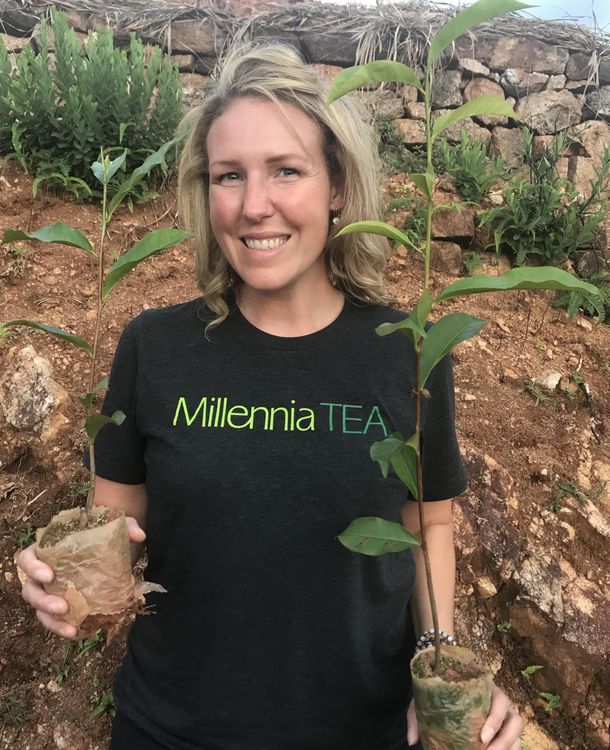
Welcome to YODL! In addition to daily original content, YODL helps CFIN Members find new partners , resources , and funding opportunities to grow their food business. Learn more about this growing community and become a CFIN Member (for free!) today . This is one in a series of interviews with CFIN member companies that have successfully app l ied for and received funding . Saint John, NB-based Millennia TEA Inc. received $78,515 in funding for a project titled Increasing Solubility and Bioavailability in Nutrient-dense Plants. We spoke to Tracy Bell, co-founder of Millennia TEA, to find out more about the company and its project. Q: Please explain what your company does and how your products are improving the food industry. A: We have a patented process to share the mighty medicinal tea plant in its purest and most naturally-powerful format – working with small-scale organic farmers in the mountains of central Sri Lanka to pick, wash, and flash - freeze fresh tea leaves at their nutritional prime. And we are developing a new functional additive – a commercial ingredient – that will support human and planetary health. Q: What is your company’s mission? A: To Help Millions Live. Better. Longer. Q: Why did you apply for this funding and how will you use it? A: Building on our current process and washing and flash-freezing fresh organic tea leaves, we see incredible potential to take our process one step further, and create a nutraceutical that will help cellular health in meaningful and measurable ways – using both tea leaves, as well as other nutrient-dense leaves that are currently not being used (i.e. blueberry or haskap berry leaves). With this funding, we will embark on an R&D project to develop and test the science, and the use-case for these new additives in human biology, as well as in other better-for-you beverages and consumer brands. Q: What excites you most about working in this area of the food industry? A: The growing acceptance and recognition of functional foods and food-as-medicine is so exciting. It’s an industry shift that stands to change the way our families and populations consume, in such a way that will help people feel better and live longer, and by extension be happier and better positioned to contribute to a societal shift that will benefit the masses. That’s a movement we want to be a part of for sure! Q: Why is collaboration so important for accelerating innovation in the food industry? Is it difficult to find good collaborating partners, and what would make the process easier? A: We go further faster by working together and drawing on a collective body of experience and expertise . This is true in all areas of life and business. Creating spaces and opportunities to find and partner with like-minded organizations – who are values-aligned and bring the necessary variety of technological know-how and areas of genius to an endeavour – are central to the co-creative process of innovation and commercialization. Organizations such as CFIN are making this once-challenging feat of finding the right innovation partners much less of a barrier than it was in years prior. Q: Please comment on the importance of public funding to help companies clear innovation hurdles and access leveraged funds. A: Doing something new is a time-consuming and expensive process for sure. The contribution of funding partners through research and commercialization grants is an imperative part of advancing innovation in food. The kind of life-changing innovations we (and many others) are working to develop quite simply would not be possible without this kind of support. It’s quite literally the life-blood for early-stage innovators working to create positive change in the world through new technologies and novel ingredients. Q: Looking ahead, what’s on the horizon for your company? A: We want to help the food-as-medicine and supplement industries deliver products that better support peoples’ health. Our innovation has the potential to help health products and services perform more effectively at a cellular level – to make the antioxidants necessary to our health and longevity more bio-available. Through our CFIN project we will identify the best ways and means to do that. Q: What are your passions or hobbies outside of work? A: I’m a wannabe mermaid. My happy place is playing in the water: foil boarding, wake boarding, wake surfing, paddle boarding, rowing, kayaking, swimming, cold plunging – l love all of it. Those activities represent moments where I can be fully present and immersed in physical activities that support my overall wellbeing. Q: If you had to pick one person to make you a meal, who would you choose? A: F or me it’s c hef Michael Smith. The Fire Feast dining experience he created and curates at his culinary farm Inn at Bay Fortune in PEI is out-of-this-world amazing!