

Articles & Reports
Featured

Foodtech Frontier 2026: Ontario, Canada’s Foodtech Engine
If you want to see what Canadian foodtech looks like once it moves past the pilot stage, Ontario is a good place to start. The province is home to 15 of this year’s 40 Foodtech Frontier winners, the largest group on the list, and those companies carry more than their share of the cohort’s commercial weight. Together they generated more than half of the cohort’s 2025 sales and led every region in sales per company that year. They also employ 41 per cent of the cohort’s staff and account for more than 52 per cent of its exports, a sign of how well Ontario-built technology is finding buyers beyond Canada. Automation that’s earning its keep Across the cohort, automation is moving out of the demo phase and into daily commercial use, and much of that shift is happening in Ontario, home to more than half of the list’s restaurant tech companies. Any operator will recognize the pressures behind it, from chronic understaffing and rising costs to the expense of opening new locations. Gastronomous and Appetronix come at the labour problem from opposite ends. Gastronomous automates one of the most demanding stations in a quick-service kitchen with ChronoGrill, an autonomous char broiler that retrofits into existing lines and now runs in national chains in Canada and the U.S. Appetronix takes on-site staff out of the equation entirely. Its robotic pizza kitchen with Donatos at an Ohio airport handled roughly 5,000 orders in its first 100 days. Kitchen Hub is working on the real estate side of the problem, fitting brands like Shake Shack and Wingstop into “pocket food halls” about a tenth the size and cost of a conventional food hall, while it develops automation for the handoff from kitchen to customer. The same thinking is starting to reach the plant floor. uDesign Solutions builds custom automation around the equipment small and medium-sized processors already own, so they can clear a bottleneck without the cost and disruption of replacing a whole line. Getting more out of what gets thrown away Ontario also accounts for more than half of the cohort’s food waste companies, and between them they cover a remarkable range of materials. Food Cycle Science starts in the kitchen. Its FoodCycler shrinks food scraps by up to 90 per cent in volume and is sold in 28 countries, and the company is now bringing the same approach to restaurants, hotels, and grocery stores. Further up the chain, other companies treat processors’ leftovers as raw material. Terra Bioindustries turns brewers’ spent grain into syrup, protein and fibre ingredients and works with AB InBev through its 100+ Accelerator program. Launch Bioindustries ferments dairy permeate into PHA, a compostable alternative to petroleum-based plastic. Then there’s the waste that never has to happen. Tewari De-Ox Systems and Curry Fresh both target spoilage, with very different tools. Tewari pulls the oxygen around fresh meat and poultry down close to zero, and independent and commercial evaluations have shown refrigerated shelf life of up to 120 days. Curry Fresh pairs a turmeric-based processing aid with high-pressure processing, an approach the company says can keep food fresh in the fridge for more than a year. Depth beyond the headline categories Some of Ontario’s most interesting companies sit outside those two trends. New School Foods has taken whole-cut plant-based salmon from the lab into commercial production at its Toronto facility. Sustento, the company behind ALT-PRO Advantage, is building a microalgae fermentation platform that grows several essential nutrients at once. It plans to prove the platform in pet food, a market where its products are already sold in more than 260 Canadian retail locations. Enhanced Medical Nutrition treats nutrition as part of surgical care, and its ENROUTE program has supported more than 43,000 patients, with more than 700 surgeons in Canada and the United States recommending it. Other Ontario winners are modernizing the everyday business of buying and selling food. Jitto grew out of the Ontario Food Terminal, where produce pricing still moves by PDF, text and phone call, and uses AI to turn those price lists into data that more than 75 wholesale buyers can compare. This year’s report points to Jitto as an example of a broader shift toward solving ordinary business problems in ways that build Canada’s own capability. Local Line gives grocers, restaurants and institutions a single platform for buying from local and regional producers, and its customers manage procurement across 14 countries. Twish Technologies pools household grocery orders into bulk purchases, aiming to unlock better prices for families and clearer demand signals for vendors. A different investment picture Ontario’s maturity shows up in its investment plans as well. It’s the only region where companies plan to raise less over the next one to two years than they’ve already secured, likely a reflection of how many established businesses are in the group, and five of its 15 winners report no raise planned in the coming year. Plenty of the region’s companies are still raising, though. Gastronomous and New School Foods are both preparing Series A rounds, and Enhanced Medical Nutrition is looking ahead to a Series B. That mix of proven and emerging companies makes Ontario a strong anchor for Food 4.0, which aims to connect Canadian foodtech companies with food businesses ready to modernize and to help fund the adoption of their technology. Ontario’s winners show that many of the tools those businesses need are already being built and sold here at home. Learn more about all 40 of this year’s winners and the Foodtech Frontier.
Foodtech Frontier 2026: Quebec, Tech Built for Better Food Manufacturing
Quebec’s six Foodtech Frontier winners have something unusual in common. All of them are building technology for the food manufacturing industry, making the province’s group one of the most focused on this year’s list. They’re smaller companies today, but the numbers point to strong growth ahead. Their sales are projected to grow twice as fast from 2025 to next year as they did between 2023 and 2025, and all six expect to raise investment in the near term. On average, they plan to raise 2.7 times what they’ve secured to date. Several of them are focused on helping manufacturers spot and solve problems sooner. Faster answers on food safety Quebec leads the cohort in food safety and traceability, and the province is at the centre of one of this year’s key trends, a shift in food safety and quality from dealing with problems after the fact to anticipating them. Of the four companies that best illustrate that shift, three are from Quebec. Bioeureka is one of them. A single food product can require more than 70 pathogen tests over its lifecycle, and conventional microbiology can take days to deliver a result. With Bioeureka’s AIMO platform, a colony grows for 12 to 24 hours and is photographed through an ordinary microscope. The AI then identifies what’s in the image within minutes and generates a compliance report automatically. Paired with the company’s MicroSelect culture media, Bioeureka estimates it can cut diagnostic time by three-quarters and testing costs by roughly 40 per cent. Innodal, based in Longueuil, takes on one of the industry’s most persistent threats. Listeria can hide in processing plants and reappear despite cleaning, and a positive result can lead to costly recalls. Innodal’s INNEO is a bacteriocin-based solution that targets the pathogen while leaving the food’s beneficial microbes alone, then breaks down into natural amino acids. It’s the first bacteriocin-based solution approved by Health Canada, and well-known players in seafood, ready-to-eat foods, dairy and other segments have already adopted it. Decisions made in real time Quebec’s other two examples of that shift work on the move and on the plant floor. Meerv, the company behind the Cooldat platform, is built around the idea that a pallet of produce should be routed according to how much shelf life it actually has left. Cooldat pairs temperature data from refrigerated trucks with mailable sensor tags that travel with a sample of packages all the way to the retail case or a customer’s fridge. From there, it estimates each pallet’s remaining life. Fresher product goes to farther, higher-value stores, while product that’s breaking down faster is redirected to nearby markets, markdown or food banks while it’s still good. Soralink, from Brossard, combines rugged sensors built for washdown environments with AI that watches for warning signs in vibration, temperature and sound before they lead to downtime or spoilage. Because that analysis happens on-site, the data never has to leave the facility. For large grocery distributors and other operators with strict security requirements, keeping data out of U.S. cloud services and the reach of the U.S. CLOUD Act can decide whether they adopt predictive maintenance at all. Soralink now has 12 paying customers in Quebec and reports zero churn. Rethinking how plants run Relocalize and DeepSight, both based in Montreal, tackle very different pressures on manufacturing. Relocalize builds autonomous micro-factories that produce packaged ice and cold packs at or near a customer’s distribution centres, so bulky, inexpensive goods no longer have to be trucked in from a distant plant. The company says the model can lower delivered costs by more than 30 per cent and cut transportation emissions by more than 90 per cent. It owns and operates each micro-factory as a service. This year, Relocalize broke ground on Canada’s first autonomous dark factory, a project partly backed by a royalty agreement. DeepSight is focused on people. As experienced workers retire or move on, it captures their know-how on the floor and turns it into interactive guides, complete with video and 3D models, that teams can pull up at the workstation on a tablet, phone or pair of smart glasses. The company has more than 30 paying customers across food processing, manufacturing and aerospace. Capital for the next stage Every one of Quebec’s winners has a raise on the horizon. Relocalize is in the middle of a $40 million Series A, and Innodal and Meerv are both raising seed rounds now. Soralink and Bioeureka expect to raise within the next year, and DeepSight is planning a Series A further out. Through Food 4.0, CFIN aims to connect Canadian foodtech companies with food businesses ready to modernize, and to help fund the adoption of their technology. Quebec’s winners are building the kind of technology Canadian food manufacturers can put to work on their own floors. Learn more about all 40 of this year’s winners and the Foodtech Frontier.

Foodtech Frontier 2026: Atlantic Canada, Scaling Innovation Beyond Our Shores
During the 2024–25 season, Dispension rolled out its SmartServ robots with two early adopters close to home, Scotiabank Centre in Halifax and Avenir Centre in Moncton. The kiosks check ID, take payment and open the can without a staff member present. Since then, the Dartmouth company has signed contracts for 25 units across sports, entertainment and hospitality venues. They include Dodger Stadium, where a revenue-sharing partnership with Levy Restaurants made it the first professional venue in the U.S. to launch SmartServ, and Empower Field at Mile High in Denver, Dispension’s first NFL deployment. That reach, from home-region arenas to some of the biggest stages in North American sports, says a lot about this year’s Atlantic Canadian winners. Atlantic Canada’s eight Foodtech Frontier companies post the highest exports per company in the cohort, likely a reflection of both their maturity and the limits of a smaller local market. They also lead every region in R&D investment and employees per company, and they’re projected to have the highest sales per company next year. In other words, they’re investing heavily at home and finding many of their customers abroad. Selling to the world from the East Coast For several of these companies, international customers are already the norm. SmartSkin Technologies in Fredericton works with some of the world’s largest food, beverage and pharmaceutical manufacturers, and its technology is used in more than 200 facilities across more than 36 countries. Its sensor-packed digital twin travels down a production line in place of a real container, capturing the pressure, shock and other forces that can damage product along the way. This year’s report points to SmartSkin as part of a quieter shift in food safety and quality, away from reacting to damage after the fact and toward spotting it the moment it occurs. Atlantic ingredient makers are just as outward-looking. Chinova Bioworks, also from Fredericton, upcycles mushroom stems that growers would otherwise discard into Chiber, a natural preservative it sells to multinational food and beverage brands through distribution partners in North America, Latin America, Europe and Asia. Infusd Nutrition takes nutrients that normally resist water, like omega-3-rich algal oils and curcumin, and turns them into water-soluble ingredients. The Halifax company is now working on development projects with more than 120 multinational corporations. Deep R&D with practical payoffs All that R&D investment shows in the science behind these products, much of it aimed at problems manufacturers are dealing with right now. RFINE Biomass turns spent coffee grounds into KAFFIKA, an ingredient that can replace up to 60 per cent of the cocoa powder in a formulation without changing the rest of the recipe. With cocoa supply under strain from disease, climate change and volatile prices, RFINE offers a unique solution of replacing a fragile global supply with a domestic waste stream. RFINE was also a winner of the MassChallenge Switzerland 2026 Sustainable Food Challenge, chosen by global food companies including Mars and Givaudan. Seafood connects two more winners, from different parts of the business. Freshr Technologies in Dartmouth is developing active packaging for fresh proteins, starting with fish, by bonding a proprietary microgel to ordinary packaging films. The approach is designed to extend shelf life by 15 to 30 per cent, and the company is piloting and co-developing it with global packaging manufacturers, protein processors, and retailers. Inside the plant, Mabel Systems helps seafood processors trade paper records for tablets, scanners and scales that capture data from receiving through shipping, and it now has 42 active customers. Tracktile, based in Charlottetown, brings a similar move away from manual data entry to food and beverage manufacturers more broadly. Staff can update its AI operations platform by voice, text, photo or video, and the company says it can be up and running in as little as three hours. Tracktile now has more than 70 customers across four countries. Financing the next stage The investment data shows a group gearing up to scale. The region co-leads the cohort in investment raised to date per company and leads in planned future investment. SmartSkin, RFINE, Dispension, Freshr and Tracktile all name a Series A as their next round. That’s five of the region’s eight winners, a clear sign of a group moving toward scale-up financing. SmartSkin’s planned $60 million Series A is the largest raise listed in this year’s company profiles. Dispension’s Series A is already under way as the company builds 50 new units and prepares to ramp up production. Through Food 4.0, CFIN aims to connect Canadian foodtech companies with food businesses ready to modernize, and to help fund the adoption of their technology. Atlantic Canada’s winners show how far innovation built on the East Coast can travel, and how much momentum it carries into its next stage of growth. Learn more about all 40 of this year’s winners and the Foodtech Frontier.

One Consumer, Dozens of Touchpoints, One Campaign
Every new touchpoint used to mean another campaign to build, budget, and measure. Brands pulling ahead in retail media reach consumers across all of them with one campaign and no extra workload.

Where Crunch Meets Clean Label: Sunflower Kernels for the Next Generation of Better-for-You Snacks
Canada’s healthy snacks market is experiencing strong growth. According to Grand View Research, the market generated $3,713.6 million (USD) in 2025 and is projected to reach $7,282.5 million (USD) by 2033, growing at a compound annual growth rate (CAGR) of 8.8% from 2026 to 2033.¹ The research also identifies Canada as the fastest-growing regional market in North America, highlighting significant opportunities for food manufacturers looking to innovate in the category. For food scientists and product developers, this growth presents a complex formulation challenge. Consumers increasingly seek snacks that deliver nutritional value, convenience and recognizable ingredients, without sacraficing the taste,texture and overall eating experience they expect. Success depends on balancing these priorities to create better-for-you products that satisfy both nutritional goals and consumer expectations. Why Texture Matters in Snack Innovation Texture is a powerful influence on how consumers experience food, shaping everything from first impressions to repeat purchases. Puratos’s Taste Tomorrow research found that nearly half of consumers prioritize texture over ingredients when purchasing food, while 68% of millennials say texture directly influences their choices.² Ingredion research further indicates that 70% of global consumers would switch to a different product or brand if they were dissatisfied with its texture.³ For snack food manufacturers, these findings underscore the importance of getting texture right from the outset. Crunch, crispness and contrast can help distinguish a product in a competitive market, while combinations of complementary textures can create a more engaging and premium eating experience. Innova Market Insights’ Global Texture Trends 2026 report highlights the appeal of combining textures such as creamy, crunchy, and soft. Its research also revealed that one in four consumers globally is interested in trying snacks in formats that are new to them.⁴ Together, these insights point to opportunities for food manufacturers to explore fresh ingredient combinations and textural experiences that make better-for-you snacks stand out. Where Sunflower Kernels Fit In U.S.-grown sunflower kernels give food manufacturers a practical way to build that contrast. Their mild flavour and satisfying crunch add dimension to both sweet and savoury product innovations without overpowering other ingredients. They also bring plant-based protein, fibre and healthy fats, along with vitamin E, zinc, folate, iron and magnesium, so the texture upgrade comes with a nutritional one. Available raw, roasted and ready-to-eat, sunflower kernels can be used across a wide range of applications, including: • Better-for-you snack bars • Granola and trail mixes • Crackers and savoury snacks • Bakery products and breakfast cereals • Plant-based snacks and bites Clean Label and Allergen-Friendly by Design Consumers worldwide are increasingly prioritizing clean-label products made with recognizable ingredients and greater transparency. Innova Market Insights reports that more than two in three consumers globally say they are at least somewhat influenced by clean ingredient decks, and that nearly one in three new products now carries some type of clean label claim.⁵ Innova also notes that non-GMO claims are most established in North America.⁵ Sunflower kernels are naturally non-GMO and sustainably grown, which supports the transparency and recognizable-ingredient positioning shoppers respond to. They are also an allergen-friendly alternative to tree nuts, delivering the crunch consumers expect from nuts and seeds. Unlike tree nuts, sunflower kernels are not considered a priority allergen in Canada, making them a versatile option for manufacturers developing new products or reformulating existing ones. Turning Texture Trends into Product Opportunities As Canada's healthy snacks market continues to expand, food manufacturers have an opportunity to differentiate their products through thoughtful ingredient choices and more engaging eating experiences. Texture is an important part of that equation, influencing consumer appeal while creating opportunities to innovate across familiar snack formats. U.S.-grown sunflower kernels bring together satisfying crunch, plant-based nutrition and application versatility, making them a valuable ingredient to consider for the next generation of healthy snacks. From bars and granola to crackers and savoury mixes, they can help product developers create food innovations that balance texture, taste and nutritional value. Explore how U.S.-grown sunflower kernels can add texture, nutrition and versatility to your next snack innovation. Connect with a supplier today > {link to lead to the NSA Kernel suppliers page} References: 1. Grand View Research, Canada Healthy Snacks Market Size & Outlook, 2026–2033. https://www.grandviewresearch.com/horizon/outlook/healthy-snacks-market/canada 2. Puratos, “Why texture is important in food,” February 19, 2025. https://www.puratos.com/blog/why-texture-is-important-in-food 3. Ingredion research, as reported in “New approaches to texture innovation,” Food Business News, May 7, 2026. https://www.foodbusinessnews.net/articles/30275-new-approaches-to-texture-innovation

Inside SIAL Canada 2026: Driving Food Innovation Through Connection and Collaboration
CFIN had the honour of taking a bite out of SIAL Canada 2026 in Montréal 🍎—connecting with partners, members, and industry leaders shaping the future of food innovation across Canada and beyond. Representing CFIN on site were CEO @Dana McCauley and @Julie Daigle , Regional Innovation Director (Quebec), who engaged with the ecosystem throughout the event. Their presence reflected CFIN’s ongoing commitment to strengthening Canada’s food innovation ecosystem and supporting high-potential foodtech ventures. Attendees could also catch Julie as a Foodtech Focus expert at the SIAL Canada Expert Hub, where she connected directly with innovators and shared insights with the community. Dana also took the stage as part of the Dairy Talks program, contributing to a forward-looking discussion on innovation as a driver of market leadership in the Canadian dairy sector. Her session explored the shift from incremental product development toward a broader innovation mindset—highlighting next-generation ingredients, value-added dairy formats, new go-to-market strategies, and the role of Industry 4.0 technologies like AI, robotics, automation, and digital supply chains in strengthening productivity and global competitiveness. A key highlight of the week was CFIN’s involvement in the 7th edition of the Startup Pitch Competition, held on April 30 on the Food & Bev Connect stage. Julie Daigle participated as the President of the Foodtech jury, joining a panel of industry experts evaluating promising entrepreneurs from the Startup Village. Beyond the competition, the Startup Pitch stage served as a strategic platform connecting entrepreneurs with buyers, investors, and key decision-makers across the agri-food ecosystem. A standout moment for the CFIN community was the recognition of Maia Farms, a CFIN member and funding recipient, which earned the Gold Prize in the foodtec h competition 🍄🏆 CFIN’s presence at SIAL Canada underscored the momentum of Canada’s food innovation sector and the value of convening the ecosystem to accelerate ideas from concept to commercialization. 📖 Explore more from SIAL Canada 2026 R elive the stories, innovations, and key moments captured throughout the show in the official SIAL Canada Daily: SIAL Canada Daily – 2026 Edition (Photos Courtesy of SIAL)

Five Years of CFIN: A Letter to the Network
Thirty years ago, I worked as a chef in the kitchen of one of Canada’s top restaurants standing should er to shoulder with people who ca red about the sensory experience of food above all else . Our tech stack was al most all analog and , to be honest, we didn’t give our ordering system or the way we did inventory a lot of thought. My career broadened over time , and I ’ ve also held roles where I developed recipes at Canadian Living and wrote about food trends; built innovation strategies and products for national brands, founded a business incubator, and ran a venture creation office at a prestigious Canadian u niversity . Food was always the thread , and technology was always present but in most of the food focused businesses I’ve worked for, it was taken for granted, and creativity and hard work were what drove the businesses forward. While smart people with great ideas are essential to food business success, it’s not enough to be competitive in today’s world. Old ways of running restaurants, innovation labs and food and beverage processi ng businesses can’t compete internationally or absorb the trade shocks that have become commonpla ce in recent history. That’s why I feel l ik e CFIN is the perfect place for me to be today and why we’re adding dozens of new members per week. When CFIN was created in 2021, the mandate was intentionally broad : cata lyze Canadian food innovation with funding , build community, connect an ecosystem that had been operating in silos for decades. The funding programs took shape quickly. Since 2022, we’ve awar ded $23.3 million to 133 projects across six program s. For every $1 CFIN invested, our members committed $7.65 of their own capital toward innovation. This leverage ratio of nearly 8-to-1 has unlocked over $140 m illion in private sector spending on R&D and capital infrastructure. The other work was harder to define . What do "build community" and "connect an ecosystem" mean in practice for a sector span ning startups, processors, researchers, investors, policymakers, and operators spread across this vast country ? Th at question didn't have a tidy answer. As a result , fostering and serving this network was (and remains ) an exercise in innovation itself : something new to be built , and then tested, adjusted, and iterated upon , ad infinitum . I’m immensely proud of what we’ve built so far . A team of Regional Innovation Directors who've supported more than 2,200 organizations, brokering the introductions that became commercial partnerships, strategic investments, leadership hires, and research collaborations. A digital platform , YODL, connecting Canada's food sector across industry silos and bridging interprovincial barriers . The first comprehensive analysis of Canadian foodtech . A network of 8,500 members from every province, every part of the food value chain, every stage of business . On any given week, our community is discussing topics ranging from precision fermentation bioreactor designs and funding stacks to food packaging labeling regulations and export strategies, all in the same space. Members benefit from purpose-built tools and resources — like our Funding Finder that aggregates food and beverage funding opportunities across the country and a growing library of original sector research and analysis — alongside direct access to our Regional Innovation Directors. Canada has strong regional funders, accelerators, trade associations, and tech transfer offices, each doing necessary work in a defined lane. What this sector didn't have was a place where the conversation s , the tools, and the connections all showed up at once — where the range of problems and the range of capabilities were dense enough that the right solutions could emerge . That's what CFIN has built. That foundation is important because the next five years will be even more dynamic, and often more challenging, than the last five . To keep pace and flourish in an increasingly volatile world, Canada's food sector needs to modernize faster and more strategic ally than ever before . Trade disruption is dramaticall y reshaping supply chains . L abour constraints are compounding a productivity gap that was widening long before tariffs became front-page news. Climate pressures are intensifying. Food 4.0 — a tech-enabled food s ector that's more collaborative, productive, resilient, and competitive — is the framework CFIN is building toward, and the case for it gets more urgent by the quarter. I ’m confident that we’re up to the task . Five years ago, Canada's food innovation ecosystem was fragmented, underleveraged, and often invisible to the investors, operators, policymakers, and media who needed to see it. That's no longer true. The capacity to respond to the challenges ahead is here. Not in any single program or policy, but in the breadth of this network — the founders , processors , researchers , and investo rs who are hungry to innovate and build a better Canadian food sector . My own wide-ranging path through the food sector taught me that no single role ever showed me the full picture. It took working across kitchens, labs, newsrooms, boardrooms, and startups to understand how innovation really moves through this industry — and where it get s stuck. CFIN was built on the same insight. A sector this complex, facing challenges this urgent, needs more than funding or advice or connections in isolation. It needs all of them in the same room. That's what we've spent five years building, and I'm betting the next five will prove its value at a scale none of us can yet imagine. Thank you for being part of it. Dana McCauley, CEO, Canadian Food Innovation Network

How BC is Becoming a National Foodtech Hub
Editor's Note: This article was o riginally published in the Vancouver Tech Journal on March 13, 2026 The province has a diverse food processing industry, world-class research facilities, and a deep bench of tech talent — everything a foodtech ecosystem needs to thrive. Foodtech builds the software, automation, and applied science for how food gets processed, manufactured, packaged, distributed, and sold. The industry behind it is enormous — food and beverage processing alone is Canada's largest manufacturing sub-sector , bigger than automotive, bigger than aerospace. It's a serious market, and in British Columbia, it's growing fast. But if you work in the province's broader tech ecosystem, you might not even know that. Foodtech hasn't traditionally drawn the same attention as sectors like cleantech or enterprise SaaS despite being a comparable market in scale and complexity — and one where demand for new technology is accelerating fast. What BC brings to the table BC's food processing sector is substantial — over 3,200 companies producing roughly $12.6 billion in value-added products annually. And it's being treated as a strategic priority. The province has funded a network of shared food processing hubs, UBC just opened a Food and Beverage Innovation Centre with pilot-scale production labs that processors and startups previously had to leave BC to access, and SFU's BC Centre for Agritech Innovation is partnering directly with SMEs on cost-shared R&D. At the same time, much of what the food industry needs is already being built in BC for other thriving tech sectors. Process automation, energy management, supply chain software, safety and traceability systems, data-driven quality control — these are cleantech and software problems applied to production floors and distribution networks. The talent, research base, and trade infrastructure to support a serious foodtech cluster are all here. A different kind of tech sector Foodtech doesn't work like enterprise SaaS or consumer tech. Processors and manufacturers adopt slowly and carefully, because failure is expensive in ways that go beyond lost revenue — a food safety issue, a botched line integration, a regulatory problem. Sales cycles run in quarters. The investor community that understands food is small and specialized. And the industry's own networks run through trade associations, existing supply relationships, and sector-specific events that sit well outside the broader tech community's orbit. None of this means foodtech is closed off. It means that if you want in — as a founder, investor, developer, or potential partner — you need a way to access the conversations, the deal flow, and the operating knowledge that don't surface through the usual channels. The Canadian Food Innovation Network The Canadian Food Innovation Network is a national not-for-profit, established in 2021 that functions as the operating infrastructure for Canada's foodtech sector. CFIN runs cost-shared funding programs that help companies de-risk R&D and move technology into commercial settings. Since launch , the organization has awarded over $22 million to 122 Canadian foodtech projects, matched by $25 million in industry co-investment. Those funded companies have generated $90 million in economic impact, created over 355 jobs and co-op placements, and attracted more than $82 million in follow-on investment. The network's 8,000-plus members include food processors, technology companies, ingredient suppliers, retailers, researchers, and investors — connected through YODL, CFIN's member platform, and supported by Regional Innovation Directors embedded across the country, who work directly with members to broker introductions, navigate funding, and connect emerging technology with the processors and buyers who need it. CFIN also produces the sector's most detailed intelligence . The Foodtech in Canada 2025 Ecosystem Report mapped investment flows, identified sector strengths, and gave both companies and investors a clearer picture of where the Canadian foodtech market stands. And then there's Foodtech Frontier , CFIN's annual program identifying the country's highest-potential foodtech companies. The inaugural cohort of 35 winners included eight BC companies. For investors, it works as curated, vetted deal flow in a sector where sourcing is otherwise hard. For the companies, it's structured national visibility. Plug into Canada’s foodtech ecosystem If you work in technology or investment and you've been curious about the food sector, then signing up for a free CFIN membership is the best place to start. Members get access to funding programs, sector intelligence, a national innovation community, and regional team members that know the BC landscape specifically.
Other Articles

CFIN Announces Food Innovation Challenge Call for Proposals focused on Supply Chain Digitization
The last 36 months have demonstrated significant weaknesses in global, national, provincial, and regional supply chains. COVID-19 resulted in the movement restrictions of workers, changes in demand of consumers, closure of food production facilities, restricted food trade policies, and financial pressures in the food supply chain. Russia’s war on Ukraine has exposed vulnerabilities in global supply chains and pushed nations across the globe to push additional grain, corn, and fertilizer supplies into world markets to make up for the disruption of more than a quarter of the worlds grain trade. Restaurants reopening post COVID-19 closures also felt significant supply chain impacts, with increased food costs and shortages of main ingredients, such as chicken and corn. Supply lines are jammed, which has created pockets of scarcity and added costs that are eventually passed on to consumers. A recent National Restaurant Association survey revealed that 95% of restaurants in the US had experienced considerable supply delays or shortages in recent months, which is concerning. Rise of omni-channel sales has also pushed fulfillment capabilities to the maximum at all points throughout the supply chain. Channel mismatches as consumer buying trends shifted from restaurants to in-home eating. As a result of these challenges, CFIN is issuing their Spring 2022 Food Innovation Challenge Call with a theme of Digitization and digitalization solutions that create safer, more secure, and more agile food supply chains. Digitization and digitalization of the supply chain enables food sector resilience with new tools to address the increasing volatility in customer requirements and supply availability, while also addressing overall efficiency improvement expectations and food safety needs. With Supply Chain 4.0 solutions, Canadian firms can move products faster, with more flexibility, granularity, accuracy and ultimately with less risk of disruptions. Key Program Priorities: As a result of these challenges and the opportunities presented by Supply Chain 4.0 technologies, this CFIN-led call is dedicated to the research, development, and demonstration of digital and digitalized solutions for Canada’s food supply chain. Key program priorities include: Data capture and management Predictive analytics and demand planning Automation of the physical flow of goods Digital order management Driving improved capacity utilization in food processing Food safety and traceability throughout the supply chain All projects should: Address the food supply chain from farm-gate to consumer’s plate Result in cross-firm solutions Offer accessible solutions to small and medium sized enterprises All applicants must be CFIN members and submit their application online at: https://cfin-rcia.smartsimple.ca/ Call Timelines: Letter of intent application opens –June 1, 2022 Info Session – June 7, 12-1 EST Letters of intent due: July 8, 2022 Full proposals due: September 16, 2022 Projects start: November 1, 2022 Projects complete - no later than Mar 31, 2025 More Program Details are available here
Robotics in Action – Top Five Takeaways
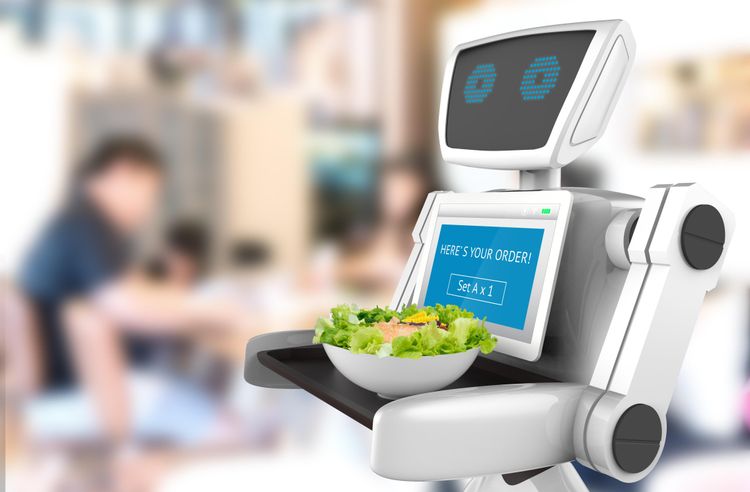
The Canadian food industry is currently facing numerous challenges, from labour shortages and supply chain disruptions, to increasing input costs and changing consumer expectations. Many of these challenges are common to manufacturing, grocery and foodservice sectors, and can be addressed by automating processes so that they are faster, safer and more reliable. While the shift to automation has been slower in the food industry than in other industries, the use of automation, robotics and data analytics has the potential to transform Canada’s food and beverage industry. By investing in technology, the industry could become more agile, traceable and transparent, while growing capacity and ensuring our food supply chain remains strong, sustainable, and competitive in the world market. On May 12, 2022 CFIN presented its second members-only event, Robotics in Action: Seeing is Believing . The virtual event was sponsored by Farm Credit Canada and hosted by Jim Beretta, president of Customer Attraction, a marketing consultancy which focuses on robotics, automation and applications. Beretta spoke with several Canadian entrepreneurs whose companies are leading technological change in the food industry, and demonstrated cutting-edge automation solutions at Western University, Mycionics , Ghost Kitchen Brands and 168 Sushi , and robotic systems from SJW Robotics , Anubis 3D , Gastronomous Technologies , JMP Solutions , Armo Tool and Tiny Mile Robotics . Here are the top five takeaways from the session: 1. Automation and robots don’t reduce jobs Robots and automatic systems are designed to do the tasks that are dangerous, dirty or repetitive and are a solution to current labour shortages in the industry. While robots perform tasks such as picking and packing, employees are freed up to complete more value-added and skilled duties. Collaborative robotic systems are designed with added safeguards so that they work side-by-side with their human counterparts. 2. Automation is becoming more efficient and less costly In the last decade, costs of implementing automatic systems or robotics have fallen, while performance and consistency have increased dramatically. There are also many new advancements in gripping technology, resolving older robotic challenges such as distinguishing between different sized and shaped products or boxes. 3. Robotic systems can be integrated into existing operations Automation systems and robotics are now easier to integrate into food operations, and are often designed so that companies can add one piece of technology at a time to ensure success and worker comfort. Working together with technology companies, food businesses can integrate plug-and-play components or create unique, custom-designed system featuring different technology modified to fit their needs. 4. Automation can lead to lower energy and input costs, while boosting food safety and capacity Technology that provides food producers with real-time data analytics enables them to optimize the use of energy and raw materials, reduce food and energy waste, and achieve higher production capacities. Data analytics can also be used to predict preventative maintenance in the system and prevent drops in throughput. Many companies rely on robotics that target sanitary compliance to safely and reliably assemble foods such as protein and uncooked ready-to-eat meals for retail or healthcare, where safe food handling is crucial. 5. Automated foodservice offerings go far beyond vending Quick-service kiosks that offer a wide range of hot and cold food choices like salad, pizza and cooked noodles are appearing on campuses, in malls and in other public spaces. Far beyond vending machines, the kiosks offer made-to-order meals prepared while you watch in just minutes, with a variety of customizations and payment options available. With a low carbon footprint and minimal labour needs, the kiosks have the potential of replacing QSR units in some locations. If you have a digital solution to make supply chains safer and more agile, apply for our Food Innovation Challenge . Applications are due July 7th.

The Tablesetter: June 20, 2022
Happy Monday CFIN members! Every Monday, we’ll give you a heads up on what will be appearing on YODL this week and around the food world. The YODL Menu Monday: The Tablesetter Tuesday: Takeaways from CFIN’s second members-only virtual event, Robotics in Action: Seeing is Believing Wednesday: Artificial Intelligence (AI) and machine learning are changing the food industry Thursday: CFIN’s most recent Food Innovation Challenge, which focuses on creating safer, more secure food supply chains Friday: Weekly News Roundup Around the Food World PIC, NPC, Protein Highway, and Humane Society International Canada, has released Game Changers: Canadian Opportunities In Alternative Protein a report outlining how Canada is translating the challenges of the alternative protein industry into competitive growth opportunities. The Golden Pencil Award winners have been announced. Collision takes place Jun 20, 2022 09:00 (ET) to Jun 23, 2022 17:00 (ET). Something to Celebrate June 24 is the Seventh Annual National Food Truck Day , celebrating the more than 35,000 entrepreneurs who own and operate food trucks across Canada and the U.S. The food truck industry was estimated to be worth $1.16 billion as of 2021, and has grown at an average rate of 12.1 per cent since 2016. Consumers aged 25 to 44 account for 43 per cent of food truck spending, with those aged 18 to 34 more likely to frequent food trucks. Food Facts According to Zippia Research, the most profitable food truck menu items to serve are: Burgers Indian street food Stone baked pizza Loaded fries Grilled cheese Falafel Macaroni and Cheese