

Articles & Reports
Featured

One Consumer, Dozens of Touchpoints, One Campaign
Every new touchpoint used to mean another campaign to build, budget, and measure. Brands pulling ahead in retail media reach consumers across all of them with one campaign and no extra workload.

Where Crunch Meets Clean Label: Sunflower Kernels for the Next Generation of Better-for-You Snacks
Canada’s healthy snacks market is experiencing strong growth. According to Grand View Research, the market generated $3,713.6 million (USD) in 2025 and is projected to reach $7,282.5 million (USD) by 2033, growing at a compound annual growth rate (CAGR) of 8.8% from 2026 to 2033.¹ The research also identifies Canada as the fastest-growing regional market in North America, highlighting significant opportunities for food manufacturers looking to innovate in the category. For food scientists and product developers, this growth presents a complex formulation challenge. Consumers increasingly seek snacks that deliver nutritional value, convenience and recognizable ingredients, without sacraficing the taste,texture and overall eating experience they expect. Success depends on balancing these priorities to create better-for-you products that satisfy both nutritional goals and consumer expectations. Why Texture Matters in Snack Innovation Texture is a powerful influence on how consumers experience food, shaping everything from first impressions to repeat purchases. Puratos’s Taste Tomorrow research found that nearly half of consumers prioritize texture over ingredients when purchasing food, while 68% of millennials say texture directly influences their choices.² Ingredion research further indicates that 70% of global consumers would switch to a different product or brand if they were dissatisfied with its texture.³ For snack food manufacturers, these findings underscore the importance of getting texture right from the outset. Crunch, crispness and contrast can help distinguish a product in a competitive market, while combinations of complementary textures can create a more engaging and premium eating experience. Innova Market Insights’ Global Texture Trends 2026 report highlights the appeal of combining textures such as creamy, crunchy, and soft. Its research also revealed that one in four consumers globally is interested in trying snacks in formats that are new to them.⁴ Together, these insights point to opportunities for food manufacturers to explore fresh ingredient combinations and textural experiences that make better-for-you snacks stand out. Where Sunflower Kernels Fit In U.S.-grown sunflower kernels give food manufacturers a practical way to build that contrast. Their mild flavour and satisfying crunch add dimension to both sweet and savoury product innovations without overpowering other ingredients. They also bring plant-based protein, fibre and healthy fats, along with vitamin E, zinc, folate, iron and magnesium, so the texture upgrade comes with a nutritional one. Available raw, roasted and ready-to-eat, sunflower kernels can be used across a wide range of applications, including: • Better-for-you snack bars • Granola and trail mixes • Crackers and savoury snacks • Bakery products and breakfast cereals • Plant-based snacks and bites Clean Label and Allergen-Friendly by Design Consumers worldwide are increasingly prioritizing clean-label products made with recognizable ingredients and greater transparency. Innova Market Insights reports that more than two in three consumers globally say they are at least somewhat influenced by clean ingredient decks, and that nearly one in three new products now carries some type of clean label claim.⁵ Innova also notes that non-GMO claims are most established in North America.⁵ Sunflower kernels are naturally non-GMO and sustainably grown, which supports the transparency and recognizable-ingredient positioning shoppers respond to. They are also an allergen-friendly alternative to tree nuts, delivering the crunch consumers expect from nuts and seeds. Unlike tree nuts, sunflower kernels are not considered a priority allergen in Canada, making them a versatile option for manufacturers developing new products or reformulating existing ones. Turning Texture Trends into Product Opportunities As Canada's healthy snacks market continues to expand, food manufacturers have an opportunity to differentiate their products through thoughtful ingredient choices and more engaging eating experiences. Texture is an important part of that equation, influencing consumer appeal while creating opportunities to innovate across familiar snack formats. U.S.-grown sunflower kernels bring together satisfying crunch, plant-based nutrition and application versatility, making them a valuable ingredient to consider for the next generation of healthy snacks. From bars and granola to crackers and savoury mixes, they can help product developers create food innovations that balance texture, taste and nutritional value. Explore how U.S.-grown sunflower kernels can add texture, nutrition and versatility to your next snack innovation. Connect with a supplier today > {link to lead to the NSA Kernel suppliers page} References: 1. Grand View Research, Canada Healthy Snacks Market Size & Outlook, 2026–2033. https://www.grandviewresearch.com/horizon/outlook/healthy-snacks-market/canada 2. Puratos, “Why texture is important in food,” February 19, 2025. https://www.puratos.com/blog/why-texture-is-important-in-food 3. Ingredion research, as reported in “New approaches to texture innovation,” Food Business News, May 7, 2026. https://www.foodbusinessnews.net/articles/30275-new-approaches-to-texture-innovation

Inside SIAL Canada 2026: Driving Food Innovation Through Connection and Collaboration
CFIN had the honour of taking a bite out of SIAL Canada 2026 in Montréal 🍎—connecting with partners, members, and industry leaders shaping the future of food innovation across Canada and beyond. Representing CFIN on site were CEO @Dana McCauley and @Julie Daigle , Regional Innovation Director (Quebec), who engaged with the ecosystem throughout the event. Their presence reflected CFIN’s ongoing commitment to strengthening Canada’s food innovation ecosystem and supporting high-potential foodtech ventures. Attendees could also catch Julie as a Foodtech Focus expert at the SIAL Canada Expert Hub, where she connected directly with innovators and shared insights with the community. Dana also took the stage as part of the Dairy Talks program, contributing to a forward-looking discussion on innovation as a driver of market leadership in the Canadian dairy sector. Her session explored the shift from incremental product development toward a broader innovation mindset—highlighting next-generation ingredients, value-added dairy formats, new go-to-market strategies, and the role of Industry 4.0 technologies like AI, robotics, automation, and digital supply chains in strengthening productivity and global competitiveness. A key highlight of the week was CFIN’s involvement in the 7th edition of the Startup Pitch Competition, held on April 30 on the Food & Bev Connect stage. Julie Daigle participated as the President of the Foodtech jury, joining a panel of industry experts evaluating promising entrepreneurs from the Startup Village. Beyond the competition, the Startup Pitch stage served as a strategic platform connecting entrepreneurs with buyers, investors, and key decision-makers across the agri-food ecosystem. A standout moment for the CFIN community was the recognition of Maia Farms, a CFIN member and funding recipient, which earned the Gold Prize in the foodtec h competition 🍄🏆 CFIN’s presence at SIAL Canada underscored the momentum of Canada’s food innovation sector and the value of convening the ecosystem to accelerate ideas from concept to commercialization. 📖 Explore more from SIAL Canada 2026 R elive the stories, innovations, and key moments captured throughout the show in the official SIAL Canada Daily: SIAL Canada Daily – 2026 Edition (Photos Courtesy of SIAL)

Five Years of CFIN: A Letter to the Network
Thirty years ago, I worked as a chef in the kitchen of one of Canada’s top restaurants standing should er to shoulder with people who ca red about the sensory experience of food above all else . Our tech stack was al most all analog and , to be honest, we didn’t give our ordering system or the way we did inventory a lot of thought. My career broadened over time , and I ’ ve also held roles where I developed recipes at Canadian Living and wrote about food trends; built innovation strategies and products for national brands, founded a business incubator, and ran a venture creation office at a prestigious Canadian u niversity . Food was always the thread , and technology was always present but in most of the food focused businesses I’ve worked for, it was taken for granted, and creativity and hard work were what drove the businesses forward. While smart people with great ideas are essential to food business success, it’s not enough to be competitive in today’s world. Old ways of running restaurants, innovation labs and food and beverage processi ng businesses can’t compete internationally or absorb the trade shocks that have become commonpla ce in recent history. That’s why I feel l ik e CFIN is the perfect place for me to be today and why we’re adding dozens of new members per week. When CFIN was created in 2021, the mandate was intentionally broad : cata lyze Canadian food innovation with funding , build community, connect an ecosystem that had been operating in silos for decades. The funding programs took shape quickly. Since 2022, we’ve awar ded $23.3 million to 133 projects across six program s. For every $1 CFIN invested, our members committed $7.65 of their own capital toward innovation. This leverage ratio of nearly 8-to-1 has unlocked over $140 m illion in private sector spending on R&D and capital infrastructure. The other work was harder to define . What do "build community" and "connect an ecosystem" mean in practice for a sector span ning startups, processors, researchers, investors, policymakers, and operators spread across this vast country ? Th at question didn't have a tidy answer. As a result , fostering and serving this network was (and remains ) an exercise in innovation itself : something new to be built , and then tested, adjusted, and iterated upon , ad infinitum . I’m immensely proud of what we’ve built so far . A team of Regional Innovation Directors who've supported more than 2,200 organizations, brokering the introductions that became commercial partnerships, strategic investments, leadership hires, and research collaborations. A digital platform , YODL, connecting Canada's food sector across industry silos and bridging interprovincial barriers . The first comprehensive analysis of Canadian foodtech . A network of 8,500 members from every province, every part of the food value chain, every stage of business . On any given week, our community is discussing topics ranging from precision fermentation bioreactor designs and funding stacks to food packaging labeling regulations and export strategies, all in the same space. Members benefit from purpose-built tools and resources — like our Funding Finder that aggregates food and beverage funding opportunities across the country and a growing library of original sector research and analysis — alongside direct access to our Regional Innovation Directors. Canada has strong regional funders, accelerators, trade associations, and tech transfer offices, each doing necessary work in a defined lane. What this sector didn't have was a place where the conversation s , the tools, and the connections all showed up at once — where the range of problems and the range of capabilities were dense enough that the right solutions could emerge . That's what CFIN has built. That foundation is important because the next five years will be even more dynamic, and often more challenging, than the last five . To keep pace and flourish in an increasingly volatile world, Canada's food sector needs to modernize faster and more strategic ally than ever before . Trade disruption is dramaticall y reshaping supply chains . L abour constraints are compounding a productivity gap that was widening long before tariffs became front-page news. Climate pressures are intensifying. Food 4.0 — a tech-enabled food s ector that's more collaborative, productive, resilient, and competitive — is the framework CFIN is building toward, and the case for it gets more urgent by the quarter. I ’m confident that we’re up to the task . Five years ago, Canada's food innovation ecosystem was fragmented, underleveraged, and often invisible to the investors, operators, policymakers, and media who needed to see it. That's no longer true. The capacity to respond to the challenges ahead is here. Not in any single program or policy, but in the breadth of this network — the founders , processors , researchers , and investo rs who are hungry to innovate and build a better Canadian food sector . My own wide-ranging path through the food sector taught me that no single role ever showed me the full picture. It took working across kitchens, labs, newsrooms, boardrooms, and startups to understand how innovation really moves through this industry — and where it get s stuck. CFIN was built on the same insight. A sector this complex, facing challenges this urgent, needs more than funding or advice or connections in isolation. It needs all of them in the same room. That's what we've spent five years building, and I'm betting the next five will prove its value at a scale none of us can yet imagine. Thank you for being part of it. Dana McCauley, CEO, Canadian Food Innovation Network

How BC is Becoming a National Foodtech Hub
Editor's Note: This article was o riginally published in the Vancouver Tech Journal on March 13, 2026 The province has a diverse food processing industry, world-class research facilities, and a deep bench of tech talent — everything a foodtech ecosystem needs to thrive. Foodtech builds the software, automation, and applied science for how food gets processed, manufactured, packaged, distributed, and sold. The industry behind it is enormous — food and beverage processing alone is Canada's largest manufacturing sub-sector , bigger than automotive, bigger than aerospace. It's a serious market, and in British Columbia, it's growing fast. But if you work in the province's broader tech ecosystem, you might not even know that. Foodtech hasn't traditionally drawn the same attention as sectors like cleantech or enterprise SaaS despite being a comparable market in scale and complexity — and one where demand for new technology is accelerating fast. What BC brings to the table BC's food processing sector is substantial — over 3,200 companies producing roughly $12.6 billion in value-added products annually. And it's being treated as a strategic priority. The province has funded a network of shared food processing hubs, UBC just opened a Food and Beverage Innovation Centre with pilot-scale production labs that processors and startups previously had to leave BC to access, and SFU's BC Centre for Agritech Innovation is partnering directly with SMEs on cost-shared R&D. At the same time, much of what the food industry needs is already being built in BC for other thriving tech sectors. Process automation, energy management, supply chain software, safety and traceability systems, data-driven quality control — these are cleantech and software problems applied to production floors and distribution networks. The talent, research base, and trade infrastructure to support a serious foodtech cluster are all here. A different kind of tech sector Foodtech doesn't work like enterprise SaaS or consumer tech. Processors and manufacturers adopt slowly and carefully, because failure is expensive in ways that go beyond lost revenue — a food safety issue, a botched line integration, a regulatory problem. Sales cycles run in quarters. The investor community that understands food is small and specialized. And the industry's own networks run through trade associations, existing supply relationships, and sector-specific events that sit well outside the broader tech community's orbit. None of this means foodtech is closed off. It means that if you want in — as a founder, investor, developer, or potential partner — you need a way to access the conversations, the deal flow, and the operating knowledge that don't surface through the usual channels. The Canadian Food Innovation Network The Canadian Food Innovation Network is a national not-for-profit, established in 2021 that functions as the operating infrastructure for Canada's foodtech sector. CFIN runs cost-shared funding programs that help companies de-risk R&D and move technology into commercial settings. Since launch , the organization has awarded over $22 million to 122 Canadian foodtech projects, matched by $25 million in industry co-investment. Those funded companies have generated $90 million in economic impact, created over 355 jobs and co-op placements, and attracted more than $82 million in follow-on investment. The network's 8,000-plus members include food processors, technology companies, ingredient suppliers, retailers, researchers, and investors — connected through YODL, CFIN's member platform, and supported by Regional Innovation Directors embedded across the country, who work directly with members to broker introductions, navigate funding, and connect emerging technology with the processors and buyers who need it. CFIN also produces the sector's most detailed intelligence . The Foodtech in Canada 2025 Ecosystem Report mapped investment flows, identified sector strengths, and gave both companies and investors a clearer picture of where the Canadian foodtech market stands. And then there's Foodtech Frontier , CFIN's annual program identifying the country's highest-potential foodtech companies. The inaugural cohort of 35 winners included eight BC companies. For investors, it works as curated, vetted deal flow in a sector where sourcing is otherwise hard. For the companies, it's structured national visibility. Plug into Canada’s foodtech ecosystem If you work in technology or investment and you've been curious about the food sector, then signing up for a free CFIN membership is the best place to start. Members get access to funding programs, sector intelligence, a national innovation community, and regional team members that know the BC landscape specifically.
Other Articles

IN 30: Food Day Canada
Welcome to YODL! In addition to daily original content, YODL helps CFIN Members find new partners , resources , and funding opportunities to grow their food business. Learn more about this growing community and become a CFIN Member (for free!) today . Sometimes, all it takes is 30 minutes to learn the ins and outs of new food technologies and trends that are transforming the food and beverage industry. In this series, we’ll dig into a food innovation topic and link you to content and resources so you can become a master on the topic in 30 minutes (or less!). This week, we’re looking at Food Day Canada, which takes place August 5, 2023. The Overview Food Day Canada takes place e ach year on the Saturday before the first Monday in August, although some businesses celebrate for the week or even the month. This year is Food Day Canada’s 20th anniversary. The day was established by cookbook author and food historian and activist Anita Stewart in 2003 as the “W orld’s Longest Barbecue” in support of Canadian beef producers. Although the event was intended to help producers struggling with U.S. border closures during BSE , it became an annual celebration of locally grown and produced food. Today Food Day Canada encourages consumers to shop, cook and dine on Canadian-made products, and is supported by farmers, fishers, restaurants, food researchers, chefs, food retailers , and food and beverage companies across the country. Resources The Food Day Canada website offers a downloadable partner t oolkit that includes graphics and an action kit with information on how to participate in the event. The site also offers a list Food Day Canada partners , as well as Anita Stewart’s favourite Canadian recipes and ingredients , including sourcing information. What you Need to Know The Food Day in Canada Act was passed by the Government of Canada in May 2023 to officially designate the Saturday before the first Monday in August as Food Day in Canada. The day officially celebrates Canadian-grown food and those who contribute to Canada’s agriculture, food and culinary industries. Get Involved Consumers, food businesses, grocers, farmers, chefs, event organizers, educators, restaurateurs and more can get involved by signing the Food Day Canada pledge to support Canadian food and the people who grow, produce, and make it. Consumers and businesses can tag their efforts on social media with #FoodDayCanada. Overtime If you’ve got more than 30 minutes, these are for you: YODL - CFIN discusses Food Day Canada 2023 with Crystal Mckay
What YODLers are Saying and Reading – The Top YODL Content for July 2023
Welcome to YODL! In addition to daily original content, YODL helps CFIN Members find new partners , resources , and funding opportunities to grow their food business. Learn more about this growing community and become a CFIN Member (for free!) today . YODL was hot in July, with networking opportunities , articles and discussion posts about industry issues, trends, events and more . In case you missed them, here are the top five discussions and most read articles on YODL in Ju ly 2023. Top YODL Discussions in July 2023 Number 5 Seeking co-packer for carbonated non alco h olic b everage Finding new business partners is one of the benefits of being on YODL. Number 4 Soft and Chewy gr a nola There are many food experts on YODL ready to help with any member questions. Number 3 Food Product Dev e lopment Services Partnerships are crucial to establishing a sustainable business model. Number 2 How to figure out first production run quantities YO DL ers are looking for all types of business advice through networking with other members. Number 1 Co-packer with stand up pouch filling capabi l ities in Alberta or BC Looking for a collaborator to help your business scale up? YODL has the answers! Most Read YODL Articles in July 2023 Number 5 Guest Post: How Networking on YODL Led to a New Career Path and the Growth of Ontario's Laplace Robotics Learn about how two food professionals connected on YODL to grow Toronto’s Laplace Robotics. Number 4 Staff Picks – Jairo M elo Find out what CFIN’s Director of Digital Technology Jairo Melo is reading, listening to, watching, and posting . Number 3 CFIN Funded Projects: One Year Upd a tes – Foodarom CFIN’s Regional Innovation Directors are checking in with companies that received funding for projects in the past year. This video interview checks in with Foodarom , a St- Hubert, QC- based company manufacturing custom flavours for the food and beverage industry. Number 2 Company Spotlight – New School Foods Toronto, ON-based New School Foods Inc. uses new production technologies to create authentic whole-cut meat and seafood alternatives for the mass market that deliver on texture, cooking, appearance, price and taste. Number 1 IN 30: Ontario’s Food Ecosystem YODL has featured overviews of the food ecosystem in regions across Canada. This article looks at resources and companies in Ontario.
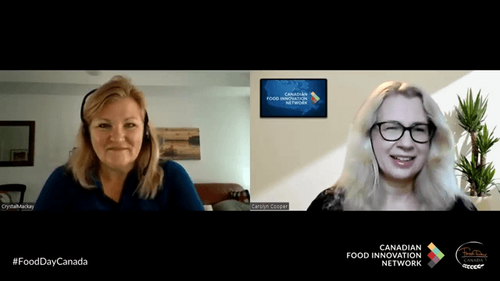
CFIN Celebrates: Food Day Canada 2023
Welcome to YODL! In addition to daily original content, YODL helps CFIN Members find new partners , resources , and funding opportunities to grow their food business. Learn more about this growing community and become a CFIN Member (for free!) today . Food Day Canada takes place e ach year on the Saturday before the first Monday in August, although some businesses celebrate for the week or even the month. To celebrate Food Day Canada’s 20th anniversary, Carolyn Cooper talks with coordinator Crystal Mackay to find out how food and beverage businesses, food retailers, researchers, educators and restaurants can participate.
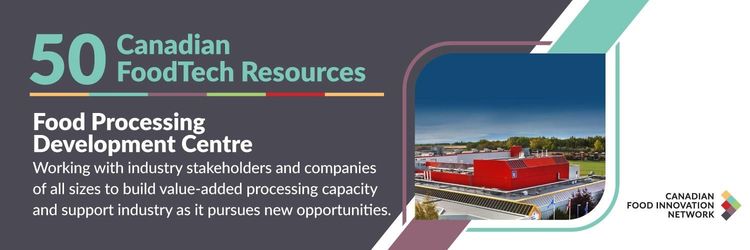
50 Canadian FoodTech Resources - Food Processing Development Centre
Welcome to YODL! In addition to daily original content, YODL helps CFIN Members find new partners , resources , and funding opportunities to grow their food business. Learn more about this growing community and become a CFIN Member (for free!) today . Canada has an extensive range of research centres, food incubators, accelerators and labs supporting food and beverage innovation through the research they do and/or the services they offer. Each week throughout 2023, we’ll be highlighting an organization that’s supporting food innovation in Canada. Name: Food Processing Developmen t Centre Location: Leduc, AB Mission: To foster the growth and commercialization of food, beverage and ingredient companies serving local and global markets. Focus: The federally inspected FPDC supports the food and beverage industry by help ing build value-added processing capacity . Services: The 65,000-sq.-ft. pilot plant and product development laboratory features more than $20 million in equipment to support food product innovation, development and commercialization. View the available equipment here . Services include : T echnical consultation B enchtop development L aboratory support A pplied research P ilot plant development P ost processing cleaning H andling and storage S cale-up B usiness development A pplied research I nterim processing services. What you Need to Know: The facility is also considered a designated incubator under the Start-Up Visa (SUV) program with the Government of Canada. Notable News: The FPDC is home to the Agrivalue Processing Business Incubator , which is expanding to add two new processing suites. Together the FPDC and the incubator cover approximately 140,000 sq. ft. Get Involved: Contact the centre at fpdc@gov.ab.ca or (780) 986-4793 or reach out to our Regional Innovation Director for the Prairies, Hubba Khatoon .

CFIN Funded Projects: One Year Updates – Innodal
Welcome to YODL! In addition to daily original content, YODL helps CFIN Members find new partners , resources , and funding opportunities to grow their food business. Learn more about this growing community and become a CFIN Member (for free!) today . CFIN has provided funding for many projects over the past two years. Now we’re catching up with the Canadian companies leading CFIN-funded projects to chat about how their innovations have advanced in the year since funding. In this video, Julie Daigle, CFIN Regional Innovation Director for Quebec, sits down with Laurent Dallaire, CEO of Quebec City, QC-based Innodal , to discuss how, with CFIN financial support, Innodal is developing a new generation of antimicrobials improves food safety standards.
IN 30: The Prairies’ Food Ecosystem
Welcome to YODL! In addition to daily original content, YODL helps CFIN Members find new partners , resources , and funding opportunities to grow their food business. Learn more about this growing community and become a CFIN Member (for free!) today . Sometimes, all it takes is 30 minutes to learn the ins and outs of new food technologies and trends that are transforming the food and beverage industry. In this series, we’ll dig into a food innovation topic and link you to the best content and resources so you can become a master on the topic in 30 minutes (or less!). This week, we’re looking at food and beverage innovation and resources in the Prairie provinces. The Overview Government of Saskatchewan – Agriculture and Agri-Value Saskatchewan is home to more than 40 per cent of Canada ’ s cultivated farmland . Food & Beverage Manitoba – Supporting Manitoba’s Largest Industry Food & Beverage Manitoba is an industry-led association dedicated to promoting Manitoba’s vibrant food and beverage industry . Invest Alberta – Growing the Future of Food Alberta is expanding its agricultural sector through innovation, technology and the development of new bio-based products . Food in Canada – Cell-Ag Institute Launching in Alberta University The University of Alberta and New Harvest Canada are developing the Institute of Cellular Agriculture in conjunction with Cult Food Science. Resources Ag-West Bio Saskatoon, SK-based Ag-West Bio is a not-for-profit, membership-based company that supports businesses bringing research to market. It focuses on areas such as biological applications in nutrition and agriculture. Alberta Food Processors Association AFPA is a non-profit organization representing all segments of the $15 - billion food and beverage industry including growers, processors, retailers, foodservice buyers and suppliers . Centre for Culinary Innovation at Northern Alberta Institute for Technology NAIT's Centre for Culinary Innovation in Edmonton, AB has expertise in new food and beverage product development that combines culinary creativity with food science principles. EMILI Winnipeg, MB-based EMILI (Enterprise Machine Intelligence and Learning Initiative) works with industry organizations and academic institutions from across the technology sector to increase integration of intelligent technologies, empower people with digital skills, support scale-ups to grow in the Prairies, and accelerate Canada’s growth as a leader in digital agriculture. Platform Calgary Platform Calgary is a non-profit, member-based organization with a mandate to bring together the resources of Calgary’s tech ecosystem to help startups launch and grow, from ideation through to scale. Prairie Research Kitchen The centre, located in the Paterson GlobalFoods Institute at Red River College Polytechnic in Winnipeg, s upports food processors and foodservice businesses through R&D, technical services and training, with a unique approach that blends food science with culinary skills. Richardson Centre for Food Technology and Research The Winnipeg, MB-based centre partners with the food and agri-food industries on collaborative research and pre-commercial development activities. Venturepark Labs Calgary, AB’s Venturepark Labs is a non-profit organization supporting early-stage entrepreneurs in the food and wellness industries. It is part of Venturepark , a business growth ecosystem in Calgary, AB. Companies you Should Know BetterCart Analytics Saskatoon, SK-based BetterCart Analytics is an AI-driven competitive pricing intelligence solution for local and regional grocery chains and CPG brands. Earthware Reusables Earthware Reusables is a return-for-reuse takeout container service located in Calgary, AB. Since launching in November 2021 the company has stopped approximately 15,000 single-use takeout containers from going into landfills. Nutrimeals Calgary’s Nutrimeals offers healthy, ready-to-eat meals incorporating personalized nutrition and fitness requirements and delivers them to customers through a monthly subscription service. TheoryMesh Winnipeg, MB’s TheoryMesh help s farmers and food companies improve food safety and sustainability through traceable and transparent, fully optimized supply chains. Overtime If you’ve got more than 30 minutes, these are for you: YODL - AI and the Food Industry – An interview with the Alberta Machine Intelligence Institute (AMII) CFIN’s Chief Technology Officer Nestor Gomez spoke wi th Russ Erickson, vice president of Investment and Partnerships at the Alberta Machine Intelligence Institute (AMII) , to discuss how innovative businesses are using artificial intelligence to optimize and scale their endeavors.

Company Spotlight – Impactful Health R&D
Welcome to YODL! In addition to daily original content, YODL helps CFIN Members find new partners , resources , and funding opportunities to grow their food business. Learn more about this growing community and become a CFIN Member (for free!) today . This is one in a series of interviews with CFIN member companies that have successfully applied for and received funding . Dartmouth, NS-based Impactful Health R&D develops sustainable active packaging to extend the shelf life of fresh proteins, starting with fresh fish. The company says that e xtending the shelf life of proteins increases consumption and reduces waste , and o rganic waste that ends up in landfill produces methane, a major greenhouse gas which is 80 times more potent at warming compared to carbon dioxide over a period of 20 years (UNEP). In addition to reducing waste, extending shelf life allows multiple stakeholders in the supply chain to capture value from fresh protein that would be lost otherwise. According to Impactful Health R&D, it is the economic and environmental impact of its technology that makes it highly desirable for protein processors, exporters, film manufacturers and grocery retailers. We spoke with Mina Mekhail, CEO and founder of Impactful Health R&D to find out more about the company and its project. Q: What is your company’s mission? A: Our mission is to innovate a zero-food waste future. Q: W h y did you apply for this funding and how will you use it? A: The funding from CFIN is critical in de-risking the scalability of our technology by building a pilot coating line that allows us to manufacture appro ximately 2 , 500 lbs of film per month. This will increase confidence in commercializing our technology, generate early sales, and allow us to get the Letter of No Objection from Health Canada. Q: What excites you most about working in this area of the food industry? A: I am passionate about fighting food waste, and I want to use advanced sustainable materials to do so. A third of the world’s food is wasted every year; that is 1.3 billion tonnes estimated at close to a $1 t rillion! The thing is, food waste is not only an environmental concern ( from wasted resources and greenhouse gas emissions) , but also a social justice and economical problem. There are millions of people around the world who are suffering from hunger and malnutrition, unable to access high - quality food to meet their daily needs . T he fact that one third of all food produced goes to waste is a travesty. We wrote an article entitled “ Food Waste: A Socio-Environmental Issue ” that you can read here . Q: Why is collaboration so important for accelerating innovation in the food industry? Is it difficult to find good collaborating partners, and what would make the process easier? A: Collaborations capitalize on the complementary expertise of various stakeholders to achieve a common goal. It is precisely due to that reason that collaboration is critical for accelerating innovation in the food industr y. There needs to be more venues for deep tech startups in the food space to meet with larger well-established firms who could be potential suppliers, manufacturers, or customers. The buy-in from these larger firms can dramatically increase the chances of success for startups. Q: Please comment on the importance of public funding to help companies clear innovation hurdles and access leveraged funds. A: Public funding is crucial in incentivizing companies, especially startups, to push through the hurdles of innovation and de-risk the ir technology. It also allows startups to leverage this money to secure more private equity. Q: Looking ahead, what’s on the horizon for your company? A: We are very excited about the next phase of growth in our company that will come with scaling up manufacturing, expanding global reach, offering new products / services to various stakeholders in the food industry, and continuing to be a company with an outstanding work culture. Q: What are your passions or hobbies outside of work? A: When I am not at work, I am with my family. My wife and I have a four -year-old boy and a 10-month-old girl. Family is my biggest driver to succeed; I want my kids to know that their father is doing all he can to create a better future for them. I am also a big non-fiction reader (history and philosophy) and love to go on hikes. Q: If you had to pick one person to make you a meal, who would you choose? A: I will have to go with mom for that one. There is a special place in my heart for Egyptian cuisine.
CFIN Funded Projects: One Year Updates – Forward Water Technologies
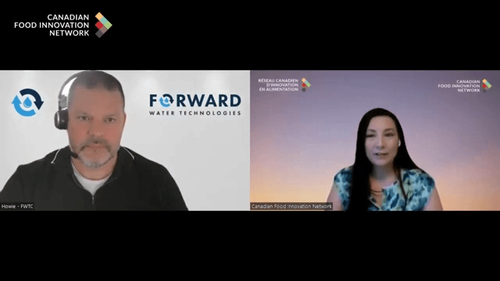
Welcome to YODL! In addition to daily original content, YODL helps CFIN Members find new partners , resources , and funding opportunities to grow their food business. Learn more about this growing community and become a CFIN Member (for free!) today . CFIN has provided funding for many projects over the past two years. Now we’re catching up with the Canadian companies leading CFIN-funded projects to chat about how their innovations have advanced in the year since funding. This time Lavina Gully, CFIN Regional Innovation Director for British Columbia, sits down with Howie Honeyman, CEO of Forward Water Technologies , to discuss how the company's forward osmosis foodstuff concentration system has advanced in the year since receiving CFIN’s funding.
50 Canadian FoodTech Resources – Walker Advanced Manufacturing Innovation Centre at Niagara College
Welcome to YODL! In addition to daily original content, YODL helps CFIN Members find new partners , resources , and funding opportunities to grow their food business. Learn more about this growing community and become a CFIN Member (for free!) today . Canada has an extensive range of research centres, food incubators, accelerators and labs supporting food and beverage innovation through the research they do and/or the services they offer. Each week throughout 2023, we’ll be highlighting an organization that’s supporting food innovation in Canada. Name: Walker Advanced Manufacturing Innovation Centre Location: Welland , ON Mission: To help businesses in Southern Ontario bring ideas to life, from concept through to working prototypes, using innovation and leading-edge technology and software. Focus: The centre specializes in engineering design, 3D technologies, lean manufacturing processes and additive manufacturing. Services: The research centre provides services such as applied research, 3D additive manufacturing services, technical services and 3D laser management for: Automation Reverse engineering Process improvement Product design and development Product re-design and improvement Proof of concept Piloting and problem solving What you Need to Know: The centre can provide professional solutions through 3D design, and laser-based 3D scanning to point cloud, and FDM and PolyJet 3D printing in all shapes and sizes . Notable News: The centre is Canada’s only 3D printing beta test centre for new Stratasys materials that are not yet commercially available. Get Involved: Contact the centre at research@niagaracollege.ca or reach out to our Regional Innovation Director for Ontario Linda Fox .

Guest Post: How Networking on YODL Led to a New Career Path and the Growth of Ontario's Laplace Robotics
Welcome to YODL! In addition to daily original content, YODL helps CFIN Members find new partners , resources , and funding opportunities to grow their food business. Learn more about this growing community and become a CFIN Member (for free!) today . By Jeff Hetherington After dedicating 25 years of my life to the food manufacturing industry, as a leader and Lean Six Sigma Black Bel t working with c ompanies like Schneiders, Maple Leaf Foods, and Sofina Foods, I found myself at a crossroads. I had taken early retirement following the challenging times brought about by the pandemic. Despite the solace retirement initially brought, I yearned for a new purpose, a way to continue making a meaningful impact on the food industry. Through a stroke of fate, I wrote a random post on YODL to reach out, offering my wealth of experience to any startup that could provide genuine innovation. Little did I know that my message would catch the attention of Rae Jeong, the CEO of Toronto, ON-based Laplace Robotics , and a talented software and robotics developer with a mission to address the labour crisis in Canada’s food industry. Rae, who had previously worked with Google ’ s Deep Mind and as a robotics developer, was on the lookout for someone with a deep understanding of the food industry to guide his company ’ s growth. We soon connected and quickly realized the immense potential of our collaboration. Laplace Robotics had developed cutting-edge V ision software that harnessed the power of artificial intelligence. T he deep learning program showcased unprecedented capabilities in robotics and automation. It was precisely what I had been searching for all these years – an innovative solution to address yield and labo u r costs in the food industry. As I delved deeper into the capabilities of Laplace Robotics ’ software, I discovered its remarkable versatility. The AI-powered V ision software had applications across various aspects of the food industry. It could optimize production lines, streamline packaging processes, and enhance quality control. With its ability to automate repetitive tasks and analyze vast amounts of data in real-time, it could significantly reduce labo u r requirements while improving efficiency and accuracy. We realized that the labo u r shortage plaguing the food industry could be mitigated with the implementation of Laplace Robotics ’ software. By automating repetitive and physically demanding tasks, the software could alleviate the burden on human workers, allowing them to focus on more complex and creative aspects of food production. The breakthrough innovation had the potential to reshape the industry ’ s labo u r landscape, making it more sustainable and attractive to new talent. Recognizing the profound impact we could make together, I officially joined Laplace Robotics as the h ead of Project Development, after six months of an advising role to Rae, marking the beginning of a tremendous partnership. With my extensive industry knowledge and expertise, combined with Rae ’ s technological prowess , vision and leadership, we form a formidable team. Our collaboration enabled Laplace Robotics to scale rapidly, as we introduced our cutting-edge software to food manufacturers across Canada. As more companies embrace the innovative technology, they are experiencing significant benefits. Customer yield rates improve, as the software optimize s production processes and minimize s waste. Labo u r costs are significantly reduced, making operations more cost-effective. Food quality and safety standards can reach new heights, thanks to the software ’ s real-time data analysis and fault detection capabilities. The value that we br ing to food manufacturers is immeasurable. We provide a solution to industry-wide challenges , but also help shape a more sustainable and efficient future for the Canadian food industry. Our partnership is a testament to the power of collaboration, innovation, and the unwavering pursuit of progress through CFIN. We continue to revolutionize the food industry through Laplace Robotics with AI-powered Vision software . We hope to inspire others to embrace technology and unlock new possibilities in the Canadian f ood i ndustry , and prove that even in the face of uncertainty, making connections can ignite a spark that transforms an entire industry. Jeff Hetherington is head of Project Development for Laplace Robotics. Contact him at jeff.hetherington@laplacerobotics.com or @JeffHetherington . Have a story you want to share about how YODL is helping your business? Contact communications director Jamil Karim . #networking #robotics #partnerships #foodtech CFIN Members get exclusive access to funding opportunities , five Regional Innovation Directors , and YODL . Learn more about what it’s like to be a CFIN Member and how you can join our growing community of food professionals.

IN 30: Ontario’s Food Ecosystem
Welcome to YODL! In addition to daily original content, YODL helps CFIN Members find new partners , resources , and funding opportunities to grow their food business. Learn more about this growing community and become a CFIN Member (for free!) today . Sometimes, all it takes is 30 minutes to learn the ins and outs of new food technologies and trends that are transforming the food and beverage industry. In this series, we’ll dig into a food innovation topic and link you to the best content and resources so you can become a master on the topic in 30 minutes (or less!). This week, we’re looking at food and beverage innovation and resources in Ontario . The Overview City of Toronto – Food & Beverage The Toronto region’s f ood and b everage sector employs more than 64,000 workers with annual wages tota l ling $3.2 billion . Government of Ontario – Ontario’s Local Food Report The report is a comprehensive snapshot of the province’s food producers and processors, as well as a look at food access and literacy in Ontario. Invest Ontario – Food and Beverage Manufacturing Ontario's food and beverage manufacturing sector is the third largest in North America with more than $48 billion in manufacturing revenues . OMAFRA – Learn About Ontario’s Food and Beverage Industry Statistics and facts about the province’s food system. Resources Caddle St. Catharines, ON-based Caddle collects consumer data and insights through its app for consumer packaged goods companies to use during decision making. Canada’s Advanced Manufacturing Cluster The research centre, based in Hamilton, ON, is positioning Canadian companies to lead industrial digitalization, maximizing competitiveness and participation in global markets . Fanshawe College’s Centre for Research and Innovation (CRI) London, ON-based CRI is the only research facility among Ontario’s colleges specializing in nutritional and shelf-life testing for product development and validation. Food & Beverage Innovation Centre at Niagara College The centre offers services to support industry innovation and commercialization of new products and processes for food, beverages and cannabis edibles. Technology Access Centre in Bio-Innovation (TAC-B) Ottawa’s TAC-B develops or improves products or processes in biotechnology for the food industry, agriculture, agri- food and bio-pharmaceutical industries. The University of Guelph Meat Science Laboratory The Meat Science Lab is a small-scale meat packing plant operating under federal meat inspection regulations with the capability to slaughter, cut, and process red meat species. Companies you Should Know App8 Inc. Ottawa’s App8’s offers innovative technology that allows foodservice brands to offer customers digital ordering experiences, while reducing operational bottlenecks and improving the bottom line. CarbonGraph Toronto, ON ’s CarbonGraph is a digital platform for tracing the carbon footprint and sustainability of food products from farm to table. Cyberworks Robotics Markham, ON ’s Cyberworks Robotics provides autonomous self-driving technology for material handling forklifts , tow- tuggers and industrial floor scrubbers. Escarpment Laboratories Escarpment Laboratories , based in Guelph, ON, supports the beer and fermentation industry through yeast cultures, knowledge and education resources. Evolved Meats Kitchener, ON-based Evolved Meats is a cultivated meat company that creates whole cuts of meat that are both structurally and biochemically identical to conventional meat. Food Cycle Science Corporation Ottawa’s Food Cycle Science Corporation is a Canadian cleantech company dedicated to revolutionizing food waste management, reducing greenhouse gas emissions, and promoting soil health and a circular economy. Forward Water Technologies Corporation This Toronto company can extract pure water from liquid streams with no energy input and without consuming any chemicals. Gastronomous Technologies Oakville, ON-based Gastronomous creates smart commercial kitchens using automation, interconnected robotics and software to solve foodservice challenges . Henry’s Tempeh This Kitchener , ON -based company produces organic and sustainable tempeh, a fermented plant protein with Indonesian roots. Liven Proteins Toronto’s Liven Proteins makes animal-free, functional and sustainable protein ingredients. Mycionics This Putnam, ON-based company has developed a fully automated mushroom harvesting system using novel advanced robotics and automation. New School Foods Toronto, ON-based New School Foods Inc. uses new production technologies to create authentic whole-cut meat and seafood alternatives for the mass market that deliver on texture, cooking, appearance, price and taste. Nutrigenomix This Toronto company offers DNA tests consisting of 70 genetic markers for health and wellness, athletic performance and fertility . PLAN Automation Bolton, ON-based PLAN Automation Inc. uses state-of-the-art X-ray technology to inspect clients’ products, including a variety of food and beverage and consumer goods . Rapid Aid Corp. Based in Mississauga, ON, Rapid Aid’s TempAid division specializes in design and manufacturing of highly engineered packaging solutions for shipping temperature-sensitive goods. Savormetrics Mississauga’s Savormetrics offers real-time biophysical and biochemical quality analysis through FoodSafe Analyzers, a fully integrated food quality analysis tool. Suppli The Toronto company leverages technology to offer its reusable takeout container service across online food channels, currently in takeout and corporate catering, but with applicability across groceries, meal kits, and beyond. Vivid Machines Toronto’s Vivid Machines has developed a multispectral computer vision platform to digitize fruit production. YEX Serums Toronto’s YEX Serums is manufacturing a product that will enable companies to make their lab-grown meat products profitably and in an environmentally friendly way. Overtime If you’ve got more than 30 minutes, these are for you: CFIN Funded Projects: One Year Updates - Index Biosystems Linda Fox, Regional Innovation Director for Ontario, speaks with David Singer, co-founder and vice president of Business Development at Burlington, ON-based Index Biosystems . The company produces BioTags that allow food and ingredients to be tracked as they move through the supply chain.
Company Spotlight – New School Foods
Welcome to YODL! In addition to daily original content, YODL helps CFIN Members find new partners , resources , and funding opportunities to grow their food business. Learn more about this growing community and become a CFIN Member (for free!) today . This is one in a series of interviews with CFIN member companies that have successfully applied for and received funding . Toronto, ON-based New School Foods Inc. uses new production technologies to create authentic whole-cut meat and seafood alternatives for the mass market that deliver on texture, cooking, appearance, price and taste. The company’s first product is a whole fillet of salmon that looks, cooks, tastes and flakes like fish. It transitions from raw to cooked, and replicates salmon muscle fibres and connective tissue to create the same texture and mouthfeel. New School Foods received $80,526 in funding to create novel equipment that can draw “white lines” in the salmon to help improve the product by creating fillets that flake and closely emulate traditional salmon. We talked to Jennifer St. Onge , senior manager of Operations at New School Foods, to find out more about the project and the company’s plans. Q: What is your company’s mission? A: New School Foods’ mission is to accelerate the transition to a kinder, more sustainable food system by creating no-compromise meat alternatives. Q: Why did you apply for this funding and how will you use it? A: We are currently developing a brand new way to create the connective tissue that contributes to the texture and flavour of whole-cut meats. In order to scale this technology, we needed to work with a partner to develop custom equipment. This funding will help support this project and allow us to solve these challenges and get to market faster. Q: What excites you most about working in this area of the food industry? A: There are many plant-based options available already, but most are ground products like nuggets and patties. Delivering a whole-cut product for the market could have a significant impact, especially as more and more consumers look to find healthier and more climate-friendly food choices. Our focus on research and development paved the way for us to develop our own technology. Long-term, our technologies could help other companies improve their products, so we can attract more people to alternative meats and, in turn, ensure the greatest environmental impact possible . Q: Why is collaboration so important for accelerating innovation in the food industry? Is it difficult to find good collaborating partners, and what would make the process easier? A: The industry has been using the same limited toolkit to make alternative proteins for years , and now is the time to start thinking outside the box if we want to create better products and new formats. Collaboration was critical in our early development. We sponsored multiple research projects at different universities and leveraged their in-house expertise and equipment to accelerate our mission to find a better technology for making whole-cut meat alternatives. We continue to collaborate with researchers, colleges, ingredient providers, and experts in food processing and engineering to solve our technical challenges quickly and efficiently. Being able to reduce the administrative burden of working with public institutions would make it easier to collaborate at the pace we need to move at and create more opportunities for innovation. Q: Please comment on the importance of public funding to help companies clear innovation hurdles and access leveraged funds. A: One of the best things about having our company in Canada is the public support for this industry. The funding that we received early on helped us invest the time and energy to really understand the science behind the texture and flavour of salmon and develop the tools to recreate it. Those early results made a huge difference in attracting foreign investment so we could focus on getting our first product to market. We are grateful to have received additional support from CFIN and other agencies this year to continue improving our product and develop new technologies for this industry. Q: Looking ahead, what’s on the horizon for your company? A: We are starting out by working closely with top North American chefs to perfect the flavour and texture of our plant-based salmon fil l et before venturing into grocery stores. Early next year, we will unveil our salmon alternative in several high-end restaurants, as a way to drum up excitement among a broad range of consumers. With our first pilot facility now under construction we will be able start producing at scale by next year. Q: What are your passions or hobbies outside of work? A: Music, both as a listener, and a writer. There’s nothing more exciting than watching an idea come to life in front of you. I also enjoy skiing, and playing tennis. Q: If you had to pick one person to make you a meal, who would you choose? A: Martha Stewart. She seems like a lot of fun, and has a ton of experience with plant-based meals. #funding #FoodInnovation #foodtech #Ontario #plantbasedfoods #meatalternatives CFIN Members get exclusive access to funding opportunities , five Regional Innovation Directors , and YODL . Learn more about what it’s like to be a CFIN Member and how you can join our growing community of food professionals.