

Articles & Reports
Featured

One Consumer, Dozens of Touchpoints, One Campaign
Every new touchpoint used to mean another campaign to build, budget, and measure. Brands pulling ahead in retail media reach consumers across all of them with one campaign and no extra workload.

Where Crunch Meets Clean Label: Sunflower Kernels for the Next Generation of Better-for-You Snacks
Canada’s healthy snacks market is experiencing strong growth. According to Grand View Research, the market generated $3,713.6 million (USD) in 2025 and is projected to reach $7,282.5 million (USD) by 2033, growing at a compound annual growth rate (CAGR) of 8.8% from 2026 to 2033.¹ The research also identifies Canada as the fastest-growing regional market in North America, highlighting significant opportunities for food manufacturers looking to innovate in the category. For food scientists and product developers, this growth presents a complex formulation challenge. Consumers increasingly seek snacks that deliver nutritional value, convenience and recognizable ingredients, without sacraficing the taste,texture and overall eating experience they expect. Success depends on balancing these priorities to create better-for-you products that satisfy both nutritional goals and consumer expectations. Why Texture Matters in Snack Innovation Texture is a powerful influence on how consumers experience food, shaping everything from first impressions to repeat purchases. Puratos’s Taste Tomorrow research found that nearly half of consumers prioritize texture over ingredients when purchasing food, while 68% of millennials say texture directly influences their choices.² Ingredion research further indicates that 70% of global consumers would switch to a different product or brand if they were dissatisfied with its texture.³ For snack food manufacturers, these findings underscore the importance of getting texture right from the outset. Crunch, crispness and contrast can help distinguish a product in a competitive market, while combinations of complementary textures can create a more engaging and premium eating experience. Innova Market Insights’ Global Texture Trends 2026 report highlights the appeal of combining textures such as creamy, crunchy, and soft. Its research also revealed that one in four consumers globally is interested in trying snacks in formats that are new to them.⁴ Together, these insights point to opportunities for food manufacturers to explore fresh ingredient combinations and textural experiences that make better-for-you snacks stand out. Where Sunflower Kernels Fit In U.S.-grown sunflower kernels give food manufacturers a practical way to build that contrast. Their mild flavour and satisfying crunch add dimension to both sweet and savoury product innovations without overpowering other ingredients. They also bring plant-based protein, fibre and healthy fats, along with vitamin E, zinc, folate, iron and magnesium, so the texture upgrade comes with a nutritional one. Available raw, roasted and ready-to-eat, sunflower kernels can be used across a wide range of applications, including: • Better-for-you snack bars • Granola and trail mixes • Crackers and savoury snacks • Bakery products and breakfast cereals • Plant-based snacks and bites Clean Label and Allergen-Friendly by Design Consumers worldwide are increasingly prioritizing clean-label products made with recognizable ingredients and greater transparency. Innova Market Insights reports that more than two in three consumers globally say they are at least somewhat influenced by clean ingredient decks, and that nearly one in three new products now carries some type of clean label claim.⁵ Innova also notes that non-GMO claims are most established in North America.⁵ Sunflower kernels are naturally non-GMO and sustainably grown, which supports the transparency and recognizable-ingredient positioning shoppers respond to. They are also an allergen-friendly alternative to tree nuts, delivering the crunch consumers expect from nuts and seeds. Unlike tree nuts, sunflower kernels are not considered a priority allergen in Canada, making them a versatile option for manufacturers developing new products or reformulating existing ones. Turning Texture Trends into Product Opportunities As Canada's healthy snacks market continues to expand, food manufacturers have an opportunity to differentiate their products through thoughtful ingredient choices and more engaging eating experiences. Texture is an important part of that equation, influencing consumer appeal while creating opportunities to innovate across familiar snack formats. U.S.-grown sunflower kernels bring together satisfying crunch, plant-based nutrition and application versatility, making them a valuable ingredient to consider for the next generation of healthy snacks. From bars and granola to crackers and savoury mixes, they can help product developers create food innovations that balance texture, taste and nutritional value. Explore how U.S.-grown sunflower kernels can add texture, nutrition and versatility to your next snack innovation. Connect with a supplier today > {link to lead to the NSA Kernel suppliers page} References: 1. Grand View Research, Canada Healthy Snacks Market Size & Outlook, 2026–2033. https://www.grandviewresearch.com/horizon/outlook/healthy-snacks-market/canada 2. Puratos, “Why texture is important in food,” February 19, 2025. https://www.puratos.com/blog/why-texture-is-important-in-food 3. Ingredion research, as reported in “New approaches to texture innovation,” Food Business News, May 7, 2026. https://www.foodbusinessnews.net/articles/30275-new-approaches-to-texture-innovation

Inside SIAL Canada 2026: Driving Food Innovation Through Connection and Collaboration
CFIN had the honour of taking a bite out of SIAL Canada 2026 in Montréal 🍎—connecting with partners, members, and industry leaders shaping the future of food innovation across Canada and beyond. Representing CFIN on site were CEO @Dana McCauley and @Julie Daigle , Regional Innovation Director (Quebec), who engaged with the ecosystem throughout the event. Their presence reflected CFIN’s ongoing commitment to strengthening Canada’s food innovation ecosystem and supporting high-potential foodtech ventures. Attendees could also catch Julie as a Foodtech Focus expert at the SIAL Canada Expert Hub, where she connected directly with innovators and shared insights with the community. Dana also took the stage as part of the Dairy Talks program, contributing to a forward-looking discussion on innovation as a driver of market leadership in the Canadian dairy sector. Her session explored the shift from incremental product development toward a broader innovation mindset—highlighting next-generation ingredients, value-added dairy formats, new go-to-market strategies, and the role of Industry 4.0 technologies like AI, robotics, automation, and digital supply chains in strengthening productivity and global competitiveness. A key highlight of the week was CFIN’s involvement in the 7th edition of the Startup Pitch Competition, held on April 30 on the Food & Bev Connect stage. Julie Daigle participated as the President of the Foodtech jury, joining a panel of industry experts evaluating promising entrepreneurs from the Startup Village. Beyond the competition, the Startup Pitch stage served as a strategic platform connecting entrepreneurs with buyers, investors, and key decision-makers across the agri-food ecosystem. A standout moment for the CFIN community was the recognition of Maia Farms, a CFIN member and funding recipient, which earned the Gold Prize in the foodtec h competition 🍄🏆 CFIN’s presence at SIAL Canada underscored the momentum of Canada’s food innovation sector and the value of convening the ecosystem to accelerate ideas from concept to commercialization. 📖 Explore more from SIAL Canada 2026 R elive the stories, innovations, and key moments captured throughout the show in the official SIAL Canada Daily: SIAL Canada Daily – 2026 Edition (Photos Courtesy of SIAL)

Five Years of CFIN: A Letter to the Network
Thirty years ago, I worked as a chef in the kitchen of one of Canada’s top restaurants standing should er to shoulder with people who ca red about the sensory experience of food above all else . Our tech stack was al most all analog and , to be honest, we didn’t give our ordering system or the way we did inventory a lot of thought. My career broadened over time , and I ’ ve also held roles where I developed recipes at Canadian Living and wrote about food trends; built innovation strategies and products for national brands, founded a business incubator, and ran a venture creation office at a prestigious Canadian u niversity . Food was always the thread , and technology was always present but in most of the food focused businesses I’ve worked for, it was taken for granted, and creativity and hard work were what drove the businesses forward. While smart people with great ideas are essential to food business success, it’s not enough to be competitive in today’s world. Old ways of running restaurants, innovation labs and food and beverage processi ng businesses can’t compete internationally or absorb the trade shocks that have become commonpla ce in recent history. That’s why I feel l ik e CFIN is the perfect place for me to be today and why we’re adding dozens of new members per week. When CFIN was created in 2021, the mandate was intentionally broad : cata lyze Canadian food innovation with funding , build community, connect an ecosystem that had been operating in silos for decades. The funding programs took shape quickly. Since 2022, we’ve awar ded $23.3 million to 133 projects across six program s. For every $1 CFIN invested, our members committed $7.65 of their own capital toward innovation. This leverage ratio of nearly 8-to-1 has unlocked over $140 m illion in private sector spending on R&D and capital infrastructure. The other work was harder to define . What do "build community" and "connect an ecosystem" mean in practice for a sector span ning startups, processors, researchers, investors, policymakers, and operators spread across this vast country ? Th at question didn't have a tidy answer. As a result , fostering and serving this network was (and remains ) an exercise in innovation itself : something new to be built , and then tested, adjusted, and iterated upon , ad infinitum . I’m immensely proud of what we’ve built so far . A team of Regional Innovation Directors who've supported more than 2,200 organizations, brokering the introductions that became commercial partnerships, strategic investments, leadership hires, and research collaborations. A digital platform , YODL, connecting Canada's food sector across industry silos and bridging interprovincial barriers . The first comprehensive analysis of Canadian foodtech . A network of 8,500 members from every province, every part of the food value chain, every stage of business . On any given week, our community is discussing topics ranging from precision fermentation bioreactor designs and funding stacks to food packaging labeling regulations and export strategies, all in the same space. Members benefit from purpose-built tools and resources — like our Funding Finder that aggregates food and beverage funding opportunities across the country and a growing library of original sector research and analysis — alongside direct access to our Regional Innovation Directors. Canada has strong regional funders, accelerators, trade associations, and tech transfer offices, each doing necessary work in a defined lane. What this sector didn't have was a place where the conversation s , the tools, and the connections all showed up at once — where the range of problems and the range of capabilities were dense enough that the right solutions could emerge . That's what CFIN has built. That foundation is important because the next five years will be even more dynamic, and often more challenging, than the last five . To keep pace and flourish in an increasingly volatile world, Canada's food sector needs to modernize faster and more strategic ally than ever before . Trade disruption is dramaticall y reshaping supply chains . L abour constraints are compounding a productivity gap that was widening long before tariffs became front-page news. Climate pressures are intensifying. Food 4.0 — a tech-enabled food s ector that's more collaborative, productive, resilient, and competitive — is the framework CFIN is building toward, and the case for it gets more urgent by the quarter. I ’m confident that we’re up to the task . Five years ago, Canada's food innovation ecosystem was fragmented, underleveraged, and often invisible to the investors, operators, policymakers, and media who needed to see it. That's no longer true. The capacity to respond to the challenges ahead is here. Not in any single program or policy, but in the breadth of this network — the founders , processors , researchers , and investo rs who are hungry to innovate and build a better Canadian food sector . My own wide-ranging path through the food sector taught me that no single role ever showed me the full picture. It took working across kitchens, labs, newsrooms, boardrooms, and startups to understand how innovation really moves through this industry — and where it get s stuck. CFIN was built on the same insight. A sector this complex, facing challenges this urgent, needs more than funding or advice or connections in isolation. It needs all of them in the same room. That's what we've spent five years building, and I'm betting the next five will prove its value at a scale none of us can yet imagine. Thank you for being part of it. Dana McCauley, CEO, Canadian Food Innovation Network

How BC is Becoming a National Foodtech Hub
Editor's Note: This article was o riginally published in the Vancouver Tech Journal on March 13, 2026 The province has a diverse food processing industry, world-class research facilities, and a deep bench of tech talent — everything a foodtech ecosystem needs to thrive. Foodtech builds the software, automation, and applied science for how food gets processed, manufactured, packaged, distributed, and sold. The industry behind it is enormous — food and beverage processing alone is Canada's largest manufacturing sub-sector , bigger than automotive, bigger than aerospace. It's a serious market, and in British Columbia, it's growing fast. But if you work in the province's broader tech ecosystem, you might not even know that. Foodtech hasn't traditionally drawn the same attention as sectors like cleantech or enterprise SaaS despite being a comparable market in scale and complexity — and one where demand for new technology is accelerating fast. What BC brings to the table BC's food processing sector is substantial — over 3,200 companies producing roughly $12.6 billion in value-added products annually. And it's being treated as a strategic priority. The province has funded a network of shared food processing hubs, UBC just opened a Food and Beverage Innovation Centre with pilot-scale production labs that processors and startups previously had to leave BC to access, and SFU's BC Centre for Agritech Innovation is partnering directly with SMEs on cost-shared R&D. At the same time, much of what the food industry needs is already being built in BC for other thriving tech sectors. Process automation, energy management, supply chain software, safety and traceability systems, data-driven quality control — these are cleantech and software problems applied to production floors and distribution networks. The talent, research base, and trade infrastructure to support a serious foodtech cluster are all here. A different kind of tech sector Foodtech doesn't work like enterprise SaaS or consumer tech. Processors and manufacturers adopt slowly and carefully, because failure is expensive in ways that go beyond lost revenue — a food safety issue, a botched line integration, a regulatory problem. Sales cycles run in quarters. The investor community that understands food is small and specialized. And the industry's own networks run through trade associations, existing supply relationships, and sector-specific events that sit well outside the broader tech community's orbit. None of this means foodtech is closed off. It means that if you want in — as a founder, investor, developer, or potential partner — you need a way to access the conversations, the deal flow, and the operating knowledge that don't surface through the usual channels. The Canadian Food Innovation Network The Canadian Food Innovation Network is a national not-for-profit, established in 2021 that functions as the operating infrastructure for Canada's foodtech sector. CFIN runs cost-shared funding programs that help companies de-risk R&D and move technology into commercial settings. Since launch , the organization has awarded over $22 million to 122 Canadian foodtech projects, matched by $25 million in industry co-investment. Those funded companies have generated $90 million in economic impact, created over 355 jobs and co-op placements, and attracted more than $82 million in follow-on investment. The network's 8,000-plus members include food processors, technology companies, ingredient suppliers, retailers, researchers, and investors — connected through YODL, CFIN's member platform, and supported by Regional Innovation Directors embedded across the country, who work directly with members to broker introductions, navigate funding, and connect emerging technology with the processors and buyers who need it. CFIN also produces the sector's most detailed intelligence . The Foodtech in Canada 2025 Ecosystem Report mapped investment flows, identified sector strengths, and gave both companies and investors a clearer picture of where the Canadian foodtech market stands. And then there's Foodtech Frontier , CFIN's annual program identifying the country's highest-potential foodtech companies. The inaugural cohort of 35 winners included eight BC companies. For investors, it works as curated, vetted deal flow in a sector where sourcing is otherwise hard. For the companies, it's structured national visibility. Plug into Canada’s foodtech ecosystem If you work in technology or investment and you've been curious about the food sector, then signing up for a free CFIN membership is the best place to start. Members get access to funding programs, sector intelligence, a national innovation community, and regional team members that know the BC landscape specifically.
Other Articles
50 Canadian FoodTech Resources – The Cultivated B Canada
Welcome to YODL! In addition to daily original content, YODL helps CFIN Members find new partners , resources , and funding opportunities to grow their food business. Learn more about this growing community and become a CFIN Member (for free!) today . Canada has an extensive range of research centres, food incubators, accelerators and labs supporting food and beverage innovation through the research they do and/or the services they offer. Each week throughout 2023, we’ll be highlighting an organization that’s supporting food innovation in Canada. Name : The Cultivated B Canada (TCB Canada) is a subsidiary of Germany’s The Cultivated B. The company’s R&D centre is in Heidelberg, Germany, while its manufacturing facility is in Burlington, ON. Location: Burlington, ON Mission: To accelerate R&D around scalable and sustainable fermented and cultivated food products and ingredients. Focus: TCB Canada develops scalable alternative protein and cellular agriculture technologies. It works with governments and companies in Canada’s cellular agriculture and food ecosystem to help develop bioengineering technologies. Services: TCB Canada operates a 130,000-sq.-ft. manufacturing facility in Burlington, ON for the production of bioreactors and the development of alternative proteins. The location also offers the Innovation Hub in collaboration with Ontario Genomics and N atural Products Canada (NPC) , a 25,000-sq.-ft. space for academic institutions, start-ups and small- to medium-sized businesses to advance research in cellular food and agriculture towards scalable testing and product development. The Innovation Hub offers lab space, bioreactors (including the world’s first bioreactor with a 25,000-L volume) , mentorship and expertise . What you need to know: In September 2023 the TCB Canada and NPC announced a program to accelerate the growth of Canadian startups using precision fermentation. The Cultivated B is develop s precision fermentation technology through its subsidiary PreFer Industries . Notable News: The company recently signed a Memorandum of Understanding with McMaster University’s Faculty of Engineering to commit to ongoing collaboration on cellular agriculture projects and talent development. Get Involved: Contact TCB Canada by email or at ( 905 ) 681-2404 , or reach out to our Regional Innovation Director for Ontario, Linda Fox.
AI + Food – ThisFish Inc.
Welcome to YODL! In addition to daily original content, YODL helps CFIN Members find new partners , resources , and funding opportunities to grow their food business. Learn more about this growing community and become a CFIN Member (for free!) today . Canadian food, beverage and foodtech companies are using AI to solve a wide variety of industry challenges, including improving efficiency, pricing analysis, inventory management, quality control, food safety assurance and more. In this installment, we’re looking at ThisFish Inc. What They Do Vancouver, BC-based ThisFish Inc. provides TallyVision , an AI solution for seafood traceability and production workflows designed to boost business efficiency, transparency and compliance in seafood supply chains. How They’re Using AI The TallyVision software, combined with sensors and industrial hardware such as scanners, digital scales and computer vision technology, help s seafood processing plants automate data collection and digitize information systems to produce real-time insights that can be used to improve traceability and quality control, while reducing waste. The software also provides for the use of QR code labels, allowing customers to track seafood through retailing and processing back to the farm or fishing vessel that harvested it. In the Media Government of BC - ThisFish Tracks BC Seafood The B.C. government supports traceability as a public health measure and to help businesses run efficiently. Global Seafood Alliance – ThisFish Launches Seafood Sector Software Directory ThisFish has launched an online directory of software, artificial intelligence (AI) and blockchain technologies for the seafood sector.
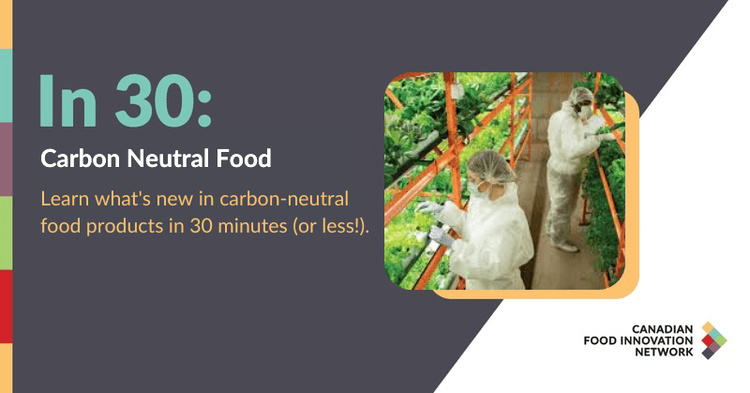
IN 30: Carbon Neutral Food
Welcome to YODL! In addition to daily original content, YODL helps CFIN Members find new partners , resources , and funding opportunities to grow their food business. Learn more about this growing community and become a CFIN Member (for free!) today . Sometimes, all it takes is 30 minutes to learn the ins and outs of new food technologies and trends that are transforming the food and beverage industry. In this series, we’ll dig into a food innovation topic and link you to content and resources so you can become a master on the topic in 30 minutes (or less!). This week we’re looking at carbon neutral food. When companies refer to their products as carbon neutral , it means that the company has reduced as much carbon emissions as it produces to create a net zero carbon output. The Overview Food Dive – Eight Carbon-Neutral Brands Aiming to Cut the Food and Beverage Industry’s Emissions Just a few of the f ood and beverage companies making their products carbon neutral. Green Eatz – How to Lower Your Food’s Carbon Footprint The carbon footprint of a food refers to the amount of greenhouse gas emissions go into producing that food, including growing, processing, and transportation. Just Food - Are “C arbon N eu t ral ” C laims D ead? Claims about carbon-neutral products are sometimes met with scepticism. The Canadian Connection Diageo – Diageo is building its a carbon neutral distillery to produce its Crown Royal Canadian Whisky brand in Ontario. Maple Leaf Foods - Maple Leaf became the world’s first major carbon-neutral food company in 2019. Karbon Brewing Co . – Karbon is the first carbon-negative brewery in Canada. Social Media Science Based Targets (LinkedIn) – Science Based Targets helps companies and organizations set emissions reduction targets. CDP (X/Twitter) - CDP is a not-for-profit charity that runs the global disclosure system for investors, companies, cities, states and regions to manage their environmental impact . Ecocert (Facebook) – Ecocert operates the Climate Neutral Certification program, which recognizes companies that contribute to carbon neutrality. Overtime If you’ve got more than 30 minutes, these are for you : YouTube – Earth Month: New Food and Drinks to Reduce your Carbon Footprint Carbon neutral products from this year’s Natural Products Expo West.
AI + Food – Canvass AI
Welcome to YODL! In addition to daily original content, YODL helps CFIN Members find new partners , resources , and funding opportunities to grow their food business. Learn more about this growing community and become a CFIN Member (for free!) today . Canadian food, beverage and foodtech companies are using AI to solve a wide variety of industry challenges, including improving efficiency, pricing analysis, inventory management, quality control, food safety assurance and more. In this installment, we’re looking at Canvass AI . What They Do Canvass Analytics Inc. (Canvass AI) is an industrial AI software developer based in Toronto, ON. How They’re Using AI The company offers AI software specifically for the industrial sector that it says will allow manufacturing companies , including food and beverage manufacturers, to monitor and predict future output to optimize operational performance, make decisions faster based on data, and set new sustainability benchmarks by reducing water consumption and CO 2 emissions . In the Media Control Engineering - Canvass AI’s APC Solution , part of its Asset Suite of software, won gold in Control Engineering ’ s 2023 Product Of The Year Awards. CB Insights – In 2022 Canvass AI was recognized by CB Insights on its annual list of the world’s 5 0 most promising advanced manufacturing companies. FedDev Ontario – The Federal Economic Development Agency for Southern Ontario invested more than $5.7 million in Canvass AI in 2022. The funding will go towards the expansion and commercialization of its AI software platform, to create 45 new jobs , and to help the company grow.

Company Profile – Myo Palate
Welcome to YODL! In addition to daily original content, YODL helps CFIN Members find new partners , resources , and funding opportunities to grow their food business. Learn more about this growing community and become a CFIN Member (for free!) today . This is one in a series of interviews with CFIN member companies that have successfully applied for and rec e ived fun d ing . Toronto, ON-based Myo Palate received $1,971,084 in funding for a project titled Scaling Cultivated Pork Production Using Embryonic Stem Cells, with project partners Getinge Canada Ltd. We spoke with Myo Palate co-founder Frank Yu to find out more about the company and its project. Q: Please explain what your company does and how your products are improving the food industry? A: Myo Palate is a biotechnology company developing sustainable meat products. We nurture cells to make meat, instead of growing the entire animal. Using natural animal cells, we produce muscle, fat and cartilage to create ground meat as a raw material. Our controlled bioprocess allows us to reduce the environmental burden associated with meat production and provide a consistent supply. Q: What is your company’s mission? A: We are a team of scientists, engineers, and food lovers applying cutting-edge technologies to achieve a common mission: making meat sustainable and accessible for everyone. Q: Why did you apply for this funding and how will you use it? A: We have developed a novel bioprocess to address the two biggest barriers in cultivated meats: scalability and price. We are now in an exciting time to scale this process. CFIN funding has provided us with the opportunity to de-risk this process and collaborate with incredible industry and academic partners. Q: What excites you most about working in this area of the food industry? A: We are a big team of foodies and we are excited about the potential of creating customizable meat products. Imagine a world where you can choose the amount of fat, muscle, and cartilage that goes into your meat . We’re still far away from this vision, but the thought of it gets us excited. Q: Why is collaboration so important for accelerating innovation in the food industry? Is it difficult to find good collaborating partners, and what would make the process easier? A: Cultivated meats is still deep tech and there are a lot of verticals in our industry. Collaborations allow us to climb these verticals faster and develop better products. We have been fortunate to have a great network of collaborators and we would not be in our current position without them. Q: Please comment on the importance of public funding to help companies clear innovation hurdles and access leveraged funds. A: Public funding serves as a critical catalyst in transitioning deep tech innovations from theoretical possibilities to real-world solutions. Deep tech, which encompasses groundbreaking technologies like AI, biotech, and advanced materials, often requires substantial investment in R&D, long gestation periods, and a high tolerance for risk. These factors make them less appealing to short-term investors or traditional venture capital. The history of solar energy serves as a prime example. In its infancy, solar technology was expensive and inefficient, making it an unattractive commercial investment. However, public funding and government grants enabled years of research, scaling, and iterative development, ultimately reducing costs and increasing efficiency. Today, solar energy is one of the most widely-used and cost-effective renewable energy sources globally. This transformative journey from a niche technology to a global industry was made possible, in large part, by public investment. Q: Looking ahead, what’s on the horizon for your company? A: We are currently preparing for our Health Canada submission and hope to bring some delicious tastings to CFIN members soon! Q: What are your passions or hobbies outside of work? A: This year will be my ninth year running HOSA Canada , a registered nonprofit organization that provides healthcare education for high school and university students. We have had over 30,000 students cycle through our program and we bring home many international competition medals every year! Q: If you had to pick one person to make you a meal, who would you choose? A: Gordon Ramsey. #cellularfood #cultivatedmeat #biotechnology #FoodInnovation #R&D #funding CFIN Members get exclusive access to funding opportunities , five Regional Innovation Directors , and YODL . Learn more about what it’s like to be a CFIN Member and how you can join our growing community of food professionals.
50 Canadian FoodTech Resources – Merinov
Welcome to YODL! In addition to daily original content, YODL helps CFIN Members find new partners , resources , and funding opportunities to grow their food business. Learn more about this growing community and become a CFIN Member (for free!) today . Canada has an extensive range of research centres, food incubators, accelerators and labs supporting food and beverage innovation through the research they do and/or the services they offer. Each week throughout 2023, we’ll be highlighting an organization that’s supporting food innovation in Canada. Name: Merinov at Cégep de la Gaspésie et des Îles Location: Gaspé, QC Mission: To he lp fisheries, aquaculture and marine biomass industr ies be come more competitive and develop sustainably through research and development, knowledge transfer , and innovation-related technical activities. Focus: Merinov is Canada’s largest integrated centre for applied research and technological transfer in fishing, aquaculture, and processing of aquatic products and marine biotechnologies. Services: As a sea-to-market industrial research centre , Merinov specializes in technology specific to fisheries, aquaculture, processing and marine bioresources. The centre offers a multidisciplinary team that helps clients implement sustainable and efficient processes. The centre offers clients customized solutions, helps find collaboration opportunities and partners, and access funding programs. The team at Merinov has expertise in R&D, applied research, technology transfer and technical assistance , design and process engineering, p rofitability and process optimization , d iagnostics and support , a nalysis services , and food product and industrial application development . It s areas of specialization include: fisheries technology, fisheries diversification, shellfish farming, seaweed farming, fish farming, biofood product development, industrial processing methods, bioresources and biotechnology. What you need to know: Merinov is responsible for the administrative and operational management of the Cégep de la Gaspésie et des Îles’s CCTT for fisheries, whose mission is to provide technological solutions and innovations for Quebec’s fisheries, aquaculture and aquatic product processing industry , helping it b ring products to market, improve the performance of its processes , and drive growth. Notable News: In February 2023 a team of researchers from Merinov travelled to Brest, France to learn about equipment and technology innovations that could be adapted to Quebec fisheries, especially in the re-emerging redfish fishery sector. Get Involved: Contact Merinov at (844) 368-6371 or at info@merinov.ca , or reach out to our Regional Innovation Director for Quebec Julie Daigle .

What YODLers are Saying and Reading - Top YODL Content for October 2023
Welcome to YODL! In addition to daily original content, YODL helps CFIN Members find new partners , resources , and funding opportunities to grow their food business. Learn more about this growing community and become a CFIN Member (for free!) today . October was a busy month on YODL! In case you missed them, here are the top five discussions and most read articles on YODL in October 2023. Top YODL Discussions in October 2023 Number 5 Looking for Technical Know-How that Knows NIR (near-infra red) Detectors in Food Applications CFIN members regularly turn to YODL to find experts and potential business partners. Number 4 Food Regulatory & Safety Conference - Nov 28/29 - Member Offer Continue to check YODL for special offers and tickets to events exclusively for CFIN members. Number 3 Hot Fill Equipment Expertise Finding new collaboration partners is just one benefit of being a CFIN member. Number 2 Looking for a Rosemary Supplier? YODL is the perfect platform for sourcing ingredients, new technology and more. Number 1 Consumers don't Understand the Food Business - How Can we Change That? A new study shows that while public trust in Canada’s agri-food sector is steady, consumers are becoming cynical. Most Read YODL Articles in October 2023 Number 5 IN 30: Food Scarc i ty and Insecurity Food organization and businesses are helping to address food scarcity and insecurity in Canada and around the world with new technology and processing techniques. Number 4 50 Canadian FoodTech Re s ources – Good to Grow North Vancouver, BC -based Good to Grow is a team of food industry experts and business educators who create success for food and beverage brands. Number 3 Agriculture and Agri-Food Canada is Puttin g a Priority on Cyber Resilience in Agriculture and Food As agricultural and agri-food businesses become more digitized and connected online, the risk of cyber threats increases. This guest post from AAFC looks at how food and agri-food businesses can minimize the risks of c yber- attacks. Number 2 IN 30: Cybersecur i ty 101 C ybercrime and cybersecurity affects Canada ’ s food and beverage industry more than most business operators realize. Number 1 An Interview with a Product Mana g er Lavina Gully, Regional Innovation Director for BC and Yukon, sits down with Jeff Epstein of North Vancouver, BC’s 16 Volts and Grants for Growth, to discuss the role of a product manager, the importance of product management, and the significant advantages it offers food and beverage companies.
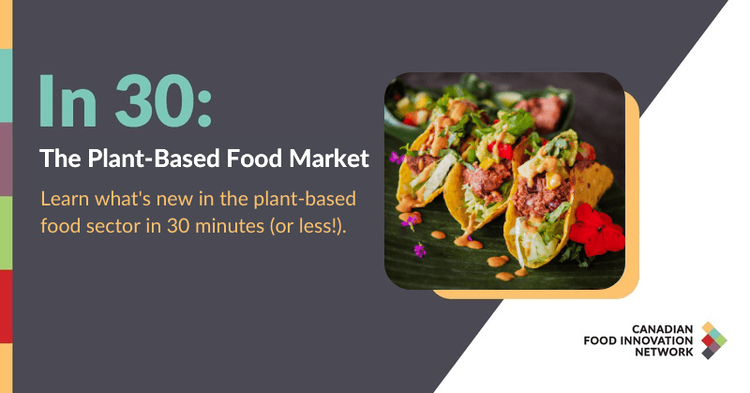
IN 30: The Plant-Based Food Market
Welcome to YODL! In addition to daily original content, YODL helps CFIN Members find new partners , resources , and funding opportunities to grow their food business. Learn more about this growing community and become a CFIN Member (for free!) today . Sometimes, all it takes is 30 minutes to learn the ins and outs of new food technologies and trends that are transforming the food and beverage industry. In this series, we’ll dig into a food innovation topic and link you to content and resources so you can become a master on the topic in 30 minutes (or less!). This week we’re looking at the latest news and developments in the plant-based food sector. What’s New Food Matters Live – Five Plant-based Food Trends and Innovations for 2023 New innovations include vegan cheese, plant-based fish, and more. VegNews – Heading to the Plant Based World Expo? These are the Five Trends to Watch . Trends from the third Plant Based World Expo, which took place in September 2023. Greener Ideal – The Eight Hottest Vegan Food Trends of 2023 What vegan customers are asking for in restaurants and at grocery stores. The Canadian Connection Plant-Based Foods Canada – Plant-Based Foods of Canada (PBFC) is a division of Food, Health & Consumer Products of Canada (FHCP) . It is the industry association for companies that make and market plant-based foods in Canada. Protein Industries Canada - Protein Industries Canada is one of Canada’s five Global Innovation Clusters , and is an industry-led, not-for-profit organization created to position Canada as a global source of high-quality plant protein and plant-based co-products. Plant Forward Conference – The next Plant Forward Conference takes place April 16 to 18, 2024 in Toronto, ON, and will showcase food and ingredients for businesses in the global plant protein sector. Social Media Gardein (Facebook) – Gardein is a Conagra Brand of meat-free foods. Sol Cuisine (Instagram) – Sol Cuisine produces a wide variety of plant-based meals, snacks and sides. Simply Protein (LinkedIn) – Simply Protein is a line of plant-based snacks with a limited number of clean ingredients from Toronto, ON-based Wellness Natural Inc. Overtime If you’ve got more than 30 minutes, these are for you: YouTube - Top Vegan Products - Natural Product Expo 2023 A collection of the best vegan and plant-based products at the Natural Product Expo West tradeshow.

The Best of Staff Picks
Welcome to YODL! In addition to daily original content, YODL helps CFIN Members find new partners , resources , and funding opportunities to grow their food business. Learn more about this growing community and become a CFIN Member (for free!) today . A lot of material comes across our desks at CFIN, and we love to share new information with YODLers ! This year we checked in with CFIN staff to find out what they were reading, listening to, watching, and posting about . Here’s a summary of some of the best of those suggestions. What are you reading? Adrianne Assenheim , Communications Specialist - Lately I have been devouring Lenore Newman’s Lost Feast: Culinary Extinction and the Future of Food . Her books are as delicious as a beach read, and as filling as the OG Noma tasting menu! I also spend a lot of time leafing through my cookbooks (which I never follow but am very inspired by) to soak up tips on zero-waste cooking, foraged/local/seasonal produce and preserving. Most recently I have been gravitating to Love and Lemons Everyday in preparation from what I hope will be a big heirloom veggie haul from our garden this year. Jairo Melo , Director of Digital Technology - Lean Analytics by Alister Croll and Benjamin Yoskovitz , and Quantum Supremacy by Michio Kaku . Rajiv Ramalingam , IT Lead Support - I read technology related articles, especially from a tech website name called How to Geek – where experts will explain us technology . I started to follow them since 2008, until today I am getting their daily email notification about new technologies and problem-solving techniques. I highly recommend to anyone to visit their page who needs tech support or to learn about the latest technologies in the market. Curtis Wong , Vice President of Partnerships and Development - I r ecently finished Less is More: How Degrowth Will Save the World . In my second week at CFIN, in Guelph, ON I was recommended Dinner on Mars and Reality Check: Straight Talk About Sponsorship Marketing – I have not started either. I am now on Quit: The Power of Knowing When to Walk Away What are you listening to? Alex Barlow , V ice P resident of Programs - Recently I’m obsessed with a band called Lake Street Dive that a friend introduced me to. Podcast wise, I really like The Big Story which is a daily 20- to 30-minute episode on Canadian topics – recent ones around grocery prices, single-use plastics, or how our cup of coffee helps us understand global inflation are some favourites. My listening habits, unlike my reading habits, are all about short and sweet ! Nestor Gomez . , Chief Technology Officer - I listen to podcasts. Lots of them. And I also follow their equivalent YouTube channels. Among my favourites are Revisionist History by Malcolm Gladwell that focuses on overlooked and misunderstood yet significant events in history; Sean Carroll’s Mindscape , a 360 view of philosophy and science with a lot of cosmology and particle physics; StarTalk Radio , with Neil DeGrasse Tyson and Chuck Nice, a fun take on very serious astrophysics and science; The Ezra Klein Show ; Freakonomics Radio ; The Hidden Brain ; and the list goes on and on… Lavina Gully , Reginal Innovation Director for BC and Yukon - My favourite podcast is Econtalk by Russ Roberts. He’s been at it for over 10 years and has branched out to cover a wide range of topics including health, business and psychology. Tyson MacInnis , Regional Innovation Director for Atlantic Canada - I listen to Freakonomics on a regular basis as I like that it covers a range of interesting subjects that you otherwise wouldn’t think of. Also, most recently I occasionally listen to How I Built This , Next in Travel & Dining , and Mid-Day Squares . Who are you following? Hubba Khatoon , Regional Innovation Director for the Prairies - I ’ m currently keeping tabs on all the winners of the CFIN funding programs. It ’ s so great to see all these innovators pushing the boundaries of food technology. I ’ ll definitely be following along closely to see them in action! Check them out here . Dana McCauley , CEO - I tend to follow sources that I can trust to have good quality information. For those interested in the food business in Canada, I follow Food in Canada , CIFST , Foodservice & Hospitality and Canadian Grocer . For an international lens, I watch what Matthieu Vincent , Elaine Watson , Danielle Nierenberg have to say. Jaleh Sasani , P rogram S pecialist - I follow a variety of great newsletters including Food Dive , Grocery Dive , MaRS News , and the Arrell Food Institute . Lately, I’ve been interested in learning more about honey bee health and enjoy updates from the University of Guelph Honey Bee Research Centre . What are you watching? Ella Baker , Administrative Specialist - I am watching a lot of videos on YODL so I can get caught up with what’s happening in this industry. A few of them include AI and the Food Industry – An interview with the Alberta Machine Intelligence Institute (AMII) , The Future of Cellular Food Regulations in Canada , and Parlons d'innovation: Nouvelles initiatives d’étiquetage sur l’impact environnemental des aliments . Jamil Karim , Director of Communications - This Ted Talk from 2021 featuring New Harvest ’s Isha Dotar has been making the rounds on our CFIN Teams channel. It’s 12 minutes and you’ll leave with an above average understanding of what cellular agriculture is and why it’s got the potential to be a vital piece to solving food security. What are you posting about? Linda Fox , Regional Innovation Director for Ontario - I make a lot of use of LinkedIn to talk about the projects our members at CFIN have underway, and the programs we have in that realm. I remain amazed each day at the breadth of solutions our Canadian innovators are coming up with .

Company Spotlight – Verschuren Centre
Welcome to YODL! In addition to daily original content, YODL helps CFIN Members find new partners , resources , and funding opportunities to grow their food business. Learn more about this growing community and become a CFIN Member (for free!) today . This is one in a series of interviews with CFIN member companies that have successfully applied for and received funding . The Verschuren Centre Inc. for Sustainability in Energy and the Environment, in Sydney, NS received $1,188,294 in funding for a project called Automation and Digital Twin Integration for Precision Fermentation Scale Up of Cell-Based Food Ingredients, with project partners Liven Proteins, NovoBind Livestock Therapeutics, Material Futures Lab, Dispersa , and Mara Renewables. We spoke with Verschuren Centre CEO Beth Mason to find out more about the centre and this project. Q: Please explain what your company does and how your products are improving the food industry. A: The Verschuren Centre (VC) is an independent not-for-profit clean technology development and deployment facility, providing contracted services to industry and community in the areas of bioprocessing, energy storage and sustainable resource use. The VC’s National Biomanufacturing program comprises in-house fermentation expertise from bench to full scale, as well as the process engineering for all downstream from separation to drying at large scale. We operate one of the leading pilot bioprocessing facilit ies in Canada and provide an open - access engagement model that enables SMEs to develop scale-up operations that advance their process and separation technology in a cost-effective, supportive environment. The c entre is collaborating with pioneering technology SMEs, to harness synthetic biology ( synbio ) for advancing cell-based food solutions through precision fermentation. Our partners specialize in producing an array of essential food molecules such as flavours, binders, pigments, proteins, oils, and polymers from natural sources, all with a common goal to decrease food industry’s carbon footprint, reducing waste, and lower our dependency on fossil fuels. Q: What is your company’s mission? A: Our mission is to bring clean technologies to bear for a sustainable future, addressing both reduced greenhouse gas ( GHG ) emission targets directly and greening the supply chain. To do this we build capacity to bridge the gap between innovation and deployment. Q: Why did you apply for this funding and how will you use it? A: In the clean tech and biotech sector capacity building is highly capital intensive, and is a major hurdle for scale up of innovative technologies that can provide solutions for today’s major challenges. We have led the way with our unique business model of shared, open - access facilities for scaling technologies that align with the needs of our partners. With CFIN’s support, the Verschuren Centre will be able to provide additional trailblazing tools that accelerate and de-risk the SMEs’ path through scale towards commercialization. Our ground-breaking endeavour involves constructing a unique 10,000 - L precision fermentation facility with integrated AI advanced automation, digital twin technology, and machine learning. An overlay of enhanced automation and digital twin will result in rapid fermentation process optimization and maximal efficiency of materials inputs; hence, reducing costs, reducing carbon footprint, enhancing human health, empowering companies to streamline their market entry, and helping to establish a resilient and sustainable Canadian supply chain. Q: What excites you most about working in this area of the food industry? A: Food security and food production sustainability are two current global challenges – s caling of innovative technologies is crucial to provide real and timely solutions. C ellular food and synbio technology present great potential for the future of food systems as well as greener bioeconomies . A recent Natural Products Canada review called biomanufacturing the internet of the future due to its growth potential. The Verschuren Centre is the collective technical expertise base for bio-based product manufacture in the fastest - growing sectors of the global economy, driven by the global need to provide innovative alternatives to a variety of products, including food. Q: Why is collaboration so important for accelerating innovation in the food industry? Is it difficult to find good collaborating partners, and what would make the process easier? A: It is critical that as many discipline experts as possible are available to address the challenges of scale up to accelerate innovation in the food industry . The complexities of a multidisciplinary field such as industrial fermentation involve s combining knowledge sets from microbiology (microbial synthesis), molecular genetics (optimizing novel microbial strains), analytical chemistry (molecule behaviour) and physics (fluid dynamics and gas diffusion) , which is why the partnerships from diverse sectors (including AI, dynamic computer simulation, and machine learning science) can play a key role in technologies advancement. This can save time and money, as well as retain a constantly growing knowledge repository for successive SME companies to build from. Q: Please comment on the importance of public funding to help companies clear innovation hurdles and access leveraged funds. A: As mentioned earlier, capacity building in biotech sector is highly capital intensive, and is a major hurdle for scale up of innovative technologies. Public funding like CFIN’s Food Innovation Challenge program helps companies build capacity to scale , and with the support for the shared open-access facilities at the Verschuren Centre, it helps to break down barriers to growth for disruptive technologies such as precision fermentation. Q: Looking ahead, what’s on the horizon for your company? A: The VC is currently commissioning the 10,000 - L (10X) precision fermentation line in a new facility (National Biomanufacturing Centre) specifically for scale up of a range of precision fermentation companies. On the horizon, a second 15 ,000- to 20,000 - L fermentation line is contemplated for later next year. The proposed expansion of our capacity is to accommodate more complexity and more companies, advanced automation, skilled jobs and training, and investment in the sector. The long-term objective of our expansion is to provide expanded and digitized end-to-end , bio-based product manufacture for clients in the biomanufacturing and precision fermentation sector, establishing Nova Scotia and Canada as the leader in these sectors, specifically with focus on sustainable materials for manufacturing, green chemicals, and agri-food functional ingredients. Q: What are your passions or hobbies outside of work? A: Hunting and fly fishing. Q: If you had to pick one person to make you a meal, who would you choose? A: A Michelin Star chef.
50 Canadian FoodTech Resources - BioFoodTech
Welcome to YODL! In addition to daily original content, YODL helps CFIN Members find new partners , resources , and funding opportunities to grow their food business. Learn more about this growing community and become a CFIN Member (for free!) today . Canada has an extensive range of research centres, food incubators, accelerators and labs supporting food and beverage innovation through the research they do and/or the services they offer. Each week throughout 2023, we’ll be highlighting an organization that’s supporting food innovation in Canada. Name : BioFoodTech (formerly called the PEI Food Technology Centre) Location: Charlottetown, PE Mission: To support the growth, transformation and competitiveness of PEI’s food and bioscience manufacturing sectors. Focus: BioFoodTech helps small- to medium-sized businesses in the PEI food and bioscience manufacturing sectors with product development, scale up, lab services, and labelling and regulations compliance. Services: The centre offers three pilot plants (one is licenced through CFIA’s Safe Food for Canadians Regulations), a product development kitchen and lab, a microbiology lab, and onsite storage for products. Product development services include converting recipes into formulations with weighted ingredients; creating prototypes; achieving targeted nutritional factors; sourcing functional ingredients; sensory analysis; quality and food safety testing; and package and process testing. Services for scale-up trials include testing similar equipment to compare which performs best, and creating early-stage metrics for information on capacities and efficiencies. Regulations and labelling services include assistance with certifications, support with Health Canada regulations, nutrition facts tables, allergen declarations, label requirements and more. What you need to know: The centre draws its expertise from its team of food and bioprocessing scientists, microbiologists, technologists, engineers and support staff. The centre also helps its clients connect with other development centres, labs, industry associations and funders. Notable News: BioFoodTech offers equipment for brewing and distilling, canning, cooking and baking, cutting/slicing/grinding, pasteurization, evaporating, filling/sealing/packaging, extracting, filtering, extruding, sanitizing and more. Get Involved: Contact BioFoodTech at ( 902) 368-5548 , or at biofoodtech@biofoodtech.ca , or reach out to our Regional Innovation Director for Atlantic Canada Tyson M acInnis .
AI + Food – Unilever
Welcome to YODL! In addition to daily original content, YODL helps CFIN Members find new partners , resources , and funding opportunities to grow their food business. Learn more about this growing community and become a CFIN Member (for free!) today . Canadian food, beverage and foodtech companies are using AI to solve a wide variety of industry challenges, including improving efficiency, pricing analysis, inventory management, quality control, food safety assurance and more. In this installment, we’re looking at Unilever . What They Do Unilever is a multinational consumer packaged goods company, with numerous food brands including Breyers, Lipton, and Knorr. How They’re Using AI Unilever uses AI for a number of reason s, including : T o increase efficiency and transparency, and analyze consumer data . To help identify alternative ingredients that can strengthen the resilience of their supply chain, making formulations more sustainable and cost-efficient, and simplifying them by reducing the number of ingredients without impacting a product’s quality or effectiveness. By optimizing design and manufacturing processes through virtual simulations, automated workflows and data-led decision making, to increase efficiency and performance. T o power next-level innovation, product reformulations, scientific discovery and portfolio simplification. In the Media Consumer Goods Technology - How Unilever Is Transforming Ice Cream With AI Unilever has incorporated image capture and artificial intelligence technology within 50,000 of its freezers, helping them manage stock levels, submit orders seamlessly, and alert stores when it’s time to restock. Food Navigator – How Unilever is Using AI and Big Data to Transform its Food Portfolio Unilever is using A I , big data and digital modelling to work smarter on new product development.