

Articles & Reports
Featured

One Consumer, Dozens of Touchpoints, One Campaign
Every new touchpoint used to mean another campaign to build, budget, and measure. Brands pulling ahead in retail media reach consumers across all of them with one campaign and no extra workload.

Where Crunch Meets Clean Label: Sunflower Kernels for the Next Generation of Better-for-You Snacks
Canada’s healthy snacks market is experiencing strong growth. According to Grand View Research, the market generated $3,713.6 million (USD) in 2025 and is projected to reach $7,282.5 million (USD) by 2033, growing at a compound annual growth rate (CAGR) of 8.8% from 2026 to 2033.¹ The research also identifies Canada as the fastest-growing regional market in North America, highlighting significant opportunities for food manufacturers looking to innovate in the category. For food scientists and product developers, this growth presents a complex formulation challenge. Consumers increasingly seek snacks that deliver nutritional value, convenience and recognizable ingredients, without sacraficing the taste,texture and overall eating experience they expect. Success depends on balancing these priorities to create better-for-you products that satisfy both nutritional goals and consumer expectations. Why Texture Matters in Snack Innovation Texture is a powerful influence on how consumers experience food, shaping everything from first impressions to repeat purchases. Puratos’s Taste Tomorrow research found that nearly half of consumers prioritize texture over ingredients when purchasing food, while 68% of millennials say texture directly influences their choices.² Ingredion research further indicates that 70% of global consumers would switch to a different product or brand if they were dissatisfied with its texture.³ For snack food manufacturers, these findings underscore the importance of getting texture right from the outset. Crunch, crispness and contrast can help distinguish a product in a competitive market, while combinations of complementary textures can create a more engaging and premium eating experience. Innova Market Insights’ Global Texture Trends 2026 report highlights the appeal of combining textures such as creamy, crunchy, and soft. Its research also revealed that one in four consumers globally is interested in trying snacks in formats that are new to them.⁴ Together, these insights point to opportunities for food manufacturers to explore fresh ingredient combinations and textural experiences that make better-for-you snacks stand out. Where Sunflower Kernels Fit In U.S.-grown sunflower kernels give food manufacturers a practical way to build that contrast. Their mild flavour and satisfying crunch add dimension to both sweet and savoury product innovations without overpowering other ingredients. They also bring plant-based protein, fibre and healthy fats, along with vitamin E, zinc, folate, iron and magnesium, so the texture upgrade comes with a nutritional one. Available raw, roasted and ready-to-eat, sunflower kernels can be used across a wide range of applications, including: • Better-for-you snack bars • Granola and trail mixes • Crackers and savoury snacks • Bakery products and breakfast cereals • Plant-based snacks and bites Clean Label and Allergen-Friendly by Design Consumers worldwide are increasingly prioritizing clean-label products made with recognizable ingredients and greater transparency. Innova Market Insights reports that more than two in three consumers globally say they are at least somewhat influenced by clean ingredient decks, and that nearly one in three new products now carries some type of clean label claim.⁵ Innova also notes that non-GMO claims are most established in North America.⁵ Sunflower kernels are naturally non-GMO and sustainably grown, which supports the transparency and recognizable-ingredient positioning shoppers respond to. They are also an allergen-friendly alternative to tree nuts, delivering the crunch consumers expect from nuts and seeds. Unlike tree nuts, sunflower kernels are not considered a priority allergen in Canada, making them a versatile option for manufacturers developing new products or reformulating existing ones. Turning Texture Trends into Product Opportunities As Canada's healthy snacks market continues to expand, food manufacturers have an opportunity to differentiate their products through thoughtful ingredient choices and more engaging eating experiences. Texture is an important part of that equation, influencing consumer appeal while creating opportunities to innovate across familiar snack formats. U.S.-grown sunflower kernels bring together satisfying crunch, plant-based nutrition and application versatility, making them a valuable ingredient to consider for the next generation of healthy snacks. From bars and granola to crackers and savoury mixes, they can help product developers create food innovations that balance texture, taste and nutritional value. Explore how U.S.-grown sunflower kernels can add texture, nutrition and versatility to your next snack innovation. Connect with a supplier today > {link to lead to the NSA Kernel suppliers page} References: 1. Grand View Research, Canada Healthy Snacks Market Size & Outlook, 2026–2033. https://www.grandviewresearch.com/horizon/outlook/healthy-snacks-market/canada 2. Puratos, “Why texture is important in food,” February 19, 2025. https://www.puratos.com/blog/why-texture-is-important-in-food 3. Ingredion research, as reported in “New approaches to texture innovation,” Food Business News, May 7, 2026. https://www.foodbusinessnews.net/articles/30275-new-approaches-to-texture-innovation

Inside SIAL Canada 2026: Driving Food Innovation Through Connection and Collaboration
CFIN had the honour of taking a bite out of SIAL Canada 2026 in Montréal 🍎—connecting with partners, members, and industry leaders shaping the future of food innovation across Canada and beyond. Representing CFIN on site were CEO @Dana McCauley and @Julie Daigle , Regional Innovation Director (Quebec), who engaged with the ecosystem throughout the event. Their presence reflected CFIN’s ongoing commitment to strengthening Canada’s food innovation ecosystem and supporting high-potential foodtech ventures. Attendees could also catch Julie as a Foodtech Focus expert at the SIAL Canada Expert Hub, where she connected directly with innovators and shared insights with the community. Dana also took the stage as part of the Dairy Talks program, contributing to a forward-looking discussion on innovation as a driver of market leadership in the Canadian dairy sector. Her session explored the shift from incremental product development toward a broader innovation mindset—highlighting next-generation ingredients, value-added dairy formats, new go-to-market strategies, and the role of Industry 4.0 technologies like AI, robotics, automation, and digital supply chains in strengthening productivity and global competitiveness. A key highlight of the week was CFIN’s involvement in the 7th edition of the Startup Pitch Competition, held on April 30 on the Food & Bev Connect stage. Julie Daigle participated as the President of the Foodtech jury, joining a panel of industry experts evaluating promising entrepreneurs from the Startup Village. Beyond the competition, the Startup Pitch stage served as a strategic platform connecting entrepreneurs with buyers, investors, and key decision-makers across the agri-food ecosystem. A standout moment for the CFIN community was the recognition of Maia Farms, a CFIN member and funding recipient, which earned the Gold Prize in the foodtec h competition 🍄🏆 CFIN’s presence at SIAL Canada underscored the momentum of Canada’s food innovation sector and the value of convening the ecosystem to accelerate ideas from concept to commercialization. 📖 Explore more from SIAL Canada 2026 R elive the stories, innovations, and key moments captured throughout the show in the official SIAL Canada Daily: SIAL Canada Daily – 2026 Edition (Photos Courtesy of SIAL)
Five Years of CFIN: A Letter to the Network
Thirty years ago, I worked as a chef in the kitchen of one of Canada’s top restaurants standing should er to shoulder with people who ca red about the sensory experience of food above all else . Our tech stack was al most all analog and , to be honest, we didn’t give our ordering system or the way we did inventory a lot of thought. My career broadened over time , and I ’ ve also held roles where I developed recipes at Canadian Living and wrote about food trends; built innovation strategies and products for national brands, founded a business incubator, and ran a venture creation office at a prestigious Canadian u niversity . Food was always the thread , and technology was always present but in most of the food focused businesses I’ve worked for, it was taken for granted, and creativity and hard work were what drove the businesses forward. While smart people with great ideas are essential to food business success, it’s not enough to be competitive in today’s world. Old ways of running restaurants, innovation labs and food and beverage processi ng businesses can’t compete internationally or absorb the trade shocks that have become commonpla ce in recent history. That’s why I feel l ik e CFIN is the perfect place for me to be today and why we’re adding dozens of new members per week. When CFIN was created in 2021, the mandate was intentionally broad : cata lyze Canadian food innovation with funding , build community, connect an ecosystem that had been operating in silos for decades. The funding programs took shape quickly. Since 2022, we’ve awar ded $23.3 million to 133 projects across six program s. For every $1 CFIN invested, our members committed $7.65 of their own capital toward innovation. This leverage ratio of nearly 8-to-1 has unlocked over $140 m illion in private sector spending on R&D and capital infrastructure. The other work was harder to define . What do "build community" and "connect an ecosystem" mean in practice for a sector span ning startups, processors, researchers, investors, policymakers, and operators spread across this vast country ? Th at question didn't have a tidy answer. As a result , fostering and serving this network was (and remains ) an exercise in innovation itself : something new to be built , and then tested, adjusted, and iterated upon , ad infinitum . I’m immensely proud of what we’ve built so far . A team of Regional Innovation Directors who've supported more than 2,200 organizations, brokering the introductions that became commercial partnerships, strategic investments, leadership hires, and research collaborations. A digital platform , YODL, connecting Canada's food sector across industry silos and bridging interprovincial barriers . The first comprehensive analysis of Canadian foodtech . A network of 8,500 members from every province, every part of the food value chain, every stage of business . On any given week, our community is discussing topics ranging from precision fermentation bioreactor designs and funding stacks to food packaging labeling regulations and export strategies, all in the same space. Members benefit from purpose-built tools and resources — like our Funding Finder that aggregates food and beverage funding opportunities across the country and a growing library of original sector research and analysis — alongside direct access to our Regional Innovation Directors. Canada has strong regional funders, accelerators, trade associations, and tech transfer offices, each doing necessary work in a defined lane. What this sector didn't have was a place where the conversation s , the tools, and the connections all showed up at once — where the range of problems and the range of capabilities were dense enough that the right solutions could emerge . That's what CFIN has built. That foundation is important because the next five years will be even more dynamic, and often more challenging, than the last five . To keep pace and flourish in an increasingly volatile world, Canada's food sector needs to modernize faster and more strategic ally than ever before . Trade disruption is dramaticall y reshaping supply chains . L abour constraints are compounding a productivity gap that was widening long before tariffs became front-page news. Climate pressures are intensifying. Food 4.0 — a tech-enabled food s ector that's more collaborative, productive, resilient, and competitive — is the framework CFIN is building toward, and the case for it gets more urgent by the quarter. I ’m confident that we’re up to the task . Five years ago, Canada's food innovation ecosystem was fragmented, underleveraged, and often invisible to the investors, operators, policymakers, and media who needed to see it. That's no longer true. The capacity to respond to the challenges ahead is here. Not in any single program or policy, but in the breadth of this network — the founders , processors , researchers , and investo rs who are hungry to innovate and build a better Canadian food sector . My own wide-ranging path through the food sector taught me that no single role ever showed me the full picture. It took working across kitchens, labs, newsrooms, boardrooms, and startups to understand how innovation really moves through this industry — and where it get s stuck. CFIN was built on the same insight. A sector this complex, facing challenges this urgent, needs more than funding or advice or connections in isolation. It needs all of them in the same room. That's what we've spent five years building, and I'm betting the next five will prove its value at a scale none of us can yet imagine. Thank you for being part of it. Dana McCauley, CEO, Canadian Food Innovation Network

How BC is Becoming a National Foodtech Hub
Editor's Note: This article was o riginally published in the Vancouver Tech Journal on March 13, 2026 The province has a diverse food processing industry, world-class research facilities, and a deep bench of tech talent — everything a foodtech ecosystem needs to thrive. Foodtech builds the software, automation, and applied science for how food gets processed, manufactured, packaged, distributed, and sold. The industry behind it is enormous — food and beverage processing alone is Canada's largest manufacturing sub-sector , bigger than automotive, bigger than aerospace. It's a serious market, and in British Columbia, it's growing fast. But if you work in the province's broader tech ecosystem, you might not even know that. Foodtech hasn't traditionally drawn the same attention as sectors like cleantech or enterprise SaaS despite being a comparable market in scale and complexity — and one where demand for new technology is accelerating fast. What BC brings to the table BC's food processing sector is substantial — over 3,200 companies producing roughly $12.6 billion in value-added products annually. And it's being treated as a strategic priority. The province has funded a network of shared food processing hubs, UBC just opened a Food and Beverage Innovation Centre with pilot-scale production labs that processors and startups previously had to leave BC to access, and SFU's BC Centre for Agritech Innovation is partnering directly with SMEs on cost-shared R&D. At the same time, much of what the food industry needs is already being built in BC for other thriving tech sectors. Process automation, energy management, supply chain software, safety and traceability systems, data-driven quality control — these are cleantech and software problems applied to production floors and distribution networks. The talent, research base, and trade infrastructure to support a serious foodtech cluster are all here. A different kind of tech sector Foodtech doesn't work like enterprise SaaS or consumer tech. Processors and manufacturers adopt slowly and carefully, because failure is expensive in ways that go beyond lost revenue — a food safety issue, a botched line integration, a regulatory problem. Sales cycles run in quarters. The investor community that understands food is small and specialized. And the industry's own networks run through trade associations, existing supply relationships, and sector-specific events that sit well outside the broader tech community's orbit. None of this means foodtech is closed off. It means that if you want in — as a founder, investor, developer, or potential partner — you need a way to access the conversations, the deal flow, and the operating knowledge that don't surface through the usual channels. The Canadian Food Innovation Network The Canadian Food Innovation Network is a national not-for-profit, established in 2021 that functions as the operating infrastructure for Canada's foodtech sector. CFIN runs cost-shared funding programs that help companies de-risk R&D and move technology into commercial settings. Since launch , the organization has awarded over $22 million to 122 Canadian foodtech projects, matched by $25 million in industry co-investment. Those funded companies have generated $90 million in economic impact, created over 355 jobs and co-op placements, and attracted more than $82 million in follow-on investment. The network's 8,000-plus members include food processors, technology companies, ingredient suppliers, retailers, researchers, and investors — connected through YODL, CFIN's member platform, and supported by Regional Innovation Directors embedded across the country, who work directly with members to broker introductions, navigate funding, and connect emerging technology with the processors and buyers who need it. CFIN also produces the sector's most detailed intelligence . The Foodtech in Canada 2025 Ecosystem Report mapped investment flows, identified sector strengths, and gave both companies and investors a clearer picture of where the Canadian foodtech market stands. And then there's Foodtech Frontier , CFIN's annual program identifying the country's highest-potential foodtech companies. The inaugural cohort of 35 winners included eight BC companies. For investors, it works as curated, vetted deal flow in a sector where sourcing is otherwise hard. For the companies, it's structured national visibility. Plug into Canada’s foodtech ecosystem If you work in technology or investment and you've been curious about the food sector, then signing up for a free CFIN membership is the best place to start. Members get access to funding programs, sector intelligence, a national innovation community, and regional team members that know the BC landscape specifically.
Other Articles
50 Food & Beverage Programs - Georgian College
Georgian College ’ s Culinary Skills Program: Crafting Future Culinary Masters At Georgian College , the Culinary Skills program is an exceptional platform for aspiring chefs to sharpen their kitchen expertise and pave their way into the culinary world. This intensive one-year program is meticulously designed to nurture professional kitchen skills, preparing students for a flourishing career in the diverse and dynamic culinary industry. Program Highlights: The essence of the program lies in its practical approach, allowing students to immerse themselves in hands-on learning experiences. From food preparation to presentation and mastering a variety of culinary techniques, the curriculum is a blend of creativity and discipline. The program covers areas such as basic cooking, baking, kitchen management, food theory, safety, and sanitation, ensuring a well-rounded education in the culinary arts. The first semester is packed with foundational courses like Basic Cooking Techniques (FOSR 1016), Basic Foodservice Cooking (FOSR 1017), and Basic Baking and Pastry Skills (FOSR 1018). Additionally, students delve into the essentials of Kitchen Management and the Professional Chef (FOSR 1019), as well as Basic Food Theory and Product Knowledge (FOSR 1026). The all-important aspect of food safety is addressed in the Basic Food Service Safety and Certification (SANI 1000) course. Complementing these core subjects are an elective Communications Course and a General Education Course, offering a comprehensive educational experience. A key highlight of the program is the experiential learning component , which includes a field placement. This practical experience is invaluable, offering students a real-world glimpse into the culinary industry and an opportunity to apply their learned skills in a professional setting. What You’ll Leave With: Upon successful completion of the program, graduates not only leave with a profound set of culinary skills but also with eligibility for exemption from Level 1 and 2 in-school training for the 415A Chef apprenticeship. This opens a plethora of career opportunities for graduates, ranging from employment in hotels, resorts, and restaurants to roles in private clubs, catering, and institutional foodservices. The program equips students to excel both locally and internationally, offering a global perspective to their culinary aspirations. Th e Culinary Skills program at Georgian College is more than just a learning pathway; it’s a journey to mastering the art of cooking and a gateway to endless possibilities in the culinary field. Whether you dream of becoming a chef in a high-end restaurant or aspire to run your own catering business, this program lays the foundation for a successful culinary career. C ontact Information: Prospective Students: Phone: 705 - 722 - 5152 Email: recruitment@georgiancollege.ca Admissions-Related Questions: Phone: 705 - 722 - 1511 Email: registrar@georgiancollege.ca International Students: Phone: 705 - 722 - 5158 Email: international@georgiancollege.ca V ideo/Social/Media : Course Overview Video Course Teacher Video Additional Course Video
50 Food & Beverage Programs - University of PEI
Nourishing Your Future: Exploring UPEI ’ s Foods and Nutrition Program University of Prince Edward Island's Foods and Nutrition program offers a comprehensive and practical approach to learning about the nutritional health of individuals and communities. The program is designed to equip students with skills in food science, nutrition, and dietetics, preparing them for a wide range of careers in health care, food industry, or research. Program Highlights: With small class sizes and dedicated faculty, students in UPEI’s Food s and Nutrition Program can expect a personalized learning experience. T he program emphasizes p ractical experiences to prepare students for real-world challenges, and offer s them the opp ortunity to engage in nutritional assessments, nutrition counse l ling, food product development, and to operate a campus restaurant. The program offers several specializations, including Foods and Nutrition major and honours, a dietetic internship, a cooperative education program, and a minor in Foods and Nutrition for students in other majors. A cooperative education program that includes paid work terms in the food industry is also available. This hands-on experience allows you to build professional networks and gain invaluable insights into food-related employment. What You’ll Leave With: This program offers a well-rounded educational experience that combines culinary arts, nutrition, and food sciences. S tudent Experience : For a firsthand look at what students have to say, check out these Student Success Stories . C ontact Information : General Inquiries: apply@upei.ca International Students: inte@upei.ca Contact List for More Information V ideo/Social / Media : UPEI YouTube Channel UPEI on Instagram
50 Food & Beverage Programs - George Brown College
Unlock the Secrets of Wine and Beverage Business Management at George Brown College George Brown College i n Toronto is home to an Advanced Wine and Beverage Business Management program . The program is designed to refine and enhance the skills of hospitality graduates and industry professionals. This Ontario College Graduate Certificate program is located at the St. James Campus within the Centre for Hospitality & Culinary Arts, School of Hospitality & Tourism Management. Spanning three semesters and beginning every September, the program offers a blend of in-depth learning and practical experience. Program Highlights: The curriculum is meticulously structured to provide students with advanced knowledge in beer, wine, spirits, and mixology. But it ’ s not just about the beverages; the program also delves into vital business skills such as financial management , organizational behavio u r, and strategic marketing. This holistic approach ensures that graduates are well-equipped to navigate the complex and ever-evolving beverage industry. In the first semester, students immerse themselves in the fascinating world of wine with Intermediate Wine – WSET Level 2, coupled with courses in Human Resources Practices and Strategic Marketing specifically tailored for the beverage industry. Beer enthusiasts will appreciate the Beer School, offering Level 1 & 2 Prud ’ homme Beer Certification, and the semester is rounded off with Financial Beverage Management. The learning journey deepens in the second semester with Advanced Wine – WSET Level 3, Advanced Mixology, and Food and Beverage Pairing and Operations. The Wine and Beverage Business Development course also equips students with the skills to thrive in this dynamic field. The third semester is dedicated to a 14-week externship/field placement, providing invaluable hands-on experience and a real-world understanding of the wine and beverage sector. What You’ll Leave With: Students will leave the program with the ability to manage different departments within food and beverage environments, position products in the market using savvy wine merchandising and marketing techniques , and interpret import/export regulations in the wine industry. The program hones financial management skills specific to wine-related enterprises, along with developing leadership and human resources skills in the beverage business. Additionally, students learn to apply current business strategies for sustainable hospitality entities. With career options such as beverage directors, sales agents, territory managers, product consultants, brand ambassadors, wine stewards, tour guides, retail operations, and portfolio managers, graduates find themselves in a sector experiencing record growth. The program also serves as an educational pathway for those with related diplomas or bachelor ’ s degrees in hospitality management fields. C ontact Information : Domestic Student Admissions: admissions@georgebrown.ca Financial/Fees: FinAid@georgebrown.ca Advanced Wine and Beverage Business Management Program: chcastudentsupport@georgebrown.ca General Inquiries: 416-415-2000 (TTY 1-877-515-5559) or 1-800-265-2002 V ideo/Social/Media : Course Youtube Video

The Future of Food as Medicine in Canada
We’re looking at the future of the sector in Canada. We asked CFIN’s Dana McCauley , CEO, Alex Barlow , Vice President of Programs, and Lavina Gully , Regional Innovation Director for BC and Yukon, for their views on the future of food as medicine. Here’s what they had to say: Q: What advances in personalized nutrition are we likely to see within the next decade? Alex: W e are likely to see more frequent and accessible options for consumers to get deep insights on their nutrition needs through DNA profiles, blood tests, or other tools. I am hopeful that it democratises access to our own health data, making it easier to assess our actual health metrics as we need it rather than having to convince a doctor to run a blood or other kind of test. How many times do you take a whack of Vitamin D in the winter as a Canadian – what if you could access your actual levels and supplement accordingly ? Other critical tests such as metabolic or lipid panels could give us deeper insights as we seek to live healthier – certainly more details than just stepping on the weight scale. Dana: The good news is that industry and consumers are more aware of how what we eat affects our health. The bad news is that this awareness hasn’t progressed in tandem with progress in health science that is extending lifespans. As a result, we have a lot of people living longer, but not necessarily better. In the next decade, there is an opportunity to make progress in lifelong nutrition science and education to ensure that people are not only living longer, but feel great every day . We see hints of this progress on the horizon with companies like Loblaws which have purchased gyms, drug stores and even medical device companies. Lavina: We’ll see w earable devices and sensors that will provide real time tracking and monitoring of an individual ’ s health and integration of this data into nutrition planning. By combining health data with AI technology, personalized insights can be generated to help people better manage their health. We’ll also see g reater focus on disease prevention vs treatment via continued research into nutrigenomics. More will be learned about gene-diet interactions , but funding is critical to provide high-quality evidence in the form of randomized clinical trials. Q: How will the trend toward personalized nutrition impact the Canadian food and beverage industry? Alex: Firstly, this is building on the existing trend for healthier food products and cleaner ingredient lists which is already impacting many brands and food manufacturers in North America. If we add in AI making personalized recommendations, providing recipes and shopping lists, and directing consumers on where to shop, it will be a big shift for the industry as retailers and brands seek to redirect their marketing efforts and get listed on these tools or platforms to be among the list of recommendations. We have already seen some of our meal kit members invest in these types of technologies. Even grocery e-commerce platforms are moving towards these types of branding and recommendation options, but to have it truly personalized based on your individual health needs will be an added level to consider and include in their growth strategies. Dana: I imagine that we will see new kinds of specialty aisles and perhaps even online stores emerge that specialize in food as medicine. I can imagine that food businesses will start to pay more attention to corporate insurance plans , and companies such as Manulife are already starting to work with companies who are developing foods that address this topic and may in the future offer reimbursement or lower premiums for people who adopt these kinds of foods into their diets. This change will require that food companies learn new things and have messaging for a new group of stakeholders. Lavina: To deliver effective personalized nutrition products and tools, the industry will need access to talent with specialized skillsets in nutrition, food science, data analysis and machine learning. Think bioinformatics with a food twist. Also, partnerships and collaborations with healthcare professionals will need to be developed as they play a crucial role in guiding individuals towards personalized nutrition plans. Q: What should food companies understand about the potential growth of this trend and how should they be responding? Alex: I think awareness is critical, and the understanding that this space is set to accelerate very quickly, with a lot of new tools and platforms launching to support consumers. Being aware of the top tools in this space and considering how you can integrate them into your growth strategies is my number one recommendation. Consumers will not be the only ones picking and choosing – food industry players will also be looking for their perfect match as they look to integrate this technology into their go - to - market strategies. For example, Walmart has already adopted a “Shop-by-Diet” tool, powered by Sifter. Sifter’s technology matches hundreds of diet , allergen, and medication attributes across every food and supplement product in their database , returning relevant foods in milliseconds for consumers. I expect to hear more and more about these kinds of partnerships in the near future . Dana: Interesting question. I think industry needs to rally together with their associations and ensure that government understands what regulatory and claims opportunities need to be made available and verifiable. Otherwise, consumers won’t be able to buy into the concept. Industry should be keeping abreast of nutrition science by working with groups such as Dietitians of Canada and u niversities to make sure they are developing credible and effective products. Lavina: The desire to eat healthy is ubiquitous , but food companies still need to earn the trust of consumers when it comes to new products or technologies. Given that personalized nutrition is so…… personal , expect less reliance on product reviews or testimonials and more emphasis on rock solid data that proves the association between a tailored diet and the characteristics of the individual consumers. The proof must be in the (personalized) pudding! For more content on the topic see IN 30 - Food as Medicine , Explained : Personalized Nutrition , 50 Canadian FoodTech Resources – Richardson Centre for Food Technology and Research and Company Profile - Nutrigenomix .
50 Food & Beverage Programs - Fanshawe College
Culinary Excellence and Industry Mastery: A Comprehensive Journey through the Culinary Arts Program at Fanshawe College The Culinary Management program at Fanshawe College is a dynamic two-year diploma course designed to develop diverse culinary skills and professionalism. It offers an opportunity to master culinary arts and succeed in various industry sectors. Program Highlights: This program is a perfect blend of practical culinary labs and theoretical learning, designed to equip you with a comprehensive understanding of food and bake theory, nutrition, entrepreneurship, and kitchen management. As part of your education, you ’ ll earn certifications in Safe Food Handling and Smartserve , and lay the groundwork to obtain WSET and Prud’homme Beer certifications upon graduation. The heart of your learning experience lies in the state-of-the-art culinary and baking lab facilities. You'll refine your skills and creativity in The Chef's Table at Fanshawe College, located in downtown London , ON . This hands-on approach is further enhanced by a five-week field placement in the industry, where you'll apply your classroom knowledge in a real-world setting. Extracurricular and charitable events offer additional platforms to showcase your skills, while international field trips open doors to global culinary perspectives. The program ’ s curriculum is designed to cover all aspects of the culinary arts. In Level 1, you’ll dive into Food Preparation 1 and Bake Practical 1 , laying the groundwork for your culinary journey. B ake Theory delves into the science behind baking, while Career Preparation equips you with essential skills for the workforce. Reason & Writing 1-Tourism/Hospitality sharpens your communication skills, and Basic Culinary Knowledge ensures you have a solid understanding of culinary fundamentals. Restaurant Production 1 is where you ’ ll apply these skills in a practical setting. What You’ll Leave With: Upon completion, graduates of this program are well-equipped to excel in various facets of the culinary industry. You ’ ll be proficient in fundamental culinary planning, preparation, and presentation, and adept at applying both basic and advanced food and bake theories. Your training ensures you can maintain a healthy, safe, and efficient kitchen environment. You ’ ll have honed your kitchen management techniques and learned to use resources responsibly, while also applying nutritional principles to food production. Graduates are skilled in working effectively within food and beverage preparation and service teams and are adept at implementing cost-control techniques in foodservice operations. Moreover, you ’ ll leave with a personalized professional development strategy to continually refine your culinary skills within the hospitality environment. C ontact Information: Phone: 519-452-4430 Contact Fanshawe College V ideo/Social/Media : Course Youtube Video Instagram
Guest Blog: Food Packaging Life Cycle Challenges
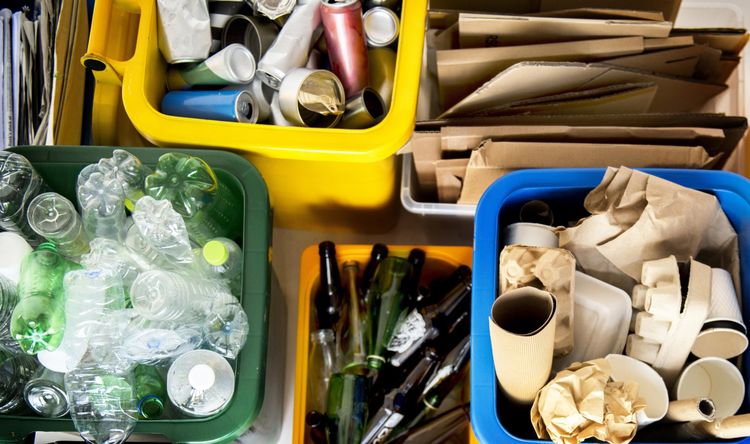
Editor's Note: This article was originally published on 09-06-2022. By Carol Zweep (Packaging Researcher, Conestoga College) Over three million tonnes of plastic waste end up in Canada’s landfills each year. To address plastic waste nationwide, the Canadian Council of Ministers of the Environment (CCME) introduced t he Canada-Wide Strategy on Zero Plastic Waste in November 2018. This strategy, built on the Ocean Plastics Charter, takes a circular economy approach to plastics. This approach aims to keep plastic products and materials in use for as long as possible, closing the loop through reducing, reusing, repairing, remanufacturing, recycling, and composting materials, and by recovering energy at a material’s end of life. While this approach supports a circular versus linear flow, some challenges must still be mitigated throughout a food package’s life cycle. Front-end Design: This involves taking a design approach to packaging that eliminates problematic or unnecessary plastic packaging. Materials and components, such as labels, closures, sleeves, and more, can be selected to ensure that the package can be reused, recycled, or composted. The Consumer Goods Forum’s Golden Design Rules offer guidelines on which plastics to use to maximize the recovery of recyclable materials and increase the value of plastics in the marketplace. Collection: Plastics collection can be challenging, especially in rural and remote communities and residential buildings and businesses. Collection systems based on Extender Producer Responsibility (EPR) programs assist in the convenient and necessary recovery of plastic waste. EPR is recognized as an effective model as it places responsibility on the producer (e.g. brand owners, first importers, or manufacturers) for waste management costs of packaging (vs. on municipalities and taxpayers). This incentivizes producers to make appropriate packaging design changes to support waste reduction, reuse, and recycling. Participation: By raising consumer awareness, the industry can inspire participation in sustainable practices and influence behavioral changes. Examples include providing educational information on recycling to teachers and schools, as well as leading initiatives and waste management campaigns in businesses, organizations and institutions. Sorting and Processing: Technology is evolving to better sort and process recyclable plastics efficiently. Advancements include robotic sorting using artificial intelligence, expansion of facilities for easy-to-recycle products, and scaling solutions including both mechanical and chemical recycling. End Markets: Finding markets for contaminated or hard-to-recycle plastics can be challenging, especially when virgin materials incur lower costs than recycled materials. Diverse measures are required to increase the supply, demand, and quality of recycled plastics. New packaging must meet municipalities’ infrastructure for recyclability and compostability, which varies from region to region across the country. Food and beverage companies must also consider how user-friendly and acceptable the new packaging is, as well as how adjusting the packaging materials or design will impact their product, especially when it comes to food contact safety, the taste or odour the material could impart, and the product shelf-life and package integrity during thermal processing, handling, transportation, and storage.
50 Food & Beverage Programs - Vancouver Island University
Crafting a Career in BC ’ s Wine Industry: VIU ’ s Wine Business Program The Wine Business program at Vancouver Island University is a comprehensive one-year certificate course designed for those passionate about pursuing a career in the BC wine industry. The program combines practical experience with academic learning in viticulture, wine business practices, marketing, and tourism. Program Highlights: As a student, you ’ ll have the chance to immerse yourself in hands-on experiences at local vineyards and wineries, gaining insights into the entire winemaking process. This practical foundation is then complemented by academic courses in viticulture, wine business practices, marketing, and tourism. A standout feature of this program is its flexibility. Whether you ’ re looking to study full-time for a year or prefer a part-time option spread over two years, VIU has you covered. Located in picturesque Nanaimo, BC, VIU provides an ideal setting for your wine education journey. With a curriculum designed to integrate viticulture essentials with business acumen, VIU ’ s Wine Business program offers a holistic understanding of the wine industry. Students can also earn credits that can be applied toward a Bachelor of Business or a Hospitality and Tourism Management program, opening doors to a wide range of future career prospects. The program includes seven courses and focuses on the broader aspects of the wine industry. In addition to viticulture and winemaking, students delve into wine marketing, exporting, and the vital role of wine tourism. C ourses cover a wide spectrum, from wine marketing and appreciation to beverage theory and the management of wine tourism. The program also offers elective courses in consumer behavio u r, entrepreneurship, and festival management . What You’ll Leave With: Upon graduation, a world of opportunities awaits you in BC ’ s wine industry. Whether you dream of managing a vineyard, excelling in wine s ales and marketing, or even opening your own restaurant, VIU ’ s Wine Business program provides the knowledge and skills to make your wine-related ambitions come true. Career options span winery/vineyard management, retail sales, wine marketing representation, hotel management, culinary arts, a gri - tourism development, and s pecial events coordination. V ideo/Social / Media : VIU YouTube Video
AI + Food – Mycionics
This series showcases Canadian foodtech companies that are using AI to solve a wide variety of industry challenges, including improving efficiency, pricing analysis, inventory management, quality control, food safety assurance and more. In this installment , we’re featuring Putnam, ON -based Mycionics. What T hey D o Mycionics has developed a fully automated mushroom harvesting system using novel advanced robotics and automation. The entire harvesting process is optimized through the application of data analytics, machine learning and artificial intelligence. The system , which is highly modular and structured in a way that can be easily applied to other crops and industries , offers mushroom farms a competitive edge against the global labour shortage afflicting the industry. Mycionics is the first company in the world to successfully automate the end-to-end mushroom harvesting process for the fresh market. How T he y’re U sing AI Stefan Glibetic , lead engineer and CTO for Mycionics , says the company’s machine vision system applies a combination of algorithms, including AI, to process the vision data to determine mushroom properties, and how to pick those mushrooms effectively and without damage. The system also capture s environmental microclimate data, such us temperature, humidity and C O 2 , which helps the farmer visualize their growing environment and grow higher - quality mushrooms. In the Media YODL – Robotics in Action
50 Food & Beverage Programs - Durham College
Culinary Mastery at Its Best: A Deep Dive into the Culinary Arts Program at Durham College The Culinary Management program at Durham College offers a comprehensive approach to mastering the art of food and flavo u r. This program focuses on exploring locally grown food while preparing both ethnic and contemporary cuisine. Emphasis is placed on hands-on lab/kitchen time in small class settings under the guidance of expert faculty. Students develop a broad range of culinary techniques and skills, such as butchery, cheese making, baking, pastry arts, and more. Additionally, students learn essential hospitality and business skills, gaining insights into planning, promoting, and managing a food business. Graduates are equipped with unique skills, including artisan meat cutting, cheese production, and preserving, making them highly desirable to employers in various sectors of the culinary industry. Program Highlights: The program is hosted at the W. Galen Weston Centre for Food (WC), which operates under a field-to-fork philosophy and sustainable practices. Facilities include a demonstration theatre, state-of-the-art labs, Bistro ’67, and an urban farm classroom. The first semester offers a diverse range of courses designed to lay a solid foundation. Communications for Business 1 sharpens communication skills tailored for the culinary industry, while Computers for Hospitality merges technology with hospitality management. Culinary Theory I delves into the principles of culinary arts, accompanied by practical Culinary and Baking Techniques . Safety and hygiene are paramount in the culinary world, topics thoroughly explored in Food Safety and Sanitation . The Field Placement Workshop – CSK prepares students for real-world experiences, and I ntroduction to Global Cuisine takes them on a culinary journey around the world. C ulinary Nutrition focuses on the health aspects of food, and Professional Development Strategies I equips students with the skills needed for career advancement. The program is enriched with experiential learning opportunities, including a first-year field placement in the culinary industry, allowing students to apply their classroom knowledge in a professional setting. Students can showcase their skills and gain broader exposure through participation in conferences, competitions, and international gastronomy tours. The fourth semester culminates in a capstone project where students create unique recipes for a program cookbook, contributing to their professional portfolio. T he on-campus restaurant Bistr o ’67 offers various events and employment opportunities, further enhancing the hands-on experience. What You’ll Leave With: Graduates of this program leave with a wealth of opportunities at their fingertips. The program opens doors to a variety of roles in the culinary sector, including Baker, Butcher, Cook, Sous Chef, and Food Sales Representative. Those aspiring to higher managerial positions can aim for roles such as Executive Chef, Kitchen Manager, Pastry/Personal/Restaurant Chef, or Restaurant Manager. Moreover, the program equips budding entrepreneurs with the skills to venture into self-employment, turning their culinary passion into a thriving business. Contact Information : Canadian Applicants : Contact recruitment at 905 - 721 - 3126 or via Live Chat International Applicants : Contact at 905 - 721 - 2000 ext. 7697 or via Live Chat V ideo/Social/Media : YouTube Video 1 YouTube Video 2

#AskLavina - How Innovation Centres can Help Food Businesses Grow (July 2024)
In addition to being CFIN’s Regional Innovation Director for BC and Yukon, Lavina Gully is a food scientist and product developer with almost two decades of experience helping food and beverage companies innovate. In this series, Lavina answers questions from CFIN members on everything from product development, R&D, food industry careers, manufacturing best practices, and co-packing — just to name a few! If you have questions for Lavina, you can reach out to her directly and we can answer your question in next month’s mailbag. This month, Lavina answers your questions about identifying the right ingredient suppliers and what innovation centres can do to help food businesses develop new products and bring them to market successfully . Q: What strategies can food businesses use to narrow down their ingredient supplier options to find the best fit for their specific needs and values? There are many — o ften con flict ing— variables to consider when sourcing ingredients , including food safety, nutrition, quality, price, location, minimum order quantities, and much more . While there is no shortage of ingredient suppliers out there to choose from , identifying the ones that will genuinely meet your uni que operational needs and complement your brand identity requires some legwork. To narrow the list of potential suppliers into something more manageable , start off by identifying the ones that share your brand’s core values. For exampl e, if sustainability is core to your brand, it should also be core to your supplier , in both the characteristics of the ingredients themselves and how the supplier conducts their own operations . C o llaborating with suppliers adhering to the same certification programs as you ( i.e. Organic, Fair Trade, or B Corp certified) is a logical first step to ensure the ingredients going into your products are aligned with your brand values. Once you have a shortlist of value-aligned suppliers, it’s time to assess their operations to see if they will be a good match . Details you will want to learn more about include: M inimum O rder Q uantities (MOQs) : A mismatch between the scale of your operation and that of your suppliers can create unnecessary headaches. For example, a large, global ingredient supplier might have MOQs far above what your business requires , while a small regional supplier may struggle to fulfill orders if you’re working with larger ingredient quantities. Doing some initial calculations about your quantity needs can help inform these discussions and ensure compatibility. Lead Times: This goes hand in hand with MOQs. Lead time s for processing and deliv ering ingredients needs to line up with your own production schedule so you are not constantly managin g shortages or a surplus of perishable ingredients. Flexibility: Some suppliers ar e willing to customize sizes or specifications to fit your unique needs . But many take a what is essentially a “ my way or the highway ” approach — you will have to adapt to their processes and standards, not the other way around . Flexibility can co rrelate to higher cos t s , but often results in reduce d waste , improve d operational efficiency , and higher-quality products . W eigh these trade-offs carefully. Retailer or Client Specification s : Your clients may have specific procurement requirements that ultimately dictate what you need from your suppliers. This includes any ingredient restrictions or sourcing limitations. Be sure that your suppliers are aligned with any re quirement s from your clients or intended place of sale . After considering these factors, your shor tlist of viable suppliers will be whittled down to th e real contenders — this is where you should acquire samples and evaluate ingredient performance firsthand. You can u se spec sheets to guide you here, but don’t rely on them entirely. I’ve seen businesses create problems f or themselves because they made ingredient decision s going solely off spec sh eet s without scrutinizing the details closely enough. You often need to see, taste, and work with an ingredient yourself to confirm that it will be a good match. Try to c onfirm with each supplier whether the ir sample is from a production batch or a lab sample . I t can be worthwhile to request a sample most representative of the production batches you would be receiving i f you do pursue a partnership . When you arrive at your top one or two potential suppliers, it’s time to really dig in and complete your due diligence. Conduct a site visit to e valuate the supplier's facilities and request recent audit scores. This documentation will provide insights into their operational standards and quality control measures , limit ing the potential for unpleasant surprises down the road . Putting in the work to find alignment with your ingredient suppliers not only sets you up for short term success , it also la ys the foundation for your business partnerships to flourish over years, or even decades, of worki n g together . This is another reason to strive to find value-aligned suppliers—they will understand your vision and be more receptive to joint development , collaborative projects , and flexible , mutually beneficial partnership agreements as you grow your business. Q: I heard about the upcoming opening of the Food and Beverage Innovation Centre in Vancouver. How can innovation centres support food entrepreneurs like me with new product development and market entry? I had the opportunity to co-host a tour of the new FBIC facilities earlier this month, and I’m excited that BC finally h as its ow n food focused innovation centre . Innovation centres are an incredible resource for food entrepreneurs. Many operate on a sandbox concept — they are essentially a big playground where you can experiment with state-of-the-art equipment without making huge capital investment s yourself . This setup is perfect for testing concepts and validating product ideas before committing to full-scale production. But pairing cutting - edge equipment and facilities with food science expertise is what makes centres like the FBIC truly invaluable . Staff r esearchers and technicians can offer support and advice on formulation, product ion techniques, and market trends. They will act as a sounding board for your ideas and help refine them into market-ready products. Innovation centre staff can also provide crucial insight in to food safety and will guid e you through potential risks and regulatory requirements. This support is particularly helpful when responding to new opportunities or external requests, allowing you to develop and market new products quickly. Access to sophisticated equipment and industry experts is a game-changer , especially for food businesses working to establish themselves or scale their operations . While shared-use kitchens are excellent resources for fulfilling small-scale production needs, innovation centres are equipped to push product development and consumer experiences forward , helping businesses stand out in a hyper-competitive market. Finally, i nnovation centres may also offer access to funding and grants. They can connect you with financial resources to support your research and development efforts, making it easier to test and validate innovative products , and to successfully bring those products to market. The FBIC is slate d to open later this year, and it will be the first facility of its kind in BC. There are o ther food innovation centres operat ing on a similar model already supporting businesses throughout Canada. Here are a few to check out: The NAIT Centre for Culinary Innovation (Edmonton, A B ) The Saskatchewan Agri-Food Innovation Centre (Saskatoon, SK) The Guelph Food Innovation Centre (Guelph, O N ) The Food Innovation & Research Studio ( Toronto, O N ) The Perennia Innovation Centre (Bible Hill, N S )
Food Day Canada: How to Eat Local — And Why it Matters
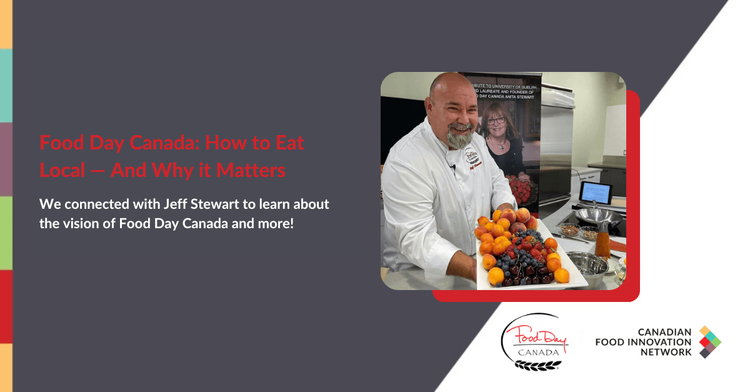
Food Day Canada is a coast-to-coast grassroots movement spearheaded by perhaps the most culinarily inclined family in the entire country. It began with Anita Stewart , a beloved and tireless champion of Canadian food and agriculture , as a way to support Canadian farmers and celebrate the country’s diverse ingredients, unique cuisines, and storied agri-food history . Anita’s sons Jeff, Mark, and Paul Stewart —all trained chefs and Canadian food advocates themselves—continue to grow and sustain their mother’s vision of an annual Canadian culin ary celebration as Board Members of Food Day Canada. We connected with Jeff to learn more about the vision of Food Day Canada, what 's in store for this year’s event, and how organizations like CFIN can help nurture a diverse, delicious, innovative, and sustainable Canadian food landscape . You can watch Jeff answer our questions in this video or read the transcribed interview that follows (edited for clarity). Be sure to also explore Food Day Canada’s list of local restaurants, events and markets to help you dine and celebrate Canadian for this year’s event , happening next S aturday , August 3 .
50 Food & Beverage Programs - Conestoga College
Shaken, Stirred, and Educated: The Comprehensive Journey Through Conestoga's Beverage Management Program The Conestoga College 14-week intensive bartending program is designed to blend hands-on practice and theory with professional development skills for a leadership role in the hospitality industry. It offers a comprehensive study of mixology, wine, and beer, and is hosted in a state-of-the-art mixology lab. The program includes an immersive field placement opportunity with top industry partners. Program Highlights: As part of Level 1, students delve into an array of subjects. The curriculum includes a Field Placement, allowing students to apply their learning in real-world settings. For those with a penchant for hops and malt, The World of Beer course offers a deep dive into brewing and beer culture. Similarly, Introduction to Spirits unravels the complexities of distilled beverages. Understanding financial aspects is crucial in the beverage industry, and the Beverage Cost Control course equips students with the necessary budgeting and financial skills. Mixology, the art of crafting drinks, is explored in-depth through Mixology I and II , where students learn the intricacies of mixing, shaking, and presenting a variety of cocktails. Complementing these skills, the Customer Service course ensures that students can provide an exceptional experience to patrons. The World of Wine takes students on a global tour of vineyards, teaching them about different grapes, regions, and wine-making techniques. Safety is paramount in the food and beverage industry, and the Safety in the Workplace course educates students on maintaining a safe and hygienic environment. To round off their education, students are trained in essential industry certifications, including SmartServe & Food Handlers. What You’ll Leave With: Upon completing this program, graduates emerge as well-rounded professionals. They possess not only the ability to effectively communicate with customers and staff but also the practical skills to perform beverage and cash calculations. Their training in maintaining sanitation and safe food handling practices ensures a safe dining environment. C ontact Information : Shannon Rea : srea@conestogac.on.ca Academic School : Hospitality & Culinary Arts Canadian Admissions Contact : admissions@conestogac.on.ca V ideo/Social/Media : Conestoga College Youtube Video Conestoga College Additional Youtube Video