Inside SIAL Canada 2026: Driving Food Innovation Through Connection and Collaboration
CFIN had the honour of taking a bite out of SIAL Canada 2026 in Montréal 🍎—connecting with partners, members, and industry leaders shaping the future of food innovation across Canada and beyond. Representing CFIN on site were CEO @Dana McCauley and @Julie Daigle , Regional Innovation Director (Quebec), who engaged with the ecosystem throughout the event. Their presence reflected CFIN’s ongoing commitment to strengthening Canada’s food innovation ecosystem and supporting high-potential foodtech ventures. Attendees could also catch Julie as a Foodtech Focus expert at the SIAL Canada Expert Hub, where she connected directly with innovators and shared insights with the community. Dana also took the stage as part of the Dairy Talks program, contributing to a forward-looking discussion on innovation as a driver of market leadership in the Canadian dairy sector. Her session explored the shift from incremental product development toward a broader innovation mindset—highlighting next-generation ingredients, value-added dairy formats, new go-to-market strategies, and the role of Industry 4.0 technologies like AI, robotics, automation, and digital supply chains in strengthening productivity and global competitiveness. A key highlight of the week was CFIN’s involvement in the 7th edition of the Startup Pitch Competition, held on April 30 on the Food & Bev Connect stage. Julie Daigle participated as the President of the Foodtech jury, joining a panel of industry experts evaluating promising entrepreneurs from the Startup Village. Beyond the competition, the Startup Pitch stage served as a strategic platform connecting entrepreneurs with buyers, investors, and key decision-makers across the agri-food ecosystem. A standout moment for the CFIN community was the recognition of Maia Farms, a CFIN member and funding recipient, which earned the Gold Prize in the foodtec h competition 🍄🏆 CFIN’s presence at SIAL Canada underscored the momentum of Canada’s food innovation sector and the value of convening the ecosystem to accelerate ideas from concept to commercialization. 📖 Explore more from SIAL Canada 2026 R elive the stories, innovations, and key moments captured throughout the show in the official SIAL Canada Daily: SIAL Canada Daily – 2026 Edition (Photos Courtesy of SIAL)
Community Manager-
Five Years of CFIN: A Letter to the Network
Thirty years ago, I worked as a chef in the kitchen of one of Canada’s top restaurants standing should er to shoulder with people who ca red about the sensory experience of food above all else . Our tech stack was al most all analog and , to be honest, we didn’t give our ordering system or the way we did inventory a lot of thought. My career broadened over time , and I ’ ve also held roles where I developed recipes at Canadian Living and wrote about food trends; built innovation strategies and products for national brands, founded a business incubator, and ran a venture creation office at a prestigious Canadian u niversity . Food was always the thread , and technology was always present but in most of the food focused businesses I’ve worked for, it was taken for granted, and creativity and hard work were what drove the businesses forward. While smart people with great ideas are essential to food business success, it’s not enough to be competitive in today’s world. Old ways of running restaurants, innovation labs and food and beverage processi ng businesses can’t compete internationally or absorb the trade shocks that have become commonpla ce in recent history. That’s why I feel l ik e CFIN is the perfect place for me to be today and why we’re adding dozens of new members per week. When CFIN was created in 2021, the mandate was intentionally broad : cata lyze Canadian food innovation with funding , build community, connect an ecosystem that had been operating in silos for decades. The funding programs took shape quickly. Since 2022, we’ve awar ded $23.3 million to 133 projects across six program s. For every $1 CFIN invested, our members committed $7.65 of their own capital toward innovation. This leverage ratio of nearly 8-to-1 has unlocked over $140 m illion in private sector spending on R&D and capital infrastructure. The other work was harder to define . What do "build community" and "connect an ecosystem" mean in practice for a sector span ning startups, processors, researchers, investors, policymakers, and operators spread across this vast country ? Th at question didn't have a tidy answer. As a result , fostering and serving this network was (and remains ) an exercise in innovation itself : something new to be built , and then tested, adjusted, and iterated upon , ad infinitum . I’m immensely proud of what we’ve built so far . A team of Regional Innovation Directors who've supported more than 2,200 organizations, brokering the introductions that became commercial partnerships, strategic investments, leadership hires, and research collaborations. A digital platform , YODL, connecting Canada's food sector across industry silos and bridging interprovincial barriers . The first comprehensive analysis of Canadian foodtech . A network of 8,500 members from every province, every part of the food value chain, every stage of business . On any given week, our community is discussing topics ranging from precision fermentation bioreactor designs and funding stacks to food packaging labeling regulations and export strategies, all in the same space. Members benefit from purpose-built tools and resources — like our Funding Finder that aggregates food and beverage funding opportunities across the country and a growing library of original sector research and analysis — alongside direct access to our Regional Innovation Directors. Canada has strong regional funders, accelerators, trade associations, and tech transfer offices, each doing necessary work in a defined lane. What this sector didn't have was a place where the conversation s , the tools, and the connections all showed up at once — where the range of problems and the range of capabilities were dense enough that the right solutions could emerge . That's what CFIN has built. That foundation is important because the next five years will be even more dynamic, and often more challenging, than the last five . To keep pace and flourish in an increasingly volatile world, Canada's food sector needs to modernize faster and more strategic ally than ever before . Trade disruption is dramaticall y reshaping supply chains . L abour constraints are compounding a productivity gap that was widening long before tariffs became front-page news. Climate pressures are intensifying. Food 4.0 — a tech-enabled food s ector that's more collaborative, productive, resilient, and competitive — is the framework CFIN is building toward, and the case for it gets more urgent by the quarter. I ’m confident that we’re up to the task . Five years ago, Canada's food innovation ecosystem was fragmented, underleveraged, and often invisible to the investors, operators, policymakers, and media who needed to see it. That's no longer true. The capacity to respond to the challenges ahead is here. Not in any single program or policy, but in the breadth of this network — the founders , processors , researchers , and investo rs who are hungry to innovate and build a better Canadian food sector . My own wide-ranging path through the food sector taught me that no single role ever showed me the full picture. It took working across kitchens, labs, newsrooms, boardrooms, and startups to understand how innovation really moves through this industry — and where it get s stuck. CFIN was built on the same insight. A sector this complex, facing challenges this urgent, needs more than funding or advice or connections in isolation. It needs all of them in the same room. That's what we've spent five years building, and I'm betting the next five will prove its value at a scale none of us can yet imagine. Thank you for being part of it. Dana McCauley, CEO, Canadian Food Innovation Network
Community Manager-
How BC is Becoming a National Foodtech Hub
Editor's Note: This article was o riginally published in the Vancouver Tech Journal on March 13, 2026 The province has a diverse food processing industry, world-class research facilities, and a deep bench of tech talent — everything a foodtech ecosystem needs to thrive. Foodtech builds the software, automation, and applied science for how food gets processed, manufactured, packaged, distributed, and sold. The industry behind it is enormous — food and beverage processing alone is Canada's largest manufacturing sub-sector , bigger than automotive, bigger than aerospace. It's a serious market, and in British Columbia, it's growing fast. But if you work in the province's broader tech ecosystem, you might not even know that. Foodtech hasn't traditionally drawn the same attention as sectors like cleantech or enterprise SaaS despite being a comparable market in scale and complexity — and one where demand for new technology is accelerating fast. What BC brings to the table BC's food processing sector is substantial — over 3,200 companies producing roughly $12.6 billion in value-added products annually. And it's being treated as a strategic priority. The province has funded a network of shared food processing hubs, UBC just opened a Food and Beverage Innovation Centre with pilot-scale production labs that processors and startups previously had to leave BC to access, and SFU's BC Centre for Agritech Innovation is partnering directly with SMEs on cost-shared R&D. At the same time, much of what the food industry needs is already being built in BC for other thriving tech sectors. Process automation, energy management, supply chain software, safety and traceability systems, data-driven quality control — these are cleantech and software problems applied to production floors and distribution networks. The talent, research base, and trade infrastructure to support a serious foodtech cluster are all here. A different kind of tech sector Foodtech doesn't work like enterprise SaaS or consumer tech. Processors and manufacturers adopt slowly and carefully, because failure is expensive in ways that go beyond lost revenue — a food safety issue, a botched line integration, a regulatory problem. Sales cycles run in quarters. The investor community that understands food is small and specialized. And the industry's own networks run through trade associations, existing supply relationships, and sector-specific events that sit well outside the broader tech community's orbit. None of this means foodtech is closed off. It means that if you want in — as a founder, investor, developer, or potential partner — you need a way to access the conversations, the deal flow, and the operating knowledge that don't surface through the usual channels. The Canadian Food Innovation Network The Canadian Food Innovation Network is a national not-for-profit, established in 2021 that functions as the operating infrastructure for Canada's foodtech sector. CFIN runs cost-shared funding programs that help companies de-risk R&D and move technology into commercial settings. Since launch , the organization has awarded over $22 million to 122 Canadian foodtech projects, matched by $25 million in industry co-investment. Those funded companies have generated $90 million in economic impact, created over 355 jobs and co-op placements, and attracted more than $82 million in follow-on investment. The network's 8,000-plus members include food processors, technology companies, ingredient suppliers, retailers, researchers, and investors — connected through YODL, CFIN's member platform, and supported by Regional Innovation Directors embedded across the country, who work directly with members to broker introductions, navigate funding, and connect emerging technology with the processors and buyers who need it. CFIN also produces the sector's most detailed intelligence . The Foodtech in Canada 2025 Ecosystem Report mapped investment flows, identified sector strengths, and gave both companies and investors a clearer picture of where the Canadian foodtech market stands. And then there's Foodtech Frontier , CFIN's annual program identifying the country's highest-potential foodtech companies. The inaugural cohort of 35 winners included eight BC companies. For investors, it works as curated, vetted deal flow in a sector where sourcing is otherwise hard. For the companies, it's structured national visibility. Plug into Canada’s foodtech ecosystem If you work in technology or investment and you've been curious about the food sector, then signing up for a free CFIN membership is the best place to start. Members get access to funding programs, sector intelligence, a national innovation community, and regional team members that know the BC landscape specifically.
Community Manager-
Other Articles
RID Week: Regional Forecasts For 2023
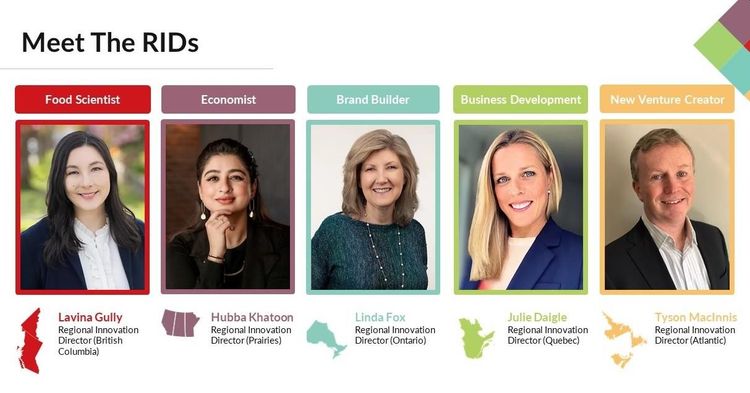
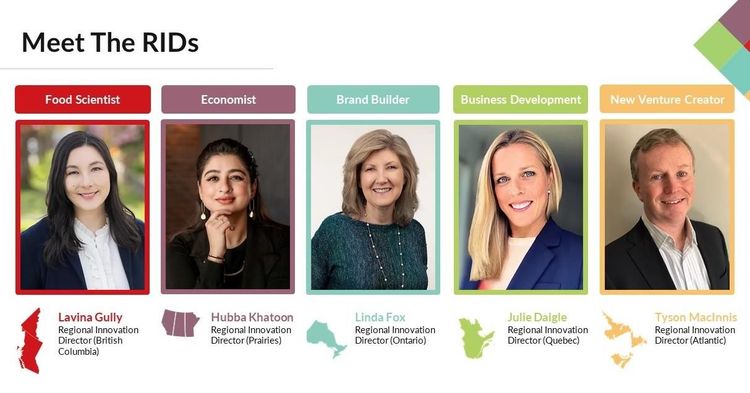
We asked our five Regional Innovation Directors (RIDs) to reflect on what innovations from their regions they’re looking forward to the most in 2023. Here’s what they told us: Lavina Gully, BC and Yukon Growing our YODL community, launching new tools for our members and finding ways to engage with students across various disciplines – there are so many connections to food! Hubba Khatoon, Prairies Exploring new novel food innovations. Some that I am really excited about are air and CO 2 protein, adaptogens, personalized nutrition, and healthy non-alcoholic drinks! Fostering regional industry networks to understand food industry needs and supporting them through collective collaboration. Championing for high-growth food tech companies in Prairies and Canada. Linda Fox, Ontario Following up with some of CFIN’s grant recipients from this past year. The projects are so diverse, and touch so many different parts of the food business; I can’t wait to see the progress. And to see what’s next! We have the FoodTech Next pitch program coming up in February, which is a completely new type of program for us, so pretty excited to participate in that. I thoroughly enjoyed being involved in the robotics event we produced at CFIN and I’m looking forward to our next event. Julie Daigle, Quebec Meeting new companies, discovering and supporting awesome innovations through our funding programs awesome, bringing people from our industry together through YODL, and working with my team every day to make Canada a top leading country in food tech. Tyson MacInnis, Atlantic Canada Over the next year, I look forward to supporting innovative companies in Atlantic Canada to advance their solutions through CFIN and other funding streams, help companies find collaborators by working closely with our RID team across the country, and contribute to launching new initiatives that will help food innovators to grow and scale their businesses.
Community Manager-
RID Week: Regional Wrap-up 2022
We asked our five Regional Innovation Directors (RIDs) to reflect on highlights from their regions in 2022. Here’s what they told us. @Lavina Gully , BC and Yukon Q: What were the top highlights from your region this year? Seafood Innovation Center Urchin Tank Event and getting back to seeing people in real life. Q: What have you enjoyed the most about working with CFIN in the past year? Meeting food tech startups and seeing all the cool hardware being built, I love machinery and equipment! Q: Give a shoutout to a member in your region and tell us why we should know about them. Hard to pick just one, but I’d like to give a shoutout to the Northern Analytical Lab Service (NALS) at the University of Northern BC. NALS is an Environmental and Climate Solutions Innovation Hub, and supports the development of new, sustainable packaging for the food industry through accredited testing for compostable and biodegradable materials. Their passionate and knowledgeable team serves Northern BC but their services are available to anyone in Canada. @Hubba Khatoon , Prairies Q: What were the top highlights from your region this year? Recognizing the interconnectivity in Canada’s food innovation ecosystem, introducing the significant role of CFIN to the Prairies, and developing Regional Industry Networks and collaborations for collective food industry growth. Q: What have you enjoyed the most about working with CFIN in the past year? Collaboration. I thoroughly enjoyed working with other fellow food enthusiasts in Alberta, Manitoba and Saskatchewan to advance food tech innovations. It’s quite rewarding to provide food companies with local support – understanding their individual growth gaps and connecting them to national solutions that best fit their needs. Q: Give a shoutout to a member in your region and tell us why we should know about them. I want to give a shout out to @Chris Bunio , co-founder at TheoryMesh . His team is building a digital platform to track data and provide traceability in the food supply chain. That’s pretty cool on its own. What’s even cooler is that he ensures that through YODL, he is well connected to producers, food processors, and consumers who can utilize this technology for traceability and sustainability. @Linda Fox , Ontario Q: What were the top highlights from your region this year? Aside from getting a high-level education every day, it’s tough to pick. It has been very exciting to spend time at several of Ontario’s post-secondary institutions to see how they are approaching innovation in education. There are some truly extraordinary people and programs out there who will propel Canada forward. Spending time with and at some of CFIN’s members’ companies is another highlight. These are some of the hardest working – and busiest – people around and they are so generous with their time and their knowledge (see “every day high-level education” above). One of our biggest awards was given to Gastronomous , an Ontario member! Also, I’ve been at several events and conferences and haven’t spilt any food or beverage on anyone (did I just jinx myself?)! Q: What have you enjoyed the most about working with CFIN in the past year? I like to think of myself as a lifelong learner, and I hope that expression hasn’t become trite…but there is nothing like a new job to remind you of what you don’t know, and I feel like I’m getting a handle on a different part of the food business than I was previously familiar with. The number of possible programs that are out there, be they government funded/funding, mentorships, academia, or associations can be overwhelming. Putting that together with my past food and branding experience has been very satisfying when I’ve been able to help make those connections for our membership. Q: G ive a shoutout to a member in your region and tell us why we should know about them. I’ve met so many incredible people. The above mentioned Gastronomous , Vivid Machines , Food Cycle Sciences , Index Biosystems , Evolved , each of these members have amazing projects in food and beverage, each from a different part of the industry, but I find it’s their collaborative nature that truly sets them apart. Then there are the other types of members (academia, other funders, suppliers to the industry, and so on) – Niagara College , Fanshawe , George Brown , Giraffe , VentureLAB , VenturePark Labs , AGS , Bioenterprise , and GFIC . I’ve missed so many, but I hope they all know how important they’ve been to my first year with CFIN. @Julie Daigle , Quebec Q: What were the top highlights from your region this year? Besides shows we attempted, events we hosted, and exposure we gained throughout this year, many good things happened in Quebec in 2022. One that keeps fascinating me is seeing the reaction from new people I meet when they learn about CFIN’s mission and YODL. It is so refreshing and rewarding to support companies from Quebec to innovate and collaborate. Q: What have you enjoyed the most about working with CFIN in the past year? My teammates, the drive, and the pace that we have as a team towards reaching our common goals. We are building this incredible network that brings together food innovators across the country like never before. It is truly incredible to be part of. Q: Give a shoutout to a member in your region and tell us why we should know about them. This is a difficult question to answer with only one shoutout! I’ll give one shoutout to Lysanne Gingras , co-owner of Chickumi in Quebec City. Besides launching the world’s first yellow beet crusted hummus sticks this year, the products also won the 2021 Food Innovation Award from the Conseil de la transformation alimentation du Québec (CTAQ) in the “new or improved products” category. Lysanne is eager to implement automatization and AI in their manufacturing processes. I’ll give another shoutout to Graham Campbell from Relocalize , a Montreal-based company which won a top project award at the Clean50 awards for environmental innovation and accomplishments including making the world’s first autonomous micro-factory for food and beverage a reality. @Tyson MacInnis , Atlantic Q: What were the top highlights from your region this year? I was initially drawn towards joining CFIN based on its mission and its people. Looking at the past year, these themes continue to hold true. Highlights for me over the past year include: getting to work, learn, and share some laughs with the amazing team at CFIN; growing our membership to over 200 members in Atlantic Canada; and expanding my network to include a wider range of innovative food tech entrepreneurs and support agencies in our region and across the country. When you consider major challenges such as climate change, health and wellness, and workforce demographics it’s never been more important for our food and beverage sector to embrace new technologies that help address these issues and maintain competitiveness. Q: What have you enjoyed the most about working with CFIN in the past year? It’s hard to believe that we’re at the end of 2022. I started with CFIN in late March a couple days after testing positive for COVID. Not exactly the way anyone wants to start a new position, but it was a temporary set back and it’s been onward and upward since – except for losing power for two weeks during Hurricane Fiona, but that’s another story! Q: G ive a shoutout to a member in your region and tell us why we should know about them . We have so many innovative companies in Atlantic Canada achieving local, national, and international success. A few companies that come to mind include technology focused innovators such as Smartskin , SmallFood , Area 52 , and Milk Moovement ; upcycling innovators such as North Taste Flavourings , 3F Waste Recovery , and Outcast Foods ; and branded product innovators such as Millenia Tea , Made with Local , Upstreet , Sum Good Foods , and Honibe .
Community Manager-
The Tablesetter – December 19, 2022
Happy Monday CFIN members! Here’s your weekly heads up on what’s happening on YODL and around the food world this week. This week it’s RID week. Get to know our Regional Innovation Directors a little better as we ask them to name their highlights of 2022, what innovations they're looking forward to in 2023, and what's on their holiday menu! The YODL Menu! Monday: The Tablesetter – December 19, 2022, and it’s RID week! Tuesday: Regional Wrap Ups for 2022 Wednesday: Regional Forecasts for 2023 Thursday: Holiday Menus from CFIN’s Regional Innovation Directors Friday: News File Something to Celebrate December 21, 2022 is National Coquito Day! Coquito is a sweet Puerto Rican drink enjoyed and given as a gift during the holiday season. Sometimes compared to eggnog, coquito is made with milk, cream of coconut, cinnamon, cloves, nutmeg, and rum, and can be made and refrigerated before serving topped with ground cinnamon. Food Facts McCormick has launched its 2023 Flavor Forecast . The company is also sharing its first Flavor of the Year: Vietnamese x Cajun Style Seasoning. Here’s a few more highlights from the report: Full-flavoured fats are back. French cuisine outside of fine dining (McCormick refers to it as everyday French) will be big in 2023. Multi-sensorial, layered offerings of heat and flavour will continue to be popular. Other flavours that will combine heat with flavour in dishes next year include Yuzu Kosho, Chongqing Mala Seasoning, Seeni Sambol, Salsa Macha, and Tom Yum Soup Base. Happy YODLing!
Community Manager-
News File – December 16, 2022
Each Friday we’ll bring you a roundup of news from CFIN, YODL and around the food world. As seen on YODL Check out this week’s most viewed discussions: Beverage sales industry | question | Open Forum (cfin-rcia.ca) Oatbox to manufacture an oat milk base for eastern Canada and Northeastern U.S. | Open Forum (cfin-rcia.ca) Creating circular economy from food waste streams (Post farm produce and food scraps) | Open Forum (cfin-rcia.ca) Around the Food World Fragrance and taste company Firmenich has announced dragon fruit as the flavour of the year for 2023. Mondelēz is working on sugar and fat reducing technology for chocolate. Believer Meats has broken ground on what will be the world’s largest production facility for cultivated meat. Did you Know? The recently released Change of Taste survey from meal kit company Goodfood shows that Canadians are dealing with food inflation and supply chain issues by opting to eat at home more frequently than before the pandemic. The survey found: Only 6% of consumers say they’d rather go out to eat or get takeout on a typical night; 78% say they’d prefer to stay in. 46% of consumers say they eat breakfast and 30% eat lunch at home more often now, compared to 41% and 27% pre-pandemic. More than 33% of consumers say higher food costs will impact their holiday menu, and 50% of consumers say they worry that their holiday menu will be impacted by ingredient shortages. 91% of consumers say they’re prepared to pay more for local products; 66% say they’d spend more for food with a lower carbon footprint; and 78% say they’d spend more on food that is sustainably sourced. 86% of consumers say they’d be willing to pay more for food that’s good for them.
Community Manager-
2022's Top Online Shopping Articles
Offering online options for customers has become a necessity for food businesses, from manufacturers to foodservice operators and grocers. This year we've looked at how consumers have permanently changed their shopping habits when they're looking for food and beverages, and how food operators are responding with mobile apps, service partners, and automated technology. In case you missed them, here are our top articles on online food sales. The Rise of Food Apps New Pathways to the Pantry Are Screens the New Stores? Shop to the Future Roundtable: Consumer Demands, Technology, and Changing Access to Food The Future of Ecommerce
Community Manager-
Cybersecurity and the Food Industry - Ransomware 101
Community Manager-
CFIN Funded Projects - Company Profiles
CFIN supports Canadian food and beverage companies by providing funding opportunities for innovation. Here are the companies which have successfully applied for and received funding, organized by program. Ready to access funding for your innovative initiative? Click here to find out more about CFIN’s funding programs. June 9, 2022 - Food Innovation Challenge Gastronomous August 3, 2022 - Innovation Booster Henry’s Tempeh Inc. Index BioSystems Nutrimeals Trendi Tech November 3, 2022 - Innovation Booster Cascadia Seaweed Escarpment Laboratories Forward Water Technologies PLAN Automation Inc. Suppli January 17, 2023 - Food Innovation Challenge BioShur Earthware Reusables Liven Proteins Rapid Aid Corp. Saltwinds Coffee Company Smallfood TheoryMesh Vivid Machines February 16, 2023 - FoodTech Next Program App8 Incorporated BetterCart Analytics CleanBands Cyberworks Robotics Relocalize Inc. March 22, 2023 - Food Innovation Challenge (Plastics) Copol International Ltd. Food Cycle Science Corporation. May 30, 2023 - Innovation Booster Program CarbonGraph Cibotica Freshline Impactful Health R&D New School Foods September 19, 2023 Food Innovation Challenge Program Verschuren Centre Myo Palate October 24, 2023 Innovation Booster Program Cronometer Software Biofect Innovations Psigryph, Inc. Millennia TEA Fresh Prep Foods Tait Labratories December 5, 2023 - Food Innovation Challenge Program Crush Dynamics Media Coverage: TechCouver , Business in Vancouver , Accelerate Okanagan , Food in Canada January 29, 2024 - FoodTech Next Program Index Biosystems Harvest Moon Foods CanDry Technologies Real Life Robotics DeepSight Réalité Augmentée Renaissance BioScience Corp. Maia Farms Inc. RFINE Biomass Solutions Inc. Media Coverage: BC Business , TechCouver , Betakit , Food in Canada, Canadian Manufacturing , Food Engineering March 13, 2024 - Innovation Booster Program GreenCo Robots Inc. Cheffer Technologies Inc. Profillet Dispension Industries Inc. Transport Genie Ltd. JAKS Automation Inc. Media Coverage: TechCouver, Food in Canada , Food Engineering
Community Manager-
The Tablesetter – December 12, 2022
Happy Monday CFIN members! Here’s your weekly heads up on what’s happening on YODL and around the food world this week. The YODL Menu Monday: The Tablesetter – December 12 Tuesday: A Collection of CFIN Member Profiles Wednesday: Webinar– Ransomware in the Food Industry (VIDEO) Thursday: Regional Highlights from 2022 Friday: News File Something to Celebrate December 15, 2022 is National Tea Day! According to the Tea & Herbal Association of Canada , Canadians drink eight cups of tea annually on a per capita basis, and 55% of consumers drink at least one cup per week. Each year $349 million worth of tea is sold in grocery stores across the country. Almost half of consumers (48%) say they prefer black tea, with Darjeeling, Assam and Ceylon mentioned as the most popular varieties. Food Facts According to Nourish Food Marketing’s 2023 Trend Report: The Future is Transformative , Canadians are eating less meat and adding more plant-based foods for many reasons, including climate change, animal welfare issues, affordability, and a desire for more sustainable food choices. Citing Mintel statistics, Nourish found that among global consumers: 33% of consumers considered themselves carnivores in 2021, compared to 28% in 2022. 49% said they were omnivores in 2021, compared to 51% in 2022. 10% considered themselves to be flexitarian in 2021, compared to 13% in 2022. The number of consumers who considered themselves pescatarians, vegetarians and vegans in 2021 were 2%, 3% and 1% respectively. Those numbers didn’t change in 2022. Happy YODLing!
Community Manager-
News File – December 9, 2022
Each Friday we’ll bring you a roundup of news from CFIN, YODL and around the food world. As seen on YODL Check out this week’s most viewed discussions: Brewery and solar power | Open Forum (cfin-rcia.ca) 2022 food industry problem and 2023 outlook? | Open Forum (cfin-rcia.ca) Beverage Co-Packing/Production - Partner with Us! Beer // Wine // Spirits // CFIA // SFCR | Open Forum (cfin-rcia.ca) Around the Food World NielsenIQ’s Carman Allison shared his views on consumer spending in his presentation “ Gauging a Consumer Recession ” at the recent GroceryConnex show. Restaurants Canada is calling for nominations in its annual Awards of Excellence for the foodservice sector. MeliBio has produced a plant-based honey for foodservice. Did you Know? According to Restaurants Canada , annual commercial foodservice sales in Canada are forecast to grow to $82.6 billion for 2022, reflecting a strong rebound in consumer spending this summer combined with higher menu prices. However, adjusted for menu inflation, real sales are still 4.4% below pre-COVID levels. Sales in the quick-service restaurant sector will hit $37.9 billion in 2022, representing just a small jump when adjusted for inflation. Meanwhile, sales in full-service restaurants are up 5.7% compared to 2019, although real sales are 6% lower than pre-COVID levels. The organization predicts that foodservice sales will increase by 5.7% in 2023 to $87.4 billion. While that number represents a 13.4% increase compared to 2019 sales, real sales adjusted for menu inflation are expected to still be 4% below pre-pandemic levels.
Community Manager-
Roundtable: How should we view plant-based foods?
YODLers have had a lot to say when it comes to plant-based foods, and recent discussions on YODL have received record views and comments. We invited CFIN members to participate in a virtual roundtable to hear more on the issue. Participants Sophie Beauchemin , La Milanaise Lavina Gully , CFIN regional innovation director, BC/Yukon James Street , director, business development, Protein Industries Canada Q: Should plant-based foods be sold alongside vegan products, meat products, with fresh produce, or in a separate area? Sophie Beauchemin: The product needs to be where the customer will find them. So, depending on which customer you are looking to sell to, the product should be in that area. If it can, it should be in both areas. Personally, I wish to find all plant-based products in a plant-based section, which is much easier to find. James Street : I feel that the plant-based meat category needs its own area. Adjacent perhaps, but distinct. Retail has had success identifying space for gluten free and local. It is very dynamic – retailers would benefit from taking a longer view and recognize that consumer adoption needs some time – dedicate some space to help customers become familiar and then begin adjusting based on sales. I recognize space is limited (I built and ran my own grocery store) but expectations need to be realistic – we are still a ways from figuring this out, adoption rates are still low. Vegetarians and vegans are unlikely to explore the meat section to find a plant-based alternative – why force them to do it? Space is ultimately given to those brands and products that generate sales, which further compounds the risks with new, plant-based products. As we see overall adoption increase, stores will be happy to dedicate more space and effort. It’s a classic chicken and egg scenario which suggests an ebb and flow dynamic as stores/brands make an investment in space, contract a bit and reposition based on the learnings, then invest again, learn and adjust. Jumping to a predetermined “plan-o-gram” that instantly boosts sales is unrealistic. This is still a long game. We need to spend more time experimenting and analyzing consumer behavior before they get to the till. Q: How does the end user affect product development, distribution, retail location? Sophie Beauchemin: It affects everything. Lavina Gully: Understanding the need states of the end user will help to create a clear and strategic product brief that zeroes in on the right positioning. Prioritize what is most meaningful and what your research shows will drive purchase intent. Be mindful of building too many features into a product and over-engineering it – you can’t be everything to everyone. Consumers may initially be tempted by claims, but if the product doesn’t taste good, they won’t repurchase. James Street: The end user is a stage that is often explored last. The industries (manufacturing and retail) need to share intel more about how people shop. Asking someone at the door or in the aisle if they prefer this or that is a waste of time. Sales data and the mapping of shopping patterns tell a clearer story. Asking the end user how they use the product is also important. Is the plant-based Italian sausage being sliced on a pizza and subjected to dry 400-degree heat, or is it “crumbled” into a pasta sauce and simmered for a couple hours. The use of the product demands the attributes of the functionality and if the product doesn’t function and taste well during the end users cooking it doesn’t get purchased again. Q: Why should it (or shouldn’t it) matter what we name plant-based products? Do we need guidelines around marketing these products? Sophie Beauchemin: It is easier to sell fake bacon then selling tenderized smoky tofu because the buyer has a reference, and it speaks more to him. I also can understand if I sell milk that I want my product to be protected against those new competitors. For me, almond milk is not milk, and plant-based yogurt is not regular yogurt. James Street: It matters to dairy-based cheese producers if you use cheese – not the consumer. This applies to all categories. Consumers need clear definitions and names that help categorize foods. Nomenclature is important as it is one of the first stages in the consumer making the decision. Confusion does not translate into sales. The barrier is getting past the non-plant-based categories. Look at margarine’s history. Q: What innovations do you see in the plant-based industry within the next five years? Sophie Beauchemin: Less transformation, fewer ingredients. Lavina Gully: More multi-component meal concepts that offer a full flavour and texture experience. Incorporating plant proteins into meal kits, bowls or traditional classics like Shepherd’s pie allows developers to use sauces and other seasonings to deliver more than just a meaty taste. Also, with precision fermentation advancing at a rapid pace, perhaps we’ll see a return to using ingredients like egg albumin in meat analogue formulations. Some of the best analogue products I’ve ever had incorporated albumin for that juicy and bouncy texture. Egg proteins were largely reformulated out in order to veganize, but various companies are working on animal-free versions. James Street: Convergence of new technologies in the food space to solve for texture – layering of muscle and fat like tissues. New and novel fats, and new and novel solvents. Hopefully a better understanding of the relationship between plant-based ingredients and the human craving (dopamine response). Want to participate in a roundtable? Contact Jamil@cfin-rcia.ca
Community Manager-
Company Spotlight – Cascadia Seaweed
This is one of a series of profiles of CFIN members that have successfully applied for and received funding through CFIN’s Innovation Booster program . Cascadia Seaweed is a vertically integrated company located in Sidney, BC. In partnership with coastal First Nations, we install low-impact farms in the ocean and cultivate a climate-positive seaweed crop. Seaweed does not require arable land or freshwater to grow and has a long list of product uses – seaweed can be used as a nutritional whole food or ingredient, as a biostimulant to enhance crop soil conditions to grow food and feed, and as a livestock feed supplement diversifying the supply of feed, improving animal health and reducing methane emissions. These are the avenues that Cascadia Seaweed is pursuing to develop and build a more resilient food system in Canada. The company received $71,911 in funding for a project to monitor the variance in beneficial and hazardous components of seaweed to optimize industrial processing for food applications. We sat down with Cascadia Seaweed CEO Mike Williamson to talk about the company. Q: What is your company’s mission? A: In partnership with coastal First Nations, Cascadia Seaweed is on a mission to become the largest producer of ocean-cultivated seaweed in North America to reduce greenhouse gas emissions and build a more resilient food system. Q: Why did you apply for this funding and how will you use it? A: Cultivating and processing seaweed at scale in Canada is still relatively unfamiliar. In order to maximize the value of this climate-positive crop we must understand the effects of various processing methods and learn to extend its shelf-life. Funding from CFIN will help Cascadia Seaweed complete this testing and analysis and therefore add to the growing body of knowledge to support the growth of the sector across Canada. Q: Please comment on the importance of public funding to help companies clear innovation hurdles and access leveraged funds. A: Public funding accelerates a company’s ability to provide information, adding value to the business and the sector. In our case, as we build revenue-generating streams, public funding allows us to conduct meaningful research in tandem with regular business activities. Q: Looking ahead, what’s on the horizon for your company? A: As Cascadia Seaweed continues to grow, we aim to improve our processes and drive costs down in an effort to provide a competitive, yet profitable, source of value-added seaweed products grown in the pristine waters of British Columbia. The more seaweed we cultivate, the more benefit we can provide to local communities, ocean ecosystems, and the Canadian food system. Ready to access funding for your innovative initiative? Click here to find out more about CFIN’s funding programs.
Community Manager-
Revisiting YODLs Top Videos
YODL regularly posts videos on issues affecting the food and beverage industry in Canada. Our videos have covered trade shows, plastic waste, digitization, innovation and more. In case you've missed them, here are links to some of the most popular videos of 2022. Algorithms and their use in food processes Auditing your operations and moving to a circular economy Innovation at SIAL Paris Collaboration in the food industry The Canada Plastics Pact Canada's Import Replacement Opportunity Is there an issue you'd like us to cover? Contact @JamilKarim to let us know!