Inside SIAL Canada 2026: Driving Food Innovation Through Connection and Collaboration
CFIN had the honour of taking a bite out of SIAL Canada 2026 in Montréal 🍎—connecting with partners, members, and industry leaders shaping the future of food innovation across Canada and beyond. Representing CFIN on site were CEO @Dana McCauley and @Julie Daigle , Regional Innovation Director (Quebec), who engaged with the ecosystem throughout the event. Their presence reflected CFIN’s ongoing commitment to strengthening Canada’s food innovation ecosystem and supporting high-potential foodtech ventures. Attendees could also catch Julie as a Foodtech Focus expert at the SIAL Canada Expert Hub, where she connected directly with innovators and shared insights with the community. Dana also took the stage as part of the Dairy Talks program, contributing to a forward-looking discussion on innovation as a driver of market leadership in the Canadian dairy sector. Her session explored the shift from incremental product development toward a broader innovation mindset—highlighting next-generation ingredients, value-added dairy formats, new go-to-market strategies, and the role of Industry 4.0 technologies like AI, robotics, automation, and digital supply chains in strengthening productivity and global competitiveness. A key highlight of the week was CFIN’s involvement in the 7th edition of the Startup Pitch Competition, held on April 30 on the Food & Bev Connect stage. Julie Daigle participated as the President of the Foodtech jury, joining a panel of industry experts evaluating promising entrepreneurs from the Startup Village. Beyond the competition, the Startup Pitch stage served as a strategic platform connecting entrepreneurs with buyers, investors, and key decision-makers across the agri-food ecosystem. A standout moment for the CFIN community was the recognition of Maia Farms, a CFIN member and funding recipient, which earned the Gold Prize in the foodtec h competition 🍄🏆 CFIN’s presence at SIAL Canada underscored the momentum of Canada’s food innovation sector and the value of convening the ecosystem to accelerate ideas from concept to commercialization. 📖 Explore more from SIAL Canada 2026 R elive the stories, innovations, and key moments captured throughout the show in the official SIAL Canada Daily: SIAL Canada Daily – 2026 Edition (Photos Courtesy of SIAL)
Community Manager-
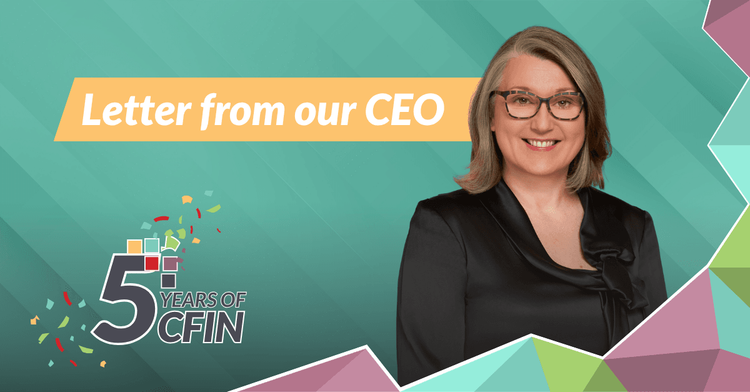
Five Years of CFIN: A Letter to the Network
Thirty years ago, I worked as a chef in the kitchen of one of Canada’s top restaurants standing should er to shoulder with people who ca red about the sensory experience of food above all else . Our tech stack was al most all analog and , to be honest, we didn’t give our ordering system or the way we did inventory a lot of thought. My career broadened over time , and I ’ ve also held roles where I developed recipes at Canadian Living and wrote about food trends; built innovation strategies and products for national brands, founded a business incubator, and ran a venture creation office at a prestigious Canadian u niversity . Food was always the thread , and technology was always present but in most of the food focused businesses I’ve worked for, it was taken for granted, and creativity and hard work were what drove the businesses forward. While smart people with great ideas are essential to food business success, it’s not enough to be competitive in today’s world. Old ways of running restaurants, innovation labs and food and beverage processi ng businesses can’t compete internationally or absorb the trade shocks that have become commonpla ce in recent history. That’s why I feel l ik e CFIN is the perfect place for me to be today and why we’re adding dozens of new members per week. When CFIN was created in 2021, the mandate was intentionally broad : cata lyze Canadian food innovation with funding , build community, connect an ecosystem that had been operating in silos for decades. The funding programs took shape quickly. Since 2022, we’ve awar ded $23.3 million to 133 projects across six program s. For every $1 CFIN invested, our members committed $7.65 of their own capital toward innovation. This leverage ratio of nearly 8-to-1 has unlocked over $140 m illion in private sector spending on R&D and capital infrastructure. The other work was harder to define . What do "build community" and "connect an ecosystem" mean in practice for a sector span ning startups, processors, researchers, investors, policymakers, and operators spread across this vast country ? Th at question didn't have a tidy answer. As a result , fostering and serving this network was (and remains ) an exercise in innovation itself : something new to be built , and then tested, adjusted, and iterated upon , ad infinitum . I’m immensely proud of what we’ve built so far . A team of Regional Innovation Directors who've supported more than 2,200 organizations, brokering the introductions that became commercial partnerships, strategic investments, leadership hires, and research collaborations. A digital platform , YODL, connecting Canada's food sector across industry silos and bridging interprovincial barriers . The first comprehensive analysis of Canadian foodtech . A network of 8,500 members from every province, every part of the food value chain, every stage of business . On any given week, our community is discussing topics ranging from precision fermentation bioreactor designs and funding stacks to food packaging labeling regulations and export strategies, all in the same space. Members benefit from purpose-built tools and resources — like our Funding Finder that aggregates food and beverage funding opportunities across the country and a growing library of original sector research and analysis — alongside direct access to our Regional Innovation Directors. Canada has strong regional funders, accelerators, trade associations, and tech transfer offices, each doing necessary work in a defined lane. What this sector didn't have was a place where the conversation s , the tools, and the connections all showed up at once — where the range of problems and the range of capabilities were dense enough that the right solutions could emerge . That's what CFIN has built. That foundation is important because the next five years will be even more dynamic, and often more challenging, than the last five . To keep pace and flourish in an increasingly volatile world, Canada's food sector needs to modernize faster and more strategic ally than ever before . Trade disruption is dramaticall y reshaping supply chains . L abour constraints are compounding a productivity gap that was widening long before tariffs became front-page news. Climate pressures are intensifying. Food 4.0 — a tech-enabled food s ector that's more collaborative, productive, resilient, and competitive — is the framework CFIN is building toward, and the case for it gets more urgent by the quarter. I ’m confident that we’re up to the task . Five years ago, Canada's food innovation ecosystem was fragmented, underleveraged, and often invisible to the investors, operators, policymakers, and media who needed to see it. That's no longer true. The capacity to respond to the challenges ahead is here. Not in any single program or policy, but in the breadth of this network — the founders , processors , researchers , and investo rs who are hungry to innovate and build a better Canadian food sector . My own wide-ranging path through the food sector taught me that no single role ever showed me the full picture. It took working across kitchens, labs, newsrooms, boardrooms, and startups to understand how innovation really moves through this industry — and where it get s stuck. CFIN was built on the same insight. A sector this complex, facing challenges this urgent, needs more than funding or advice or connections in isolation. It needs all of them in the same room. That's what we've spent five years building, and I'm betting the next five will prove its value at a scale none of us can yet imagine. Thank you for being part of it. Dana McCauley, CEO, Canadian Food Innovation Network
Community Manager-
How BC is Becoming a National Foodtech Hub
Editor's Note: This article was o riginally published in the Vancouver Tech Journal on March 13, 2026 The province has a diverse food processing industry, world-class research facilities, and a deep bench of tech talent — everything a foodtech ecosystem needs to thrive. Foodtech builds the software, automation, and applied science for how food gets processed, manufactured, packaged, distributed, and sold. The industry behind it is enormous — food and beverage processing alone is Canada's largest manufacturing sub-sector , bigger than automotive, bigger than aerospace. It's a serious market, and in British Columbia, it's growing fast. But if you work in the province's broader tech ecosystem, you might not even know that. Foodtech hasn't traditionally drawn the same attention as sectors like cleantech or enterprise SaaS despite being a comparable market in scale and complexity — and one where demand for new technology is accelerating fast. What BC brings to the table BC's food processing sector is substantial — over 3,200 companies producing roughly $12.6 billion in value-added products annually. And it's being treated as a strategic priority. The province has funded a network of shared food processing hubs, UBC just opened a Food and Beverage Innovation Centre with pilot-scale production labs that processors and startups previously had to leave BC to access, and SFU's BC Centre for Agritech Innovation is partnering directly with SMEs on cost-shared R&D. At the same time, much of what the food industry needs is already being built in BC for other thriving tech sectors. Process automation, energy management, supply chain software, safety and traceability systems, data-driven quality control — these are cleantech and software problems applied to production floors and distribution networks. The talent, research base, and trade infrastructure to support a serious foodtech cluster are all here. A different kind of tech sector Foodtech doesn't work like enterprise SaaS or consumer tech. Processors and manufacturers adopt slowly and carefully, because failure is expensive in ways that go beyond lost revenue — a food safety issue, a botched line integration, a regulatory problem. Sales cycles run in quarters. The investor community that understands food is small and specialized. And the industry's own networks run through trade associations, existing supply relationships, and sector-specific events that sit well outside the broader tech community's orbit. None of this means foodtech is closed off. It means that if you want in — as a founder, investor, developer, or potential partner — you need a way to access the conversations, the deal flow, and the operating knowledge that don't surface through the usual channels. The Canadian Food Innovation Network The Canadian Food Innovation Network is a national not-for-profit, established in 2021 that functions as the operating infrastructure for Canada's foodtech sector. CFIN runs cost-shared funding programs that help companies de-risk R&D and move technology into commercial settings. Since launch , the organization has awarded over $22 million to 122 Canadian foodtech projects, matched by $25 million in industry co-investment. Those funded companies have generated $90 million in economic impact, created over 355 jobs and co-op placements, and attracted more than $82 million in follow-on investment. The network's 8,000-plus members include food processors, technology companies, ingredient suppliers, retailers, researchers, and investors — connected through YODL, CFIN's member platform, and supported by Regional Innovation Directors embedded across the country, who work directly with members to broker introductions, navigate funding, and connect emerging technology with the processors and buyers who need it. CFIN also produces the sector's most detailed intelligence . The Foodtech in Canada 2025 Ecosystem Report mapped investment flows, identified sector strengths, and gave both companies and investors a clearer picture of where the Canadian foodtech market stands. And then there's Foodtech Frontier , CFIN's annual program identifying the country's highest-potential foodtech companies. The inaugural cohort of 35 winners included eight BC companies. For investors, it works as curated, vetted deal flow in a sector where sourcing is otherwise hard. For the companies, it's structured national visibility. Plug into Canada’s foodtech ecosystem If you work in technology or investment and you've been curious about the food sector, then signing up for a free CFIN membership is the best place to start. Members get access to funding programs, sector intelligence, a national innovation community, and regional team members that know the BC landscape specifically.
Community Manager-
Other Articles
The Tablesetter – February 27, 2023
Happy Monday CFIN members! Here’s your weekly heads up on what’s happening on YODL and around the food world this week. The YODL Menu Monday: The Tablesetter – February 27, 2023 Tuesday: T op YODL discussions and articles for February ; and A Recap of Cellular Food Articles Wednesday: 50 Canadian FoodTech Resources – Fanshawe College Centre for Research & Innovatio n Thursday: Company Spotlight – Rapid Aid Corp. Friday: News File Something to Celebrate March 3 is Canadian Bacon Day! Peameal bacon, known as Canadian bacon throughout the rest of the world, is taken from the loin of the pig instead of the belly, and so contains less fat and more protein than regular bacon. Food Facts Bacon is so popular that everything from jams and candy to carbonated drinks and alcoholic beverages have been infused with bacon flavouring. There are even several bacon-scented fragrances , including Wright No. 100 , a cologne made by Wright Brand to celebrate its 100 th anniversary , featuring notes of smoky bacon, applewood, bergamot, white patchouli, sandalwood and maple syrup from. According to the company, the scent is “ decadent and addictive like bacon, yet subtle enough to wear daily. ” Happy YODLing!
Community Manager-
News File – February 24, 2023
Each Friday we’ll bring you a roundup of news from CFIN, YODL and around the food world. As seen on YODL Check out this week’s most viewed discussions: Centennial Supports small and medium sized business e s in developing Tech Solutions with grant support How to Cool Bone Broth Quickly - Using Automation Co-packing ability to place sauces in stand up pouch. Around the Food World Canada and Mexico have reached a trade arrangement for organic products. A global consumer survey from Ingredion shows that 46% of consumers would pay 20 to 30% more for a product with a natural claim. Post Consumer Brands has launched Sweet Dreams in the U.S., the first cereal designed to help consumers sleep. Did you Kno w? Caddle has released its 2023 Market Outlook on Canadian grocery shopping habits. As well as discovering that 92% of Canadians feel groceries cost more than they did just three months ago, the report found that: More than 5 3 % of consumers say they’ve purchased more private-label brands in the past three months due to rising prices. 61% of respondents say they’ve reduced their meat purchases due to higher costs. 51% of consumers say they’re buying more produce than they did last year, as well as frozen foods and dairy to offset meat purchases. Price increases differ greater between grocery categories , and sometimes don’t match consumer perceptions, with meat prices increasing 6%, bakery increasing 14%, vegetables increasing 13.7% and dairy increasing 12%.
Community Manager-
Company Spotlight – TheoryMesh
This is one in a series of interviews with CFIN member companies that have successfully applied for and received funding. Winnipeg, MN-based TheoryMesh is digitizing the food supply chain , applying blockchain and machine learning to optimize processes, improve traceability and improve transparency and sustainability. The company’s platform is built to capture data and inform decision makers of the best methods for optimizing their production and environmental footprint . Companies can use the platform to share information about food production and sustainability with consumers. The company received $1,287 , 025 in funding to create a more sustainable beef and dairy supply chain through controlled environment agriculture and digitization . We spoke to TheoryMesh CEO Chris Bunio to learn more about the company and its plans. Q: What is your company’s mission? A: Our mission is to help farmers and food companies improve food safety and sustainability through traceable and transparent, full y optimized supply chains. Q: W h y did you apply for this funding and how will you use it? A: Improving the food supply chain is an imperative to feed the world and reduce the impact of agriculture and food waste on the environment. This funding will allow us to implement a complete and traceable beef and dairy supply chain system which connects from feed to consumer, providing the first real opportunity to drive effective optimization and sustainability with data driven insights. The partners in the project will use the funding to integrate our systems, develop the needed data capture and tracking technology , and ultimately showcase information to consumers in a system which will scale across the industry. Q: What excites you most about working in this area of the food industry? A: Applying science and data driven observations/optimizations is a keen interest. In this project we will establish a factual picture of the dairy and beef supply chain and find real world mechanisms to improve the supply chain for all participants. Having consumers see the reduction in methane or other metrics is very exciting. Q: Why is collaboration so important for accelerating innovation in the food industry? Is it difficult to find good collaborating partners, and what would make the process easier? A: Food supply chains are inherently typically complex. In order to make an impact on the food consumers eat and the information available to them, all partners in the supply chain need to collaborate on a project. Creating synergy among a partner group is the fundamental key to success with complex projects , and creating joint value is one of the most important outcomes. Q: Please comment on the importance of public funding to help companies clear innovation hurdles and access leveraged funds. A: As a startup we are always looking at how we can create innovation products and solutions while scaling our business. Public funding allows us to pursue innovative ideas while de-risking the investment and making every investment dollar scale further. We use public funding to expand our workforce and create solutions which are solving hard problems , which we would likely not try to tackle without the multiplier effect of public funding. Q: Looking ahead, what’s on the horizon for your company? A: Our company has moved quickly in less than two years to create solutions which address critical needs in the market for traceability, transparency and sustainable impact. We will continue scaling the company and expand our customer reach to Europe, Africa and Asia. Q: What are your passions or hobbies outside of work? A: I enjoy trave l ling with my family, reading/researching various topics , finding and making gluten - free food , hiking, swimming and exploring new areas. Q: If you had to pick one person to make you a meal, who would you choose? A: With my gluten allergy this is an incredibly hard question to answer! I would probably go with Gordon Ramsey , for sheer entertainment! Ready to access funding for your innovative initiative? Click here to find out more about CFIN’s funding programs.
Community Manager-
50 Canadian FoodTech Resources – Mycélium
Canada has an extensive range of research centres, food incubators, accelerators and labs supporting food and beverage innovation through the research they do and/or the services they offer. Each week throughout 2023, we’ll be highlighting an organization that’s supporting food innovation in Canada. Name : Myc é lium food incubator Location: Quebec City, QC Mission: The Myc é lium food incubator and accelerator is dedicated to the d evelopment and marketing of innovative and value-added products. Focus: Mycélium offers food and beverage startups support with innovating and commercializing their products . Services: The centre offers a 1,500-sq.-ft. kitchen, storage space, a commercial experimentation space, coaching with experts , and test market opportunities. What you need to know: The centre also offers two business coaching programs : the one-year Incubation Path helps entrepreneurs in the agri-food sector develop a business model ; and the Evolution Program, a personalized support program lasting six to 24 months that helps entrepreneurs grow their businesses. Notable News: Myc é lium and the Institute of Nutrition and Functional Foods (INAF) of Université Laval have partnered with IGA stores in Quebec to support local agri-food companies through IGA’s local accelerator program. Get Involved: Contact Myc é lium at info@myceliuminc.ca , or 418-692-2517, ext. 132, or reach out to our Regional Innovation Director Julie Daigle . Click here to view a 3D tour of the Myc é lium kitchen.
Community Manager-
Let’s Talk Innovation: Cellular Agriculture and Cultivated Foods
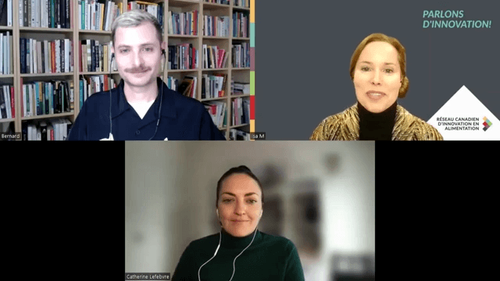
Welcome to Let’s Talk Innovation with Isabelle Marquis, a French-language video series covering every area of food innovation. Today, Isabelle speaks with Catherine Lefebvre and Bernard Lavallée, nutritionists and co-hosts of the popular podcast On s’appelle et on déjeune, about the development of foods produced through cellular agriculture.
Community Manager-
The Tablesetter – February 20, 2023
Happy Monday CFIN members! Here’s your weekly heads up on what’s happening on YODL and around the food world this week. The YODL Menu Monday: The Tablesetter – February 20 , 2023 Tuesday: Agriculture cellulaire et aliments cultivés ( Video ) Wednesday: 50 Canadian FoodTech Resources – Mycelium Thursday: Company Spotlight – TheoryMesh Friday: News File Something to Celebrate February 23 is National Banana Bread Day! Bananas began to be transported in bulk to North America in the early 1900s as improved refrigeration techniques became more available . While r ecipes for banana bread began appearing in the 1930s as a way to use up ripe bananas , and the quick bread became more popular following the publication of the Chiquita Banana Recipe Book in 1950. Food Facts Breakfast trends have changed dramatically over the years, from bacon and eggs to acai bowls . Click here to check out some of the most popular breakfast foods since 1950. Happy YODLing !
Community Manager-
News File – February 17, 2023
Each Friday we’ll bring you a roundup of news from CFIN, YODL and around the food world. As seen on YODL Check out this week’s most viewed discussions: Potential Food Plant Real-Estate near Toronto | Open Forum (cfin-rcia.ca) Ontario Beverage Co Packers | Open Forum (cfin-rcia.ca) Excellent example OEM equipment development & innovation | Open Forum (cfin-rcia.ca) Around the Food World Czech company Mewery has developed the first prototype of cultivated meat made of pork cells and microalgae cells. Researchers in the UK have used gene-editing CRISPR technology to produce wheat that produces much lower acrylamide when cooked. Lactalis Canada has announced the winner of its Lactalis Canada NEXT Ventures initiative around waste reduction . Did you Kno w? A new study from Dalhousie University’s Agri-food Analytics Lab in partnership with Angus Reid called Cashed Out: How a Cashless Economy Impacts Your Grocery Experience, a Canadian Perspective , looked at how consumer s view cashless shopping experiences. The survey found: O n average 6% of Canadians only use cash to buy groceries, although that varies by province, with 13% of consumers in Manitoba and 11% of consumers in Atlantic Canada say ing they only use cash when shopping for groceries. Credit cards are the most popular with grocery shoppers in B C (58%), while debit cards are the most popular way to buy groceries in Saskatchewan (51%). 53% o f Canadians consider a cashless economy to be a threat to their privacy. 73% of consumers believe a cashless grocery store can be discriminatory. 74% of Canadians believe that not using cash can be more convenient, but only 26% believe grocery stores will not accept cash within the next five years.
Community Manager-
Company Spotlight – Smallfood Inc.
This is one in a series of interviews with CFIN member companies that have successfully applied for and received fu n ding. Dartmouth, NS-based Smallfood Inc. uses microalgae and a proprietary biomass fermentation process to produce food ingredients that are abundant in high-quality protein and rich in brain-boosting omega-3 DHA. According to the company, its ingredients are ideally suited for brands seeking to bring innovative, nutritious, animal-free foods to market. The process also delivers a consistent, high-quality product and ensures supply chain reliability. The company received $98,932 in funding for a project to assess the shelf-life stability of a novel protein and DHA-rich food ingredient that could be used by the alternative seafood industry. We spoke with Smallfood’s director of Research and Development Gulten Izmirlioglu to learn more about the company and its plans. Q: What is your company’s mission? A: To nourish a sustainable plane. Our global population is estimated to grow to 10 billion people by 2050 – as such, one of the biggest challenges we will face over the next generation is feeding everyone. The majority of protein production systems are highly inefficient and livestock production is quickly becoming the largest contributor to global warming, outranking all forms of transportation. Seafood consumption is at an all-time high, driven by the global demand by health-conscious consumers for protein and omega - 3 rich diets. And increasing demand for plant-based proteins is causing global problems that include deforestation, soil erosion, and loss of biodiversity. At Smallfood, our quest for a sustainable solution to the world’s massive food production challenge resulted in the discovery of something “ small ” with very “big” potential. Microbes are the world’s most energy-efficient production systems so we set out in search of a microbe that could produce abundant protein and DHA, with the highest nutritional quality, while conserving the Earth’s precious resources. And after 10 years and over 20,000 unique microorganisms discovered, Smallfood unearthed unique microalgae that could produce wholesome food ingredients that are abundant in high-quality protein and rich in brain-boosting omega-3 DHA. Biomass fermentation is the ultimate sustainable solution given its minimal land, water, and energy requirements compared to traditional protein sources. The unparalleled productivity of our process results in a production time of just seven days vs. seven to nine months for plant-based proteins, and years for beef protein. Our process also delivers a consistent, high-quality product and ensures supply chain reliability. Ingredients produced through fermentation aren’t subject to the fluctuations in quality and supply we sometimes see with plant-sourced ingredients. Q: W h y did you apply for this funding and how will you use it? A: Smallfood will commercialize its first product, algal powder, as a protein and DHA source for the alternative seafood industry in early 2024. Prior to commercialization, however, stability of the dried algal biomass needs to be evaluated. High lipid content of the algal biomass, particularly long chain omega-3 polyunsaturated fatty acids (DHA) are susceptible to oxidation. Therefore, storage stability of Smallfood’s microalgal whole cell needs to be assessed for its stability. In order to perform this study, we applied to CFIN ’s Innovation Booster program. This funding will allow Smallfood to undertake th e study i n a timely manner and keep our commercialization plan on schedule. Q: W hat excites you most about working in this area of the food industry? A: As a Turkish - Canadian, food always played a key role in my childhood. Food was the way of caring for your loved ones. Later on , I also realized the importance of self-sufficiency and sustainability in food production. Now, my work allows me to help Canada become a self-sufficient and sustainable producer of food ingredients and merge s my two cultures together. That is why I am very excited and proud of my work. Q: Why is collaboration so important for accelerating innovation in the food industry? Is it difficult to find good collaborating partners, and what would make the process easier? A: An interdisciplinary collaboration is vital for food innovation that must bring experts from various backgrounds. Based on my experience, finding the right partners might be a challenge for innovators, especially who are new in the space. Having a platform for food innovators could really help with that. Q: Please comment on the importance of public funding to help companies clear innovation hurdles and access leveraged funds. A: Innovation in the food industry requires extensive resources for a food product. Developing a process may take years with a well-qualified team of researchers before becoming profitable. Therefore, public funding is key for the food industry, especially for start-ups, since the majority of investors are looking for companies where they can commercialize quickly. Q: Looking ahead, what’s on the horizon for your company? A: In the next 12 to 18 months, Smallfood will be commercializing its biomass product while building capacity. Our target is to build a pilot scale fermentation plant (1 , 500 L to 7 , 500 L) in the next year and continue increasing the fermentation capacity to 500 million liters in the next five years. In addition to building capacity, we will diversify our product line, from algal biomass powder to premium protein and DHA products. Q: What are your passions or hobbies outside of work? A: I am passionate about the environment. As a mother of two young boys, I feel responsible for the damage we have done to the E arth. While we all try very hard to provide a good life for our children, we mostly overlook the most precious inheritance that every living organism needs for a better life, a healthy planet. Although I know it is not enough, I try my best both professionally and personally to decrease the damage we do to the E arth . Q: If you had to pick one person to make you a meal, who would you choose? A: I would choose Dana McCauley. As a researcher, I would love to talk with Dana about her work while enjoying her food . Ready to access funding for your innovative initiative? Click here to find out more about CFIN’s funding programs.
Community Manager-
50 Canadian FoodTech Resources – Centre for Aquaculture and Seafood Development
Canada has an extensive range of research centres, food incubators, accelerators and labs supporting food and beverage innovation through the research they do and/or the services they offer. Each week throughout 2023, we’ll be highlighting an organization that’s supporting food innovation in Canada. Name : Centre for Aquaculture and Seafood Development . Location: St. John’s, NL. The Centre is an industrial response unit in the School of Fisheries at the Fisheries and Marine Institute of Memorial University of Newfoundland . Focus: Technical services in seafood processing, aquaculture, and marine bioprocessing , in the areas of applied research, product and process development, advisory services, and training. Mission: To offer technical support to industry in the seafood and aquaculture sectors. Services: The Centre’s, 400-sq.-m pilot plant facilities include a 1,100-sq.-m food processing pilot plant, an aquaculture facility, and a marine bioprocessing facility. The food processing plant offers a food development kitchen, a sensory analysis lab, and a variety of pilot-scale food processing equipment that will enable clients to develop new seafood products, equipment and processes, or train employees. The bioprocessing research laboratory performs analytical work and small-scale process development , and is available for businesses requiring lab - scale production of marine bio-products, lab - scale concentration of marine extracts, or for testing, analysis of products, food chemistry, or wastewater . The Centre helps clients move from product concept to development through to proof-of-concept and pre-commercialization stages. What you need to know: The Centre has strategic partnerships with various faculties within Memorial University to compliment its capabilities. Notable News: The Centre’s clients include seafood and food processing companies, aquaculture companies, provincial and federal governments, fish harvesters, biotechnology companies, and suppl ier businesses to these sectors. Get Involved: Contact the Centre for Aquaculture and Seafood Development at casd@mi.mun.ca , or at 709-778-0532, or reach out to our Regional Innovation Director for Atlantic Canada Tyson M acInnis .
Community Manager-
Regulating Cellular Food: A Discussion on the Regulations Governing Cultivated Food in Canada
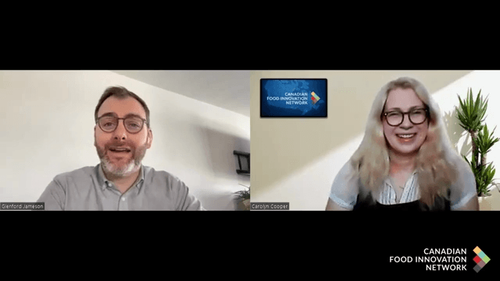
Carolyn Cooper sat down with food lawyer Glenford Jameson of G.S. Jameson & Co. to discuss the regulations governing the research, development and commercialization of cellular food in Canada. Look for more on the laws and regulations covering cellular food in coming weeks.
Community Manager-
The Tablesetter – February 13, 2023
Happy Monday CFIN members! Here’s your weekly heads up on what’s happening on YODL and around the food world this week. The YODL Menu Monday: The Tablesetter – February 13, 2023 Tuesday: Regulating Cellular Food: A Discussion with Glenford Jameson on the Regulations Governing Cultivated Food in Canada (Video) Wednesday: 50 Canadian FoodTech Resources – Centre for Aquaculture and Seafood Development Thursday: Company Spotlight – Smallfood Inc. Friday: News File Something to Celebrate February 16 is Paczki Day ! A p aczki is a Polish pastry dating back to the middle ages, similar to a sugary, filled doughnut . The treats are traditional ly eaten on the Thursday before Ash Wednesday in Poland, and on Fat Tuesday (Pancake Day) in North America . They can be filled with a variety of fruit preserves , cream or custard , and topped with granulated sugar, icing sugar or sugar glaze. Food Facts National Retail Federation conducts an annual Valentine’s Day consumer spending survey. Here’s what the 2023 survey reveals: 52% of consumers say they plan to celebrate Valentine’s Day this year, and will spend an average of $192.80. That compares to an average of $175.41 in 2022. 28% of consumers who say they won’t celebrate the day, still plan to mark the occasion in some way. Candy is the top gift to give for Valentine’s Day, with 57% of respondents saying they’ll be buying confection e ry. 35% of shoppers are buying gifts online this year, followed by department stores (34%), discount stores (31%) and specialty stores (18%). Happy YODLing!
Community Manager-
News File – February 10, 2023
Each Friday we’ll bring you a roundup of news from CFIN, YODL and around the food world. As seen on YODL Check out this week’s most viewed discussions: Opportunity for Canadian Frozen Food Brand | Open Forum (cfin-rcia.ca) Recycling Challenges and Opps - great piece for CBC | Open Forum (cfin-rcia.ca) Seaweed in the News | Open Forum (cfin-rcia.ca) Around the Food World Researchers in France have shown a direct association between diabetes and nitrates from food additives. This spring customers will have the chance to visit a “ Zellers Diner on wheels ” in the form of food truck when the first Zellers pop-up stores appear within Hudson’s Bay locations. Kerry’s Global Taste and Nutrition Charts for 2023 predicts that flavours inspired by heirloom recipes will drive food and beverage innovation this year. Did you Kno w? Second Harvest has released the results of a two-year project on food waste involving 20 large-scale Canadian food manufacturing companies. The study, funded by Walmart Foundation, reveals that food waste reduction measures can produce significant results and financial savings . Findings include: Each year a pproximately 60% of food produced for Canadians is lost or wasted. 47% of this loss occurs during manufacturing and processing, equalling 16.77 million metric tonnes. Working with advisors to reduce food loss and waste allowed the manufacturers involved in the project to collectively prevent 3.1 million kg/year of food from being wasted, and 100,295 kg of food to be redistributed. The companies collectively saved 7,029 tonnes of greenhouse gas emissions, while reducing their water use by an average of 879 m 3 , natural gas use by 4,013 m 3 , and electricity use by 69,225 kWh annually. The companies collectively saved an average of $205,800 annually by retaining food that was being lost or wasted, enough for 6.7 million meals.