Inside SIAL Canada 2026: Driving Food Innovation Through Connection and Collaboration
CFIN had the honour of taking a bite out of SIAL Canada 2026 in Montréal 🍎—connecting with partners, members, and industry leaders shaping the future of food innovation across Canada and beyond. Representing CFIN on site were CEO @Dana McCauley and @Julie Daigle , Regional Innovation Director (Quebec), who engaged with the ecosystem throughout the event. Their presence reflected CFIN’s ongoing commitment to strengthening Canada’s food innovation ecosystem and supporting high-potential foodtech ventures. Attendees could also catch Julie as a Foodtech Focus expert at the SIAL Canada Expert Hub, where she connected directly with innovators and shared insights with the community. Dana also took the stage as part of the Dairy Talks program, contributing to a forward-looking discussion on innovation as a driver of market leadership in the Canadian dairy sector. Her session explored the shift from incremental product development toward a broader innovation mindset—highlighting next-generation ingredients, value-added dairy formats, new go-to-market strategies, and the role of Industry 4.0 technologies like AI, robotics, automation, and digital supply chains in strengthening productivity and global competitiveness. A key highlight of the week was CFIN’s involvement in the 7th edition of the Startup Pitch Competition, held on April 30 on the Food & Bev Connect stage. Julie Daigle participated as the President of the Foodtech jury, joining a panel of industry experts evaluating promising entrepreneurs from the Startup Village. Beyond the competition, the Startup Pitch stage served as a strategic platform connecting entrepreneurs with buyers, investors, and key decision-makers across the agri-food ecosystem. A standout moment for the CFIN community was the recognition of Maia Farms, a CFIN member and funding recipient, which earned the Gold Prize in the foodtec h competition 🍄🏆 CFIN’s presence at SIAL Canada underscored the momentum of Canada’s food innovation sector and the value of convening the ecosystem to accelerate ideas from concept to commercialization. 📖 Explore more from SIAL Canada 2026 R elive the stories, innovations, and key moments captured throughout the show in the official SIAL Canada Daily: SIAL Canada Daily – 2026 Edition (Photos Courtesy of SIAL)
Community Manager-
Five Years of CFIN: A Letter to the Network
Thirty years ago, I worked as a chef in the kitchen of one of Canada’s top restaurants standing should er to shoulder with people who ca red about the sensory experience of food above all else . Our tech stack was al most all analog and , to be honest, we didn’t give our ordering system or the way we did inventory a lot of thought. My career broadened over time , and I ’ ve also held roles where I developed recipes at Canadian Living and wrote about food trends; built innovation strategies and products for national brands, founded a business incubator, and ran a venture creation office at a prestigious Canadian u niversity . Food was always the thread , and technology was always present but in most of the food focused businesses I’ve worked for, it was taken for granted, and creativity and hard work were what drove the businesses forward. While smart people with great ideas are essential to food business success, it’s not enough to be competitive in today’s world. Old ways of running restaurants, innovation labs and food and beverage processi ng businesses can’t compete internationally or absorb the trade shocks that have become commonpla ce in recent history. That’s why I feel l ik e CFIN is the perfect place for me to be today and why we’re adding dozens of new members per week. When CFIN was created in 2021, the mandate was intentionally broad : cata lyze Canadian food innovation with funding , build community, connect an ecosystem that had been operating in silos for decades. The funding programs took shape quickly. Since 2022, we’ve awar ded $23.3 million to 133 projects across six program s. For every $1 CFIN invested, our members committed $7.65 of their own capital toward innovation. This leverage ratio of nearly 8-to-1 has unlocked over $140 m illion in private sector spending on R&D and capital infrastructure. The other work was harder to define . What do "build community" and "connect an ecosystem" mean in practice for a sector span ning startups, processors, researchers, investors, policymakers, and operators spread across this vast country ? Th at question didn't have a tidy answer. As a result , fostering and serving this network was (and remains ) an exercise in innovation itself : something new to be built , and then tested, adjusted, and iterated upon , ad infinitum . I’m immensely proud of what we’ve built so far . A team of Regional Innovation Directors who've supported more than 2,200 organizations, brokering the introductions that became commercial partnerships, strategic investments, leadership hires, and research collaborations. A digital platform , YODL, connecting Canada's food sector across industry silos and bridging interprovincial barriers . The first comprehensive analysis of Canadian foodtech . A network of 8,500 members from every province, every part of the food value chain, every stage of business . On any given week, our community is discussing topics ranging from precision fermentation bioreactor designs and funding stacks to food packaging labeling regulations and export strategies, all in the same space. Members benefit from purpose-built tools and resources — like our Funding Finder that aggregates food and beverage funding opportunities across the country and a growing library of original sector research and analysis — alongside direct access to our Regional Innovation Directors. Canada has strong regional funders, accelerators, trade associations, and tech transfer offices, each doing necessary work in a defined lane. What this sector didn't have was a place where the conversation s , the tools, and the connections all showed up at once — where the range of problems and the range of capabilities were dense enough that the right solutions could emerge . That's what CFIN has built. That foundation is important because the next five years will be even more dynamic, and often more challenging, than the last five . To keep pace and flourish in an increasingly volatile world, Canada's food sector needs to modernize faster and more strategic ally than ever before . Trade disruption is dramaticall y reshaping supply chains . L abour constraints are compounding a productivity gap that was widening long before tariffs became front-page news. Climate pressures are intensifying. Food 4.0 — a tech-enabled food s ector that's more collaborative, productive, resilient, and competitive — is the framework CFIN is building toward, and the case for it gets more urgent by the quarter. I ’m confident that we’re up to the task . Five years ago, Canada's food innovation ecosystem was fragmented, underleveraged, and often invisible to the investors, operators, policymakers, and media who needed to see it. That's no longer true. The capacity to respond to the challenges ahead is here. Not in any single program or policy, but in the breadth of this network — the founders , processors , researchers , and investo rs who are hungry to innovate and build a better Canadian food sector . My own wide-ranging path through the food sector taught me that no single role ever showed me the full picture. It took working across kitchens, labs, newsrooms, boardrooms, and startups to understand how innovation really moves through this industry — and where it get s stuck. CFIN was built on the same insight. A sector this complex, facing challenges this urgent, needs more than funding or advice or connections in isolation. It needs all of them in the same room. That's what we've spent five years building, and I'm betting the next five will prove its value at a scale none of us can yet imagine. Thank you for being part of it. Dana McCauley, CEO, Canadian Food Innovation Network
Community Manager-
How BC is Becoming a National Foodtech Hub
Editor's Note: This article was o riginally published in the Vancouver Tech Journal on March 13, 2026 The province has a diverse food processing industry, world-class research facilities, and a deep bench of tech talent — everything a foodtech ecosystem needs to thrive. Foodtech builds the software, automation, and applied science for how food gets processed, manufactured, packaged, distributed, and sold. The industry behind it is enormous — food and beverage processing alone is Canada's largest manufacturing sub-sector , bigger than automotive, bigger than aerospace. It's a serious market, and in British Columbia, it's growing fast. But if you work in the province's broader tech ecosystem, you might not even know that. Foodtech hasn't traditionally drawn the same attention as sectors like cleantech or enterprise SaaS despite being a comparable market in scale and complexity — and one where demand for new technology is accelerating fast. What BC brings to the table BC's food processing sector is substantial — over 3,200 companies producing roughly $12.6 billion in value-added products annually. And it's being treated as a strategic priority. The province has funded a network of shared food processing hubs, UBC just opened a Food and Beverage Innovation Centre with pilot-scale production labs that processors and startups previously had to leave BC to access, and SFU's BC Centre for Agritech Innovation is partnering directly with SMEs on cost-shared R&D. At the same time, much of what the food industry needs is already being built in BC for other thriving tech sectors. Process automation, energy management, supply chain software, safety and traceability systems, data-driven quality control — these are cleantech and software problems applied to production floors and distribution networks. The talent, research base, and trade infrastructure to support a serious foodtech cluster are all here. A different kind of tech sector Foodtech doesn't work like enterprise SaaS or consumer tech. Processors and manufacturers adopt slowly and carefully, because failure is expensive in ways that go beyond lost revenue — a food safety issue, a botched line integration, a regulatory problem. Sales cycles run in quarters. The investor community that understands food is small and specialized. And the industry's own networks run through trade associations, existing supply relationships, and sector-specific events that sit well outside the broader tech community's orbit. None of this means foodtech is closed off. It means that if you want in — as a founder, investor, developer, or potential partner — you need a way to access the conversations, the deal flow, and the operating knowledge that don't surface through the usual channels. The Canadian Food Innovation Network The Canadian Food Innovation Network is a national not-for-profit, established in 2021 that functions as the operating infrastructure for Canada's foodtech sector. CFIN runs cost-shared funding programs that help companies de-risk R&D and move technology into commercial settings. Since launch , the organization has awarded over $22 million to 122 Canadian foodtech projects, matched by $25 million in industry co-investment. Those funded companies have generated $90 million in economic impact, created over 355 jobs and co-op placements, and attracted more than $82 million in follow-on investment. The network's 8,000-plus members include food processors, technology companies, ingredient suppliers, retailers, researchers, and investors — connected through YODL, CFIN's member platform, and supported by Regional Innovation Directors embedded across the country, who work directly with members to broker introductions, navigate funding, and connect emerging technology with the processors and buyers who need it. CFIN also produces the sector's most detailed intelligence . The Foodtech in Canada 2025 Ecosystem Report mapped investment flows, identified sector strengths, and gave both companies and investors a clearer picture of where the Canadian foodtech market stands. And then there's Foodtech Frontier , CFIN's annual program identifying the country's highest-potential foodtech companies. The inaugural cohort of 35 winners included eight BC companies. For investors, it works as curated, vetted deal flow in a sector where sourcing is otherwise hard. For the companies, it's structured national visibility. Plug into Canada’s foodtech ecosystem If you work in technology or investment and you've been curious about the food sector, then signing up for a free CFIN membership is the best place to start. Members get access to funding programs, sector intelligence, a national innovation community, and regional team members that know the BC landscape specifically.
Community Manager-
Other Articles
50 Canadian FoodTech Resources – Kemitek
Welcome to YODL! In addition to daily original content, YODL helps CFIN Members find new partners , resources , and funding opportunities to grow their food business. Learn more about this growing community and become a CFIN Member (for free!) today . Canada has an extensive range of research centres, food incubators, accelerators and labs supporting food and beverage innovation through the research they do and/or the services they offer. Each week throughout 2023, we’ll be highlighting an organization that’s supporting food innovation in Canada. Name: Kemitek (formerly O LEOTEK ) Location: Thetford Mines, Q C Mission: T o help organizations innovate in the fields of sustainable chemistry, green chemistry and process scale-up, while acti ng as a regional centre of excellence with international reach. Focus: Kemitek focuses on green and sustainable chemistry, process scale up and oleochemistry . Kemitek’s vision is to be the premier centre for technology development and support for green chemistry commercialization in Canada by 2030. It offers services to a number of sector s, including food and nutraceuticals; materials, coatings and adhesives; and cleaning agents. Services: The centre ’s services include : Green chemistry Renewable chemistry and oleochemistry Chemical process development Process scale up and piloting Pre-commercial production Applied research Technical assistance Characterization, testing and analysis Financing What you Need to Know: Kemitek’s pilot plant can be used to scale up processes developed in the laboratory ; as the last step of research ; for the large-scale production of chemicals (from a kilogram to a ton) ; and for the adaptation of existing technologies. It features a range of equipment and storage options. Notable News: In 2020 t he centre changed its name from O LEOTEK to Kemitek to better represent its mission and its innovation and technological development features. Get Involved: Contact Kemitek at info@kemitek.org or (418) 338-1318, or reach out to our Regional Innovation Director for Quebec , Julie Daigle .
Community Manager-
From ChatGPT: How AI is transforming the Canadian Food Sector
Welcome to YODL! In addition to daily original content, YODL helps CFIN Members find new partners , resources , and funding opportunities to grow their food business. Learn more about this growing community and become a CFIN Member (for free!) today . This article was written using ChatGPT, with the prompt “write an article about how AI and ChatGPT can help the food industry in Canada . ” Let us know what you think. The food and beverage sector in Canada is an important part of the country’s economy, providing jobs and contributing to the GDP. Companies in this sector are constantly looking for ways to enhance their product offerings and improve efficiency and profitability. Artificial intelligence (AI) is emerging as a promising technology that can help these companies meet these goals. AI can be used to improve the customer experience in the food and beverage sector. AI-powered applications such as chatbots and virtual personal assistants (VPAs) can provide customers with access to information and services on demand. For example, VPA-enabled voice recognition systems can be used to suggest products and recipes based on a customer’s dietary preferences or to provide personalized nutritional advice. AI-based analytics can be used to identify customer preferences and needs, making it easier to develop tailored products and services to meet customer needs. AI can also be used to streamline operations and reduce costs in the food and beverage sector. AI-powered applications can be used to automate process and systems, allowing companies to respond quickly to changing customer demands and improving efficiency. AI-enabled systems can also be used to monitor and analyze supply chain operations, helping to identify areas where costs can be reduced and operations streamlined. Finally, AI can be used to develop new products and processes. AI-enabled systems can be used to analyze customer data, identify trends and develop new products that address customer demand. AI-based analytics can also be used to analyze production processes and identify areas where improvements can be made, allowing companies to stay ahead of the competition. One example of AI being used in the food and beverage industry is ChatGPT. ChatGPT is a cloud-based artificial intelligence tool that enables companies to create virtual assistant services customized to their specific needs. It can be used to provide customers with personalized product recommendations and advice, and to automate customer services tasks such as order confirmation and product fulfillment. The use of AI-enabled virtual assistants can help companies in the food and beverage sector improve customer experience, reduce costs and improve efficiency. In short, AI can offer a range of potential benefits to companies in the food and beverage sector. By leveraging AI-powered applications and analytics, companies in this sector can improve the customer experience, streamline operations and reduce costs, and develop new products and processes. In order to truly unlock the potential of AI, however, it is important for companies to invest in the necessary infrastructure, training and expertise to ensure that AI is used effectively and is properly integrated into existing processes. By taking these steps, companies in Canada’s food and beverage sector will be well positioned to take advantage of the opportunities that AI offers.
Community Manager-
From ChatGPT: How AI is transforming the Canadian Food Sector
Welcome to YODL! In addition to daily original content, YODL helps CFIN Members find new partners , resources , and funding opportunities to grow their food business. Learn more about this growing community and become a CFIN Member (for free!) today . This article was written using ChatGPT, with the prompt “write an article about how AI and ChatGPT can help the food industry in Canada . ” Let us know what you think. The food and beverage sector in Canada is an important part of the country’s economy, providing jobs and contributing to the GDP. Companies in this sector are constantly looking for ways to enhance their product offerings and improve efficiency and profitability. Artificial intelligence (AI) is emerging as a promising technology that can help these companies meet these goals. AI can be used to improve the customer experience in the food and beverage sector. AI-powered applications such as chatbots and virtual personal assistants (VPAs) can provide customers with access to information and services on demand. For example, VPA-enabled voice recognition systems can be used to suggest products and recipes based on a customer’s dietary preferences or to provide personalized nutritional advice. AI-based analytics can be used to identify customer preferences and needs, making it easier to develop tailored products and services to meet customer needs. AI can also be used to streamline operations and reduce costs in the food and beverage sector. AI-powered applications can be used to automate process and systems, allowing companies to respond quickly to changing customer demands and improving efficiency. AI-enabled systems can also be used to monitor and analyze supply chain operations, helping to identify areas where costs can be reduced and operations streamlined. Finally, AI can be used to develop new products and processes. AI-enabled systems can be used to analyze customer data, identify trends and develop new products that address customer demand. AI-based analytics can also be used to analyze production processes and identify areas where improvements can be made, allowing companies to stay ahead of the competition. One example of AI being used in the food and beverage industry is ChatGPT. ChatGPT is a cloud-based artificial intelligence tool that enables companies to create virtual assistant services customized to their specific needs. It can be used to provide customers with personalized product recommendations and advice, and to automate customer services tasks such as order confirmation and product fulfillment. The use of AI-enabled virtual assistants can help companies in the food and beverage sector improve customer experience, reduce costs and improve efficiency. In short, AI can offer a range of potential benefits to companies in the food and beverage sector. By leveraging AI-powered applications and analytics, companies in this sector can improve the customer experience, streamline operations and reduce costs, and develop new products and processes. In order to truly unlock the potential of AI, however, it is important for companies to invest in the necessary infrastructure, training and expertise to ensure that AI is used effectively and is properly integrated into existing processes. By taking these steps, companies in Canada’s food and beverage sector will be well positioned to take advantage of the opportunities that AI offers. #AI #ChatGPT #chatbot #foodtech CFIN Members get exclusive access to funding opportunities , five Regional Innovation Directors , and YODL . Learn more about what it’s like to be a CFIN Member and how you can join our growing community of food professionals.
Community Manager-
IN 30: Quebec’s Food Ecosystem
Welcome to YODL! In addition to daily original content, YODL helps CFIN Members find new partners , resources , and funding opportunities to grow their food business. Learn more about this growing community and become a CFIN Member (for free!) today . Sometimes, all it takes is 30 minutes to learn the ins and outs of new food technologies and trends that are transforming the food and beverage industry. In this series, we’ll dig into a food innovation topic and link you to the best content and resources so you can become a master on the topic in 30 minutes (or less!). This week, we’re looking at food and beverage innovation and resources in Quebec. The Overview MAPAQ – Ministère de l'Agriculture, des Pêcheries et de l'Alimentation The Quebec Ministry of Agriculture, Fisheries and Food offers information on food processing and distribution, restaurants and grocery retail, consumer consumption statistics, food safety and more. YODL - Production bioalimentaire et achat local The province of Québec has invested an additional $175 million to increase food self-sufficiency in all regions of the province. La Presse - GÉNOMIQUE : CAP SUR L’AGRICULTURE DE PRÉCISION Over the past 10 years, Génome Québec's genetic improvement programs have increased dramatically . YODL - Qu'est-ce que le rendez-vous Gourmet Québec CFIN’s Regional Innovation Director Julie Daigle discusses Rendez-vous Gourmet Québec, a road show of approximately 70 Quebec companies travelling to meet with Canadian buyers. Baronmag.com – Baronmag /Boisson Qu é bec is an online French-language site cover ing the beverage industry in Quebec. Qu é bec International – The Quebec City region has a high concentration of research centres and food and nutrition companies. Resources InBe NomadLab InBe works with innovative consumer brands from a variety of industries, including food and beverage manufacturing, to provide consumer feedback on concepts, products and services. INAF’s In Vitro Digestion Platform The lab studies the impact of the digestion system on bioactive compounds. Innofibre Innofibre helps companies develop innovative cellulosic and biomass-based products. Mycélium The Mycélium food incubator offers food and beverage startups support with innovating and commercializing their products. Technology Access Centre in Bio-Innovation (TAC-B) The centre is comprised of a team with expertise in biophysics, bioprocesses, biotechnology, analytical chemistry and genetic engineering that collaborates with businesses and institutions to offer solutions to specific challenges. Companies you Should Know BioSh u r Inc. , based in Montreal, aims to replace petro -based flexible plastic packaging with soil-compostable, plant-based flexible films. Foodarom , is a St. Hubert, QC based company that manufactures custom flavours for the food and beverage industry. Radish is a Montreal-based company developing software to help restaurants meet their technical needs and make delivery more efficient. Relocalize Inc. is a Montreal - based company that hyper-localizes packaged food manufacturing with autonomous factories that eliminate middle mile logistics (and CO2 emissions), reduce product costs and cut waste. YODL - Les 25 plus grandes entreprises de transformation alimentaire au Québec The newspaper Les affaires ’ list of the 25 largest food processing companies in Quebec. Events YODL - Recontres des membres RCIA : français On August 23 , 2023 CFIN is holding a French-language member meet up session online . The session is a chance to connect with other members, meet our Regional Innovation Directors and ask questions about the organization. B É N É FIQ2023 The 6th edition of BÉNÉFIQ, the international meeting on healthy ingredients and foods, will be held October 4 and 5, 2023 in Quebec City, QC. Overtime If you’ve got more than 30 minutes, these are for you: YODL – Parlon ’ s d'innovation! L’intelligence artificielle au service de l’industrie alimentaire CFIN’s Isabelle Marquis talks with Michel Dubois, Senior Director, AI Activation, Mila Research Center, about artificial intelligence and its applications and potential for the food industry.
Community Manager-
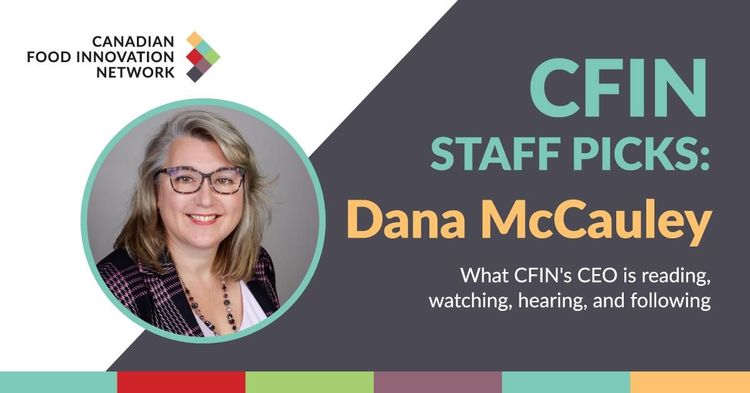
Staff Picks – Dana McCauley
Welcome to YODL! In addition to daily original content, YODL helps CFIN Members find new partners , resources , and funding opportunities to grow their food business. Learn more about this growing community and become a CFIN Member (for free!) today . A lot of material comes across our desks at CFIN, and we love to share new information with YODLers ! This one in a series of articles highlighting what CFIN staff are reading, listening to, watching, and posting. This time we’re checking in with CFIN’s CEO Dana McCauley . What are you reading? It’s usually easier to ask me what I’m not reading! I’m a massive consumer of content of all kinds. Everyday I read a roster of newsletters from around the world to keep up with trends in the food sector. I’m also a lifelong learner so I always have a few business-related books on the go. Right now I’m reading the Hidden Psych o logy of Social Networks to learn about how to enhance YODL and I have both Teams f o r Dummies and Sharepoint f o r Dummies on the go as well. As a virtual organization where we work collaboratively, it’s essential that we use technology to simplify communication and project management. My university degree is in English Literature so I’m also a big fiction reader. If you’re planning some down time and want to get lost in a good book , I highly recommend I Have Some Question s For You by Rebecca Makkai and Sea of Tr a nquility by Emily St. John Mandel. What are you listening to? I love to listen to podcasts while I’m gardening and doing housework. I usually try to recharge my creativity when choosing podcasts so favs of mine are The Lon g Now and Ide a s . I probably shouldn’t admit that I spent the spring getting in touch with my inner teenie bopper listening to my local dance music radio station; I woke up more than one day with “Can’t talk. Got a Be a t in My Headphones” running through my brain. Now, I’m in a country diva’s phase that is all Do l ly, all Pat s y , all the time… Who are you following? I tend to follow sources that I can trust to have good quality information. For those interested in the food business in Canada, I follow Food in Ca n ada , CIF S T , Foods e rvice & Hospitality and Canadian G rocer . For an international lens, I watch what Ma t thieu Vincent , Elaine Wa t son , Danielle Niere n berg have to say. What are you watching? I’m in mourning since the end of Succession . Thank goodness The Bear is back to partially fill that void. As someone with a fine - dining restaurant background, that show delivers such authenticity. What are you posting about? Food innovation, of course! And Succession. And novels. And Wordle . And recipes. And my dog (yes, I’m one of those people! Search #kobehere on Instagram if you want proof.)
Community Manager-
Company Spotlight – CarbonGraph Inc.
Welcome to YODL! In addition to daily original content, YODL helps CFIN Members find new partners , resources , and funding opportunities to grow their food business. Learn more about this growing community and become a CFIN Member (for free!) today . This is one in a series of interviews with CFIN member companies that have successfully applied for and received funding . Toronto, ON based CarbonGraph is a digital platform for tracing the carbon footprint and sustainability of food products from farm to table. It does t his with innovative, accessible, and automated life cycle assessment (LCA) software that lets businesses collaborate with their suppliers and their customers to build detailed and shared sustainability models and Scope 1-2-3 carbon footprints. This data helps find ways to become more sustainable and to showcase the sustainability achievements Canadian food companies are already making. CarbonGraph received $96,358 in funding to develop and pilot new core functionality of their platform to automatically capture supply chain data from grocers and food distributors across thousands of individual products. We talked to co-founder and CEO Sam Anderson to find out more about the project and the company’s plans. Q: What is your company’s mission? A: To make sustainability visible and profitable for every company in the world. Q: Why did you apply for this funding and how will you use it? A: We ’ ve been developing and piloting our tech for the last two years and we ’ re ready to take it to the next level with small and large food companies across Canada. We are using the funding to subsidize the cost of commercial pilots with Canadian food companies - if you want a better view into your products' sustainability, please reach out! Q: What excites you most about working in this area of the food industry? A: The food sector has a big environmental impact but it ’ s also innovating so much to reduce that impact, and CarbonGraph is a new way to highlight some of those innovations that have gone relatively unnoticed by customers and the public. Q: Why is collaboration so important for accelerating innovation in the food industry? Is it difficult to find good collaborating partners, and what would make the process easier? A: The food sector is hard to navigate if you ’ re bringing new technology or ideas in from the outside. Organizations like CFIN make it so much easier. More open calls for innovation and direct partnerships between food companies and funding agencies to pilot new tech would be a great next step. Q: Please comment on the importance of public funding to help companies clear innovation hurdles and access leveraged funds. A: Canada's public funding is critical to startups. We would absolutely not be where we are today without the support of CFIN, the National Research Council, Sustainable Development Technology Canada, Foresight, Accelerator Centre, The DMZ, Ontario Centre of Innovation, League of Innovators, the Centre for Social Innovation, ICTC, EcoCanada , Technation ...do you get the idea yet? Q: Looking ahead, what’s on the horizon for your company? A: As we start to pilot our platform across the Canadian food sector, we are going to see a positive feedback loop. As it becomes easier to measure product-level sustainability, more businesses and consumers will ask for the data, more sustainable products will receive higher demand, more funding will flow to sustainability innovations, and eventually being sustainable will just be smart business – and that ’ s good for people and the p lanet. Q: What are your passions or hobbies outside of work? A: I like to hike, camp, and race triathlons. Q: If you had to pick one person to make you a meal, who would you choose? A: I'll pick my Mom's Guyanese chicken curry over fine dining any day. Ready to access funding for your innovative initiative? Click here to find out more about CFIN’s funding programs.
Community Manager-
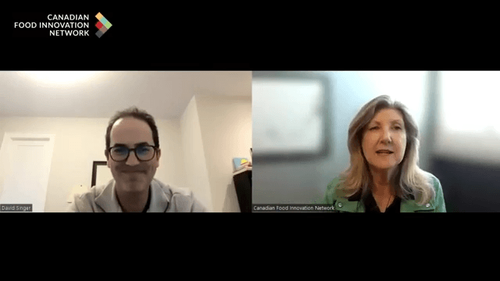
CFIN Funded Projects: One Year Updates - Index Biosystems
Welcome to YODL! In addition to daily original content, YODL helps CFIN Members find new partners , resources , and funding opportunities to grow their food business. Learn more about this growing community and become a CFIN Member (for free!) today . CFIN has provided funding for many projects over the past two years. Now we’re catching up with the Canadian companies leading CFIN-funded projects to chat about how their innovations have advanced in the year since funding. In this video Linda Fox, Regional Innovation Director for Ontario, speaks with David Singer, co-founder and vice president of Business Development at Burlington, ON-based Index Biosystems . The company produces BioTags that allow food and ingredients to be tracked as they move through the supply chain.
Community Manager-
50 Canadian FoodTech Resources – Prairie Research Kitchen
Welcome to YODL! In addition to daily original content, YODL helps CFIN Members find new partners , resources , and funding opportunities to grow their food business. Learn more about this growing community and become a CFIN Member (for free!) today . Canada has an extensive range of research centres, food incubators, accelerators and labs supporting food and beverage innovation through the research they do and/or the services they offer. Each week throughout 2023, we’ll be highlighting an organization that’s supporting food innovation in Canada. Name: Prairie Research Kitchen in the Paterson GlobalFoods Institute at Red River College Polytechnic . Location: Winnipeg, MN Mission: To serve Western Canada’s food production industries with food research, development and innovation. Focus: The Prairie R esearch kitchen supports food processors and foodservice businesses through R&D , technical services and training, with a unique approach that blends food science with culinary skills. Services: The Research Kitchen offers R&D , including prototyping, ingredient applications and customer research trials; technical and business services such as recipe development, food photography and funding resources; and customized training, including onsite and in-house, plus safety and processing training. The centre’s facilities include a demonstration kitchen, a food quality lab, a food styling studio, and a research and development kitchen featuring state-of-the-art technology. What You Need to Know: Clients also have access to Red River College Polytechnic’s facilities and technology. That includes experts such as chefs/ culinary instructors and culinary students, food scientists, and business and marketing professionals. Clients can also be connected to skilled partners in manufacturing, IT, and graphic design, as well as incubators, investors, business leaders and government. Notable News: The Research Kitchen has worked with approximately 70 companies in Western Canada to generate more than 120 food product ideas. Get Involved: Contact Conor Lloyd, Red River College Polytechnic public relations, at clloyd@rrc.ca or (204) 795-2864, or reach out to our Regional Innovation Director for the Prairies, Hubba Khatoon .
Community Manager-
Explained: ChatGPT
Welcome to YODL! In addition to daily original content, YODL helps CFIN Members find new partners , resources , and funding opportunities to grow their food business. Learn more about this growing community and become a CFIN Member (for free!) today . What is it? ChatGPT is a n open access chatbot ( a computer program designed to interact with customer s online to simulate conversation) developed by OpenAI and launched in November 2022. It uses data, artificial intelligence and natural language processing to enable users to ask questions and produce content. ChatGPT differs from other chatbots in that it remembers prompts and replies throughout the conversation that it uses as context . As a result, the system is more versatile than other chatbots . OpenAI says the system can answer follow - up questions, admit its mistakes, challenge incorrect premises, and reject inappropriate requests. OpenAI offers users free access to its GPT-3.5 version, but the more advanced version, GPT-4, is offered to subscribers under the name ChatGPT Plus. ChatGPT can write computer programs, music, written content, generate ideas, translate, play games and more. Why You Should Care ChatGPT is the fastest-growing consumer software application ever , with more than 100 million users . Although rival versions by Google ( PaLM -E) and Meta ( LLaMA ) also exist , a Pew Research Center poll shows that 58% of Americans are familiar with ChatGPT, and 14% ha ve used it for work, educational purposes or entertainment, with 74% of th em saying it was somewhat useful . Food and beverage b usinesses can fine-tune the system for a variety of uses. ChatGPT can be used by businesses t o : G enerate tailored content for marketing, consumer promotion and online blogs; I mprove a website’s SEO ranking with keywords; A utomate sales ; C reate menu or product descriptions and images ; P erform research; C r eate a brand persona; B rainstorm and generate ideas ; T rain employees; Tr anslat e copy into different languages; Process data and g enerate reports; Supply chain optimization; C ustomer service , and more. Challenges There are still challenges with the use of ChatGPT, and responses and content still need to be monitored . While ChatGP T is designed to reduce harmful or offensive responses , it can still produce misleading responses with the right (or wrong) prompts, including incorrect answers, biased content and even fabricated or plagiarized material . It has limited information events occurring after 2021, meaning material on some topics is limited. ChatGPT also presents a cybersecurity risk, as it can be used to generate sophisticated phishing emails and write malware that allow senders to hack into business systems. What’s Happening in Canada? ChatGPT Plus launched in Canada in February 202 3 . In April, the Office of the P rivacy C ommissioner of Canada announced it was investigating how OpenAI collected, used and disclosed users’ personal information , as well as the use of copyright materials. And b y May, the commissioner announced it was jointly investigating the system with the privacy authorities for Quebec, BC and Alberta. Last year the government also introduced the federal Digital Charter Implementation Act (Bill C-27), which if passed will introduce new legislation governing consumer privacy, data protection and all AI systems in Canada.
Community Manager-
IN 30: Canada Day Reading List
Welcome to YODL! In addition to daily original content, YODL helps CFIN Members find new partners , resources , and funding opportunities to grow their food business. Learn more about this growing community and become a CFIN Member (for free!) today . Sometimes, all it takes is 30 minutes to learn the ins and outs of new food technologies and trends that are transforming the food and beverage industry. In this series, we’ll dig into a food innovation topic and link you to content and resources so you can become a master on the topic in 30 minutes (or less!). C anada Day is the perfect time to catch up on reading about Canadian cuisine, home-grown food and beverage products, and our vibrant ecosystem. Following are a few articles, facts and books we think you might enjoy. The Overview YODL - Coast-To-Coast Cuisine Commemorating Canada Day with facts on iconic Canadian cuisine and products. Canadian Grocer – Most Canadians plan to shop local this Canada Day: Survey Caddle and the Retail Council of Canada surveyed Canadians to better understand consumers’ shopping intentions around Canada Day. Ricardo C uisine – Our Best Canada Day Recipes The website offers more than 60 recipes from across Canada to help celebrate the holiday. YODL - Happy Canada Day Recipe Dana McCauley offers her recipe for traditional Greek salad, a cool complement for any Canada Day barbecue. Food Network Canada - Best Indigenous Recipes, How-Tos And Tips A roundup of Indigenous recipes and food producers. Overtime If you have more than 30 minutes, these are for you. Goodreads - Goodreads - Speaking in Cod Tongues: A Canadian Culinary Journey by Lenore Newman Dr. Lenore Newman of the University of the Fraser Valley offers a cross-country tour of Canadian cuisine. YouTube – This video from the Old Cookbook Show , featur es a recipe for Cottage Potato Pudding from The Cook Not Mad, or Rational Cooking , one of the earliest cookbooks available in Canada.
Community Manager-
What YODLers are Saying and Reading – The Top YODL Content for June 2023
Welcome to YODL! In addition to daily original content, YODL helps CFIN Members find new partners , resources , and funding opportunities to grow their food business. Learn more about this growing community and become a CFIN Member (for free!) today . Summer is here, and YODL is the place to be for networking and information on industry issues, trends, events and more . In case you missed them, here are the top five discussions and most read articles on YODL in June 2023. Top YODL Discussions in June 2023 Number 5 Food Prep Job Postings Labour shortages are an ongoing challenge for many food businesses looking for employees. Number 4 UBC Food Science Program Seeking Industry Projects The UBC Food Science Department is recruit ing industry partners for a research project conducted by fourth year undergraduate students as part of a capstone course. Number 3 Co-packer chicken meals Looking for a co-packer? YODLers always have suggestions! Number 2 Our Favourite Food Newsletters We’re sharing our favourite food newsletters, starting with the enewsletter from Food in Canada magazine. Number 1 Newbie and starting a new line of food products. Any advice for a starter? YODL is the perfect place to network with other industry professionals , whether you’re starting a company, launching new products, scaling up, or growing your business . Most Read YODL Articles in April 2023 Number 5 IN 30: Food Apps Find out all you ever wanted to know about food apps, including apps for food ordering and delivery, grocery purchases, nutrition tracking , reducing food waste and more. Number 4 Explained: Personalized Nutrition As consumers increasingly embrace the concept of food as medicine, many are looking for customized solutions to treat or prevent illness and injury. Number 3 Parlons d'innovation: L’intelligence artificielle au service de l’industrie alimentaire In this French-language video Isabelle Marquis speaks with Michel Dubois, s enior d irector, AI Activation for the Mila Research Center, about artificial intelligence and its applications in the food industry. Number 2 IN 30 – Food as Medicine The concept of food as medicine is growing in popularity with consumers, leading innovators to develop software, ingredients, and products that aim to improve health and wellness. Number 1 Staff Picks – Lavina Gully Each week we profile a CFIN staff member to find out what they’re reading, listening to and posting about. In this article meet Lavina Gully, Regional Innovation Director for BC and Yukon.
Community Manager-
Company Spotlight – Cibotica Inc.
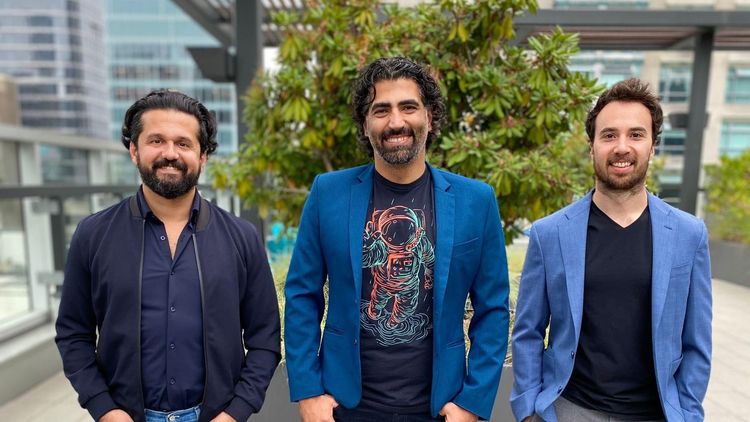
Welcome to YODL! In addition to daily original content, YODL helps CFIN Members find new partners , resources , and funding opportunities to grow their food business. Learn more about this growing community and become a CFIN Member (for free!) today . This is one in a series of interviews with CFIN member companies that have successfully applied for and rece i ved funding . Vancouver, BC-based Cibotica Inc. is a technology company automating the food-making process with robotic solutions. Cibotica’s first product is Remy , a high-tech line cook that makes food preparation more efficient, accurate, and less labour intensive. The company’s goal is to make a restaurant owner’s life easier with fewer issues, less wast e , and less uncertainty , while creating a better industry and environment for all food industry collaborators. Cibotica received $90,741 in funding to help develop a food-safe version of a universal dispensing mechanism and associated control algorithms for use in the company’s robotic salad and bowl makeline. We talked with Cibotica’s executive team, Ashkan Mirnabavi , Soroush Sefidkar and Daryoush Sahebjavaher , to find out more about the project and the company’s plans. Q: What is your company’s mission? A: Our mission is to make food more accessible and affordable by creating a thriving food system which works better for restaurant owners, workers, and consumers. Q: Why did you apply for this funding and how will you use it? A: Food dispensing is the most challenging aspect of food robotics due to the inconsistency of ingredients. Current solutions are inconsistent, space-inefficient, and constraining. We are working on developing our food-safe universal dispensing system, the key ingredient to our automated solution. This agnostic dispenser can accurately measure ingredients of various sizes , shapes, textures and preparation methods. We applied for the CFIN Innovation Booster to support the development of this universal dispensing system and solve the restaurant industry’s challenges. Q: What excites you most about working in this area of the food industry? A: As restaurant owners who have experienced firsthand the daily challenges restaurants face , we are motivated to solve these issues using automation and robotics. Our knowledge of how to solve them with technology has led us to create Cibotica. This area of the food industry is evolving at a rapid pace, and we are excited to become one of the leaders in the industry. We are also excited to see the Canadian restaurant industry evolve to serve Canadians better. Q: Why is collaboration so important for accelerating innovation in the food industry? Is it difficult to find good collaborating partners, and what would make the process easier? A: Collaboration is crucial for accelerating innovation in the food industry. It brings together the expertise, resources and perspectives of others in order to improve existing processes and products. Finding good partners can be challenging, but when there is a shared vision, trust and excellent communication, collaboration comes easy. At Cibotica we are open to collaborations with other technologies to create a better food system for all. Q: Please comment on the importance of public funding to help companies clear innovation hurdles and access leveraged funds. A: Public funding is vital in helping companies overcome innovation hurdles by mitigating risks and addressing market failures. It provides financial resources for research and development, prototype development, and market validation, reducing risks associated with innovation. Additionally, public funding motivates companies to tackle complex problems and allows businesses to expand their teams and accelerate product development. Q: Looking ahead, what’s on the horizon for your company? A: While we currently concentrate on automating salad and bowl preparation, our bigger aim is to go beyond specific cuisines and expand into other areas of cooking. We aim to become the foremost provider of automation solutions for the restaurant industry and set new standards within this sector. Our universal dispensing technology is poised to become the preferred standard across diverse areas of the food industry, extending its reach beyond restaurants. Q: What are your passions or hobbies outside of work. A: Cooking, s ocializing over a culinary experience, s ports, h iking, and t ravelling . Q: If you had to pick one person to make you a meal, who would you choose? A: Remy from Ratatouille.