Inside SIAL Canada 2026: Driving Food Innovation Through Connection and Collaboration
CFIN had the honour of taking a bite out of SIAL Canada 2026 in Montréal 🍎—connecting with partners, members, and industry leaders shaping the future of food innovation across Canada and beyond. Representing CFIN on site were CEO @Dana McCauley and @Julie Daigle , Regional Innovation Director (Quebec), who engaged with the ecosystem throughout the event. Their presence reflected CFIN’s ongoing commitment to strengthening Canada’s food innovation ecosystem and supporting high-potential foodtech ventures. Attendees could also catch Julie as a Foodtech Focus expert at the SIAL Canada Expert Hub, where she connected directly with innovators and shared insights with the community. Dana also took the stage as part of the Dairy Talks program, contributing to a forward-looking discussion on innovation as a driver of market leadership in the Canadian dairy sector. Her session explored the shift from incremental product development toward a broader innovation mindset—highlighting next-generation ingredients, value-added dairy formats, new go-to-market strategies, and the role of Industry 4.0 technologies like AI, robotics, automation, and digital supply chains in strengthening productivity and global competitiveness. A key highlight of the week was CFIN’s involvement in the 7th edition of the Startup Pitch Competition, held on April 30 on the Food & Bev Connect stage. Julie Daigle participated as the President of the Foodtech jury, joining a panel of industry experts evaluating promising entrepreneurs from the Startup Village. Beyond the competition, the Startup Pitch stage served as a strategic platform connecting entrepreneurs with buyers, investors, and key decision-makers across the agri-food ecosystem. A standout moment for the CFIN community was the recognition of Maia Farms, a CFIN member and funding recipient, which earned the Gold Prize in the foodtec h competition 🍄🏆 CFIN’s presence at SIAL Canada underscored the momentum of Canada’s food innovation sector and the value of convening the ecosystem to accelerate ideas from concept to commercialization. 📖 Explore more from SIAL Canada 2026 R elive the stories, innovations, and key moments captured throughout the show in the official SIAL Canada Daily: SIAL Canada Daily – 2026 Edition (Photos Courtesy of SIAL)
Community Manager-
Five Years of CFIN: A Letter to the Network
Thirty years ago, I worked as a chef in the kitchen of one of Canada’s top restaurants standing should er to shoulder with people who ca red about the sensory experience of food above all else . Our tech stack was al most all analog and , to be honest, we didn’t give our ordering system or the way we did inventory a lot of thought. My career broadened over time , and I ’ ve also held roles where I developed recipes at Canadian Living and wrote about food trends; built innovation strategies and products for national brands, founded a business incubator, and ran a venture creation office at a prestigious Canadian u niversity . Food was always the thread , and technology was always present but in most of the food focused businesses I’ve worked for, it was taken for granted, and creativity and hard work were what drove the businesses forward. While smart people with great ideas are essential to food business success, it’s not enough to be competitive in today’s world. Old ways of running restaurants, innovation labs and food and beverage processi ng businesses can’t compete internationally or absorb the trade shocks that have become commonpla ce in recent history. That’s why I feel l ik e CFIN is the perfect place for me to be today and why we’re adding dozens of new members per week. When CFIN was created in 2021, the mandate was intentionally broad : cata lyze Canadian food innovation with funding , build community, connect an ecosystem that had been operating in silos for decades. The funding programs took shape quickly. Since 2022, we’ve awar ded $23.3 million to 133 projects across six program s. For every $1 CFIN invested, our members committed $7.65 of their own capital toward innovation. This leverage ratio of nearly 8-to-1 has unlocked over $140 m illion in private sector spending on R&D and capital infrastructure. The other work was harder to define . What do "build community" and "connect an ecosystem" mean in practice for a sector span ning startups, processors, researchers, investors, policymakers, and operators spread across this vast country ? Th at question didn't have a tidy answer. As a result , fostering and serving this network was (and remains ) an exercise in innovation itself : something new to be built , and then tested, adjusted, and iterated upon , ad infinitum . I’m immensely proud of what we’ve built so far . A team of Regional Innovation Directors who've supported more than 2,200 organizations, brokering the introductions that became commercial partnerships, strategic investments, leadership hires, and research collaborations. A digital platform , YODL, connecting Canada's food sector across industry silos and bridging interprovincial barriers . The first comprehensive analysis of Canadian foodtech . A network of 8,500 members from every province, every part of the food value chain, every stage of business . On any given week, our community is discussing topics ranging from precision fermentation bioreactor designs and funding stacks to food packaging labeling regulations and export strategies, all in the same space. Members benefit from purpose-built tools and resources — like our Funding Finder that aggregates food and beverage funding opportunities across the country and a growing library of original sector research and analysis — alongside direct access to our Regional Innovation Directors. Canada has strong regional funders, accelerators, trade associations, and tech transfer offices, each doing necessary work in a defined lane. What this sector didn't have was a place where the conversation s , the tools, and the connections all showed up at once — where the range of problems and the range of capabilities were dense enough that the right solutions could emerge . That's what CFIN has built. That foundation is important because the next five years will be even more dynamic, and often more challenging, than the last five . To keep pace and flourish in an increasingly volatile world, Canada's food sector needs to modernize faster and more strategic ally than ever before . Trade disruption is dramaticall y reshaping supply chains . L abour constraints are compounding a productivity gap that was widening long before tariffs became front-page news. Climate pressures are intensifying. Food 4.0 — a tech-enabled food s ector that's more collaborative, productive, resilient, and competitive — is the framework CFIN is building toward, and the case for it gets more urgent by the quarter. I ’m confident that we’re up to the task . Five years ago, Canada's food innovation ecosystem was fragmented, underleveraged, and often invisible to the investors, operators, policymakers, and media who needed to see it. That's no longer true. The capacity to respond to the challenges ahead is here. Not in any single program or policy, but in the breadth of this network — the founders , processors , researchers , and investo rs who are hungry to innovate and build a better Canadian food sector . My own wide-ranging path through the food sector taught me that no single role ever showed me the full picture. It took working across kitchens, labs, newsrooms, boardrooms, and startups to understand how innovation really moves through this industry — and where it get s stuck. CFIN was built on the same insight. A sector this complex, facing challenges this urgent, needs more than funding or advice or connections in isolation. It needs all of them in the same room. That's what we've spent five years building, and I'm betting the next five will prove its value at a scale none of us can yet imagine. Thank you for being part of it. Dana McCauley, CEO, Canadian Food Innovation Network
Community Manager-
How BC is Becoming a National Foodtech Hub
Editor's Note: This article was o riginally published in the Vancouver Tech Journal on March 13, 2026 The province has a diverse food processing industry, world-class research facilities, and a deep bench of tech talent — everything a foodtech ecosystem needs to thrive. Foodtech builds the software, automation, and applied science for how food gets processed, manufactured, packaged, distributed, and sold. The industry behind it is enormous — food and beverage processing alone is Canada's largest manufacturing sub-sector , bigger than automotive, bigger than aerospace. It's a serious market, and in British Columbia, it's growing fast. But if you work in the province's broader tech ecosystem, you might not even know that. Foodtech hasn't traditionally drawn the same attention as sectors like cleantech or enterprise SaaS despite being a comparable market in scale and complexity — and one where demand for new technology is accelerating fast. What BC brings to the table BC's food processing sector is substantial — over 3,200 companies producing roughly $12.6 billion in value-added products annually. And it's being treated as a strategic priority. The province has funded a network of shared food processing hubs, UBC just opened a Food and Beverage Innovation Centre with pilot-scale production labs that processors and startups previously had to leave BC to access, and SFU's BC Centre for Agritech Innovation is partnering directly with SMEs on cost-shared R&D. At the same time, much of what the food industry needs is already being built in BC for other thriving tech sectors. Process automation, energy management, supply chain software, safety and traceability systems, data-driven quality control — these are cleantech and software problems applied to production floors and distribution networks. The talent, research base, and trade infrastructure to support a serious foodtech cluster are all here. A different kind of tech sector Foodtech doesn't work like enterprise SaaS or consumer tech. Processors and manufacturers adopt slowly and carefully, because failure is expensive in ways that go beyond lost revenue — a food safety issue, a botched line integration, a regulatory problem. Sales cycles run in quarters. The investor community that understands food is small and specialized. And the industry's own networks run through trade associations, existing supply relationships, and sector-specific events that sit well outside the broader tech community's orbit. None of this means foodtech is closed off. It means that if you want in — as a founder, investor, developer, or potential partner — you need a way to access the conversations, the deal flow, and the operating knowledge that don't surface through the usual channels. The Canadian Food Innovation Network The Canadian Food Innovation Network is a national not-for-profit, established in 2021 that functions as the operating infrastructure for Canada's foodtech sector. CFIN runs cost-shared funding programs that help companies de-risk R&D and move technology into commercial settings. Since launch , the organization has awarded over $22 million to 122 Canadian foodtech projects, matched by $25 million in industry co-investment. Those funded companies have generated $90 million in economic impact, created over 355 jobs and co-op placements, and attracted more than $82 million in follow-on investment. The network's 8,000-plus members include food processors, technology companies, ingredient suppliers, retailers, researchers, and investors — connected through YODL, CFIN's member platform, and supported by Regional Innovation Directors embedded across the country, who work directly with members to broker introductions, navigate funding, and connect emerging technology with the processors and buyers who need it. CFIN also produces the sector's most detailed intelligence . The Foodtech in Canada 2025 Ecosystem Report mapped investment flows, identified sector strengths, and gave both companies and investors a clearer picture of where the Canadian foodtech market stands. And then there's Foodtech Frontier , CFIN's annual program identifying the country's highest-potential foodtech companies. The inaugural cohort of 35 winners included eight BC companies. For investors, it works as curated, vetted deal flow in a sector where sourcing is otherwise hard. For the companies, it's structured national visibility. Plug into Canada’s foodtech ecosystem If you work in technology or investment and you've been curious about the food sector, then signing up for a free CFIN membership is the best place to start. Members get access to funding programs, sector intelligence, a national innovation community, and regional team members that know the BC landscape specifically.
Community Manager-
Other Articles
Member Picks – Cheryl Appleton
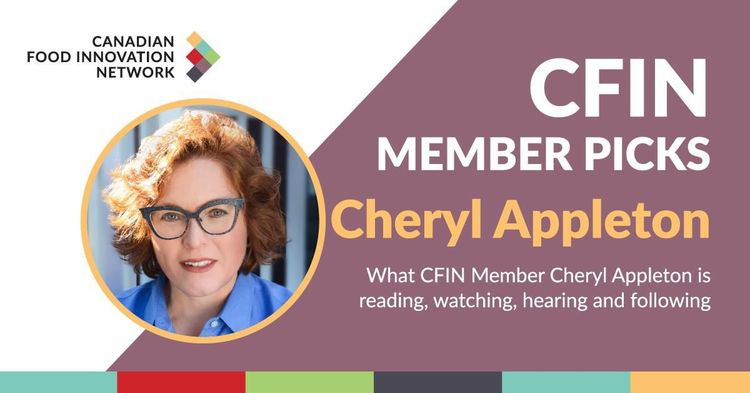
Welcome to YODL! In addition to daily original content, YODL helps CFIN Members find new partners , resources , and funding opportunities to grow their food business. Learn more about this growing community and become a CFIN Member (for free!) today . In the past we’ve highlighted what CFIN staff are reading, listening to, and posting about. Since we’re highlighting members this week we’ve reached out to a CFIN member to uncover a few of her favourite picks. Cheryl Appleton is COO of Inca’s Gold Or g anics , and founder of Canadia n Women In Food . What are you reading? Kicking it old school, breakfast involves a scan of The Toronto Star newspaper, and perhaps some printed articles from The Washington Post . When I hit my desk, there is the daily dose of updates by Grocery Business , Canadian Grocer , and at least one other online feed. And of course, I always cap off the day with a read through of The Open Forum Digest by CFIN . What are you listening to? I’m a dynamic learner, so one-dimensional podcasts have limited value for me. Each week, I host Monday Morning Manager with Canadian Women In Food , so I’m really listening to what female food entrepreneurs have to say. So much in our industry changes so quickly that there is always lots to talk about. Who are you following? Women leading food businesses are so on the ball that it’s a real pleasure to support them, learn from them, and also cheer them on. This is a tough industry and the landscape can be so unbelievably challenging that we need to leverage our collective knowledge and resilience to stay innovative. What are you watching? A guilty pleasure of mine is watching what chefs are cooking and creating. I’m “Chef Cheryl” at home, and I love to play around with new recipes and ideas that support living a healthier life. You may as well have fun with what you enjoy eating every day. What are you posting about? One of the things I love about my journey with Inca Gold Organics is learning about all the health benefits of high-quality, organic quinoa, chia and maca. There’s no question I’ve noticed a remarkable change in my energy and vitality, just by adding superfoods into my cooking. It inspires me to share these insights as we know how certified organic products are going to become more important to people in the future. Have a story you want to tell us? Want to get more involved with CFIN? Contact one of our Regional Innovation Directors . CFIN Members get exclusive access to funding opportunities , five Regional Innovation Directors , and YODL . Learn more about what it’s like to be a CFIN Member and how you can join our growing community of food professionals.
Community Manager-
Meet a Member - Mingyang Sun
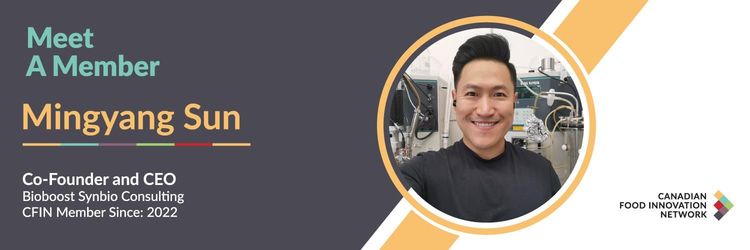
Welcome to YODL! In addition to daily original content, YODL helps CFIN Members find new partners , resources , and funding opportunities to grow their food business. Learn more about this growing community and become a CFIN Member (for free!) today . Since launching in 2022, CFIN has grown to more than 3, 3 00 members, which includes professionals from every sector of the food industry. This series highlights the many different CFIN members across Canada who visit YODL to learn, make connections, find funding, and discover new ways to grow their businesses. Mingyang Sun Co-foun d er and CEO, B ioboost Synbio Port Coquitlam , BC Tell us about your job I’m a jack of all trade s. How Is YODL helping you do your job ? YODL helps me to look for and to connect with potential strategic partners and funding. It also helps me to keep updated on the current trends and challenges others have in the food space How often do you visit YODL ? Once a week . Can you tell us something you have learned on YODL? I connected with individuals that are knowledgeable about biosynthesis/precision fermentation. From there I learned about the demand of growth factors in the artificial meat industry, which helps us to decide what product innovations we could bring. What type of connection partners are you looking for? Players in cellular agriculture. Ideally the big players that would like invest in cutting - edge alternative protein production. What Is your favorite aspect of YODL? Community engagement. People with diverse background s in the food space are helping each other on the platform. What area of food innovation are you most interested in ? A lternative protein via precision fermentation and biosynthesis. What's your favo u rite food and beverage ? Sashimi/Beijing soy paste noodle . Missed a Meet a Member article? Here are links to profiles of CFIM members Richard Baker , Leonardo Calcagno , Rebecca Prime , and Mary Ellen Schaafsma. Interested in participating in our Meet a Member series? Contact your Regional Innovation Director for more information! CFIN Members get exclusive access to funding opportunities , five Regional Innovation Directors , and YODL . Learn more about what it’s like to be a CFIN Member and how you can join our growing community of food professionals.
Community Manager-
50 Canadian FoodTech Resources – BC Food & Beverage Association
Welcome to YODL! In addition to daily original content, YODL helps CFIN Members find new partners , resources , and funding opportunities to grow their food business. Learn more about this growing community and become a CFIN Member (for free!) today . Canada has an extensive range of research centres, food incubators, accelerators and labs supporting food and beverage innovation through the research they do and/or the services they offer. Each week throughout 2023, we’ll be highlighting an organization that’s supporting food innovation in Canada. Name: BC Food & Beverage Association Location: Langley, BC Mission: To ensure a thriving, world-class food and beverage manufacturing industry for British Columbia. Focus: The not-for-profit industry association represents food and beverage manufacturers in BC. Services: The association helps to support and grow food and beverage businesses, and to engage members in practical and meaningful ways. It offers a strong network of experts able to support members at every stage of their business. Services include: Monthly webinar series Resources such The BCFB Learning Centre , Export Guide, Partner Referral Guide and Cultivate Magazine One-on-one Ask an Expert meetings and Quarterly Breakfast Series Events such as the Foodpro Thrive Conference , the BC Food & Beverage Awards , and the Product of the Year Competition Programs such as the Women’s Peer Mentorship Program Member discounts on services such as Food Safety Training & Certification What you Need to Know: The association also acts as an advocate for the BC food and beverage industry. Notable News: The BCFB Awards 2023 will be presented at the Rocky Mountaineer Station in Vancouver , BC on October 11, 2023. Get Involved: Contact the association at info@bcfb.ca or (604) 371-4245 , or reach out to CFIN’s Regional Innovation Director for BC, Lavina Gully .
Community Manager-
Guest Post: Data Quality Matters - Unravelling the Impact of Bad Data on Inventory Expiration
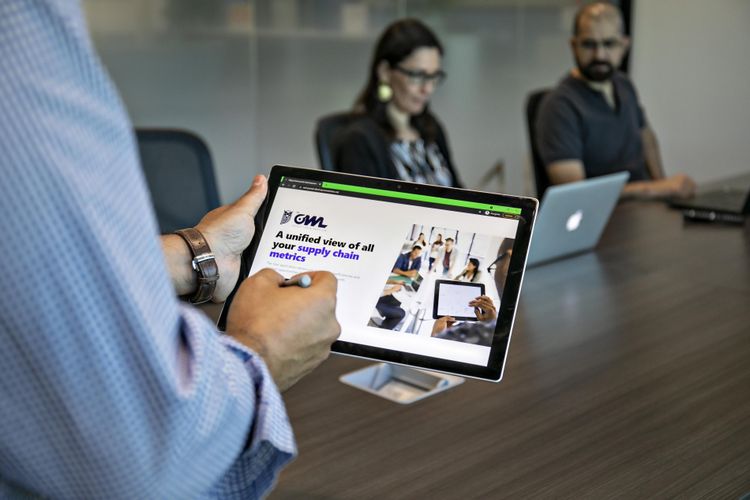
Welcome to YODL! In addition to daily original content, YODL helps CFIN Members find new partners , resources , and funding opportunities to grow their food business. Learn more about this growing community and become a CFIN Member (for free!) today . By Hugo Fuentes , CFIN member and CEO of The Owl Solutions In the fast-paced world of food manufacturing, inventory expiration poses a persistent challenge for many companies. While it may be easy to blame inventory planners or analysts for these issues, the root cause often lies in outdated systems and processes that professionals are forced to work with. The harsh reality is that most manufacturers rely on a patchwork of three to five different IT systems to manage their supply chain, resulting in fragmented data and information silos that hinder productivity. Imagine the inventory planner juggling multiple ERPs, warehouse management systems, Power BI, and more, all to extract the necessary data into Excel spreadsheets for reports. This manual process not only consumes valuable time but also diverts attention from critical tasks such as coordinating action items and conducting root cause analyses. Supply chains are inherently complex, and their intricacies are only expected to grow in the future. Yet, persisting with outdated systems is similar to using a typewriter in an era of advanced word processors – it impedes efficiency, accuracy, and adaptability, leaving organizations vulnerable to costly inventory expiration . But how can you determine if your organization is suffering from poor data quality? Fortunately, there are several factors that can serve as red flags for poor data quality. Factors that contribute to poor data quality 1. Manual data entry Some food companies still rely on manual data entry processes, which are prone to human errors. Inaccurate or incomplete data can result from typos, misinterpretation, or oversight during manual input, leading to poor data quality. 2. Fragmented data sources Food companies often have multiple systems and databases that store different types of data, such as sales, inventory, and procurement. When these systems are not integrated or communicate poorly with each other, it can result in fragmented data sources. Inconsistent or disconnected data makes it challenging to have a holistic view of the business and can lead to poor data quality. 3. Lack of data governance Data governance refers to the policies, processes, and procedures in place to ensure data integrity and quality. Without proper data governance practices, food companies may struggle to establish standardized data definitions, data validation rules, and data maintenance protocols. This lack of governance can result in data inconsistencies and inaccuracies. 4. Complex supply chains Food companies often have complex supply chains involving multiple stakeholders, such as suppliers, distributors, and retailers. The flow of data across these entities can be fragmented and inconsistent, making it difficult to maintain accurate and up-to-date information. Issues such as delays in data transmission, incompatible data formats, or data discrepancies between different parties can contribute to poor data quality. 5. Legacy systems Some food companies may still rely on outdated or legacy systems that were implemented before modern data management practices became prevalent. These systems may lack the capabilities to effectively capture, store, and analyze data, leading to data quality issues. Upgrading or migrating to more advanced systems can be a costly and time-consuming process, deterring some companies from improving their data quality. 6. Lack of data expertise Managing data effectively requires specialized knowledge and skills. Food companies that do not have dedicated data professionals or data management expertise may struggle to implement robust data quality measures. Without the necessary expertise , it becomes challenging to identify and address data quality issues, resulting in poor data across the organization. Addressing the challenges posed by data quality in inventory management is crucial for food manufacturers. By investing in robust data management practices or partnering with third-party , full-service supply chain analytics providers, companies can achieve increased visibility into their inventory. This enhanced visibility enables inventory teams to spend less time vetting data and more time focusing on reviewing insights, conducting root cause analyses, and coordinating action items. The benefits of clear visibility into inventory extend beyond the company ’ s bottom line. It plays a vital role in reducing the number of expired products, which not only impacts financial performance but also has sustainability implications for the food and beverage industry. A significant amount of food waste in the supply chain ends up in landfills, contributing to the emission of methane – a greenhouse gas 25 times more potent than carbon dioxide (U .S. Environmental Protection Agency, 2022). Read more about how data analytics can reduce supply chain food waste . By effectively reducing inventory expiration , companies can achieve multiple benefits. They improve their bottom line, enhance supply chain efficiency, and contribute to a more sustainable future for our planet. Taking proactive steps towards data-driven inventory management is not just a business imperative, but also an ethical responsibility in the face of environmental challenges. R ecognizing the impact of bad data on inventory expiration and taking decisive action to improve data quality will unlock opportunities for better decision making, reduced waste, and a more resilient and environmentally conscious supply chain . Hugo Fuentes is the CEO of The Owl Solutions , a prominent supply chain analytics company committed to aiding mid-sized manufacturers in diminishing financial, environmental, and productivity waste through data-driven insights and actionable strategies. If you are interested in learning more about how The Owl can help you reduce inventory waste through our inventory expiration module, please visit www.theowlsolutions.com/inventory-expiration
Community Manager-
IN 30: YODL
Welcome to YODL! In addition to daily original content, YODL helps CFIN Members find new partners , resources , and funding opportunities to grow their food business. Learn more about this growing community and become a CFIN Member (for free!) today . Sometimes, all it takes is 30 minutes to learn the ins and outs of new food technologies and trends that are transforming the food and beverage industry. In this series, we’ll dig into a food innovation topic and link you to content and resources so you can become a master on the topic in 30 minutes (or less!). This week, we’re looking at everything CFIN members can do on YODL. The Overview CFIN now has more than 3, 3 00 members (and growing) , including food and beverage processors, distributors, retailers, funders, innovators, regulators and researchers from all areas of Canada . One of the benefits of becoming a member is access to YODL, our interactive online platform. Here’s just a taste of what you’ll find on YODL: Original d aily content covering food industry news, foodtech resources , and information on topics such as cellular food , automation and robotics , personalized nutrition , removing plastics waste , and digitization . O nline events that showcase how innovation is transforming the food value chain , including Cultivating Success: Canada's Big Biomanufacturing Opportunity and Robotics in Action -- Seeing is Believing! Profiles of CFIN member companies and individuals . Guest posts and interview s with industry specialists in packaging , marketing, food law , arti ficial intelligence and more. Funding opportunities for innovation through a range of CFIN programs. N etworking , mentoring , sourcing and collaboration opportunities with other food and beverage professionals through our discussion forum. Access to one of our five Regional Innovation Directors located across the country , who can c onnect you with funding and partnership opportunities to help grow your business and innovation capacity. Lively discussion posts from members , RID and CFIN staff. An open community of food and beverage professionals sharing ideas and solutions. YODL is also bilingual – simply toggle between French and English on the widget located at the bottom right of the site. Additional R esources YODL offers two member-exclusive tools: a Funding Finder featuring federal, regional and provincial funding opportunities available across Canada, and a Resource Finder , offering more than 2,000 food-related products and services. CFIN members are using the finder resources to find funding, source ingredients and find supply partners and co-packers. Get Involved CFIN members have automatic access to YODL. Becoming a member of CFIN takes less than five minutes and is free! Find out how to sign up here . Or click here to learn more about CFIN. Overtime If you’ve got more than 30 minutes, these are for you: YODL – Guest Post: How Networking on YODL Led to a New Career Path and the Growth of Ontario's Laplace Robotics Read how two CFIN members met on YODL to establish a n innovative robotics business. YODL – Meet YODL! Find out more about our one-of-a-kind online platform.
Community Manager-
Staff Picks – Leonardo Ojeda
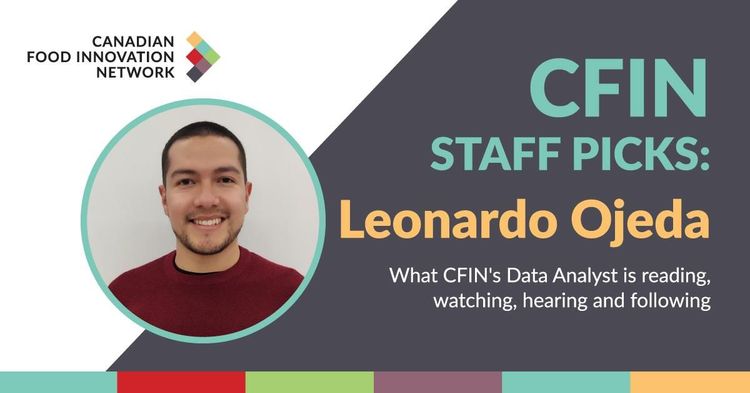
Welcome to YODL! In addition to daily original content, YODL helps CFIN Members find new partners , resources , and funding opportunities to grow their food business. Learn more about this growing community and become a CFIN Member (for free!) today . A lot of material comes across our desks at CFIN, and we love to share new information with YODLers! This one in a series of articles highlighting what CFIN staff are reading, listening to, watching, and posting. This week we’re checking in with Data Analyst Leonardo Ojeda . What technology is out there that really excites you right now? Automation and quantum computing. These innovations are exceptionally intriguing as they grant us the ability to comprehend and process not only numeric data but a vast array of diverse information. T hese technologies hold the potential to unlock new frontiers in scientific discoveries and optimization. What tech tools do you think food and beverage companies should be investing in? Food waste reduction technologies. Solutions that tackle food waste, such as AI-powered inventory management systems and composting technologies, can help companies become more sustainable and reduce their environmental impact. What are you currently reading, watching or listening to? I just watched Sound of Freedom . You came to Canada from Colombia. What are the biggest differences you’ve noticed – from both a food and tech perspective? In terms of food, Colombia and Canada are quite different. In Colombia, th ere is a whole bunch of fresh and locally sourced ingredients that make cuisine pop with flavo u rs . On the other hand, Canada has diversity in offering a wide array of cuisines from all over the world, reflecting the multicultural nature of the country with an international fusion of tastes and dishes .
Community Manager-
AI + Food – Moosehead Breweries
Welcome to YODL! In addition to daily original content, YODL helps CFIN Members find new partners , resources , and funding opportunities to grow their food business. Learn more about this growing community and become a CFIN Member (for free!) today . This series showcases Canadian foodtech companies that are using AI to solve a wide variety of industry challenges, including improving efficiency, pricing analysis, inventory management, quality control, food safety assurance and more. This time we're featuring Saint John, NB-based Moosehead Breweries Ltd . What They Do Moosehead Breweries is Canada’s oldest independent beer company , established in 1867 . It sells a wide range of brands throughout Canada and the U.S., and in 15 countries worldwide. How They’re Using AI The beer company is focused on innovation and modernization of the brewery. It uses artificial intelligence combined with a conveyor belt at its bottling plant embedded with Internet-enabled sensors and data analytics software to monitor pasteurization, filling, labelling, capping and packaging, increasing capacity while lowering costs. AI and sensors also helps the brewery to monitor supply chain and procurement, and match production to customer demand in different market regions to reduce transportation and its carbon footprint. In the Media YouTube - Moosehead Journey
Community Manager-
50 Canadian FoodTech Resources - Alacrity Cleantech
Welcome to YODL! In addition to daily original content, YODL helps CFIN Members find new partners , resources and funding opportunities to grow their food business. Learn more about this growing community and become a CFIN Member (for free!) today. Canada has an extensive range of research centres, food incubators, accelerators and labs supporting food and beverage innovation through the research they do and/or the services they offer. Each week throughout 2023, we’ll be highlighting an organization that’s supporting food innovation in Canada. Name: Alacrity Cleantech , part of Alacrity Canada. Location : Victoria, BC Mission: Alacrity Cleantech is a government-funded program that helps emerging cleantech companies in BC and Western Canada scale up and access resources so they can grow internationally. Focus : The program helps cleantech companies that are in the early commercialization or revenue stage, and prepare for them investments, sales and services in international target markets. Services: Alacrity Cleantech helps small- and medium-sized companies (up to 500 employees) with a product or service developed and ready to sell to optimize their approaches to customer acquisition, attract and connect with investors, accelerate growth, navigate long sales cycles, and connect with government and peers. Help is available for marketing, sales, business development, financial due diligence, and international growth strategies. In addition, Alacrity’s parent company, Alacrity Canada, has a wide network of advisors, mentors, and business experts that help to identify problems in global markets that can be solved by BC cleantech companies. The program primarily focuses on international markets Mexico, Singapore, India and Northern Europe. What you Need to Know : The company helps cleantech companies in the following sectors: Water and wastewater treatment Recycling and the circular economy Agricultural technology (Agritech) Energy and resource efficiency Marine research and ocean technology (Oceantech) Carbon capture and storage (CCS) Hydrogen and alternative Energy Notable News : To date Alacrity Canada has attracted more than $356.6 million in investment supporting 10,500+ businesses and creating over 6,894 jobs. Get Involved : Contact Alacrity Cleantech at cleantech@alacritycanada.com or reach out to our Regional Innovation Director for BC and Yukon Lavina Gully .
Community Manager-
CFIN Funded Projects: One Year Updates – Gastronomous Technologies
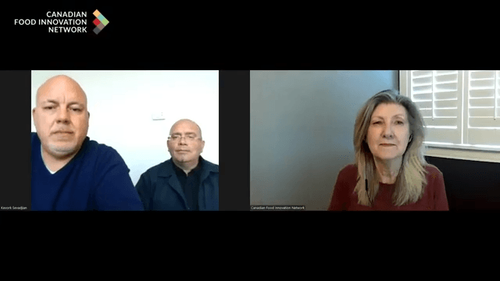
Welcome to YODL! In addition to daily original content, YODL helps CFIN Members find new partners , resources , and funding opportunities to grow their food business. Learn more about this growing community and become a CFIN Member (for free!) today . CFIN has provided funding for many projects over the past two years. Now we’re catching up with the Canadian companies leading CFIN-funded projects to chat about how their innovations have advanced in the year since funding. In this video, Linda Fox, CFIN Regional Innovation Director for Ontario, sits down with Kevork Sevadjian and Andrew Skrepnek, co-founders of Oakville, ON-based Gastronomous Technologies, to discuss how CFIN’s Food Innovation Challenge funding has helped them in creating their connected, autonomous kitchen.
Community Manager-
IN 30: Food Day Canada
Welcome to YODL! In addition to daily original content, YODL helps CFIN Members find new partners , resources , and funding opportunities to grow their food business. Learn more about this growing community and become a CFIN Member (for free!) today . Sometimes, all it takes is 30 minutes to learn the ins and outs of new food technologies and trends that are transforming the food and beverage industry. In this series, we’ll dig into a food innovation topic and link you to content and resources so you can become a master on the topic in 30 minutes (or less!). This week, we’re looking at Food Day Canada, which takes place August 5, 2023. The Overview Food Day Canada takes place e ach year on the Saturday before the first Monday in August, although some businesses celebrate for the week or even the month. This year is Food Day Canada’s 20th anniversary. The day was established by cookbook author and food historian and activist Anita Stewart in 2003 as the “W orld’s Longest Barbecue” in support of Canadian beef producers. Although the event was intended to help producers struggling with U.S. border closures during BSE , it became an annual celebration of locally grown and produced food. Today Food Day Canada encourages consumers to shop, cook and dine on Canadian-made products, and is supported by farmers, fishers, restaurants, food researchers, chefs, food retailers , and food and beverage companies across the country. Resources The Food Day Canada website offers a downloadable partner t oolkit that includes graphics and an action kit with information on how to participate in the event. The site also offers a list Food Day Canada partners , as well as Anita Stewart’s favourite Canadian recipes and ingredients , including sourcing information. What you Need to Know The Food Day in Canada Act was passed by the Government of Canada in May 2023 to officially designate the Saturday before the first Monday in August as Food Day in Canada. The day officially celebrates Canadian-grown food and those who contribute to Canada’s agriculture, food and culinary industries. Get Involved Consumers, food businesses, grocers, farmers, chefs, event organizers, educators, restaurateurs and more can get involved by signing the Food Day Canada pledge to support Canadian food and the people who grow, produce, and make it. Consumers and businesses can tag their efforts on social media with #FoodDayCanada. Overtime If you’ve got more than 30 minutes, these are for you: YODL - CFIN discusses Food Day Canada 2023 with Crystal Mckay
Community Manager-
What YODLers are Saying and Reading – The Top YODL Content for July 2023
Welcome to YODL! In addition to daily original content, YODL helps CFIN Members find new partners , resources , and funding opportunities to grow their food business. Learn more about this growing community and become a CFIN Member (for free!) today . YODL was hot in July, with networking opportunities , articles and discussion posts about industry issues, trends, events and more . In case you missed them, here are the top five discussions and most read articles on YODL in Ju ly 2023. Top YODL Discussions in July 2023 Number 5 Seeking co-packer for carbonated non alco h olic b everage Finding new business partners is one of the benefits of being on YODL. Number 4 Soft and Chewy gr a nola There are many food experts on YODL ready to help with any member questions. Number 3 Food Product Dev e lopment Services Partnerships are crucial to establishing a sustainable business model. Number 2 How to figure out first production run quantities YO DL ers are looking for all types of business advice through networking with other members. Number 1 Co-packer with stand up pouch filling capabi l ities in Alberta or BC Looking for a collaborator to help your business scale up? YODL has the answers! Most Read YODL Articles in July 2023 Number 5 Guest Post: How Networking on YODL Led to a New Career Path and the Growth of Ontario's Laplace Robotics Learn about how two food professionals connected on YODL to grow Toronto’s Laplace Robotics. Number 4 Staff Picks – Jairo M elo Find out what CFIN’s Director of Digital Technology Jairo Melo is reading, listening to, watching, and posting . Number 3 CFIN Funded Projects: One Year Upd a tes – Foodarom CFIN’s Regional Innovation Directors are checking in with companies that received funding for projects in the past year. This video interview checks in with Foodarom , a St- Hubert, QC- based company manufacturing custom flavours for the food and beverage industry. Number 2 Company Spotlight – New School Foods Toronto, ON-based New School Foods Inc. uses new production technologies to create authentic whole-cut meat and seafood alternatives for the mass market that deliver on texture, cooking, appearance, price and taste. Number 1 IN 30: Ontario’s Food Ecosystem YODL has featured overviews of the food ecosystem in regions across Canada. This article looks at resources and companies in Ontario.
Community Manager-
CFIN Celebrates: Food Day Canada 2023
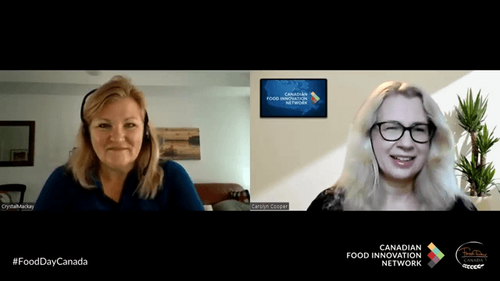
Welcome to YODL! In addition to daily original content, YODL helps CFIN Members find new partners , resources , and funding opportunities to grow their food business. Learn more about this growing community and become a CFIN Member (for free!) today . Food Day Canada takes place e ach year on the Saturday before the first Monday in August, although some businesses celebrate for the week or even the month. To celebrate Food Day Canada’s 20th anniversary, Carolyn Cooper talks with coordinator Crystal Mackay to find out how food and beverage businesses, food retailers, researchers, educators and restaurants can participate.