Inside SIAL Canada 2026: Driving Food Innovation Through Connection and Collaboration
CFIN had the honour of taking a bite out of SIAL Canada 2026 in Montréal 🍎—connecting with partners, members, and industry leaders shaping the future of food innovation across Canada and beyond. Representing CFIN on site were CEO @Dana McCauley and @Julie Daigle , Regional Innovation Director (Quebec), who engaged with the ecosystem throughout the event. Their presence reflected CFIN’s ongoing commitment to strengthening Canada’s food innovation ecosystem and supporting high-potential foodtech ventures. Attendees could also catch Julie as a Foodtech Focus expert at the SIAL Canada Expert Hub, where she connected directly with innovators and shared insights with the community. Dana also took the stage as part of the Dairy Talks program, contributing to a forward-looking discussion on innovation as a driver of market leadership in the Canadian dairy sector. Her session explored the shift from incremental product development toward a broader innovation mindset—highlighting next-generation ingredients, value-added dairy formats, new go-to-market strategies, and the role of Industry 4.0 technologies like AI, robotics, automation, and digital supply chains in strengthening productivity and global competitiveness. A key highlight of the week was CFIN’s involvement in the 7th edition of the Startup Pitch Competition, held on April 30 on the Food & Bev Connect stage. Julie Daigle participated as the President of the Foodtech jury, joining a panel of industry experts evaluating promising entrepreneurs from the Startup Village. Beyond the competition, the Startup Pitch stage served as a strategic platform connecting entrepreneurs with buyers, investors, and key decision-makers across the agri-food ecosystem. A standout moment for the CFIN community was the recognition of Maia Farms, a CFIN member and funding recipient, which earned the Gold Prize in the foodtec h competition 🍄🏆 CFIN’s presence at SIAL Canada underscored the momentum of Canada’s food innovation sector and the value of convening the ecosystem to accelerate ideas from concept to commercialization. 📖 Explore more from SIAL Canada 2026 R elive the stories, innovations, and key moments captured throughout the show in the official SIAL Canada Daily: SIAL Canada Daily – 2026 Edition (Photos Courtesy of SIAL)
Community Manager-
Five Years of CFIN: A Letter to the Network
Thirty years ago, I worked as a chef in the kitchen of one of Canada’s top restaurants standing should er to shoulder with people who ca red about the sensory experience of food above all else . Our tech stack was al most all analog and , to be honest, we didn’t give our ordering system or the way we did inventory a lot of thought. My career broadened over time , and I ’ ve also held roles where I developed recipes at Canadian Living and wrote about food trends; built innovation strategies and products for national brands, founded a business incubator, and ran a venture creation office at a prestigious Canadian u niversity . Food was always the thread , and technology was always present but in most of the food focused businesses I’ve worked for, it was taken for granted, and creativity and hard work were what drove the businesses forward. While smart people with great ideas are essential to food business success, it’s not enough to be competitive in today’s world. Old ways of running restaurants, innovation labs and food and beverage processi ng businesses can’t compete internationally or absorb the trade shocks that have become commonpla ce in recent history. That’s why I feel l ik e CFIN is the perfect place for me to be today and why we’re adding dozens of new members per week. When CFIN was created in 2021, the mandate was intentionally broad : cata lyze Canadian food innovation with funding , build community, connect an ecosystem that had been operating in silos for decades. The funding programs took shape quickly. Since 2022, we’ve awar ded $23.3 million to 133 projects across six program s. For every $1 CFIN invested, our members committed $7.65 of their own capital toward innovation. This leverage ratio of nearly 8-to-1 has unlocked over $140 m illion in private sector spending on R&D and capital infrastructure. The other work was harder to define . What do "build community" and "connect an ecosystem" mean in practice for a sector span ning startups, processors, researchers, investors, policymakers, and operators spread across this vast country ? Th at question didn't have a tidy answer. As a result , fostering and serving this network was (and remains ) an exercise in innovation itself : something new to be built , and then tested, adjusted, and iterated upon , ad infinitum . I’m immensely proud of what we’ve built so far . A team of Regional Innovation Directors who've supported more than 2,200 organizations, brokering the introductions that became commercial partnerships, strategic investments, leadership hires, and research collaborations. A digital platform , YODL, connecting Canada's food sector across industry silos and bridging interprovincial barriers . The first comprehensive analysis of Canadian foodtech . A network of 8,500 members from every province, every part of the food value chain, every stage of business . On any given week, our community is discussing topics ranging from precision fermentation bioreactor designs and funding stacks to food packaging labeling regulations and export strategies, all in the same space. Members benefit from purpose-built tools and resources — like our Funding Finder that aggregates food and beverage funding opportunities across the country and a growing library of original sector research and analysis — alongside direct access to our Regional Innovation Directors. Canada has strong regional funders, accelerators, trade associations, and tech transfer offices, each doing necessary work in a defined lane. What this sector didn't have was a place where the conversation s , the tools, and the connections all showed up at once — where the range of problems and the range of capabilities were dense enough that the right solutions could emerge . That's what CFIN has built. That foundation is important because the next five years will be even more dynamic, and often more challenging, than the last five . To keep pace and flourish in an increasingly volatile world, Canada's food sector needs to modernize faster and more strategic ally than ever before . Trade disruption is dramaticall y reshaping supply chains . L abour constraints are compounding a productivity gap that was widening long before tariffs became front-page news. Climate pressures are intensifying. Food 4.0 — a tech-enabled food s ector that's more collaborative, productive, resilient, and competitive — is the framework CFIN is building toward, and the case for it gets more urgent by the quarter. I ’m confident that we’re up to the task . Five years ago, Canada's food innovation ecosystem was fragmented, underleveraged, and often invisible to the investors, operators, policymakers, and media who needed to see it. That's no longer true. The capacity to respond to the challenges ahead is here. Not in any single program or policy, but in the breadth of this network — the founders , processors , researchers , and investo rs who are hungry to innovate and build a better Canadian food sector . My own wide-ranging path through the food sector taught me that no single role ever showed me the full picture. It took working across kitchens, labs, newsrooms, boardrooms, and startups to understand how innovation really moves through this industry — and where it get s stuck. CFIN was built on the same insight. A sector this complex, facing challenges this urgent, needs more than funding or advice or connections in isolation. It needs all of them in the same room. That's what we've spent five years building, and I'm betting the next five will prove its value at a scale none of us can yet imagine. Thank you for being part of it. Dana McCauley, CEO, Canadian Food Innovation Network
Community Manager-
How BC is Becoming a National Foodtech Hub
Editor's Note: This article was o riginally published in the Vancouver Tech Journal on March 13, 2026 The province has a diverse food processing industry, world-class research facilities, and a deep bench of tech talent — everything a foodtech ecosystem needs to thrive. Foodtech builds the software, automation, and applied science for how food gets processed, manufactured, packaged, distributed, and sold. The industry behind it is enormous — food and beverage processing alone is Canada's largest manufacturing sub-sector , bigger than automotive, bigger than aerospace. It's a serious market, and in British Columbia, it's growing fast. But if you work in the province's broader tech ecosystem, you might not even know that. Foodtech hasn't traditionally drawn the same attention as sectors like cleantech or enterprise SaaS despite being a comparable market in scale and complexity — and one where demand for new technology is accelerating fast. What BC brings to the table BC's food processing sector is substantial — over 3,200 companies producing roughly $12.6 billion in value-added products annually. And it's being treated as a strategic priority. The province has funded a network of shared food processing hubs, UBC just opened a Food and Beverage Innovation Centre with pilot-scale production labs that processors and startups previously had to leave BC to access, and SFU's BC Centre for Agritech Innovation is partnering directly with SMEs on cost-shared R&D. At the same time, much of what the food industry needs is already being built in BC for other thriving tech sectors. Process automation, energy management, supply chain software, safety and traceability systems, data-driven quality control — these are cleantech and software problems applied to production floors and distribution networks. The talent, research base, and trade infrastructure to support a serious foodtech cluster are all here. A different kind of tech sector Foodtech doesn't work like enterprise SaaS or consumer tech. Processors and manufacturers adopt slowly and carefully, because failure is expensive in ways that go beyond lost revenue — a food safety issue, a botched line integration, a regulatory problem. Sales cycles run in quarters. The investor community that understands food is small and specialized. And the industry's own networks run through trade associations, existing supply relationships, and sector-specific events that sit well outside the broader tech community's orbit. None of this means foodtech is closed off. It means that if you want in — as a founder, investor, developer, or potential partner — you need a way to access the conversations, the deal flow, and the operating knowledge that don't surface through the usual channels. The Canadian Food Innovation Network The Canadian Food Innovation Network is a national not-for-profit, established in 2021 that functions as the operating infrastructure for Canada's foodtech sector. CFIN runs cost-shared funding programs that help companies de-risk R&D and move technology into commercial settings. Since launch , the organization has awarded over $22 million to 122 Canadian foodtech projects, matched by $25 million in industry co-investment. Those funded companies have generated $90 million in economic impact, created over 355 jobs and co-op placements, and attracted more than $82 million in follow-on investment. The network's 8,000-plus members include food processors, technology companies, ingredient suppliers, retailers, researchers, and investors — connected through YODL, CFIN's member platform, and supported by Regional Innovation Directors embedded across the country, who work directly with members to broker introductions, navigate funding, and connect emerging technology with the processors and buyers who need it. CFIN also produces the sector's most detailed intelligence . The Foodtech in Canada 2025 Ecosystem Report mapped investment flows, identified sector strengths, and gave both companies and investors a clearer picture of where the Canadian foodtech market stands. And then there's Foodtech Frontier , CFIN's annual program identifying the country's highest-potential foodtech companies. The inaugural cohort of 35 winners included eight BC companies. For investors, it works as curated, vetted deal flow in a sector where sourcing is otherwise hard. For the companies, it's structured national visibility. Plug into Canada’s foodtech ecosystem If you work in technology or investment and you've been curious about the food sector, then signing up for a free CFIN membership is the best place to start. Members get access to funding programs, sector intelligence, a national innovation community, and regional team members that know the BC landscape specifically.
Community Manager-
Other Articles
Report: The 2024 Food and Beverage Outlook
Welcome to YODL! In addition to daily original content, YODL helps CFIN Members find new partners , resources , and funding opportunities to grow their food business. Learn more about this growing community and become a CFIN Member (for free!) today . Market researcher Circana , formerly IRI and The NPD Group, recently released its 2024 Food and Beverage Outlook report , which reveals some of the key changes and issues that will affect the industry over the next year. Here are three takeaways from the report. 1 . The food and beverage industry will see modest growth in 2024, following three years of decline. According to Circana , h igh inflation is expected to slow in 2024 , which will have a positive affect on industry growth, as will “the macroeconomic environment and growing promotional investments.” Manufacturers and retailers are continuing to innovate and adapt to meet changing consumer interests. 2. Some areas of the industry will grow faster than others. The beverage and deli sectors will outperform overall food and beverage unit sales next year as consumers look for more healthy protein and energy choices in a convenient, grab-and-go format . Circana says the beverage category has been more innovative than other sectors, leading to greater consumer interest and exploration. 3. The frozen category must focus on diversity. Circana says f rozen products in grocery stores and online should be reevaluated “to ensure a variety of products are available to meet consumers’ needs.” It adds that consumers will be looking to the centre of the grocery store for products that offer value, quality and convenience.
Community Manager-
IN 30: Roundup of Personalized Nutrition Articles
Welcome to YODL! In addition to daily original content, YODL helps CFIN Members find new partners , resources , and funding opportunities to grow their food business. Learn more about this growing community and become a CFIN Member (for free!) today . Sometimes, all it takes is 30 minutes to learn the ins and outs of new food technologies and trends that are transforming the food and beverage industry. In this series, we dig into a food innovation topic and link you to content and resources so you can become a master on the topic in 30 minutes (or less!). This year we dug deep into the topic of personalized nutrition . This week we’re recapping all of the original content posted on the topic in 2023. Company Profile – Nutrigenomix Toronto, ON-based Nutrigenomix specializes in personalized nutrition through nutrigenomics, the study of genes and how they interact with diet. Company Profile – Nutri m eals Calgary, AB-based Nutrimeals Inc. offers healthy, ready-to-eat meals incorporating personalized nutrition and fitness requirements and delivers them to customers through a monthly subscription service. Explained: Personalized Nutrition With greater awareness of how nutrients affect them personally, customers will be increasingly looking for solutions tailored to their specific needs. 50 Canadian FoodTech Resources – INAF’s In Vitro Digestion Platform The In Vitro Digestion Platform , part of INAF (Institute of Nutrition and Functional Foods) at Laval University in Quebec City, QC studies the impact of the digestion system on bioactive compounds. 50 Canadian FoodTech Resources – Richardson Centre for Food Technology and Research The Richardson Centre strives to advance food quality and human nutrition through traditional and innovative food processing techniques. Food as Medicine The concept of food as medicine is growing in popularity with consumers, leading innovators to develop software, ingredients, and products that aim to improve health and wellness. The Future of Food as Medicine in Canada CFIN’s Dana McCauley , CEO, Alex Barlow , Vice President of Programs, and Lavina Gully , Regional Innovation Director for BC and Yukon, discuss the future of personalized nutrition. Post-Secondary Food Research A look at some of the food, foodtech and food-related work taking place at research centres and departments of post-secondary institutions in Canada. This is just a small sample of the fascinating projects underway across the country.
Community Manager-
Report: Changing Grocery Shopping Habits of Canadians
Welcome to YODL! In addition to daily original content, YODL helps CFIN Members find new partners , resources , and funding opportunities to grow their food business. Learn more about this growing community and become a CFIN Member (for free!) today . The Agri-Food Analytics Lab at Dalhousie University recently collaborated with Caddle on a survey to discover how Canadians are dealing with changing challenges in the food market. The survey , conducted in September 2023 and published in Grocery Business , revealed that consumers are changing their grocery shopping habits due to the rising cost of food. Here are three key takeaways from the survey . 1. Canadians are feeling the crunch from higher f ood prices . 64.1% of respondents say they have substantially changed how they shop for food. 86.4% say they are more price-conscious than a year ago. 55.1% are using cost-saving measures more than they were a year ago, including using coupons (74.8%) , food-rescuing apps ( 52.8%) , loyalty programs (79.2%) and “enjoy tonight” deals (41.4%). 49.7% of consumers say they have thought about growing their own food. 79.1% say they have reduced food waste significantly over the past year. 2. Consumers are changing how and where they shop for groceries. 41.2% of Canadians visit grocery stores less often than they did a year ago, and strategize by stocking items when they are on sale. 26.5% say they visit grocery stores more often to capitalize on deals , and only purchase food necessary for two to three days. 59.3% of consumers say they are now more likely to shop at dollar stores than they were a year ago. 18.5% of respondents visit farmers’ markets more often. 63.8% are now more likely to purchase store brands rather than national brands to save money. 3. Canadians are changing their diets due to rising food prices. 49.2% of consumers say they have reduced the quality of the protein they buy due to higher costs. 45.4% of respondents say they now prioritize cost over nutritional value when shopping for groceries, although 63.3% report being wary about the affect of this practice on their long-term health . 4. Concern about higher prices differs among the generations. 54.5% of Canadians born between 1900 and 1945 say they prioritize cost over nutritional value, higher than any other generation of respondents. 68.7% of millennials worry about compromising on nutrition due to higher food prices, more than any other generation. Only 34.6% of baby boomers say they put cost before nutrition when shopping for food.
Community Manager-
AI + Food – A&L Canada Laboratories
Welcome to YODL! In addition to daily original content, YODL helps CFIN Members find new partners , resources , and funding opportunities to grow their food business. Learn more about this growing community and become a CFIN Member (for free!) today . In this installment, we’re looking at London , ON-based A&L Canada Laboratories . What They Do A &L Canada Laboratories offers soil , p lant tissue , feed, fertilizer and water analysis for the agriculture, environmental, food and pharma (cannabis) industries. It also offers software solutions, analytics platforms and mobile apps. How They’re Using AI The company uses AI-driven image analysis to detect contaminants and defects in food products to ensure food safety and quality . A&L Canada Laboratories contributed to a project with Aspire Food Group, Darwin AI and TELUS that received funding from Canada’s Advanced Manufacturing Cluster. The project created the world’s largest fully automated food grade cricket protein manufacturing facility in London, ON that uses advanced manufacturing technologies such as AI, automation, robotics, Internet of Things, automated storage and retrieva l, and deep learning and analytics. In the Med ia AgriTech Tomorrow - A&L Canada Laboratories announces launch of TerraSiteRx analytics platform A&L Laboratories ’ TerraSiteRx analytics platform provides ag retailers and crop consultants analytical tools and algorithms to gain deeper insights from farm data . Bloomberg - A&L Canada Laboratories to be L ead A nalytical T esting F acility in Shoppers Drug Mart and TruTrace Pilot Traceability Program A&L Canada was one of the primary testing facilities in the pilot program on medicinal cannabis products ensuring quality assurance. If you’d like to connect with A&L Canada Laboratories reach out to your Regional Innovation Director.
Community Manager-
50 Canadian FoodTech Resources – Propel
Welcome to YODL! In addition to daily original content, YODL helps CFIN Members find new partners , resources , and funding opportunities to grow their food business. Learn more about this growing community and become a CFIN Member (for free!) today . Canada has an extensive range of research centres, food incubators, accelerators and labs supporting food and beverage innovation through the research they do and/or the services they offer. Each week throughout 2023, we’ re highlighting an organization that’s supporting food innovation in Canada. Name: Pro p e l Inc. Location: Saint John, NB Mission: Propel is a virtual accelerator that helps startup technology companies validate their product and market fit, find customers and raise financing. Focus: Propel offers technology entrepreneurs virtual coaching and mentoring , with a priority on companies from Atlantic Canada. Services: The organization’s online accelerator program offers startups access to coaching at every stage of growth , from ideation through product development to scaleup. As well as one-on-one mentoring, online learning includes speakers from around the world, and the courses Vision and Validation for companies making less than $1,000/month, and Traction and Growth for companies making more than $1,000/month. What you N eed to K now: Propel has more than 350 alumni, has funded millions of dollars to technology companies in financing , and has created 1,400 jobs. The centre says alumni have shorted their sales cycles by 78%, and have doubled their contract size. Some of the companies in the food industry which have worked with Prop e l are SomaDetect , Easy Platter , Couryah! and Prospre . Notable News: Propel received $1.05 million in funding from the government of Nova Scotia to continue to deliver programming and coaching for startups over the next three years. Get Involved: Contact Propel at info@propelict.com or reach out to our Regional Innovation Director for Atlantic Canada Tyson MacInnis .
Community Manager-
Interview with Saltwinds Coffee Company
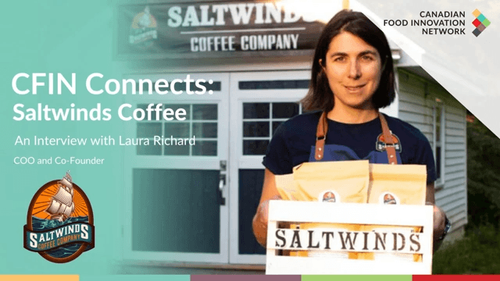
Welcome to YODL! In addition to daily original content, YODL helps CFIN Members find new partners , resources , and funding opportunities to grow their food business. Learn more about this growing community and become a CFIN Member (for free!) today . Nestor Gomez , CFIN’s Chief Technology Officer, recently caught up with Laura Richard, COO and co-founder of Douglas, NB-based Saltwinds Coffee Company, during the 2023 InnovateNB Awards. Saltwinds produces unique tasting coffee roasted using carbon-friendly techniques. The company received funding through CFIN’s Food Innovation Challenge to help create its carbon capture system that can be used in the exhaust flue of a roaster, capturing the CO 2 that is emitted when coffee beans are roasted. Here they discuss the company and what it has been up to in the past year since receiving funding.
Community Manager-
IN 30: Roundup of Cellular Food Articles
Welcome to YODL! In addition to daily original content, YODL helps CFIN Members find new partners , resources , and funding opportunities to grow their food business. Learn more about this growing community and become a CFIN Member (for free!) today . Sometimes, all it takes is 30 minutes to learn the ins and outs of new food technologies and trends that are transforming the food and beverage industry. In this series, we’ll dig into a food innovation topic and link you to content and resources so you can become a master on the topic in 30 minutes (or less!). This year we dug deep into the topic of cellular food and agriculture, so now we’re recapping all of the original content posted on the topic in 2023. Canadian FoodTech Trends: Interest and Curiosity in Cellular Food Continues to Grow CFIN worked with Moncton, NB-based data science company Fiddlehead Technology to develop a report providing insight into the potential adoption of cellular meat in Canada. Cellular Food How cellular food is changing the way we produce, transport, and consume food. Cellular Food in Canada New food production technology such as cellular agriculture has the potential to alleviate challenges facing the food industry, including supply chain disruptions and climate change. Commercializing Cellular Food Issues surrounding c ellular food entering or currently on the market, and opportunities for commercialization in Canada and around the world. Cultivating Success – Top 5 Takeaways CFIN’s latest virtual experience is Cultivating Success: Canada ’ s Big Biomanufacturing Opportunity. Here are the top five takeaways from the experience: Funding for Cellular Food Research and Development There are several sourc es of funding for companies working to develop new products, technology, and services for the emerging cellular agriculture industry in Canada. Infographic: Introduction to Cellular Food An infographic showing the history of cellular food and precision fermentation and opportunities in Canada. The Language of…Cellular Food Here’s some of the terminology you may be questioning when it comes to the cellular food and agriculture sector. New Harvest New Harvest is a global non-profit research institute advancing the science of cellular agriculture , with a Canadian division based in Edmonton, AB. Precision Fermentation P recision fermentation is a specific kind of fermentation process to create lab-grown ingredients for use in a variety of products, including food. Regulating Cellular Food How emerging cellular food technology is being governed around the world, and the debate around how products will be regulated as they hit the market. What’s for Dinner on Mars? Dinner on Mars: The Technologies that Will Feed the Red Planet and Transform Agriculture on Earth by Lenore Newman and Evan Fraser explores the food science and cellular food technology and production methods it will take to feed a settlement on Mars, while meeting the needs of the estimated 9.8 billion people on Earth by 2050. Overtime If you’ve got more than 30 minutes, these are for you: Cultivating Success: Canada’s Big Biomanufacturing Opportunity CFIN ’s latest virtual experience , Cultivating Success: Canada's Big Biomanufacturing Opportunity , was ho sted by cellular food experts Dr. Lenore Newman of the Food and Agriculture Institute at the University of the Fraser Valley in BC, and Dr. Evan Fraser of the Arrell Food Institute at the University of Guelph in Ontario.
Community Manager-
Report: Public Trust in Canada’s Food System
Welcome to YODL! In addition to daily original content, YODL helps CFIN Members find new partners , resources , and funding opportunities to grow their food business. Learn more about this growing community and become a CFIN Member (for free!) today . The Canadian Centre for Food Integrity (CCFI) recently released it s 2023 Public Trust Research Report revealing consumer perceptions of Canada’s food and agri-food industry, and views on issues such as rising food costs, food safety and transparency . Here are four key highlights. 1. Rising f ood costs are top of mind with Canadians . 50% of consumers polled said they are very concerned about the affordability of healthy food. That compares to 47% in 2022 and just 28% in 2020. 54% of Canadians say the cost of food is their number one concern , while 41% say they are most concerned with the affordability of healthy food. 2. Canadians are changing their habits due to higher food costs . 45% say they are reducing food waste; 42% are cooking more meals at home; and 37% are buying less food. Other changes include buying more frozen food (23% ) , and changing grocery stores (21%) and recipes (14%) . 60% of respondents say they’re interested in learning how to spend less on food. 50% say they loo k up online information about spending less on food. 3 . Consumers are focused on issues such as food, health and housing rather than big-picture concerns such as the economy , and are increasingly linking food and health. 44% of Canadians are very concerned about health care, up from 37% in 2022. 54% of consumers say they engage with information about nutrition and healthy eating. 4 . Consumer s show overall trust in our agri-food system, but want more transparency. 34% of Canadians say the food system is heading in the right direction, although 41% say they are unsure. Canadians have a moderate level of trust when it comes to food safety, with only 26% saying they are very concerned about food safety overall, compared to 30% last year. 41% of consumers believe supply chain costs are to blame for rising food costs , down from 56% the previous year. 34% feel food costs are higher because businesses want to increase their profits . T hat compares to 20% in 2022. Transparency scores have decreased significantly since 2018 , especially around misinformation, with 62% saying they are concerned about misleading food labels or descriptions for marketing, and 33% saying they are very concerned . Click her e to download the full report.
Community Manager-
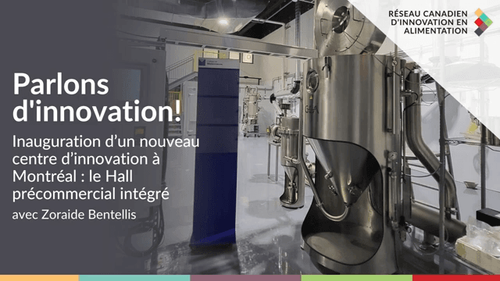
Let’s Talk Innovation – the Integrated Pre-commercial Hall
Welcome to Let’s Talk Innovation with Isabelle Marquis, a French-language video covering all areas of food innovation. Today, Isabelle speaks with Zoraїde Bentellis, Director of ITEGA, the Institute of Packaging Technology and Food Engineering, about the inauguration of a new innovation centre in Montréal: the Integrated Pre-commercial Hall. On 30 October, the official inauguration of the Integrated Pre-commercial Hall (HPCI) took place in Montréal: a new research and innovation hub for sustainable development, unique in Canada. Equipped with the latest technologies and combining the expertise of ITEGA and CEPROCQ in packaging, food engineering and food chemistry, the HPCI’s mandate is to support businesses wishing to create, develop and commercialise innovative products.
Community Manager-
50 Canadian FoodTech Resources – The Cultivated B Canada
Welcome to YODL! In addition to daily original content, YODL helps CFIN Members find new partners , resources , and funding opportunities to grow their food business. Learn more about this growing community and become a CFIN Member (for free!) today . Canada has an extensive range of research centres, food incubators, accelerators and labs supporting food and beverage innovation through the research they do and/or the services they offer. Each week throughout 2023, we’ll be highlighting an organization that’s supporting food innovation in Canada. Name : The Cultivated B Canada (TCB Canada) is a subsidiary of Germany’s The Cultivated B. The company’s R&D centre is in Heidelberg, Germany, while its manufacturing facility is in Burlington, ON. Location: Burlington, ON Mission: To accelerate R&D around scalable and sustainable fermented and cultivated food products and ingredients. Focus: TCB Canada develops scalable alternative protein and cellular agriculture technologies. It works with governments and companies in Canada’s cellular agriculture and food ecosystem to help develop bioengineering technologies. Services: TCB Canada operates a 130,000-sq.-ft. manufacturing facility in Burlington, ON for the production of bioreactors and the development of alternative proteins. The location also offers the Innovation Hub in collaboration with Ontario Genomics and N atural Products Canada (NPC) , a 25,000-sq.-ft. space for academic institutions, start-ups and small- to medium-sized businesses to advance research in cellular food and agriculture towards scalable testing and product development. The Innovation Hub offers lab space, bioreactors (including the world’s first bioreactor with a 25,000-L volume) , mentorship and expertise . What you need to know: In September 2023 the TCB Canada and NPC announced a program to accelerate the growth of Canadian startups using precision fermentation. The Cultivated B is develop s precision fermentation technology through its subsidiary PreFer Industries . Notable News: The company recently signed a Memorandum of Understanding with McMaster University’s Faculty of Engineering to commit to ongoing collaboration on cellular agriculture projects and talent development. Get Involved: Contact TCB Canada by email or at ( 905 ) 681-2404 , or reach out to our Regional Innovation Director for Ontario, Linda Fox.
Community Manager-
AI + Food – ThisFish Inc.
Welcome to YODL! In addition to daily original content, YODL helps CFIN Members find new partners , resources , and funding opportunities to grow their food business. Learn more about this growing community and become a CFIN Member (for free!) today . Canadian food, beverage and foodtech companies are using AI to solve a wide variety of industry challenges, including improving efficiency, pricing analysis, inventory management, quality control, food safety assurance and more. In this installment, we’re looking at ThisFish Inc. What They Do Vancouver, BC-based ThisFish Inc. provides TallyVision , an AI solution for seafood traceability and production workflows designed to boost business efficiency, transparency and compliance in seafood supply chains. How They’re Using AI The TallyVision software, combined with sensors and industrial hardware such as scanners, digital scales and computer vision technology, help s seafood processing plants automate data collection and digitize information systems to produce real-time insights that can be used to improve traceability and quality control, while reducing waste. The software also provides for the use of QR code labels, allowing customers to track seafood through retailing and processing back to the farm or fishing vessel that harvested it. In the Media Government of BC - ThisFish Tracks BC Seafood The B.C. government supports traceability as a public health measure and to help businesses run efficiently. Global Seafood Alliance – ThisFish Launches Seafood Sector Software Directory ThisFish has launched an online directory of software, artificial intelligence (AI) and blockchain technologies for the seafood sector.
Community Manager-
IN 30: Carbon Neutral Food
Welcome to YODL! In addition to daily original content, YODL helps CFIN Members find new partners , resources , and funding opportunities to grow their food business. Learn more about this growing community and become a CFIN Member (for free!) today . Sometimes, all it takes is 30 minutes to learn the ins and outs of new food technologies and trends that are transforming the food and beverage industry. In this series, we’ll dig into a food innovation topic and link you to content and resources so you can become a master on the topic in 30 minutes (or less!). This week we’re looking at carbon neutral food. When companies refer to their products as carbon neutral , it means that the company has reduced as much carbon emissions as it produces to create a net zero carbon output. The Overview Food Dive – Eight Carbon-Neutral Brands Aiming to Cut the Food and Beverage Industry’s Emissions Just a few of the f ood and beverage companies making their products carbon neutral. Green Eatz – How to Lower Your Food’s Carbon Footprint The carbon footprint of a food refers to the amount of greenhouse gas emissions go into producing that food, including growing, processing, and transportation. Just Food - Are “C arbon N eu t ral ” C laims D ead? Claims about carbon-neutral products are sometimes met with scepticism. The Canadian Connection Diageo – Diageo is building its a carbon neutral distillery to produce its Crown Royal Canadian Whisky brand in Ontario. Maple Leaf Foods - Maple Leaf became the world’s first major carbon-neutral food company in 2019. Karbon Brewing Co . – Karbon is the first carbon-negative brewery in Canada. Social Media Science Based Targets (LinkedIn) – Science Based Targets helps companies and organizations set emissions reduction targets. CDP (X/Twitter) - CDP is a not-for-profit charity that runs the global disclosure system for investors, companies, cities, states and regions to manage their environmental impact . Ecocert (Facebook) – Ecocert operates the Climate Neutral Certification program, which recognizes companies that contribute to carbon neutrality. Overtime If you’ve got more than 30 minutes, these are for you : YouTube – Earth Month: New Food and Drinks to Reduce your Carbon Footprint Carbon neutral products from this year’s Natural Products Expo West.